Beltola is a prime residential area in the southern part of Guwahati, Assam. Mythical sources claimed that the word Beltola comes from the word Bilvapatra, which means leaves of Bael tree, used in religious ceremonies. It was said that in olden day's large quantities of Bael tree leaves were sent to Kamakhya Temple to be used in rituals. It was from that time the place is called as Beltola.
It is an adjoining area of the Dispur Capital Complex, the capital of Assam. The area has seen rapid growth since the 1980s . It covers area of about 2.53 km²
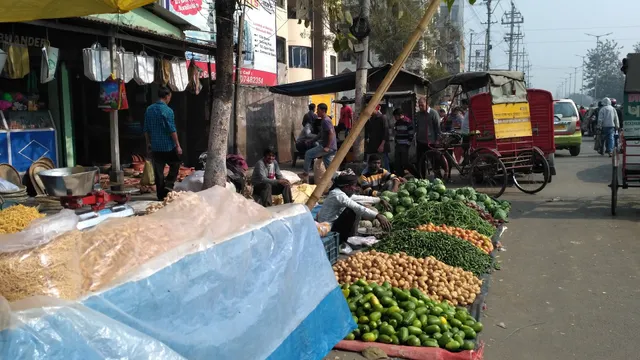
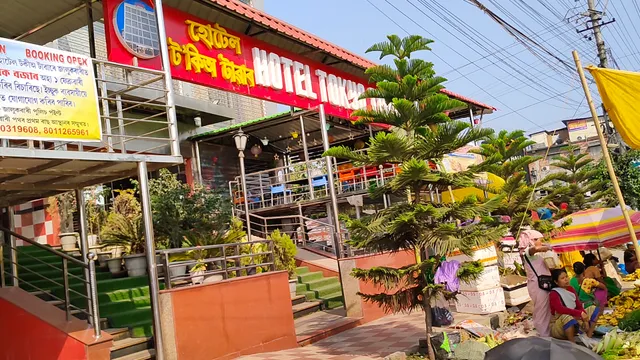
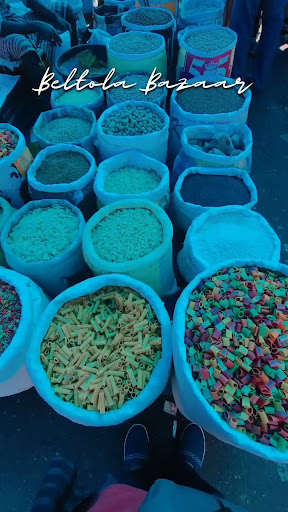
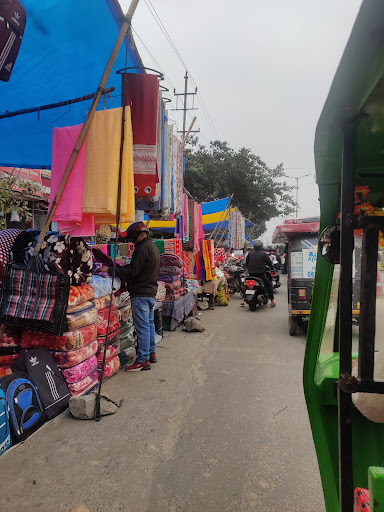
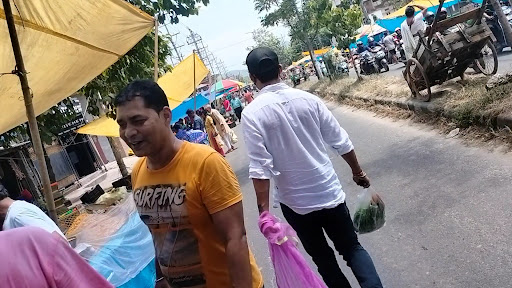
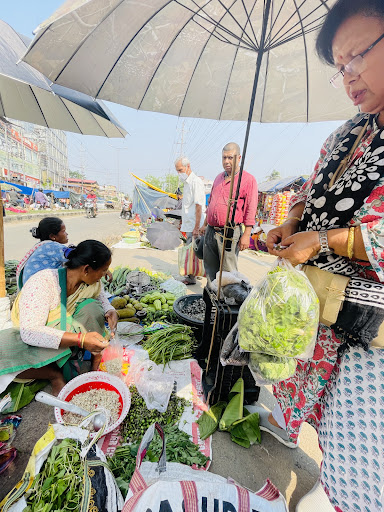
Beltola Bazar in the central part of Beltola is a traditional bi-weekly fruits and vegetables market with historic importance. The market has been continuing since historic past and is an important traditional trading point between the people from the Khasi hills (Meghalaya) and the local people. It is a rich market with various types of local food products.
Previously, Beltola was also the seat for a small protectorate of Ahom Kingdom, principally assisting administration of the Borphukan and in maintaining relations with the communities of Khasi Hills. The Rani or the Queen of Beltola is a popular historic figure in the locality. During the Ahom reign, the kingdom of Beltola extends from the borders of the kingdom of Rani in the west, while in the east it extends to the borders of the kingdom of Mayong and Dimorua. The places named as Rajgarh and Hatigarh in present-day Guwahati city, were the borders between Ahom ruled Guwahati city and the kingdom of Beltola. After the fall of Ahom kingdom and the British occupation of Assam, Beltola lost its status as a kingdom and converted into a Mouza or revenue circle. Under British rule, the size of the Beltola Mouza was much reduced. Presently Beltola Mouza consists of several places of Modern day Guwahati city. Centrally located from Beltola haat or Beltola Bazaar, the Mouza or estate covers the area of Narengi, Birkuchi, Hengrabari, Panjabari, Hatigaon, Bhetapara, Maidam gaon, Rukminigaon, Khanapara, Kahilipara, Ganeshguri and Basistha Mandir. It was said that the Royal residence of the Beltola royal family was in Rukminigaon, while the place where the royal elephants were kept and trained was Hatigaon, literally meaning village of elephants (in Assamese Hati means elephant; gaon means village). Maidam gaon was said to be the place of cremation of the royal family members. The old name of Khanapara was Kainapara. Kaina is a Khasi word, which means elephant, while Para in Khasi language means human settlements or colony. It was said that the ruler of Beltola used to capture elephants and was indulge in the profitable business of selling elephants. It can be assumed that the Khasi people living in that region were indulged in the capturing elephants for the rulers of Beltola, due to which the name Kainapara or later Khanapara came into existence. Birkuchi name comes from the combination of two words, Bir means heroes and Kuchi means camp. It was said that the Koch army of Chilarai use to camp there for some time and thus the place got its name.
Over time, Beltola has expanded as a residential area come commercial and educational hub with Beltola College as the institute offering graduate courses in Arts and Science. A sub-centre of the All Assam Students Union known as Beltola Students Union and is active in...
Read moreIf you were born in Guwahati, you have probably heard about the famous Beltola Bazaar at some point in your life. I also heard about this weekly bazaar very frequently as I grew up. Unfortunately, I never got the chance to visit this place. But about 2 to 3 years earlier, I used to work in an office located near Beltola, Jayanagar area. One day, probably Thursday, because my office had closed early and I had nothing else to do, our office boy and I decided to go to the famous Beltola Bazaar. I was fascinated by the fact that it was such a large market that, from one point to another, the distance was close to 1 km. I don't think anyone could finish visiting the entire bazaar from point A to point B in one day; it is that big.
Vendors from different communities all around the northeast gather here to sell their authentic foods, vegetables, fish, poultry, domestic animals, and other organic products. When it comes to food, I never hesitate to try new things. After this visit, I got addicted to visiting this place over and over again if I got the chance, till now I have completed numerous visit. It was a real treat to wander around here and there to see fresh vegetables, fish, meat, etc.
But due to rising inflation, the price of everything goes up. Negotiation with vendors is a bad idea, as almost all of them have fixed their prices. It is easy to be misled by vendors and pay an unjustified price, if you are not careful enough. However, there are some vendors, interacting with them will be a very pleasurable experience.
The place starts to get very crowded on Thursday and Sunday of every week. Due to that, it is very difficult to find a spot to park your vehicle. It is highly recommended that you visit Beltola Bazaar at least once in...
Read moreOne of Guwahati's Most Unique and Bustling Markets!
Beltola Market is both famous and underrated among Guwahatians. It stretches across nearly 2 km and offers everything from everyday vegetables to rare and local produce you may have never seen or heard of before!
Sundays are incredibly crowded, so if you're not there for your weekly bazaar, it's best to avoid the Beltola Tiniali and Jayanagar Chariali road. Parking? Forget about it! Especially for four-wheelers—two-wheelers usually find space near the vendors they shop from.
What makes this market truly special is the variety: vegetables, fruits, groceries, spices, and an amazing range of non-veg items—fish, pork, chicken, mutton, duck, pigeon, crabs, snails, silkworms, and more! You name it, they probably have it.
It's a fascinating place to explore—ask a vendor about something unfamiliar and you’ll likely be surprised. Definitely a must-visit for local flavor and...
Read more