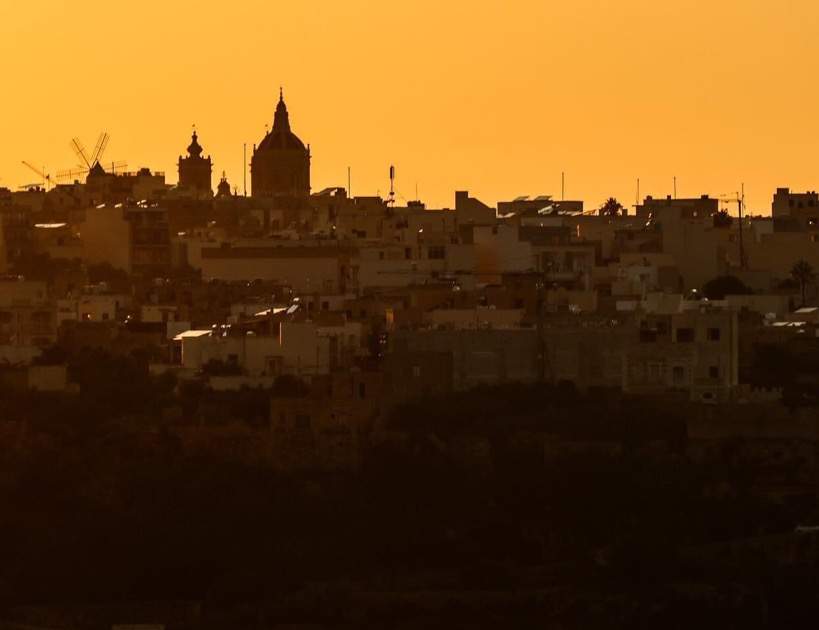
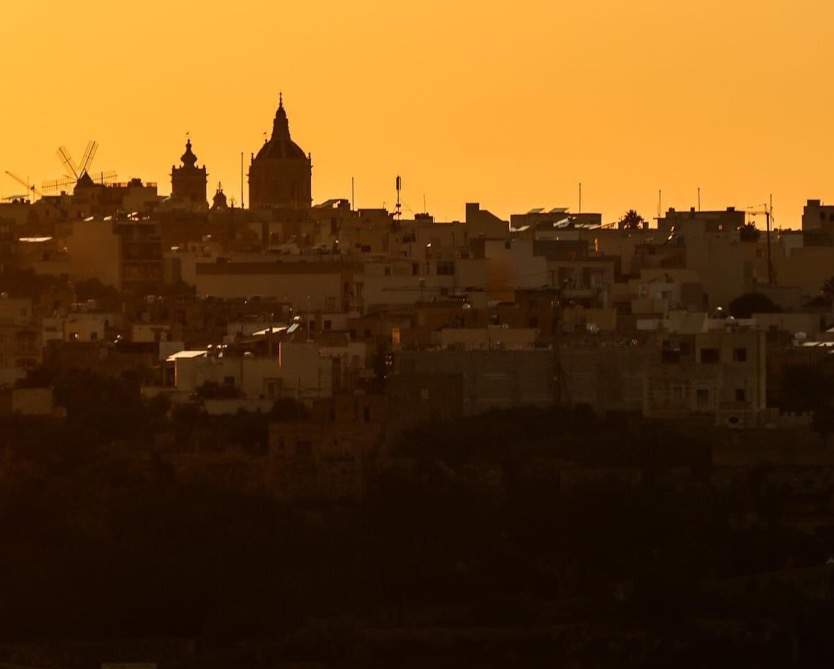
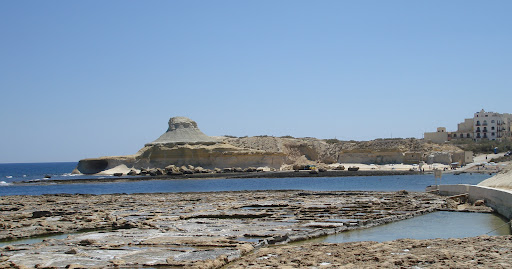
The Awesome! I say nothing is like GOZO full of enjoyment
History
Gozo has been inhabited since 5000 BC, when farmers from nearby Sicily crossed the sea to the island.[12] Due to the discovery of similar pottery found in both places from the Għar Dalam phase, it has been suggested that the first colonists were specifically from the area of Agrigento; however, it is currently unknown exactly where in Sicily the farmers came from. They are thought to have first lived in caves on the outskirts of what is now known as San Lawrenz.[12]
Gozo was an important place for cultural evolution, and during the neolithic period the Ġgantija temples were built; they are among the world's oldest free-standing structures, as well as the world's oldest religious structures. The temple's name is Maltese for "belonging to the giants", because legend in Maltese and Gozitan folklore says the temples were built by giants.[9] Another important Maltese archaeological site in Gozo, which dates back to the neolithic period, is the Xagħra Stone Circle. Also, native tradition and certain ancient Greek historians (notably Euhemerus and Callimachus) maintain that Gozo is the island Homer described as Ogygia, home of the nymph Calypso.[13]
Gozo was occupied by the Carthaginians, who raised a temple to Astarte on the islands.[14] It was probably annexed by Rome around 218 BC and minted its own bronze coins in the 1st century BC. These feature Astarte's head with a crescent obverse and a warrior, a star, and the legend Gaulitōn (Greek: ΓΑΥΛΙΤΩΝ) reverse.[14]
In July 1551 Ottomans under Sinan Pasha and Dragut invaded and ravaged Gozo and enslaved most of its inhabitants, about 5,000, bringing them to Tarhuna Wa Msalata in Libya, their departure port in Gozo was Mġarr ix-Xini. The island of Gozo was repopulated between 1565 and 1580 by people from mainland Malta, undertaken by the Knights of Malta.[15]
View of Mgarr Harbour from the Gozo Channel Line
The history of Gozo is strongly coupled with the history of Malta, since Gozo has been governed by Malta throughout history, with the brief exception of a short period of autonomy following the uprising against the French forces after Napoleon's conquest of Malta, between 28 October 1798 and 20 August 1801.[15]
The Gozo Civic Council was set up as a statutory local government in the island of Gozo on 14 April 1961, the first experiment in civil local government in Malta since the French occupation of 1798–1800. The law authorised the Council to raise taxes, although it never actually made use of this power. In 1971 the Malta Labour Party was voted into office. As its support in Gozo was weak and it favoured a more centralised administration, it proposed a referendum on the abolition of the Council, putting emphasis on the unpopular possibility of its raising taxes. In the Gozo Civic Council referendum, 1973, the overwhelming majority of voters (76.97%) voted for the abolition of the Gozo Civic Council.[16]
In the mid-1980s attempts were made to set up a Gozo committee, chaired by the prime minister and with the Gozitan members of Parliament as members. However, it was only in 1987 that the Ministry of Gozo was set up (demoted to a parliamentary secretariat between 1996 and 1998). Local government in the Gozitan localities was restored with the introduction of local councils in 1993 with Gozo having 14 councils.
The islands have historically been connected by air and sea links.[19] However, a helicopter service which connected the two ceased operations in 2006.[20]
By ferryEdit
Main article: Gozo Channel Line
MV Ta' Pinu, one of the three ferries operated by the Gozo Channel Line, on its way from Gozo to Ċirkewwa.
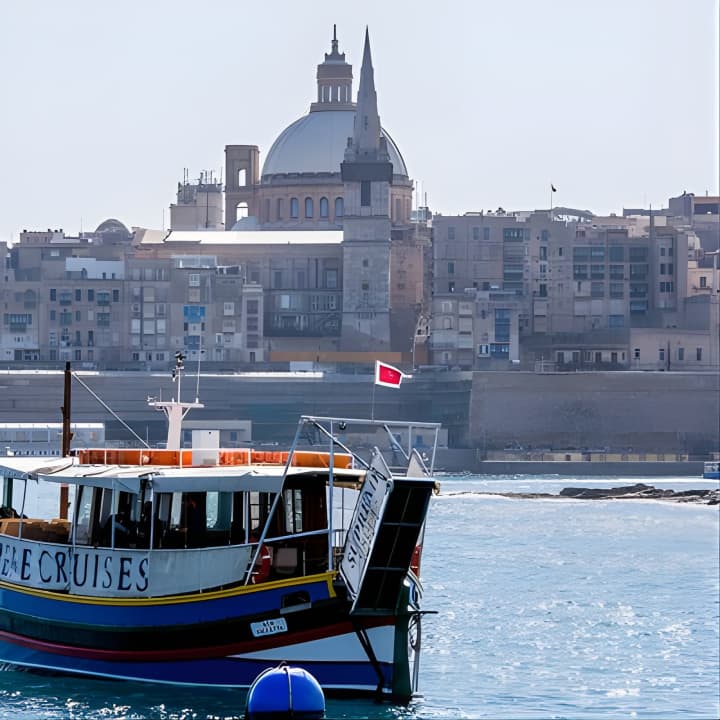
Visitors can currently reach the island by ferry. There are regular crossings between the port of Mġarr on Gozo and Ċirkewwa on the north-west coast of Malta. The Gozo Channel Line makes the trip every 45 minutes during the summer and almost as often in the winter. A return journey costs €4.65 and takes around 25 minutes each way. The service is used by tourists...
Read moreI was glad I booked a coach tour for my first trip to Gozo from Malta . Everything was organised from hotel collection, the short Ferry ride from the North of Malta past the famous blue lagoon of Comino to Gozo itself. It meant I could appreciate all the journey and capturing the local architecture and character of the island, with interesting facts interspaced throughout by the tour guide. Whilst only a small island covering an area of 67 km² (26 square miles ) there is a great deal to see or do. My trip took me to the location of one of the filming of Games of Thrones sets, Blue Hole, although nature has took its toll and the famous blue hole rock face has succumb to nature. Nearby is a popular Inland Sea Diving site Visiting the historical Ġgantija temples, built around 3600BC, making them the world’s oldest monuments and a UNESCO World Heritage Site was a fascinating place to visit, its even older than the pyramids! Near Xwejni Bay Beach and on the sea front are a large series of natural salt pans with its fascinating surrounding landscape, shaped by nature with unique patterns cut into the rock. Whilst Calypso cave, linked to Greek Mythology, can no longer be visited due to the ground being unsafe, the location offers a great view of one of the island’s sandy beaches ir-Ramla l-Ħamra, better known as Ramla Beach. Other sites were also visited as part of the journey along with an enjoyable restaurant meal, tasting the local food. There is no way I could have created my own itinerary and managed to get so much...
Read moreGozo in antiquity known as Gaulos (Punic: 𐤂𐤅𐤋, romanized: gwl;Ancient Greek: Γαῦλος[6], romanized: Gaúlos),is an island in the Maltese archipelago in the Mediterranean Sea.
The island is part of the Republic of Malta. After the island of Malta itself, it is the second-largest island in the archipelago.
The island is rural in character and less developed than the island of Malta. Gozo is known for its scenic hills, which are featured on its coat of arms. The Azure Window in Dwejra, San Lawrenz, a natural limestone arch, was a remarkable geological feature until its collapse on March 8, 2017. The island has other notable natural features, including the Inland Sea and Wied il-Mielaħ Window. There are a few sandy beaches on the island, namely Ramla Bay in Xagħra and Nadur, as well as seaside resorts that are popular with both locals and tourists, the most popular being Marsalforn and Xlendi. Gozo is considered one of the top diving destinations in the Mediterranean and a centre for...
Read more