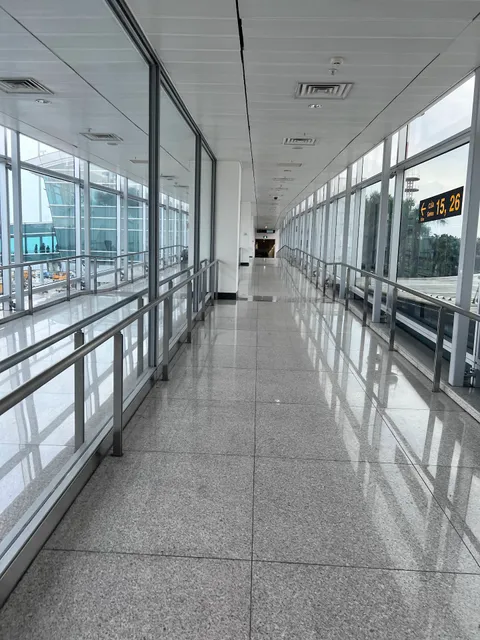
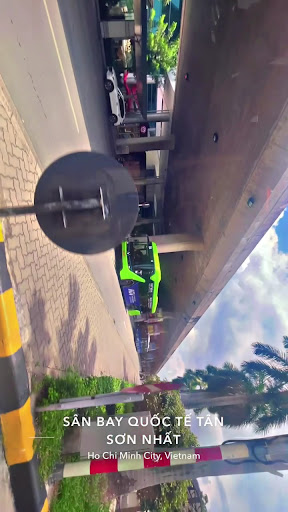
Standing in the gleaming halls of Tan Son Nhat International Airport's newest terminal, one can almost feel the fabric of Vietnam's national dress come alive in architecture. The sweeping curves of Terminal 3, which opened this April, draw their inspiration from the ao dai's flowing silhouette—a bold gesture that transforms utilitarian infrastructure into cultural expression.
Yet this poetic vision collides harshly with reality. Despite handling 41 million passengers annually against a 30-million design capacity, the airport has become a study in beautiful dysfunction.
The story begins in 2007, when a Japanese consortium led by Kajima, Taisei, Obayashi, and Maeda delivered Terminal 2—a $219 million testament to international cooperation funded by Japanese development aid. Clean-lined and efficient, it epitomized the era's faith in modernist airport design. The terminal's spacious halls seemed to anticipate Vietnam's economic ascent, yet even then, growth outpaced projections.
Terminal 3 represents a marked philosophical shift. Singapore-based CPG Consultants abandoned sterile internationalism for something distinctly Vietnamese. The ao dai concept isn't mere decoration—the building's soft, curved roof literally flows from terminal to garden, creating what the architects call "juxtaposition of lifting and embedding." Natural light floods dramatic interior spaces while landscape terraces culminate in a central courtyard.
This cultural turn reflects broader trends in Asian airport design. Korea's Heerim Architects, designer of the future Long Thanh replacement airport, similarly chose the lotus flower as their organizing principle. The firm, which created Incheon's celebrated Terminal 2, understands that today's mega-airports must be more than transit hubs—they're cultural ambassadors.
But poetry can't solve capacity crises. Passengers endure 100-meter customs queues and what one reviewer called "astronomical" food prices. Staff attitudes remain a persistent complaint, while overcrowding has transformed what should be welcoming spaces into stressed bottlenecks.
The airport's awards—including Asia's Leading Airport from 2016 to 2023—feel increasingly hollow against user ratings averaging just 2 out of 5 stars. French consultants ADPI's $1.3 billion expansion proposal acknowledges these limits, capping capacity at 51 million rather than pursuing the city's ambitious 70-million goal.
The architectural lesson here transcends Vietnam. Tan Son Nhat's terminals showcase how cultural expression can elevate infrastructure design—the ao dai roof genuinely moves visitors, while the forthcoming lotus-inspired Long Thanh promises even greater drama. Yet these achievements highlight architecture's limits when operational planning lags behind aesthetic ambition.
Vietnam's airport story mirrors the nation's broader trajectory: meteoric growth that has outstripped institutional capacity to manage it gracefully. The ao dai terminal's flowing curves suggest movement and aspiration, but until the country's infrastructure catches up with its architectural poetry, travelers will continue to experience more turbulence than grace.
Terminal 3's cultural authenticity offers hope. Unlike generic international airport design, its Vietnamese identity suggests confidence in local traditions as sources of innovation. When Long Thanh opens next year, it may finally provide the operational excellence to match Vietnam's architectural ambitions—assuming the lessons of Tan Son Nhat's beautiful chaos inform its planning as much...
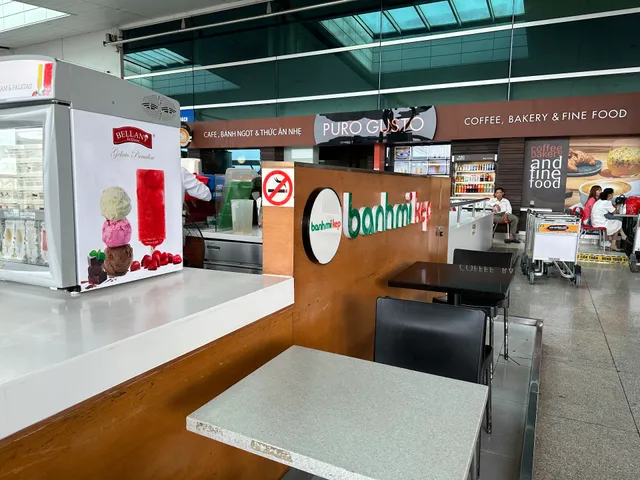
Read moreIt’s a small airport in Ho Chi Minh City with both domestic and international terminals. One terminal each. We arrived in d morning around 6.30 am and a bus takes you to the arrivals. Once you are inside Towards your left are the immigration counters and right is the domestic and international transfers. There was no proper marking so we wasted sometime to get to the immigration area. There used to be a currency exchange and sim kiosk prior to immigration. Immigration line was quite a bit but it got cleared within 30-40 minutes. Once you are done with your immigration go downstairs on the ground floor to collect your luggage. Immigration Queue was managed well. The experience at the airport, their services and staff wasn’t great. We asked two female staff for the way to the restrooms but they simply ignored. They were listening to us but ddnt even bother to look up and help us deliberately talking their own. Two, we had to get currency exchange Dong from USD to VND ie Vietnamese Dong. There are multiple counters outside once you exit the luggage conveyor area. We went to one and sought clarity on the exchange rate and she straightaway bluntly pointed us to another counter saying they give better rates. Went to the other counter he was giving at the rate of 25180 VNd for a usd and he gave us the amount, cut the receipt but ddnt give the 370 VND and we are waiting for it. on seeking clarity he said he doesn’t have change amounting to 370. Then on requesting to give the complete amount he was very rude and returned our USD abc took back the Vietnamese Dong. He also rudely stated that if I go back to him he will not exchange the money. So we went to the 3rd counter that had the same rate of 25180 and were about to take our money when the earlier guy comes and says something to the woman at the counter in Vietnamese language. She refused to give us the rate of 25180 and rudely said she would give us a lower exchange rate of 24155 instead. We refused to exchange and checked with a few other counters who were either giving lesser rate or asking for a service charge of 2%. The airport management needs to regulate this and train their staff and counter staff to be polite with the travellers who come to visit their country. I had booked a prepaid taxi via Klook.com Taxis for international passenger pickups waits at pillar 11 towards the right once you exit the airport. So that wasn’t an issue. Driver contacted me well in advance for the scheduled pickup. Went to the domestic terminal tp take a flight to Danang from Ho Chi Minh. Delayed vietjetair. Ground floor has a few cafés. Fast boarding pass and security. You have to take out your shoes, belt, electronics etc ag security. There’s no free water. You need to buy 500 ml for 10 VNd. Boarding gates on...
Read morePassport control - wait time at arrival 1 hour Test of patience
GRAB Ride Share- Ground level when you leave arrivals. It’s convenient. Should be no issues.
General information per .:.Chat.G.P.T.:. —
Tan Son Nhat International Airport (IATA: SGN, ICAO: VVTS) is the main airport serving Ho Chi Minh City (Saigon), Vietnam. It is the busiest airport in Vietnam in terms of passenger traffic. Here’s a detailed overview:
⸻
📍 General Information • Location: About 6 km (3.7 mi) north of downtown Ho Chi Minh City. • Opened: Originally built in the 1930s by the French; expanded significantly during the Vietnam War. • Ownership/Management: Operated by Airports Corporation of Vietnam (ACV). • Capacity: Designed for 28 million passengers annually, but it often handles over 40 million, making it heavily congested.
⸻
🛫 Terminals Domestic Terminal (T1) • Serves domestic flights (Vietnam Airlines, VietJet Air, Bamboo Airways, Vietravel Airlines, Pacific Airlines). • Older and usually more crowded. International Terminal (T2) • Serves international airlines and routes. • More modern, with duty-free shops, lounges, and a better layout.
⸻
✈ Airlines & Destinations • Major Vietnamese Carriers: Vietnam Airlines, VietJet Air, Bamboo Airways. • International Carriers: Singapore Airlines, Emirates, Qatar Airways, Korean Air, Cathay Pacific, ANA, JAL, and many others. • Key Destinations: • Asia: Bangkok, Singapore, Tokyo, Seoul, Kuala Lumpur, Hong Kong, Beijing. • Europe: Paris, Frankfurt, London (seasonal). • Oceania & North America: Melbourne, Sydney, San Francisco (direct Vietnam Airlines route).
⸻
🚖 Ground Transport • Taxi/Grab: Widely used, but beware of scams with unlicensed taxis—stick to official Vinasun or Mai Linh. • Public Bus: Routes connect to central districts (cheap but slower). • Private Transfers: Hotels and services offer pickups.
⸻
🏗 Expansion Plans
Because Tan Son Nhat is over capacity: • Long Thanh International Airport, located about 40 km east of Ho Chi Minh City, is under construction and expected to become Vietnam’s largest international gateway in the next few years. • Tan Son Nhat will still operate but focus more on domestic flights.
⸻
⚠️ Traveler Tips • Congestion: Lines at security and immigration can be long—arrive at least 2–3 hours early for international flights. • Currency Exchange: Available inside, but rates are usually better in the city. • Wi-Fi: Free but often unstable. • Food & Drink: Limited variety compared to other major Asian airports; better options after...
Read more