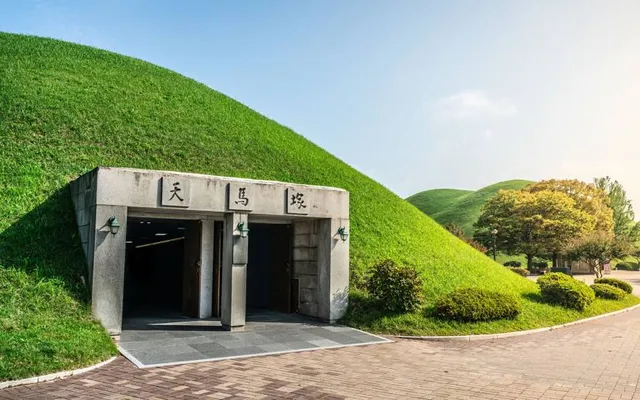

Gyeongju Guide | Cheonmachong Tomb of Silla
⛰️ When I stepped out of Sin-Gyeongju KTX Station, a light drizzle was falling over this city surrounded by vast, misty hills 🌧. Unlike Busan’s sunny, warm coastal vibe, Gyeongju hits you with an overwhelming sense of history—like the giant ancient tombs scattered along the roads, quietly telling the rise and fall of the Silla Dynasty a thousand years ago. 📍 Back in 503 AD, a tribal alliance in the southeastern part of the Korean Peninsula evolved into a formal state after five centuries of development, adopting the name “Silla.” For a long time afterward, it stood in a three-way power struggle with Goguryeo (to the north) and Baekje (to the west). Gyeongju remained Silla’s capital until the dynasty fell in 935, when it submitted to Goryeo. In 1995, Bulguksa Temple and Seokguram Grotto (on the southeastern outskirts of Gyeongju) were inscribed on the UNESCO World Heritage List. In 2000, the entire urban area of Gyeongju joined the list as the Gyeongju Historic Areas. ✅ Bulguksa Temple, a top-tier heritage site on the peninsula, is detailed in my previous notes; the “Smile of Silla” at Seokguram Grotto is the only surviving masterpiece of Korean grotto art. Meanwhile, the Gyeongju Historic Areas boast equally unforgettable and unique sights: 1. Daereungwon Ancient Tomb Complex 🎫 Ticket: 0 KRW (free entry!) Also known as “Ancient Tomb Park,” it’s home to 23 ancient tombs from the Silla period (59 BC – 935 AD). Shaped like steamed buns and covered in green grass, the tombs look like man-made hills from a distance, blending harmoniously with the distant mountains. The most famous (and only tomb open to visitors) is Cheonmachong (Heavenly Horse Tomb), named after the “heavenly horse” pattern painted on a saddle cover unearthed here . However, it requires queuing and an additional 1,500 KRW ticket. The iconic Silla gold crowns unearthed from these tombs are now housed in the Gyeongju National Museum. 2. Cheomseongdae (Astronomical Observatory) 🎫 Ticket: 0 KRW (free!) A 100-meter walk from Daereungwon’s south gate will bring you here. Built in 634 AD (during the reign of Queen Seondeok, the 27th ruler of Silla and the peninsula’s first female monarch—yes, the one behind the “Astronomy” tech in Civilization VI 😂), it’s the oldest surviving astronomical observatory in Asia. Standing 9.17 meters tall, it’s constructed from 362 stone blocks (each around 30cm in size)—a simple yet striking piece of ancient engineering. 3. Donggung Palace & Wolji Pond 🎫 Ticket: 3,000 KRW Wolji Pond (also called “Anapji”) sits on the ruins of Silla’s eastern palace. All above-ground structures here are reconstructions, but the site retains numerous stone foundations of Silla palaces and temples. Pro tip: It’s far more charming to visit at night when the lights are on— the pond reflects the palace silhouettes, creating a dreamy, ancient atmosphere. 4. Woljeong Bridge & Gyeongju Hahoe Village 🎫 Ticket: 0 KRW (free!) About a 1km walk from Cheomseongdae: Woljeong Bridge: A recently funded reconstruction. While visually appealing, it’s been criticized for ignoring historical records and allegedly copying the design of Huilong Bridge in Hunan, China. Gyeongju Hahoe Village: Adjacent to the bridge, this village preserves wooden hanoks from the Joseon Dynasty (a later period than Silla)—well worth a visit! Note: Entry closes at 17:00, so plan accordingly. 🚄 Transportation & Practical Tips From Busan: Take the KTX high-speed train (30 minutes direct)—perfect for a day trip (leave Busan in the morning, return at night). Within Gyeongju: Bus from Sin-Gyeongju Station to the city center: ~30 minutes. Bus from the city center to Bulguksa Temple: ~30 minutes. Urban heritage sites are clustered together—walking is the best way to explore. Safety & Crowds: No need to worry about it being too “off-the-beaten-path” or unsafe. Infrastructure is solid, and the area is popular with tourists from Taiwan, Japan, Europe, and the US. Food: Most restaurants are on Hwangnyongsa Street, offering retro hanok-style dining (traditional rice soup, grilled meat, etc.). Honestly, it’s easier (and often more satisfying) to grab a meal at a GS25 convenience store. #MyHiddenTravelGuide #KoreanAncientArchitecture #Gyeongju #BusanDayTrips #KoreaTravel #SillaDynasty #UNESCOWorldHeritage #BeautyOfAncientArchitecture #QueenSeondeok #BulguksaTemple