Hamilton Gallery was established in 1961 following a large bequest of an outstanding collection of art works left to the City of Hamilton by Herbert Buchanan Shaw (1882-1957). This generous bequest of 781 items reflects the collecting interests of Herbert and his wife May who lived at 'Kiama', a homestead near Hamilton. The Shaw Bequest consisted mainly of 18th and 19th century English and European decorative arts and was the beginnings of Hamilton's collection that is today vast, fascinating, diverse and unique.
Since 1961 Hamilton's collection has grown to over 9000 objects and now includes silver, porcelain and glass from 1700 onwards, a collection of 18th century landscapes by Paul Sandby, Asian ceramics from the major dynasties, European and Australian prints, Australian oil paintings and watercolours and fine international examples of 20th century decorative arts. The Gallery's collection continues to expand with the purchase of new acquisitions every year.
The Gallery actively collects Australian art, works on paper and contemporary decorative arts. Hamilton Gallery presents a high quality program that features some of the finest exhibitions touring Australia, exhibitions from the vast permanent collection and work by local artists.
The Shaw Bequest includes examples of 18th and 19th century English and European silver, glass, porcelain, an extensive range of Oriental ceramics and hard stone carvings. The bequest also contains Roman glass and early Mediterranean artefacts, a tapestry from the early 1700s, 'The Triumphal Entry of Alexander into Babylon', designed by Charles le Brun(1619-1690), a 16th century Chinese-Tibetan bronze Buddha, English 19th century watercolours including a Bonington wash drawing, a few pieces of furniture, a drawing by Adrien Manglard, Australian paintings by Hans Heysen, Will Ashton, Frederick McCubbin, Septimus Power and a James Quinn portrait of May Shaw.
In 1972, the State Government of Victoria purchased for the Gallery a large collection of works by Paul Sandby (1731-1809), known as The Father of English Watercolour. A first floor was then added to accommodate a rapidly growing collection. The Sandby collection of 29 watercolours and 74 etchings was purchased from C.C.L. Gaussen and Lady Mary Gaussen of 'Gringegalgona', a homestead near Hamilton. Sandby was a foundation member of the Royal Academy and the earliest English artist of note to exploit the media of watercolour and gouache. He was also a fine etcher, a great innovator and the art of aquatint printing was developed in England largely as a result of his early enthusiasm for this technique.
Hamilton's large collection of Sandby's charming 18th century English landscapes is unrivalled in Australia. Still in their original frames they are on permanent display in the Gaussen Gallery, an elegant recreation of an English drawing room.
Hamilton Gallery is noted for its rich, diverse, historic and contemporary collections of fine and decorative arts featured in six...
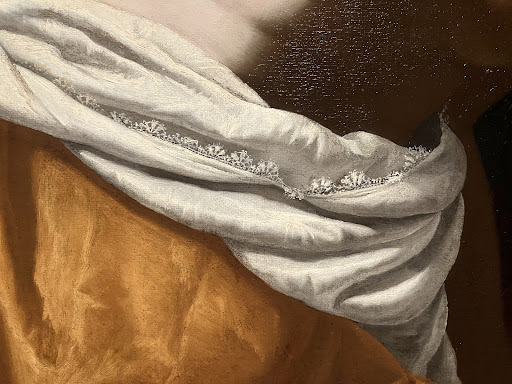
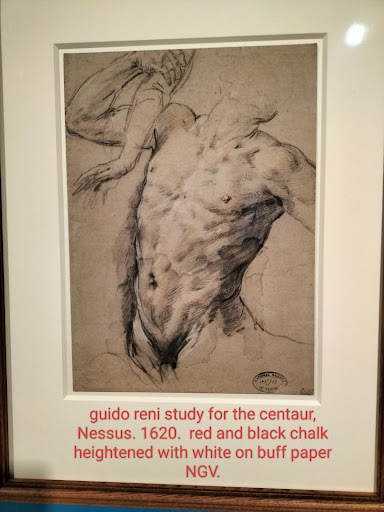
Read moreWhat a great art gallery ! MOST STUNNING exhibition at the mo. Baroque paintings and drawings. Beautifully fully put together and so well presented. Pieces themselves are brilliant. Superb examples. For me, highlights were the Rubens self portrait and the Sofonisba Anguissola portrait of a prelate. I love the Anguissola images I’ve seen of her family and self portraits so wonderful to see this actual painting in real life. Breathtakingly beautiful and superbly executed painting by Artemisia Gentileschi was then AMAZING and unexpected highlight of the show. Gorgeous colours of russet gold and deep bright blue. Creamy skin tones. Such emotion in this painting. WOW ! ! Deep heartfelt thanks to contributors, staff and directors and curators for this exhibition. NOT...
Read moreIt will be interesting to see where they'll put the new gallery. It's so central where it is now, I don't know why they want to move it. One place I thought that has a bit of historical significance is the old Argyle Arms on Gray Street. It's been closed for so long and would make an incredible art space at an area of Gray Street that is relatively dull and lifeless. Why no one is not using this building is beyond me. It's like going to Coleraine, so many empty, lifeless old shops just sitting there. The Argyle all done up would be spectacular. A lot of hard work but just think of what it would do for the town. I mean, you could keep the original gallery where it is and have a second art space there with different styles of art shown in both. How incredible...
Read more