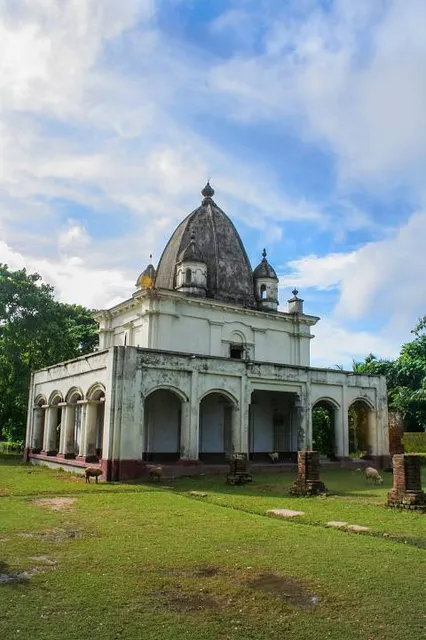
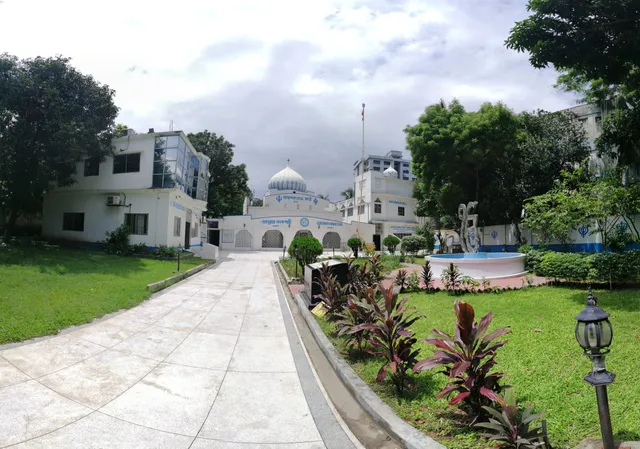
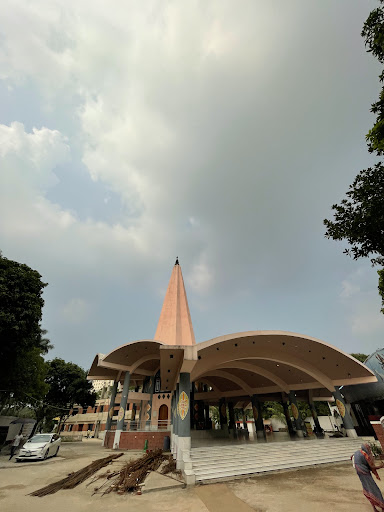
The Ramna Kali Mandir (Bengali: রমনা কালী মন্দির) was a temple in Dhaka begun in the time of the Mughal Empire. It was also known as the "Ramna Kalibari". The temple is dedicated to the Hindu Goddess Kali.
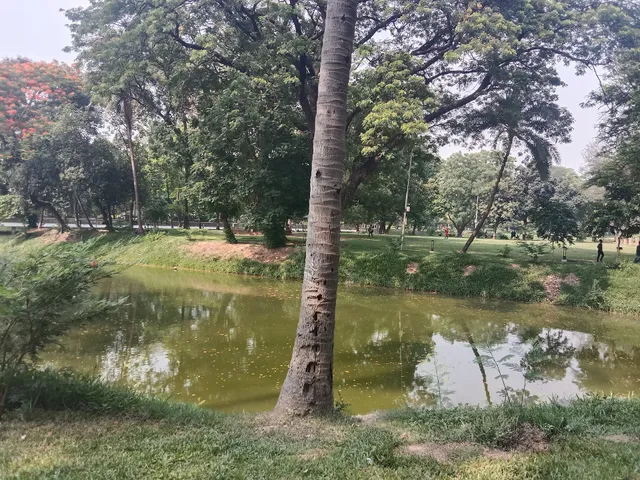
It was beside the former Dhaka Racecourse, now Suhrawardy Udyan. The entire temple complex occupied almost 2.25 acres (9,100 m2) and was on the south side of Ramna Park, opposite the Bangla Academy.
The temple was destroyed on March 27, 1971 by the Pakistani Army during the Bangladesh Liberation War. It was the site of a massacre of mostly Hindu people.
History
In Nepalese folklore, the Ramna Kali Temple was founded by the devotees of the Goddess Kali. The devotees had come to Bengal from the Himalayas.
Although the temple had stood for centuries, it was largely developed in the early 20th century. The temple was developed under the patronage of Rani Bilashmoni Debi, wife of Rajendra Narayan (1882–1913). At this time, the temple was one of Dhaka's tallest landmarks.
Design
The architectural design of the temple changed over the centuries in which it stood. In front of the temple was a large dighi (pool) which was a popular place for worshipers and visitors to swim. The temple has a tall shikhara (tower). Next to the temple was the Ma Anandamoyee Ashram (Bengali: মা আনন্দময়ী আশ্রম), a place of worship with a residential complex and facilities for washing.
The design of the temple is documented in pictures taken at Sheikh Mujibur Rahman's address of 7 March 1971. This is likely the last time the temple was photographed by journalists or historians.
Demolition and genocide by the Pakistan Army
On March 25, 1971, in the night, the Pakistan Army began its "Operation Searchlight" to oppose a Bengali nationalist movement in what was then East Pakistan. It led to a genocideand to the Bangladesh Liberation War. Most of the targets of Operation Searchlight were young Hindu men, intellectuals, students and academics. Operation Searchlight focused on prominent Hindu sites including the Jagannath Hall (a hostel for Hindu students on the Dhaka University campus) and the Ramna Kali Mandir.
On March 27, 1971, the Pakistan Army entered the Ramna Kali Mandir complex and, within one hour, killed 85 people, almost all Hindus. Several Muslims who had sought refuge in the temple complex were also killed.
Until 2000, accounts of the demolition of the temple relied largely on the oral testimony of survivors of and witnesses. In 2000, Awami League, the governing political party, opened a public enquiry. In September 2000, the chairman Justice KM Sobhan, presented a preliminary report.
Only around 50 victims of the massacre have been identified; relatives of the other victims are either deceased or have left Bangladesh. A worldwide appeal has been made for any surviving relatives of the Ramna Kali Mandir massacre victims to contribute names of their deceased family members to be listed on a future memorial.
Confiscation by Bangladesh Government
Temple Gate:
The temple was ruined. It was expected that it would be rebuilt or left as a memorial to those who died. However, the government of Bangladesh, led by Sheikh Mujibur Rahmanmade the temple an asset of the Department of Public Works. In 1972, the temple ruins were bulldozed. The land was given to the Dhaka Club, an exclusive recreation organisation. The Ramna Kali Mandir Board, traditional owners of the temple, objected through the court but was unsuccessful.
Rebuilding:
The Ma Durga Mandir and the Radha Krisna Mandir are present in the area of the Ramna Kali Mandir. Others are planned. The Government of India has pledged money for...
Read moreThe situation in and around the Ramna Kali Mandir and Ma Anandamoyee Ashram near the Dhaka University campus was frightfully unnerving. Some 75 Hindu families living there were gripped with fear after hearing heavy gunshots and news of killings of students and teachers at Jagannath Hall, a non-Muslim dormitory of DU, the night before -- March 25, 1971. Tension ratcheted sky-high when the Pakistan army visited the temple at the Ramna Race Course Maidan, now Suhrawardy Udyan, around 11:00am the next day. They asked the families not to go anywhere and left. There was a curfew in place.Within 15 hours, another group of Pakistan soldiers stormed into the temple. It was around 2:00am on March 27. The soldiers held Swami Paramananda Giri, priest of the temple, and forced him to recite "Kalima", an Islamic declaration of faith, in front of those present there."'Are you a Hindu or Muslim?' the soldiers asked Paramananda."As he replied that he was the priest of the temple, the army compelled him to recite Kalima," recalled Shankar Lal Ghosh, a witness who was around 17 at that time. "The Pakistan army then brutally killed him by bayonetting in the stomach. To reconfirm his death, they also fired bullets," he told this newspaper.People started running frantically for life.Women broke their shakha, conch shell bangles, and wiped clean their sindoor, vermilion dots put along the part of their hairline. They didn't want to be recognised as Hindus. Some even began to shout "Pakistan Zindabad". Some tried to hide inside the temple and the ashram, but the soldiers traced them out. Dilip Das, another witness, said women and children were forced to line up while men were in a separate queue. "They [Pakistanis] opened fire on the lines. Then they set fire to the temple and the ashram." Dilip, who was then about 12, lost his father and two sisters on that night. It was sheer luck that he along with his mother managed to flee the temple to the High Court premises through a pocket gate. Shankar, who was one of those standing in a line, also considers himself lucky. "A bullet somehow missed my head… I fainted," he recounted the nightmare. "I did not know how much time went by when I regained consciousness. As I opened my eyes, I found myself under some motionless bodies. I realised I was shot at the wrist joint of my right hand," said Shankar, showing the scars of the bullet. He fled in the dawn after the barbaric Pakistan forces finished...
Read moreThe Ramna Kali Mandir Bengali: (রমনা কালী মন্দির) is also known as the Ramna Kalibari. It is a house of the Hindu Goddess Kali. This Mandir was one of the most renowned Hindu temples of the Indian sub-continent. It was believed to be over a thousand years old. The temple was demolished by the Pakistan Army on 27th March in 1971 as it originated its genocide during Liberation War of Bangladesh.
The temple was established by a Nepalese follower of the Goddess Kali who had come to Bengal from the Himalayas. The major growth of the temple happened under the support of Rani Bilashmoni Debi of Bhawal domain.
The temple was one of most famous landmarks in Dhaka city. It’s tower noticeable for miles around Dhaka. In front of the temple there was a large pond. It was a popular place for both reverence and visitors to the park to take a wet and cool down. The architecture of the temple reproduced the dissimilar styles. The tower was usually called Shikhara.
The temple was Ma Anandamoyee Ashram is another place next of this place. It is built with a residential complex and hygiene facility. The complete temple complex extended approximately 2.25 acres. There are now numerous temples in the border of Ramna Kali Mandir. Ma Durga Mandir and Radha Krisna Mandir are in nearly full shape. There are some other constant Temples to be built like Ma Anandamoyi Temple, Shiva Temple, Baba Loknath Temple and Temple of Sri Harichad Thakur etc.
Ramna Kali Mandir is located in Dhaka. It is situated on the south side of Ramna Park and opposite the Bangla Academy. Most of Hindu Religious people are coming here every day for their prayer. All kind of Hindu religious festivals are organized here with great enjoyment. Visitors can go there easily by local vehicles everywhere...
Read more