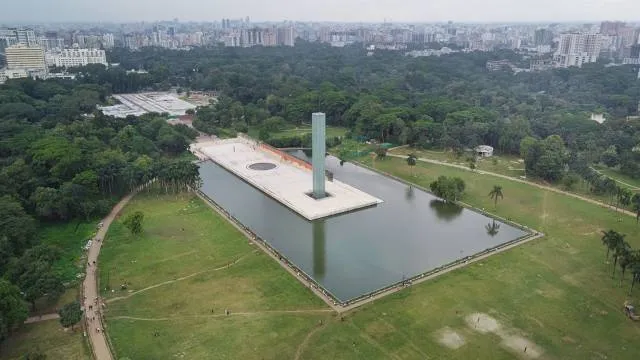
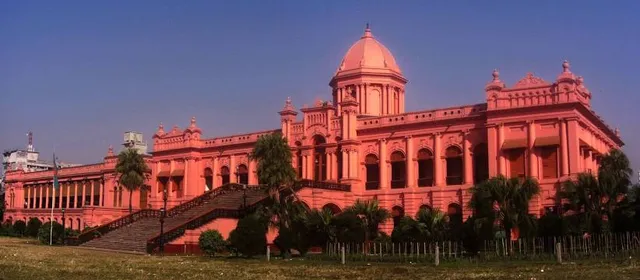
Bangladesh National Museum is a national institute, focused on collection, preservation, research and interpretative display of historical documents, archaeological artifacts, decorative arts, ethnological materials and specimens of natural heritage of Bangladesh. Bangladesh National Museum (BNM), officially known as Bangladesh Jatiya Jadughar, owes its origin and growth to the Dhaka museum. The museum is located at Shahbag in Dhaka city occupying 8.63 acres land, with a magnificent building, containing 44 galleries, a large library, three auditoriums and two exhibition halls. There are four other branch museums under the control of Bangladesh National Museum- these are ahsan manzil Museum (Dhaka), Osmani Museum (Sylhet), Zia Smriti Museum (Chittagong) and Shilpacharya Zainul Abedin Sangrahashala (Mymensingh).
Bangladesh National Museum On 1st November 1856, The dhaka news reported news regarding the raising public demand of a museum in Dhaka. But in the nineteenth century nothing came about in response to the demand until Lord Curzon, the then Viceroy of British India, made a scope to establish a museum at Dhaka after the partition of Bengal in 1905. Subsequently the historic city of Dhaka became the capital of the new province of East Bengal and Assam. Since the coins of the Shillong cabinet was going to transfer at Dhaka, the new capital, HE Stapleton, the Honorary Government Numismatist, proposed a letter to the Director of Public Instruction to set up a museum at Dhaka. The proposal was brought to the attention of Sir Lancelot Hare, the Governor of the new province and passed an order for the selection of a site for a museum. But in 1911, the partition of Bengal was revoked and Dhaka had lost its position as a capital. As a result, the decision of setting up of a museum at Dhaka was fallen backside. Then the elite of Dhaka came forward and demanded for a museum with active interest.
e BNM is appointed by the government. The BNM has four curatorial and three others departments. These are (1) Natural History (2) History and Classical Art (3) Ethnography and Decorative Art (4) Contemporary Art and World Civilisation (5) Conservation Laboratory (6) Public Education and (7) Administration.
Each of the department is run by professionally qualified curator, designated as Keeper. There are professional curatorial staffs under the Keeper such as Deputy Keepers, Assistant Keepers etc. There are also adequate clerical, caretaking and cleaning staffs those who play significant role to run the museum. Besides these, there is an administrative department comprised of security, account, engineering and administrative sections. The administrative department is headed by a Deputy Secretary appointed by the government.
Objects and Galleries Bangladesh National Museum is a multidisciplinary museum. Collections from several disciplines such as archaeology, history, ethnography and natural history are displayed here. The number of exhibits, from different disciplines collected upto 2009, was 86,000.
Natural History The first 10 galleries are dedicated to the natural heritage of Bangladesh. The collections consist of flora and fauna, such as cereals, pulses, herbal medicines, economically important plants, insects, birds, sea life of the Bay of Bengal, Sundarbans, the largest mangrove forest, its spotted dears and the Royal Bengal tiger. Geographical specimens included rocks and minerals, etc. The galleries contain semi-dioramas, dioramas on birds and mammals with their natural habitats. A large skeleton of a giant whale saw fish, beehive, different types of butterflies and reptiles are the other notable objects of these galleries. Natural history specimens preserved in the departmental store serve as a reference library of the biodiversity...
Read moreIndependence Museum Overview
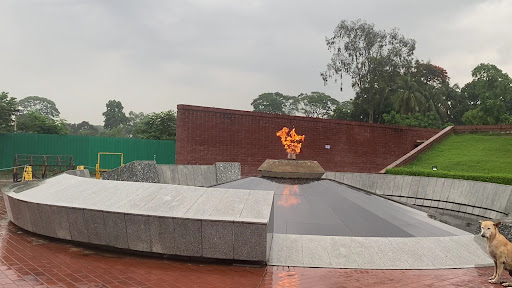
The Museum of Independence in Bangladesh is a significant cultural institution that commemorates the history and struggles of the nation's fight for independence. Located in Dhaka, the capital city, the museum stands as a testament to the courage, resilience, and sacrifices made by the Bangladeshi people during the Liberation War of 1971.
The Museum of Independence offers a comprehensive and immersive experience that chronicles the events leading up to the war and the subsequent struggle for freedom. It showcases a diverse range of artifacts, photographs, documents, audiovisual presentations, and interactive exhibits that provide a vivid depiction of the country's journey towards independence.
The museum's exhibits often begin with the historical context, shedding light on the social, economic, and political factors that led to the demand for self-determination and the quest for a separate identity. Visitors can explore the rich cultural heritage of Bangladesh, the language movement, and the various movements for autonomy that ultimately culminated in the Liberation War.
As visitors progress through the museum, they encounter exhibits that highlight the key milestones, battles, and iconic moments of the war. The exhibits may include personal belongings of freedom fighters, weapons used during the war, photographs capturing the atrocities committed, and testimonies of survivors. These displays serve as a poignant reminder of the immense sacrifices and determination of the Bangladeshi people in their fight for independence.
The Museum of Independence also features multimedia presentations and audiovisual installations that recreate the intense atmosphere of the war. Visitors can listen to firsthand accounts of war veterans, witness reenactments of significant events, and engage with interactive displays that provide a deeper understanding of the Liberation War and its impact on the nation.
Moreover, the museum houses a research center and a library, making it a valuable resource for scholars, researchers, and students interested in studying the history of the Liberation War and its aftermath. These facilities provide access to a vast collection of archival materials, books, and publications related to the independence movement, ensuring that the legacy of the war remains preserved for future generations.
The Museum of Independence in Bangladesh serves as a symbol of national pride, unity, and resilience. It plays a crucial role in preserving the collective memory of the nation and educating visitors, particularly the younger generation, about the sacrifices made for their freedom. By commemorating the Liberation War, the museum inspires visitors to cherish and protect the hard-fought independence, promoting a deeper understanding of national identity, social justice, and the values upon which the nation was built.
Through its exhibits, educational programs, and community engagement initiatives, the museum fosters a sense of patriotism and encourages active citizenship. It serves as a reminder that the struggle for independence is not a solitary event confined to the past but an ongoing endeavor to uphold the principles of freedom, democracy, and human rights.
The Museum of Independence in Bangladesh stands as a significant institution that honors the nation's history, preserves its heritage, and inspires generations to value the hard-won independence. It is a testament to the indomitable spirit of the Bangladeshi people and their commitment to upholding the ideals of a sovereign and...
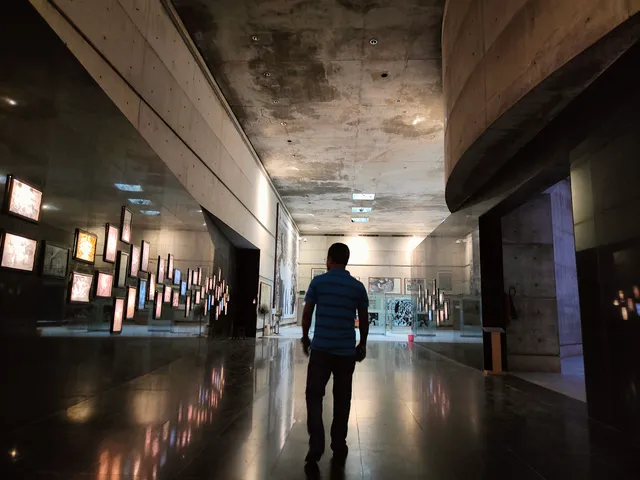
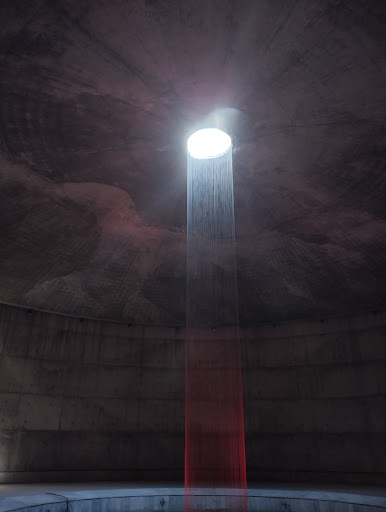
Read moreThe experience within the space is a reflection of all the architects and structural designer from the firm, urbana who worked on the project, named the Museum of Independence in Dhaka, Bangladesh, in collaboration with Architect marina tabassom to materialize a comprehended planning of the space which comprised of its placement, natural and artificial lighting, acoustics, scale, volume, construction material, and other physical elements like the steps, openings and wall thickness. The space is placed right at the end of the Western Black Gallery. You walk through a corridor of completely black tiled walls and floor with illuminated photographic exhibits of heart-wrenching war cruelty. And at the end of the gallery, to your left you see - an incision on the wall with a beam of light far within. With a disturbed mind, you plunge into the space as if to hold on to that one beam of hope for salvation.
The light draws you into the cool, blank space. You realize the only exit to the place is the one you have entered through and you are not yet ready to go back. So you move forward and with a few steps further you hear the sounds of falling water. Curious about its source, your gaze follows it upward. You find the circular opening on the ceiling which is bringing in both the light and the water. You are filled with awe as you anticipate the water falling from the sky. Your eyes move to the surrounding raw, concrete ceiling with a mix layer of circular patterns and an organic imprint which somehow resembles the natural water and its ripples. And as you stare at the ceiling, already feeling a little lighter than before, you realize you need to sit and take the space in. To accommodate your need, as if by reading your mind, the architects have prepared a few steps circling the water, to let you sit and be with your thoughts. As you motion to sit, you see in front, a circular concrete container holding the water from above. When you sit, your vision is mostly fixed on the place where the water from the sky hits the water within the container- where the splashing sound plays. The dimly lighted, blank, circular concrete wall blends into the background as you concentrate on the water. The thick walls and the few small, linear openings cut visual and auditory connections to outside. The ceiling height being not too grand, provides a comparatively intimate space for you to start...
Read more