HTML SitemapExplore
logo
Find Things to DoFind The Best Restaurants

Basilica of Our Lady of Copacabana — Attraction in Copacabana

Name
Basilica of Our Lady of Copacabana
Description
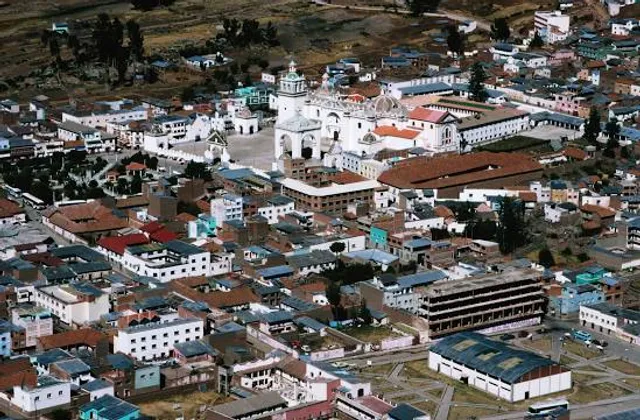
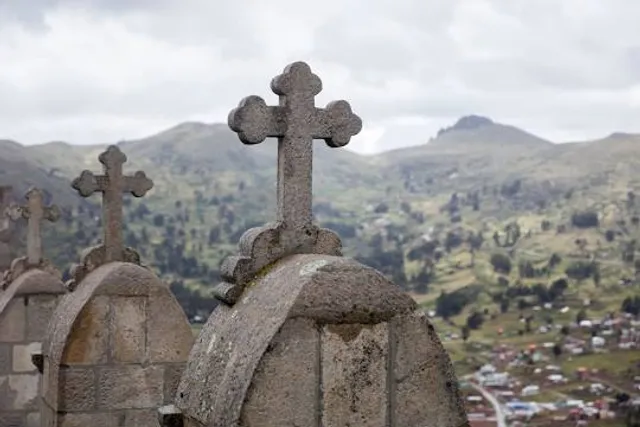
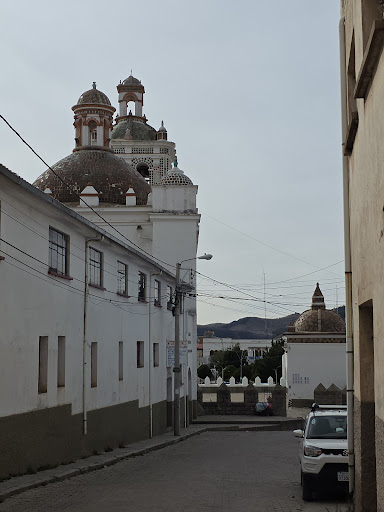
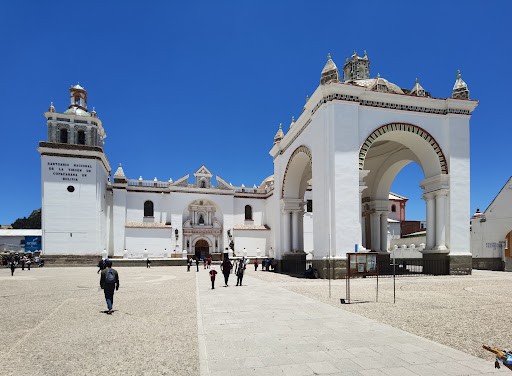
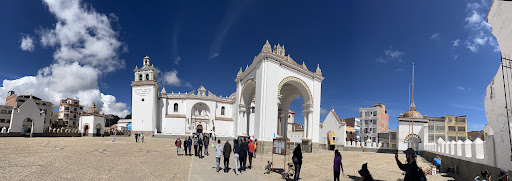
The Basilica of Our Lady of Copacabana is a 17th-century Spanish colonial shrine that houses the image of the Virgen de Copacabana. It is located in the town of Copacabana, Bolivia on the shores of Lake Titicaca near the Altiplano region. Our Lady of Copacabana is the patron saint of Bolivia.
Nearby attractions
Copacabana La Paz
RWM7+FGP, C. Pando, Copacabana, Bolivia
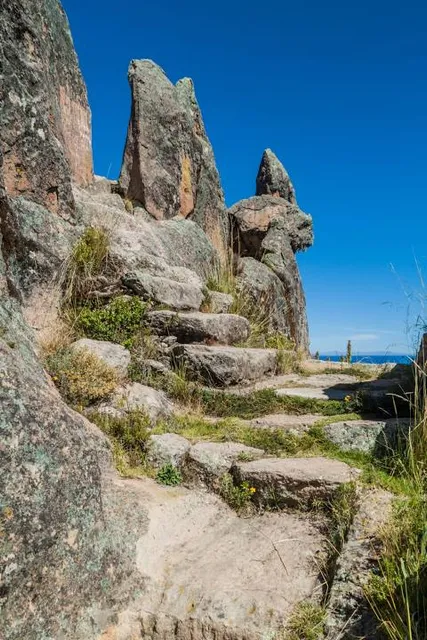
La Horca del Inca (Mirador del Inca)
RWH7+XVW, Copacabana, Bolivia
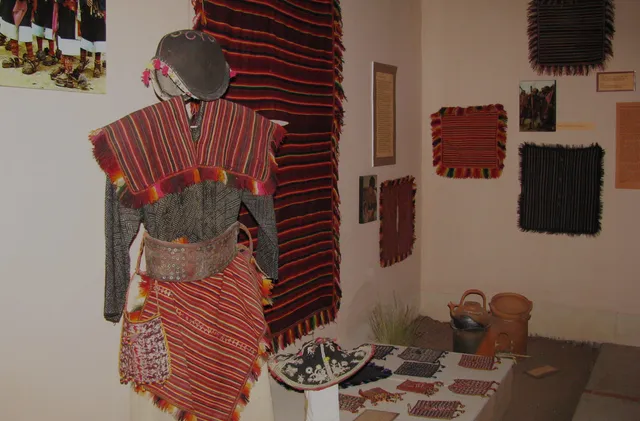
Museo del Poncho
Baptista 42, Copacabana, Bolivia
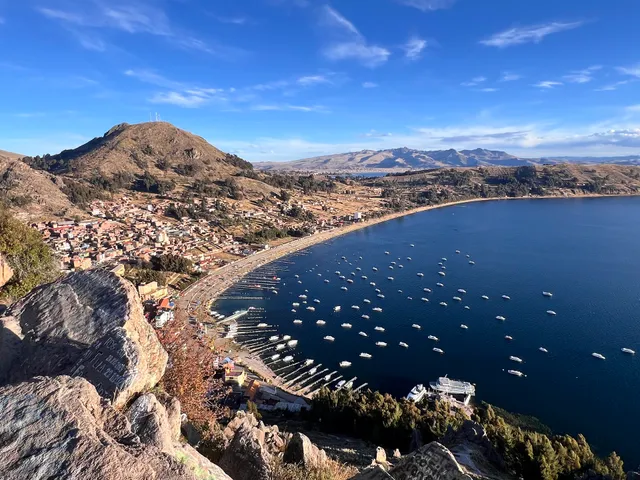
Cerro Calvario
RWQ5+CGG, Sendero al Cerro del Calvario, Copacabana, Bolivia
Playa de Copacabana
Bolivia
Nearby restaurants
Nearby hotels
Hostal Florencia
Manuel Mejía 120, Copacabana, Bolivia
Mia Posada Copacabana
C. Murillo, Copacabana, Bolivia
Hostal Sonia
C. Murillo N° 256, Copacabana, Bolivia
La Casa Del Sol
CALLE JOSÉ BALLIVIAN s/n, Copacabana, Bolivia
Hostal Puerto Alegre
Manuel Mejía 190, Copacabana, Bolivia
Hostal "Real Gala"
Av. La Paz Esq, Junin, La Paz, Bolivia
HOSTAL ARCO IRIS
Av. 6 de Agosto, La Paz, Bolivia
Hostal Solsticio
Copacabana, Bolivia
Hostal Alvasar
Av. Busch, Copacabana, Bolivia
Hostal Venegas Copacabana
Bolivia, Copacabana, Av. 6 de Agosto, Hostal venegas Plaza Sucre
Related posts
Keywords
Basilica of Our Lady of Copacabana tourism.Basilica of Our Lady of Copacabana hotels.Basilica of Our Lady of Copacabana bed and breakfast. flights to Basilica of Our Lady of Copacabana.Basilica of Our Lady of Copacabana attractions.Basilica of Our Lady of Copacabana restaurants.Basilica of Our Lady of Copacabana travel.Basilica of Our Lady of Copacabana travel guide.Basilica of Our Lady of Copacabana travel blog.Basilica of Our Lady of Copacabana pictures.Basilica of Our Lady of Copacabana photos.Basilica of Our Lady of Copacabana travel tips.Basilica of Our Lady of Copacabana maps.Basilica of Our Lady of Copacabana things to do.
Basilica of Our Lady of Copacabana things to do, attractions, restaurants, events info and trip planning
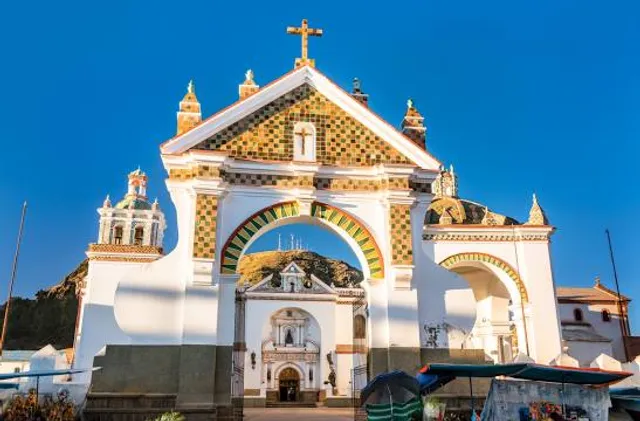
Basilica of Our Lady of Copacabana
BoliviaLa PazCopacabanaBasilica of Our Lady of Copacabana

Basic Info

Basilica of Our Lady of Copacabana

RWM7+9W6, Copacabana, Bolivia
4.7(536)
Open 24 hours
Save
spot

Ratings & Description

Info

The Basilica of Our Lady of Copacabana is a 17th-century Spanish colonial shrine that houses the image of the Virgen de Copacabana. It is located in the town of Copacabana, Bolivia on the shores of Lake Titicaca near the Altiplano region. Our Lady of Copacabana is the patron saint of Bolivia.

Cultural
Scenic
Family friendly
Accessibility
attractions: Copacabana La Paz, La Horca del Inca (Mirador del Inca), Museo del Poncho, Cerro Calvario, Playa de Copacabana, restaurants:
logoLearn more insights from Wanderboat AI.
Phone
+591 2 8622081

Plan your stay

hotel
Pet-friendly Hotels in Copacabana
Find a cozy hotel nearby and make it a full experience.
hotel
Affordable Hotels in Copacabana
Find a cozy hotel nearby and make it a full experience.
hotel
The Coolest Hotels You Haven't Heard Of (Yet)
Find a cozy hotel nearby and make it a full experience.
hotel
Trending Stays Worth the Hype in Copacabana
Find a cozy hotel nearby and make it a full experience.

Reviews

Nearby attractions of Basilica of Our Lady of Copacabana

Copacabana La Paz

La Horca del Inca (Mirador del Inca)

Museo del Poncho

Cerro Calvario

Playa de Copacabana

Copacabana La Paz

Copacabana La Paz

4.5

(1.4K)

Open 24 hours
Click for details
La Horca del Inca (Mirador del Inca)

La Horca del Inca (Mirador del Inca)

4.5

(179)

Open 24 hours
Click for details
Museo del Poncho

Museo del Poncho

3.6

(23)

Open 24 hours
Click for details
Cerro Calvario

Cerro Calvario

4.5

(980)

Open until 12:00 AM
Click for details
Get the Appoverlay
Get the AppOne tap to find yournext favorite spots!
Wanderboat LogoWanderboat

Your everyday Al companion for getaway ideas

CompanyAbout Us
InformationAI Trip PlannerSitemap
SocialXInstagramTiktokLinkedin
LegalTerms of ServicePrivacy Policy

Get the app

© 2025 Wanderboat. All rights reserved.
logo

Reviews of Basilica of Our Lady of Copacabana

4.7
(536)
avatar
5.0
25w

The must see in town. The Basilica of Our Lady of Copacabana, located on the shores of Lake Titicaca, is one of Bolivia's most important religious sites. The sanctuary houses the revered Virgin of Copacabana, the patron saint of Bolivia, whose devotion dates back to the 16th century. It was so famous in colonial times that the shores in Copacabana in Brazil are named in honor of this Virgen de la Candelaria. The original statue was sculpted by Francisco Tito Yupanqui, an indigenous artist and descendant of the Inca Huayna Capac, with the intention of inspiring faith among the local population. Built between 1669 and 1679, the basilica replaced an earlier church and was constructed at the foot of a hill sacred to the Incas. Within the sanctuary complex, there is the Capilla de Indios, an open chapel that allowed indigenous worshippers to participate in religious ceremonies outdoors, a practice deeply rooted in their traditions. Additionally, the Calvario of Copacabana, located on a nearby hill, serves as a pilgrimage site where devotees follow the Stations of the Cross, bringing offerings and performing rituals that blend Catholic and Andean beliefs. Today, the sanctuary remains a significant spiritual destination, especially during the festivities on February 2 and August 5, when thousands of pilgrims gather to honor the Virgin. The image is positioned in a rotating base that allows it to be in the Main Althar or in...

   Read more
avatar
5.0
5y

La Basílica de la Virgen de la Candelaria de Copacabana, ubicada en la ciudad de Copacabana, provincia de Manco Capac, Departamento de La Paz, Bolivia, es un edificio de estilo morisco, originalmente de estilo renacentista, que fue construido en 1550 y reconstruido entre los años 1610 y 1651, con parte de las estructuras que se conservan hoy.

Además alberga la escultura de la famosa "Virgen de la Candelaria o Virgen Morena", Reina coronada de Bolivia, tallada hacia el año 1580 por el artista indígena Francisco Tito Yupanqui, nieto del Inca Túpac Yupanqui.

La Basílica posee una imponente belleza y una gran colección de objetos religiosos. El templo fue construido en estilo renacentista entre los años 1601 y 1619, por el arquitecto Francisco Jiménez de Siguenza, y concluido junto con el atrio y posas que lo rodean el año 1640. A decir de los historiadores, Dn. José de Mesa y Teresa Gisbert, lo más extraordinario del conjunto de Copacabana es que conserva la Capilla Abierta o Capilla de Indios, que se puede ver adosada a la nave del templo.

Las Capillas Abiertas servían para oficiar el culto al aire libre dada la enorme cantidad de fieles que llegaban a estos lugares y porque los indígenas estaban acostumbrados a tener ceremonias religiosas al aire libre. Hoy esta capilla no se ve muy bien, sus arcos están tapiados y está rodeada de construcciones modernas, pero se la puede ver desde su lado oeste. Con el paso de los tiempos, el templo de Copacabana fue quedando pequeño para albergar a la creciente cantidad de peregrinos durante tiempos coloniales.

En 1651 se terminó la ampliación de la Capilla Mayor en lo que es la nave actual, contando para ese entonces con la Nave, la Sacristía, el Atrio y las Torres. A la par que se iba remodelando la arquitectura de la basílica, se van mejorando los altares y retablos.

Bajo la orden de los franciscanos, desde 1910 hasta 1913, se levantó el actual Camarín de la Virgen. Desde entonces y hasta 1971 se han hecho una serie de refacciones, pintados, reposición de materiales y otros, que concluyeron en la Basílica que vemos hoy. En nuestros días la Basílica es centro importante de peregrinaje tanto para bolivianos como para peruanos y católicos de otros lugares, por devoción a la Virgen...

   Read more
avatar
5.0
1y

Historical and imposing Basilica, much larger than you'd expect to find in such a small town as Copacabana. It all makes sense, though, when considering that this 17th-century Spanish colonial shrine that houses the image of the Virgen de Copacabana, the the patron saint of the Country of Bolivia. Unfortunately it is strictly prohibited to take pictures on the inside, where the most impressive art is. At the entrance there is a statue of Francisco Tito Yupanqui (1550–1616) the indigenous sculptor who created the statue of the Virgin of Copacabana, one of the most revered Marian images in Bolivia. He was an Inca descendant, grandson of Emperor Huayna Capac and son of the last Inca named by the Spanish...

   Read more
Page 1 of 7
Previous
Next

Posts

Manuel UrquidiManuel Urquidi
The must see in town. The Basilica of Our Lady of Copacabana, located on the shores of Lake Titicaca, is one of Bolivia's most important religious sites. The sanctuary houses the revered Virgin of Copacabana, the patron saint of Bolivia, whose devotion dates back to the 16th century. It was so famous in colonial times that the shores in Copacabana in Brazil are named in honor of this Virgen de la Candelaria. The original statue was sculpted by Francisco Tito Yupanqui, an indigenous artist and descendant of the Inca Huayna Capac, with the intention of inspiring faith among the local population. Built between 1669 and 1679, the basilica replaced an earlier church and was constructed at the foot of a hill sacred to the Incas. Within the sanctuary complex, there is the Capilla de Indios, an open chapel that allowed indigenous worshippers to participate in religious ceremonies outdoors, a practice deeply rooted in their traditions. Additionally, the Calvario of Copacabana, located on a nearby hill, serves as a pilgrimage site where devotees follow the Stations of the Cross, bringing offerings and performing rituals that blend Catholic and Andean beliefs. Today, the sanctuary remains a significant spiritual destination, especially during the festivities on February 2 and August 5, when thousands of pilgrims gather to honor the Virgin. The image is positioned in a rotating base that allows it to be in the Main Althar or in el camarino.
Niccolo' BertoldiNiccolo' Bertoldi
Historical and imposing Basilica, much larger than you'd expect to find in such a small town as Copacabana. It all makes sense, though, when considering that this 17th-century Spanish colonial shrine that houses the image of the Virgen de Copacabana, the the patron saint of the Country of Bolivia. Unfortunately it is strictly prohibited to take pictures on the inside, where the most impressive art is. At the entrance there is a statue of Francisco Tito Yupanqui (1550–1616) the indigenous sculptor who created the statue of the Virgin of Copacabana, one of the most revered Marian images in Bolivia. He was an Inca descendant, grandson of Emperor Huayna Capac and son of the last Inca named by the Spanish Paullu Inca.
P4K toP4K to
Coming from Europe, colonial church’s don’t call my attention so much. But this one has an exquisite architecture, something between a church and a moral. It totally deserves the visit. They were painting when we were there a week ago, so it should be even more beautiful soon.
See more posts
See more posts
hotel
Find your stay

Pet-friendly Hotels in Copacabana

Find a cozy hotel nearby and make it a full experience.

The must see in town. The Basilica of Our Lady of Copacabana, located on the shores of Lake Titicaca, is one of Bolivia's most important religious sites. The sanctuary houses the revered Virgin of Copacabana, the patron saint of Bolivia, whose devotion dates back to the 16th century. It was so famous in colonial times that the shores in Copacabana in Brazil are named in honor of this Virgen de la Candelaria. The original statue was sculpted by Francisco Tito Yupanqui, an indigenous artist and descendant of the Inca Huayna Capac, with the intention of inspiring faith among the local population. Built between 1669 and 1679, the basilica replaced an earlier church and was constructed at the foot of a hill sacred to the Incas. Within the sanctuary complex, there is the Capilla de Indios, an open chapel that allowed indigenous worshippers to participate in religious ceremonies outdoors, a practice deeply rooted in their traditions. Additionally, the Calvario of Copacabana, located on a nearby hill, serves as a pilgrimage site where devotees follow the Stations of the Cross, bringing offerings and performing rituals that blend Catholic and Andean beliefs. Today, the sanctuary remains a significant spiritual destination, especially during the festivities on February 2 and August 5, when thousands of pilgrims gather to honor the Virgin. The image is positioned in a rotating base that allows it to be in the Main Althar or in el camarino.
Manuel Urquidi

Manuel Urquidi

hotel
Find your stay

Affordable Hotels in Copacabana

Find a cozy hotel nearby and make it a full experience.

Get the Appoverlay
Get the AppOne tap to find yournext favorite spots!
Historical and imposing Basilica, much larger than you'd expect to find in such a small town as Copacabana. It all makes sense, though, when considering that this 17th-century Spanish colonial shrine that houses the image of the Virgen de Copacabana, the the patron saint of the Country of Bolivia. Unfortunately it is strictly prohibited to take pictures on the inside, where the most impressive art is. At the entrance there is a statue of Francisco Tito Yupanqui (1550–1616) the indigenous sculptor who created the statue of the Virgin of Copacabana, one of the most revered Marian images in Bolivia. He was an Inca descendant, grandson of Emperor Huayna Capac and son of the last Inca named by the Spanish Paullu Inca.
Niccolo' Bertoldi

Niccolo' Bertoldi

hotel
Find your stay

The Coolest Hotels You Haven't Heard Of (Yet)

Find a cozy hotel nearby and make it a full experience.

hotel
Find your stay

Trending Stays Worth the Hype in Copacabana

Find a cozy hotel nearby and make it a full experience.

Coming from Europe, colonial church’s don’t call my attention so much. But this one has an exquisite architecture, something between a church and a moral. It totally deserves the visit. They were painting when we were there a week ago, so it should be even more beautiful soon.
P4K to

P4K to

See more posts
See more posts