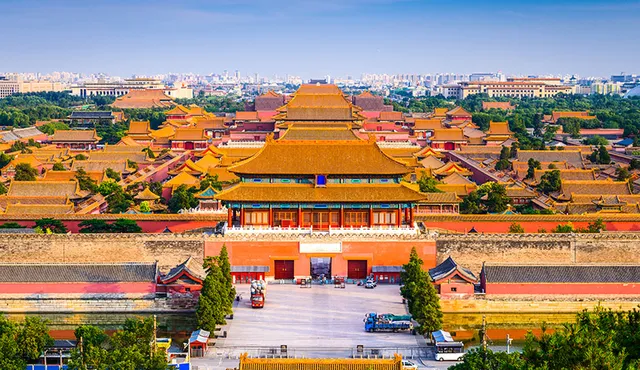
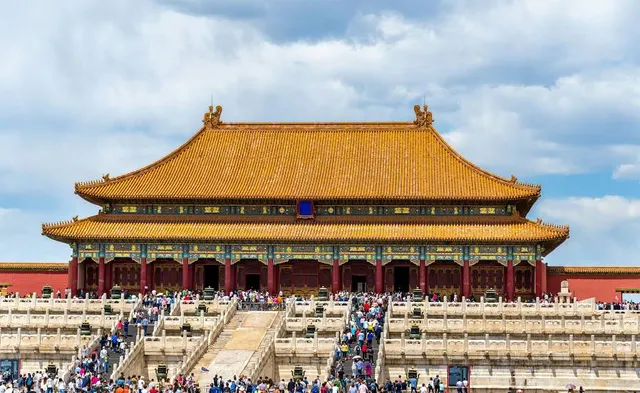
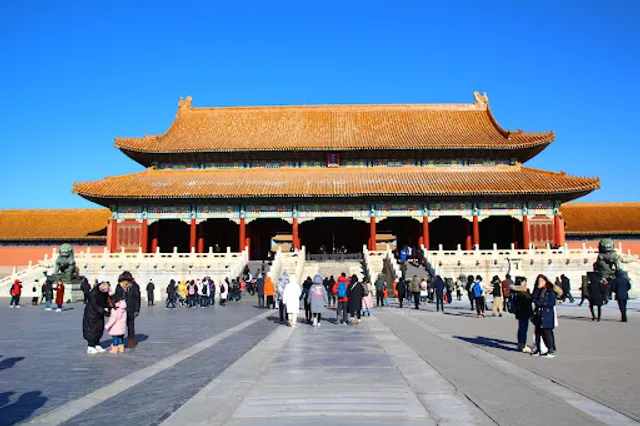
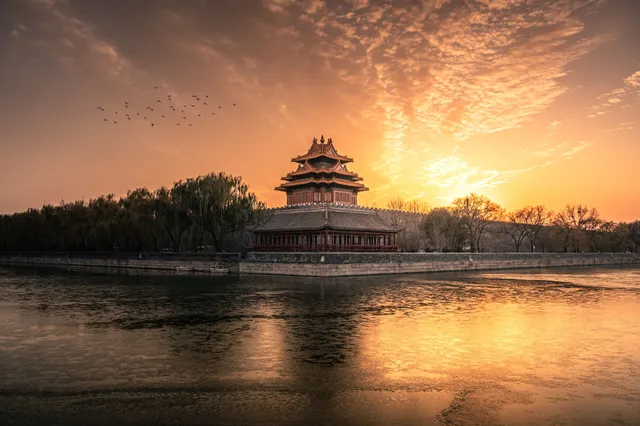
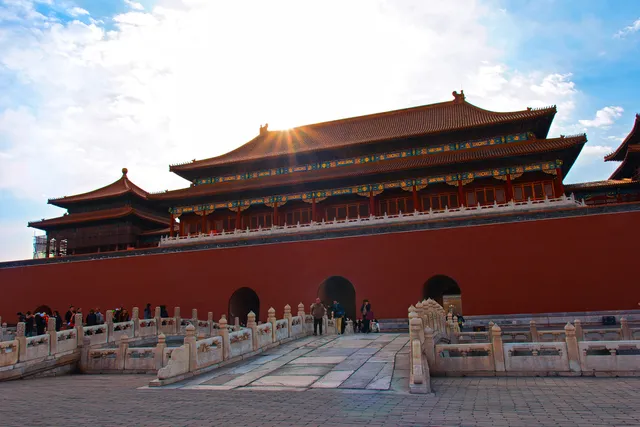
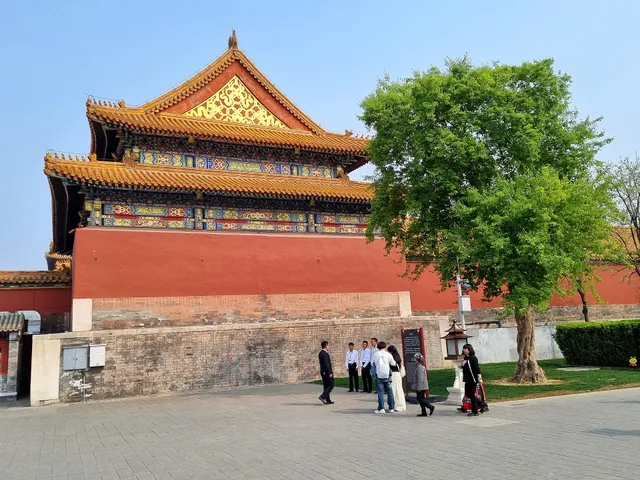
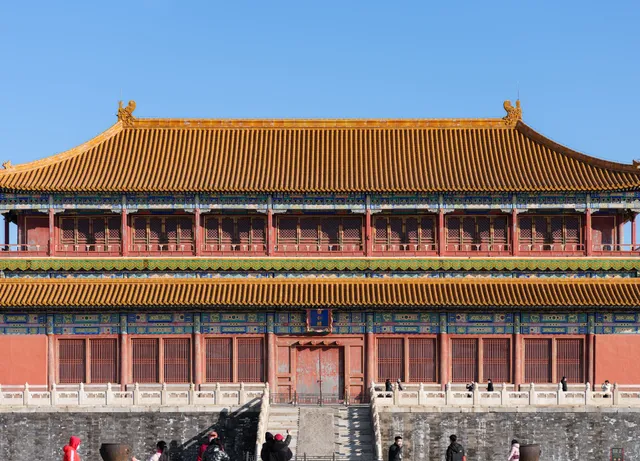
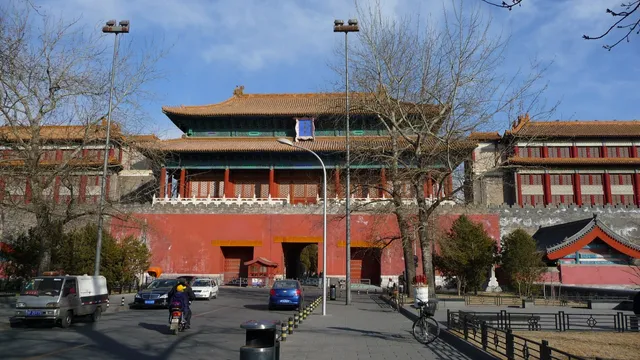
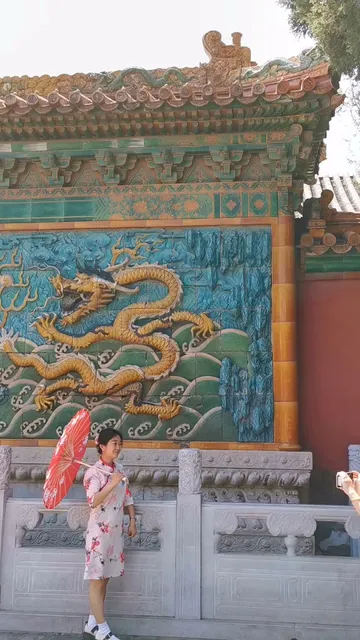
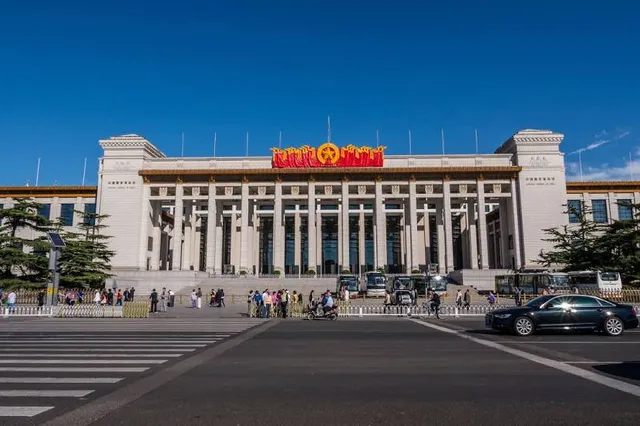
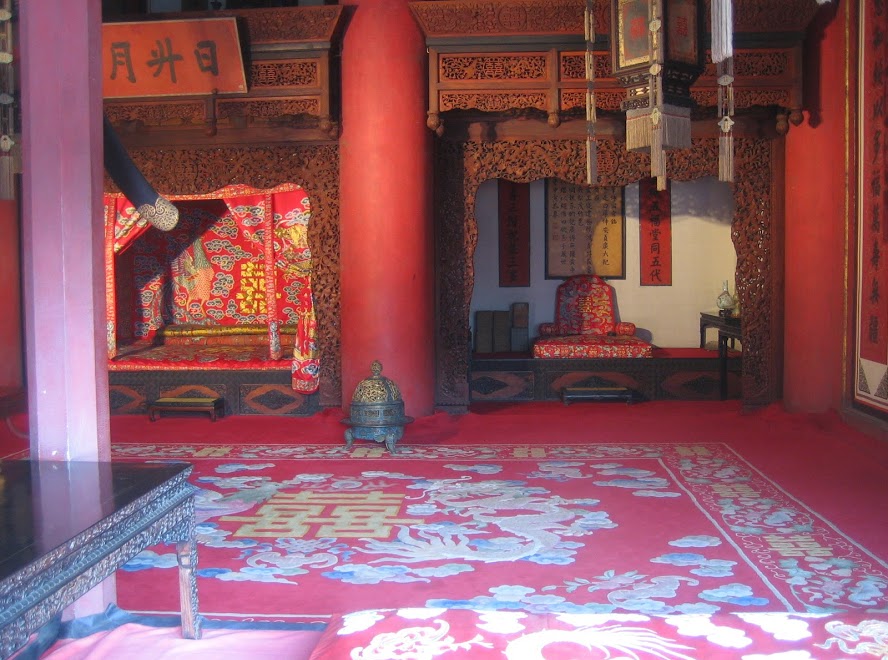
When Hongwu Emperor's son Zhu Di became the Yongle Emperor, he moved the capital from Nanjing to Beijing, and construction began in 1406 on what would become the Forbidden City.
Construction lasted 14 years and required more than a million workers. Material used include whole logs of precious Phoebe zhennan wood (Chinese: 楠木; pinyin: nánmù) found in the jungles of south-western China, and large blocks of marble from quarries near Beijing.The floors of major halls were paved with "golden bricks" (Chinese: 金砖; pinyin: jīnzhuān), specially baked paving bricks from Suzhou.
From 1420 to 1644, the Forbidden City was the seat of the Ming dynasty. In April 1644, it was captured by rebel forces led by Li Zicheng, who proclaimed himself emperor of the Shun dynasty.He soon fled before the combined armies of former Ming general Wu Sangui and Manchu forces, setting fire to parts of the Forbidden City in the process.
By October, the Manchus had achieved supremacy in northern China, and a ceremony was held at the Forbidden City to proclaim the young Shunzhi Emperor as ruler of all China under the Qing dynasty. The Qing rulers changed the names on some of the principal buildings, to emphasise "Harmony" rather than "Supremacy", made the name platesbilingual (Chinese and Manchu), and introduced Shamanist elements to the palace.
In 1860, during the Second Opium War, Anglo-French forces took control of the Forbidden City and occupied it until the end of the war. In 1900 Empress Dowager Cixi fled from the Forbidden City during the Boxer Rebellion, leaving it to be occupied by forces of the treaty powers until the following year.
After being the home of 24 emperors – 14 of the Ming dynasty and 10 of the Qing dynasty – the Forbidden City ceased being the political centre of China in 1912 with the abdication of Puyi, the last Emperor of China. Under an agreement with the new Republic of China government, Puyi remained in the Inner Court, while the Outer Court was given over to public use, until he was evicted after a coup in 1924. The Palace Museum was then established in the Forbidden City in 1925.In 1933, the Japanese invasion of China forced the evacuation of the national treasures in the Forbidden City.Part of the collection was returned at the end of World War II,but the other part was evacuated to Taiwan in 1948 under orders by Chiang Kai-shek, whose Kuomintang was losing the Chinese Civil War. This relatively small but high quality collection was kept in storage until 1965, when it again became public, as the core of the National Palace Museum in Taipei.
After the establishment of the People's Republic of China in 1949, some damage was done to the Forbidden City as the country was swept up in revolutionary zeal.During the Cultural Revolution, however, further destruction was prevented when Premier Zhou Enlai sent an army battalion to guard the city.
The Forbidden City was declared a World Heritage Site in 1987 by UNESCO as the "Imperial Palace of the Ming and Qing Dynasties",due to its significant place in the development of Chinese architecture and culture. It is currently administered by the Palace Museum, which is carrying out a sixteen-year restoration project to repair and restore all buildings in the Forbidden City to their pre-1912 state.
In recent years, the presence of commercial enterprises in the Forbidden City has become controversial. A Starbucks store that opened in 2000 sparked objections and eventually closed on 13 July 2007.Chinese media also took notice of a pair of souvenir shops that refused to admit Chinese citizens in order to price-gouge foreign customers in 2006.
On November 8, 2017, President of the United States Donald Trump was the first US President to be granted a state dinner in the Forbidden City since the founding of the People's...
Read moreThe Palace museum, more commonly known as the Forbidden city is a must visit when visiting Beijing.
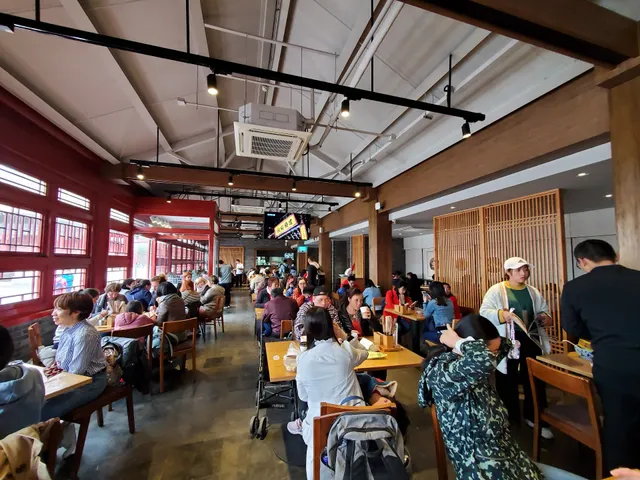
It is absolutely huge, to visit it in it fully you need two full days perhaps. There are some "recommended routes" which if you follow will allow you to see some of the highlights but will still take 3 or 4 hours. To put things into perspective, we queued up before opening at around 830am, and when we left at 1700 we had barely covered 50% - this was walking at leisurely pace, one 30 min cafe stop, taking lots of photos, visiting numerous gift shops (of which there are loads), reading descriptions and not visiting any of the exhibitions. We then came a second time a few days later and spent 4 hours rushing around to see the places we missed, and visit the exhibitions, we could have easily spent the whole day there again but we had a plane to catch.
They don't open on Mondays, so plan around this.
Getting tickets can be a pain in the butt, they don't sell tickets at the entrance, you need to buy them in advance either via wechat or their website. I recommend buying via the website, the wechat route requires you to be able read Chinese and is slower and more fiddly. They release tickets 7 days in advance at 8pm Beijing time and no earlier, and they often sell out fast so you need to be quick. So for example, they release tickets for Wednesdays the Wednesday prior at 8pm Beijing time. When you go to try and buy tickets at 8pm, don't despair if it shows sold out, keep refreshing the page as they release tickets in batches. Also, if after you have filled in all your details and are about to pay it suddenly says "sold out choose a different date", don't despair, but go back and try again and repeat the process (again you might need to refresh a few times if it says sold out), i had to do this around 4 times before I eventually could buy my tickets. It might be easier to buy tickets via an agent through trip dot com or Expedia, we used the former for our first set of tickets and then bought the second set ourselves online via the official website. An agent may charge you double the official ticket price, but it may be worth it saving yourself the hassle of fighting for tickets online. Alternatively book a guided tour, but I've never been on one so can't recommend which one. You will need to take your passport with you to the entrance, as they don't issue tickets per se, when you buy tickets you are required to enter your passport number and when you go to the entrance your passport is used as your ticket, so make sure you enter your number correctly and don't forget your passport.
At the entrance you have to go through baggage check, they are very strict on what you can and cannot take inside. Don't bother with tripods and flash guns, they will make you leave them at the entrance and ask you which exit (out of 2) are you planning to leave via, and then transport them to that exit for you to pick up. Check on their website the list of items they don't allow in and save yourself some grief.
One thing I should mention are the toilets, a lot of public toilets in china are filthy, but the ones in the forbidden city were to my surprise clean and modern, and full of cleaners! In the men's at least, they would come and mop up immediately if someone pee'd on the floor.
In terms of accessibility, I saw lots of ramps and lifts for wheelchairs, but also plenty of places without. I would say all the main places they consider important are accessible. For all other folks be prepared to do a...
Read moreThe Palace Museum, known as 故宫博物院 (Gùgōng Bówùyuàn) in Chinese, is located in Beijing and is one of the most significant cultural institutions in China. Here are some key details:
Overview
Location: Beijing, China
Founded: 1925
Historical Significance: The museum is situated within the Forbidden City, which served as the imperial palace for 24 emperors of the Ming and Qing dynasties from 1420 until the end of the Qing dynasty in 1912.
Architecture
Style: Traditional Chinese palatial architecture, showcasing the design principles of symmetry and hierarchy.
Size: The museum covers approximately 180 acres and consists of around 980 buildings, making it one of the largest and best-preserved collections of ancient wooden structures in the world.
Collections
The Palace Museum houses a vast collection of over 1.8 million artifacts, including:
Chinese Paintings: Renowned works from various dynasties.
Ceramics: Notable porcelain pieces from the Ming and Qing dynasties.
Bronzes: Ritual vessels and other ancient bronze artifacts.
Jade: A diverse range of jade items, including jewelry and ceremonial objects.
Textiles: Imperial garments and silk pieces, showcasing the art of weaving and dyeing.
The collection reflects the cultural, artistic, and historical developments of China over centuries.
Exhibitions and Education
Permanent Exhibitions: Highlight key aspects of Chinese history, art, and culture.
Temporary Exhibitions: Often feature collaborations with other museums worldwide, showcasing artifacts from different cultures and periods.
Educational Programs: The museum offers various programs and workshops aimed at educating the public about Chinese history and culture.
Visitor Information
Hours: Generally open every day except Mondays, but it is advisable to check the official website for current operating hours and ticketing information.
Tickets: Visitors can purchase tickets online or at the museum. It's recommended to book in advance, especially during peak tourist seasons.
Guided Tours: Available for visitors who want to learn more about the museum's rich history and collections.
Cultural Impact
The Palace Museum plays a crucial role in preserving Chinese cultural heritage and serves as a symbol of Chinese identity. It attracts millions of visitors annually, making it one of the most popular museums in the world.
Online Presence
The Palace Museum has embraced technology, offering virtual tours and online exhibitions to reach a global audience. Its official website provides information about collections, exhibitions, and educational resources.
For more specific information, including upcoming exhibitions or special events, visiting the official Palace Museum website is...
Read more