Jin Mao Tower
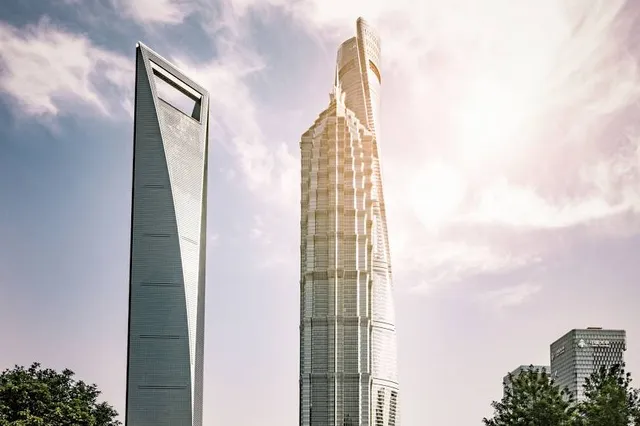
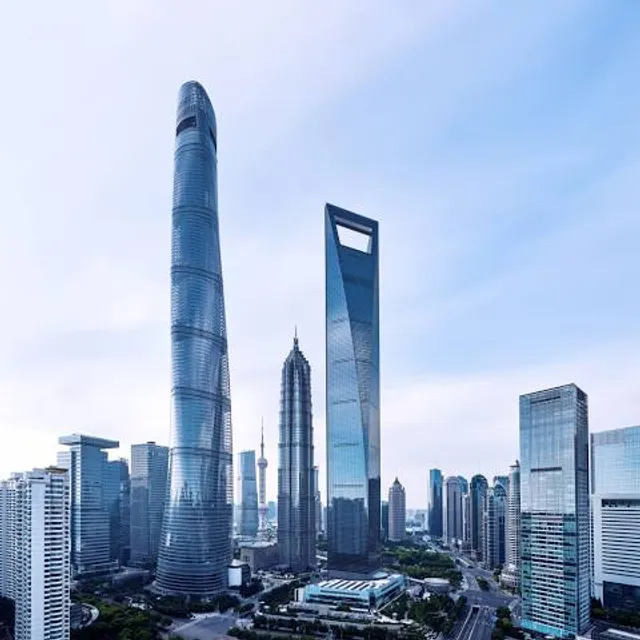
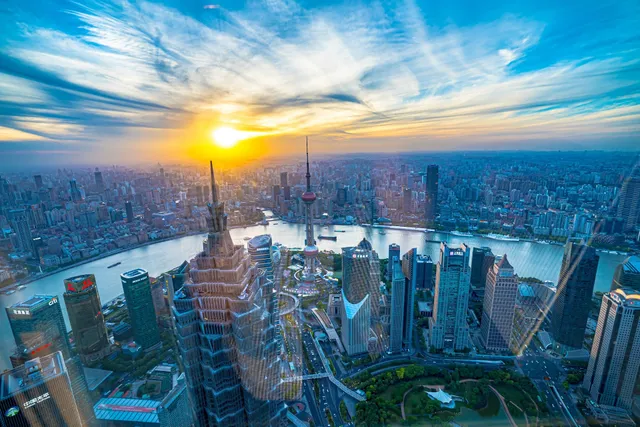
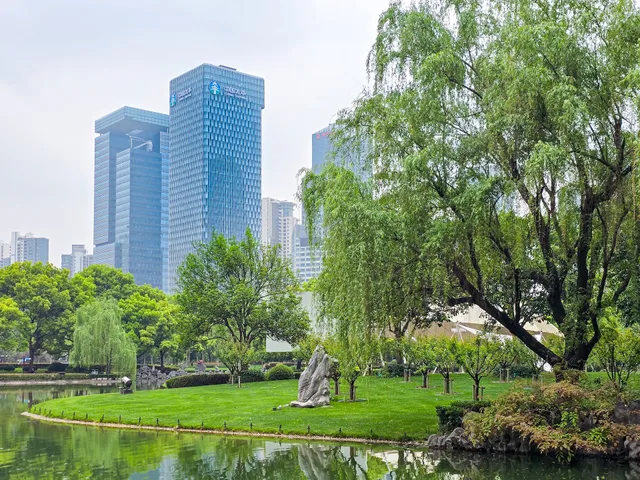
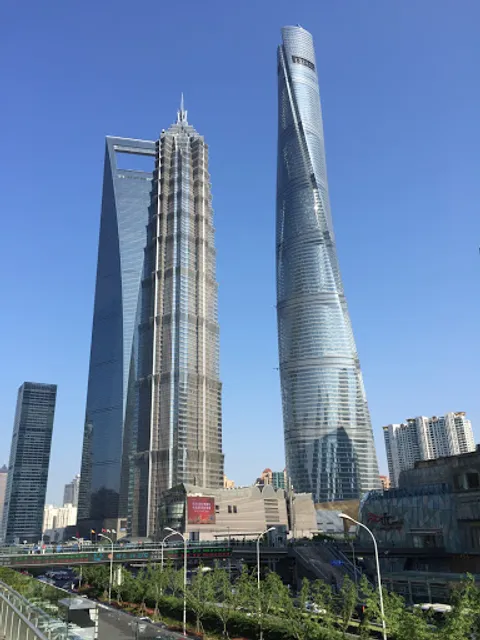
The Jin Mao Tower (simplified Chinese: 金茂大厦; traditional Chinese: 金茂大廈; pinyin: Jīnmào Dàshà; Shanghainese: Jinmoh Dusa; literally: "The Golden Prosperity Building"), also known as the Jinmao Building or Jinmao Tower, is an 88-story (93 if counting the floors in the spire) landmark skyscraper in Lujiazui, Pudong, Shanghai, China. It is 420.5 metres (1,380 feet) tall and is one of the tallest buildings in the world. It contains a shopping mall, offices and the Grand Hyatt Shanghai hotel, which at the time of completion was the highest hotel in the world. Along with the Oriental Pearl Tower, the Shanghai World Financial Center and the Shanghai Tower it is part of the Lujiazui skyline seen from the Bund. It was the tallest building in China from its completion in 1999 until 2007, when it was surpassed by the Shanghai World Financial Center which is located close by.3] The Shanghai Tower, a 121-story building located next to these two buildings, surpassed the height of both these buildings in 2015.[4]
Jin Mao Tower金茂大厦
The Jin Mao Tower in August 2005, with SWFC under construction
General informationStatusCompleteTypeSkyscraper (incl. office, hotel, tourism, & retail)Architectural styleNeo-FuturismLocation88 Century Avenue, Pudong District, Shanghai 200121, ChinaCoordinatesConstruction started1994Completed1999CostUS$530 million (1999)HeightArchitectural420.5 meters (1,380 ft)[1]Tip420.5 meters (1,380 ft)Top floor348.4 meters (1,143 ft)[1]Observatory340.1 meters (1,116 ft)[1]Technical detailsFloor count
88 (+5 spire floors) (+3 basement floors)[1Floor area289,500 m2(3,116,000 sq ft)1]Lifts/elevators61[1]Design and constructionArchitectAdrian Smith at SOMStructural engineerSOM[1]References[1
StructureEdit
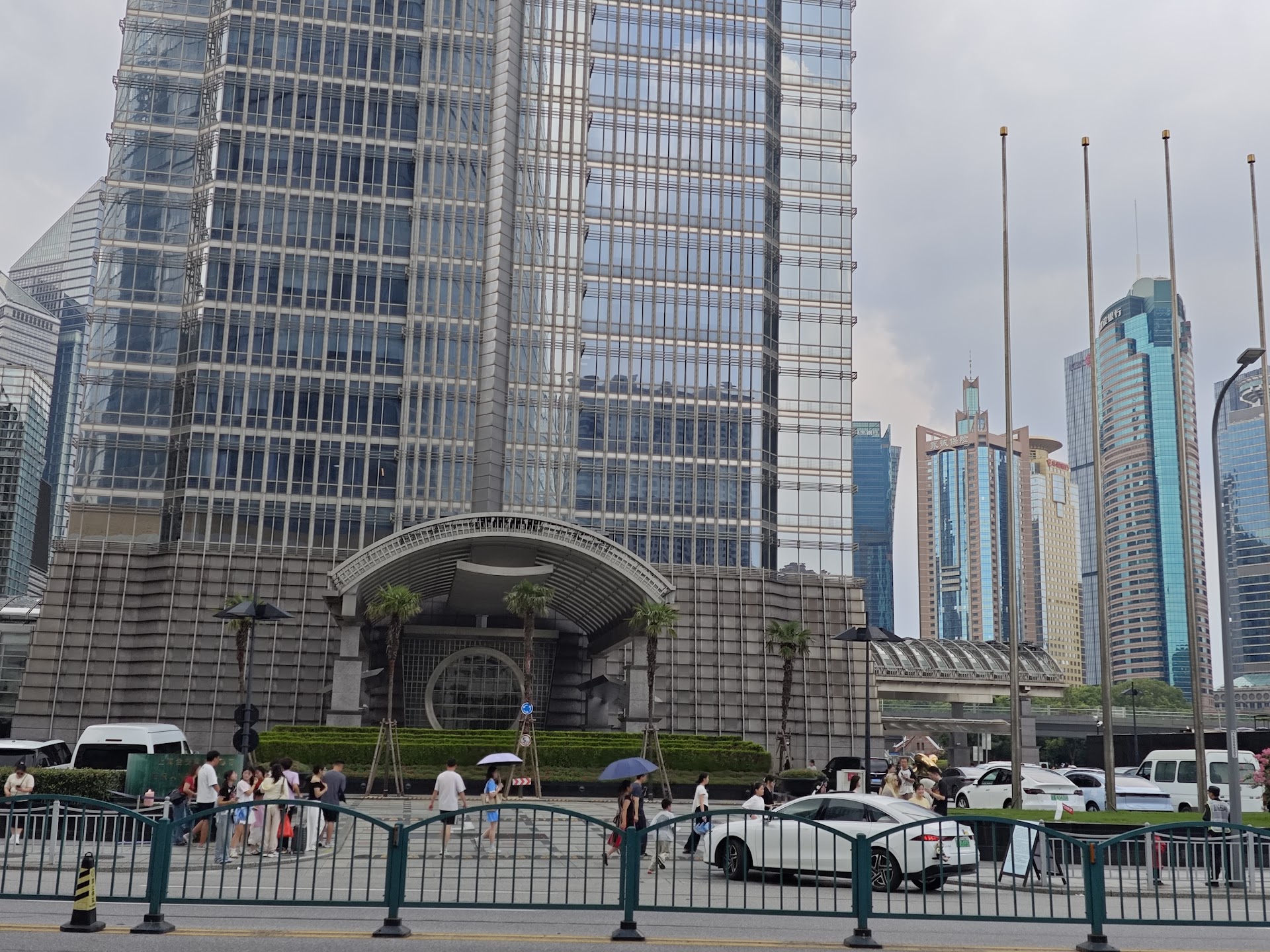
Looking up at the Jin Mao Tower.
The building is located on a 24,000 m2(260,000 sq ft) plot of land near the Lujiazuimetro station and was built at an estimated cost of US$530 million.[citation needed]
It was designed by the Chicago firm of Skidmore, Owings & Merrill (SOM). Its postmodern form, whose complexity rises as it ascends, draws on traditional Chinese architecture such as the tiered pagoda, gently stepping back to create a rhythmic pattern as it rises. Like the Petronas Towers in Malaysia, the building's proportions revolve around the number 8, associated with prosperity in Chinese culture. The 88 floors (93 if the spire floors are counted) are divided into 16 segments, each of which is 1/8 shorter than the 16-story base. The tower is built around an octagon-shaped concrete shear wall core surrounded by 8 exterior compositesupercolumns and 8 exterior steel columns. Three sets of 8 two-story high outrigger trusses connect the columns to the core at six of the floors to provide additional support.
The foundations rest on 1,062 high-capacity steel piles driven 83.5 m (274 ft) deep in the ground to compensate for poor upper-strata soil conditions. At the time of construction, these were the longest steel piles ever used for a land-based building. The piles are capped by a 4 m-thick concrete raft 19.6 m (64 ft) underground. The basement's surrounding slurry wall is 1 m thick, 36 m high and 568 m long. It is composed of 20,500 m3(720,000 cu ft) of reinforced concrete.
The building employs an advanced structural engineering system of wind and earthquake engineering which fortify it against typhoonwinds of up to 200 km/h (with the top swaying by a maximum of 75 cm or 30 in) and earthquakes of up to 7 on the Richter scale. The steel shafts have shear joints that act as shock absorbers to cushion the lateral forces imposed by winds and quakes. The swimming pool on the 57th floor is also said to act as a passive damper. The exterior curtain wall is made of glass, stainless steel, aluminum, and granite and is criss-crossed by complex latticework cladding made of aluminum alloy pipes.
The Jin Mao Tower's retail area in the...
Read moreJin Mao Tower
Being the third tallest building only to Shanghai Tower and Shanghai World Financial Center in mainland China, Jin Mao Tower is located in the center of Lujiazui Finance and Trade Districts in Pudong. It can be conveniently accessed from either Puxi (the area west of the Hungpu River) by taking the tunnel (travel time is about two minutes) or the Hongqiao and Pudong International Airports (travel time is about 30 minutes) by car.
The 88-stories Jin Mao Tower was completed in 1999. It is 420.5 meters (almost 1380 feet) tall and covers an area of 2.3 hectares (5.68 acres). The architect, Adrian D. Smith, of this skyscraper ingeniously combined the elements of traditional Chinese culture with the newest architectural styles of the time, which makes it one of the best-constructed buildings in China.
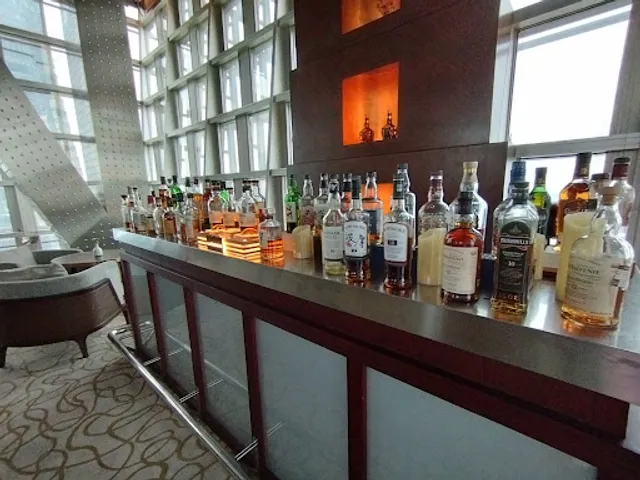
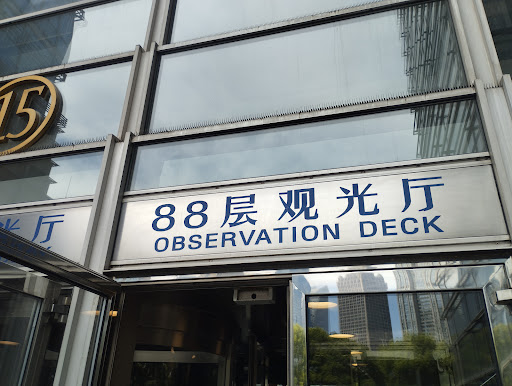
This building includes modern offices, a deluxe 5-star hotel - the Grand Hyatt Shanghai, exhibition halls, banquet halls, an observation deck, and entertainment facilities which is situated in the following levels: the 1st and 2nd floors form an imposing and bright lobby of the business area; the 3rd to the 50th floors are occupied by office spaces; the 51st and 52nd floors are the mechanical and electrical facilities center, which are restricted for the tower's working staff; the 53rd to 87th floors are reserved for the deluxe Grand Hyatt Hotel of which, the 86th floor houses a club exclusive for the hotel guests and the 87th floor lodges the hotel restaurant; and, the 88th floor-the highest floor, is reserved for the tower's observation deck, which can hold 1000 people at any one time.
The tower has the best elevators available. Two direct elevators operate at the speed of 9.1 meters (nearly 30 feet) per second that can send visitors from the ground floor to the 88th floor for only 45 seconds. There are also five to six elevators every 10 floors, which reduce waiting-time to 35 seconds even during rush hours.
The tower has an annex building 6-stories high which houses the exhibition halls, conference rooms, multi-function halls, grand banquet halls and a recreational center.
The basement of the tower is a parking area 3 stories deep, which can hold 800 cars and 2000 bicycles. The parking area is equipped with 360-degree surveillance cameras as a security feature of...
Read moreThe Jin Mao Tower, situated in the heart of Shanghai's Lujiazui financial district, is a masterful blend of architectural prowess and functional elegance. Soaring to a height of 421 meters, this skyscraper commands attention with its distinctive tiered design, reminiscent of ancient Chinese pagodas, yet infused with a modern aesthetic.
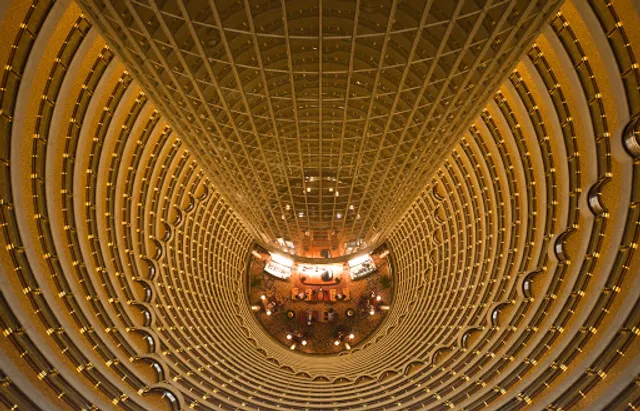
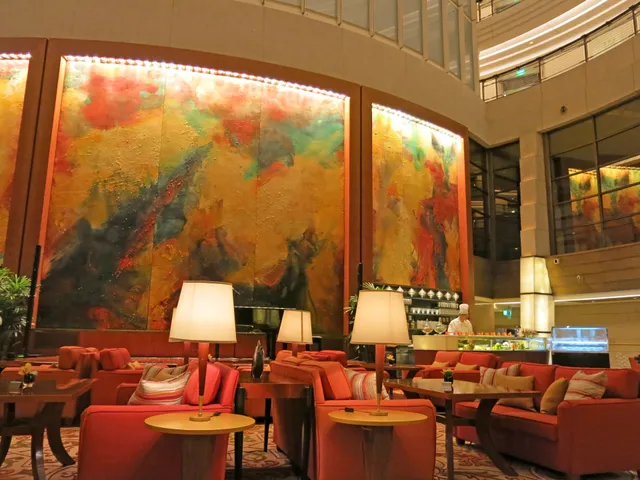
Upon entering the tower, visitors are greeted by a grand atrium that spans several floors, adorned with intricate details and luxurious materials. The tower's interior seamlessly combines traditional Chinese design elements with contemporary touches, creating a sophisticated ambiance.
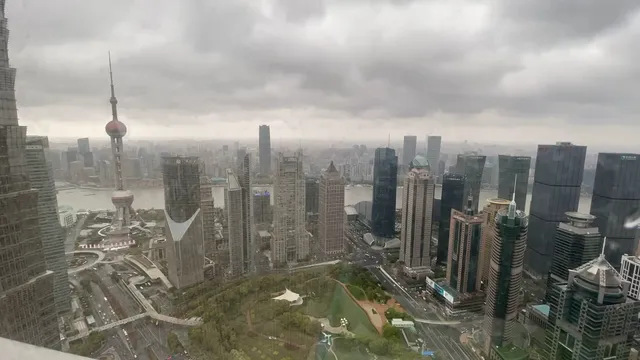
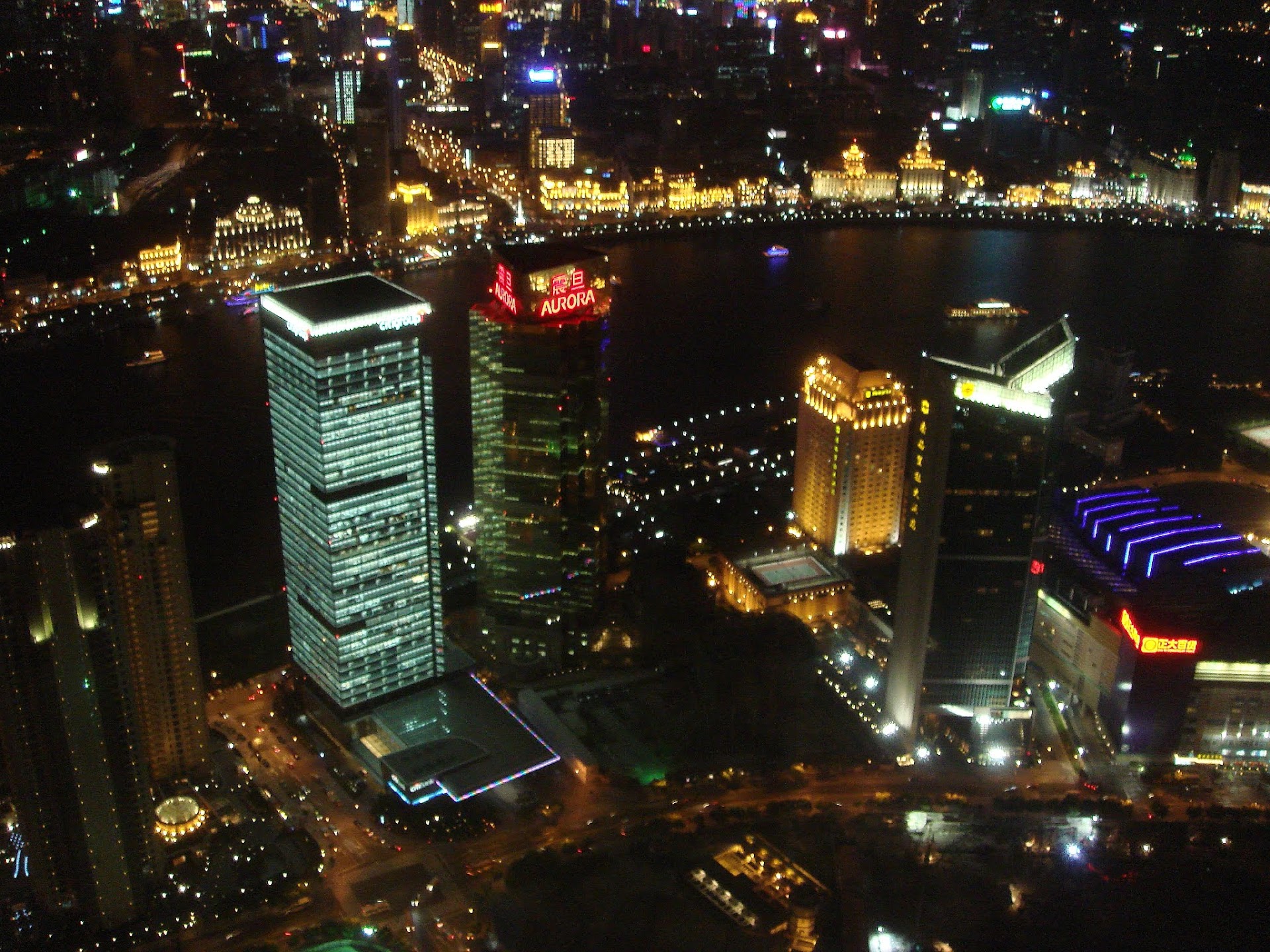
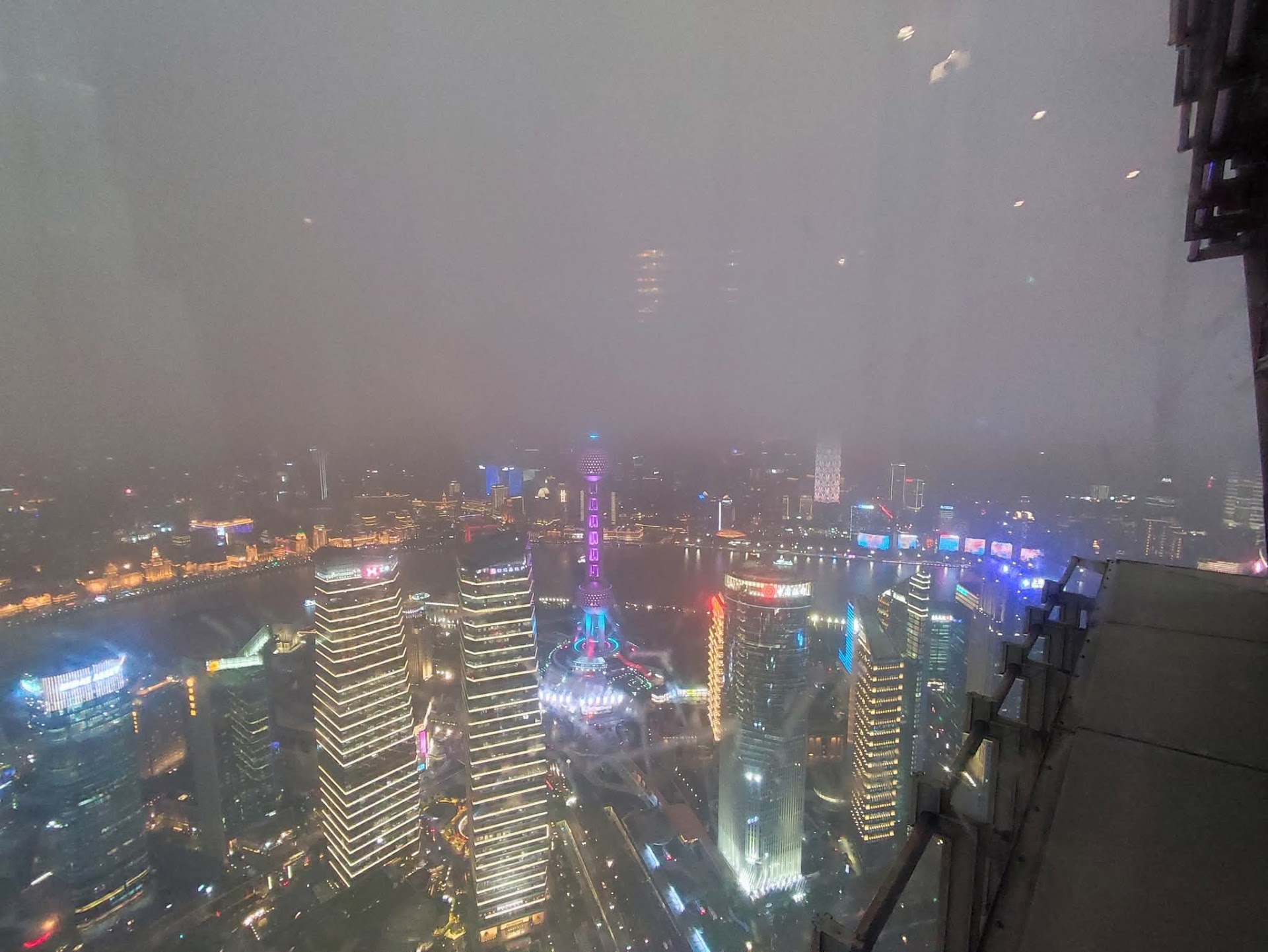
Riding the express elevators to the observation deck on the 88th floor is a thrilling experience, offering panoramic views of the sprawling cityscape, the Huangpu River, and the neighboring skyscrapers. The architectural ingenuity is evident in the tower's structural design, incorporating advanced engineering to withstand earthquakes and typhoons common to the region.
One of the Jin Mao Tower's unique features is its multi-functional nature. Housing a luxury hotel, offices, and observation decks, it serves as a microcosm of urban living, making it a symbol of Shanghai's economic and cultural dynamism. The tower's integration of sustainable practices further underscores its commitment to environmental responsibility.
In summary, the Jin Mao Tower is more than a towering structure; it's a testament to architectural innovation, cultural fusion, and urban functionality. Its enduring appeal lies not only in its height but in its ability to seamlessly integrate tradition and modernity in the vibrant tapestry of...
Read more