HTML SitemapExplore
logo
Find Things to DoFind The Best Restaurants

Colossi of Memnon — Attraction in New Al Qarnh City

Name
Colossi of Memnon
Description
Nearby attractions
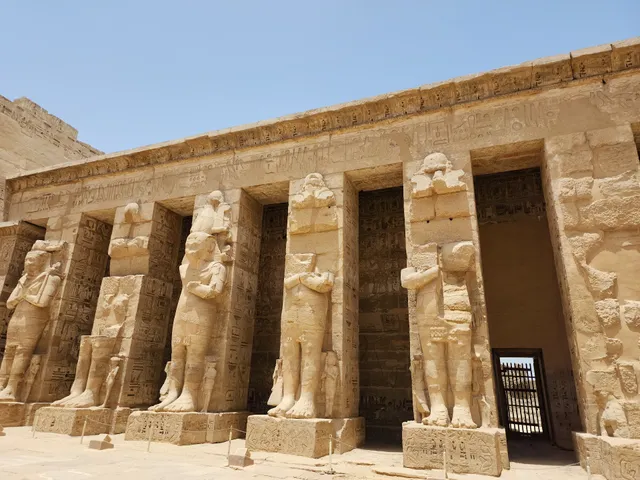
Mortuary Temple of Amenhotep III
PJC5+GJG, Al Bairat, Luxor, Luxor Governorate 1341703, Egypt
Ramesseum
Edfo, Luxor Governorate 1341711, Egypt
메디넷 하부
PJ92+R8Q, Al Bairat, Luxor, Luxor Governorate 1340550, Egypt
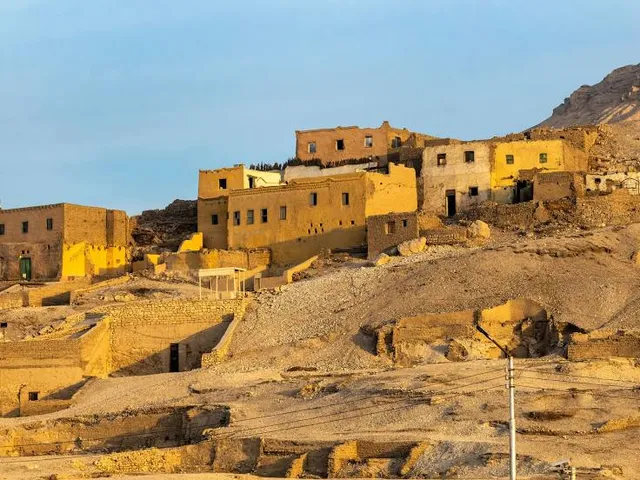
Qurnet Murai Necropolis
PJF3+V93, Al Qarnah, Al Qarna, Luxor Governorate 1340413, Egypt
Nearby restaurants
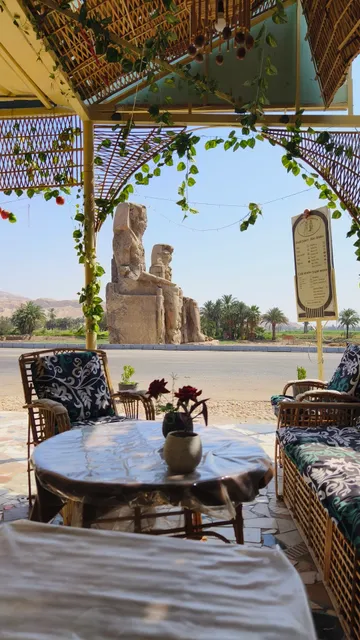
Saray El Nile Restaurant مطعم سرايا النيل
In front of Colossi of Memnon, Qarnah, Al Qarna, Luxor Governorate 1341473, Egypt
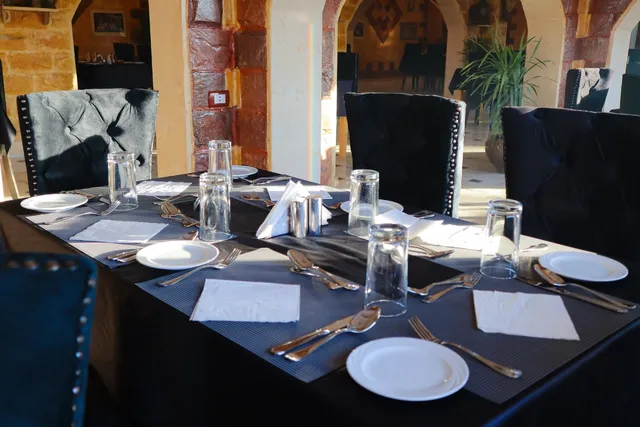
Memnon Guesthouse, Restaurant & Cafe
Al Bairat, Al Qarna, Luxor Governorate 85831, Egypt
مطعم الجزيرة البدوية Bedouin island restaurant
البر الغربي، Luxor, Luxor Governorate 85952, Egypt
Ali Baba Restaurant
Memnon Street Front of Colossi of Memnon, Al Bairat, Al Qarna, Luxor Governorate 85831, Egypt
Restaurant Paris
طريق تمثالين، ممنون, Luxor Governorate, Egypt
Restaurant Mohamed
البر الغربي القرنة, Luxor City, Luxor, Luxor Governorate, Egypt
Balady restaurant
PJ98+2HJ, Al Bairat, Al Qarna, Luxor Governorate 1341476, Egypt
Café & Restaurant Maratonga - Medinet Habu, Luxor
Unnamed Road, Al Bairat, Luxor, Luxor Governorate 85958, Egypt
Belzoni Alaa El Din
PJ92+6XV, Al Bairat, Luxor, Luxor Governorate 1340560, Egypt
Habu Garden
PJ82+WFM, Al Qarnah, Al Qarna, Luxor Governorate 1340560, Egypt
Nearby hotels
Memnon Hotel Luxor
Memnon Street, Al Tmsalyn, Al Bairat, Al Qarna, Luxor Governorate 1341472, Egypt
Nour El Gourna Hotel
ش الجورنة, Al Qarnah, Al Qarna, Luxor Governorate 1341701, Egypt
Casa Helvetica VIP
Baarade El kom, Luxor, Luxor Governorate 85831, Egypt
Quiet Gate Guest House
PJ87+H5, smail،, Al Bairat, Al Qarna, Luxor Governorate 1341475, Egypt
PHARAOHS HOTEL
west bank, habu city, Al Qarnah, Luxor Governorate, Egypt
Shahhat House
PJ93+H35 Medinet Habu, Al Bairat, Al Qarna, Luxor Governorate 1340561, Egypt
Habu Hotel
Temple, Village, Opposite, Luxor Governorate 85958, Egypt
Related posts
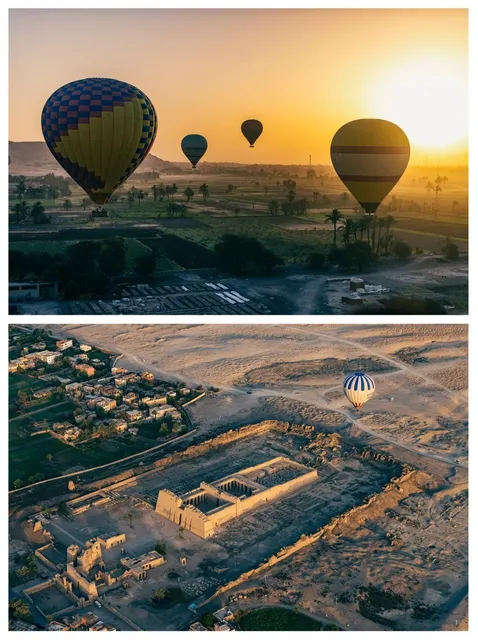
Colossi of Memnon 🗿✨ - Luxor's 3,400-Year-Old "Influencers"Luxor 2-Day Itinerary: Hot Air Balloons & Ancient Wonders
Keywords
Colossi of Memnon tourism.Colossi of Memnon hotels.Colossi of Memnon bed and breakfast. flights to Colossi of Memnon.Colossi of Memnon attractions.Colossi of Memnon restaurants.Colossi of Memnon travel.Colossi of Memnon travel guide.Colossi of Memnon travel blog.Colossi of Memnon pictures.Colossi of Memnon photos.Colossi of Memnon travel tips.Colossi of Memnon maps.Colossi of Memnon things to do.
Colossi of Memnon things to do, attractions, restaurants, events info and trip planning
Colossi of Memnon
EgyptLuxorNew Al Qarnh CityColossi of Memnon

Basic Info

Colossi of Memnon

Al Bairat, Al Qarna, Luxor Governorate 1341703, Egypt
4.6(4.1K)
Open 24 hours
Save
spot

Ratings & Description

Info

Cultural
Scenic
Outdoor
attractions: Mortuary Temple of Amenhotep III, Ramesseum, 메디넷 하부, Qurnet Murai Necropolis, restaurants: Saray El Nile Restaurant مطعم سرايا النيل, Memnon Guesthouse, Restaurant & Cafe, مطعم الجزيرة البدوية Bedouin island restaurant, Ali Baba Restaurant, Restaurant Paris, Restaurant Mohamed, Balady restaurant, Café & Restaurant Maratonga - Medinet Habu, Luxor, Belzoni Alaa El Din, Habu Garden
logoLearn more insights from Wanderboat AI.

Plan your stay

hotel
Pet-friendly Hotels in New Al Qarnh City
Find a cozy hotel nearby and make it a full experience.
hotel
Affordable Hotels in New Al Qarnh City
Find a cozy hotel nearby and make it a full experience.
hotel
The Coolest Hotels You Haven't Heard Of (Yet)
Find a cozy hotel nearby and make it a full experience.
hotel
Trending Stays Worth the Hype in New Al Qarnh City
Find a cozy hotel nearby and make it a full experience.

Reviews

Nearby attractions of Colossi of Memnon

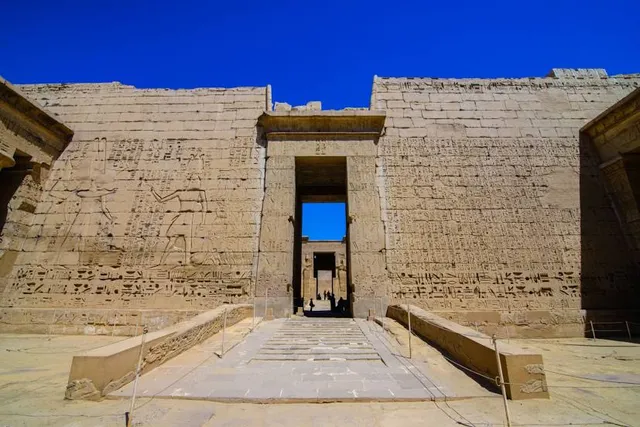
Mortuary Temple of Amenhotep III

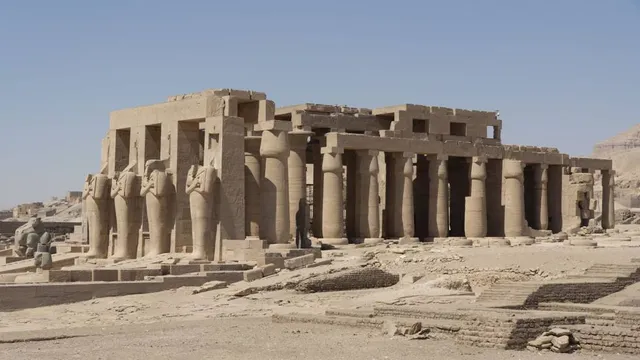
Ramesseum

메디넷 하부

Qurnet Murai Necropolis

Mortuary Temple of Amenhotep III

Mortuary Temple of Amenhotep III

4.6

(3.5K)

Open until 5:00 PM
Click for details
Ramesseum

Ramesseum

4.7

(451)

Open 24 hours
Click for details
메디넷 하부

메디넷 하부

4.8

(381)

Open 24 hours
Click for details
Qurnet Murai Necropolis

Qurnet Murai Necropolis

4.3

(11)

Open 24 hours
Click for details

Things to do nearby

[Private]Valley of The Kings Hatshpsut Habu &lunch
[Private]Valley of The Kings Hatshpsut Habu &lunch
Mon, Dec 8 • 5:30 AM
Luxor City, Luxor Governorate, 1362404, Egypt
View details
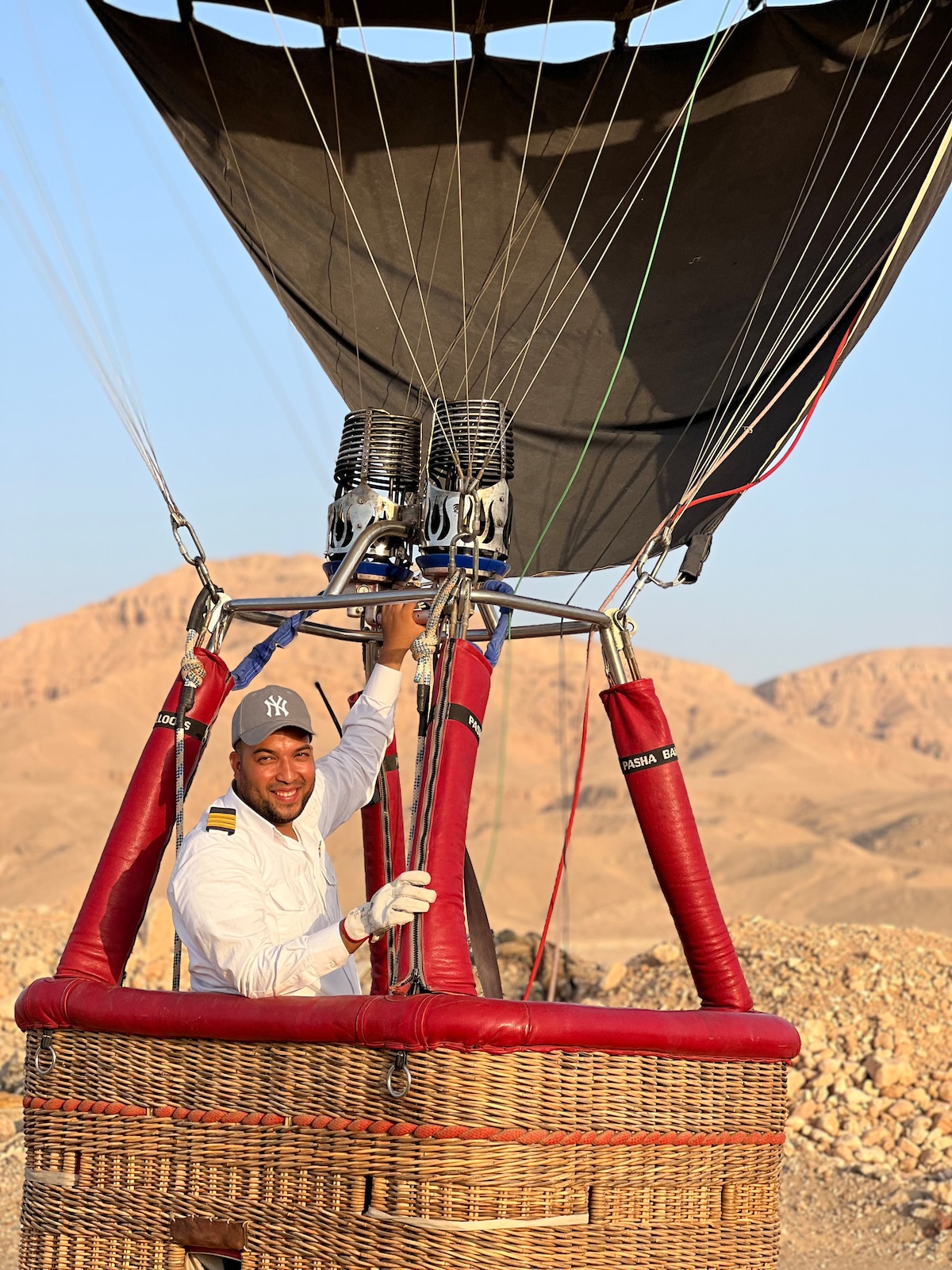
Balloons ride over luxor, Fly with Captain Moo
Tue, Dec 9 • 4:00 AM
Luxor City, Luxor Governorate, 00000, Egypt
View details
Private customized day trip in Luxor with Lunch
Mon, Dec 8 • 6:00 AM
Al Qarna, Luxor Governorate, 1340413, Egypt
View details

Nearby restaurants of Colossi of Memnon

Saray El Nile Restaurant مطعم سرايا النيل

Memnon Guesthouse, Restaurant & Cafe

مطعم الجزيرة البدوية Bedouin island restaurant

Ali Baba Restaurant

Restaurant Paris

Restaurant Mohamed

Balady restaurant

Café & Restaurant Maratonga - Medinet Habu, Luxor

Belzoni Alaa El Din

Habu Garden

Saray El Nile Restaurant مطعم سرايا النيل

Saray El Nile Restaurant مطعم سرايا النيل

4.6

(72)

Click for details
Memnon Guesthouse, Restaurant & Cafe

Memnon Guesthouse, Restaurant & Cafe

4.5

(48)

Click for details
مطعم الجزيرة البدوية Bedouin island restaurant

مطعم الجزيرة البدوية Bedouin island restaurant

4.8

(25)

Click for details
Ali Baba Restaurant

Ali Baba Restaurant

4.6

(51)

Click for details
Get the Appoverlay
Get the AppOne tap to find yournext favorite spots!
Wanderboat LogoWanderboat

Your everyday Al companion for getaway ideas

CompanyAbout Us
InformationAI Trip PlannerSitemap
SocialXInstagramTiktokLinkedin
LegalTerms of ServicePrivacy Policy

Get the app

© 2025 Wanderboat. All rights reserved.
logo

Posts

Colossi of Memnon 🗿✨ - Luxor's 3,400-Year-Old "Influencers"
Hazel LilyHazel Lily
Colossi of Memnon 🗿✨ - Luxor's 3,400-Year-Old "Influencers"
Luxor 2-Day Itinerary: Hot Air Balloons & Ancient Wonders
Ingrid AnnetteIngrid Annette
Luxor 2-Day Itinerary: Hot Air Balloons & Ancient Wonders
Asiyah Noemi KosoAsiyah Noemi Koso
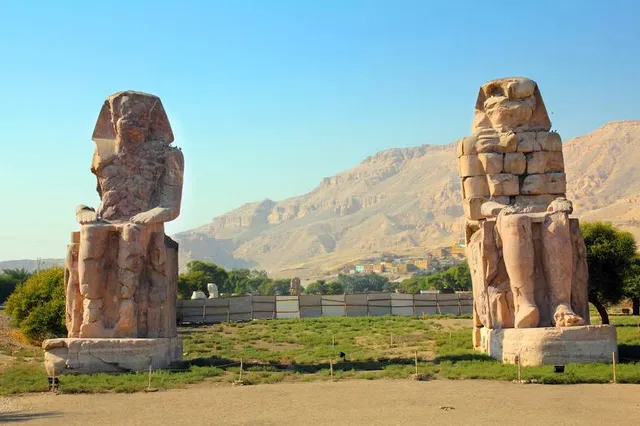
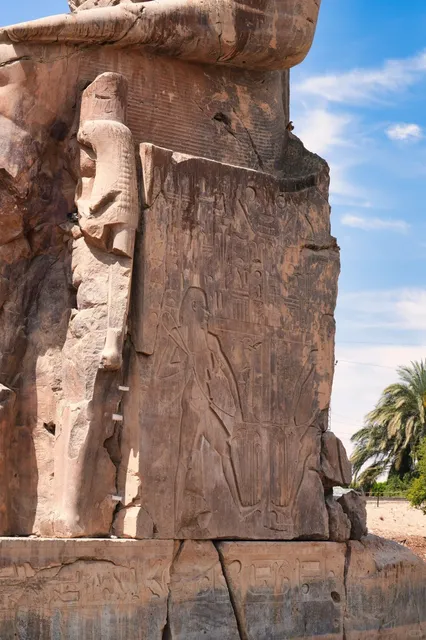
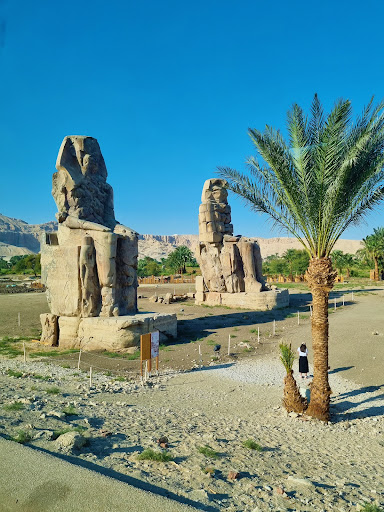
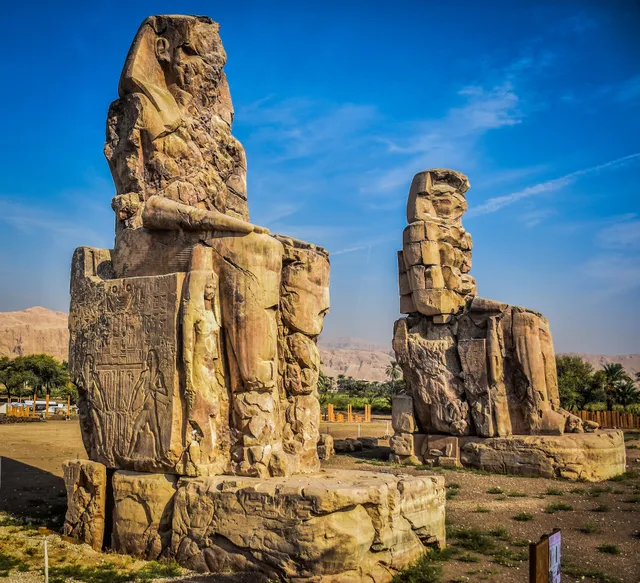
West of Luxor on the way to the Valley of the Kings there is an extremely important archaeological site of Pharaoh Amenhotep III with two massive stone statues. These two giant fascinating statues are called The Colossi of Memnon (Arabic: el-Colossat or es-Salamat). They are two massive stone statues of the Pharaoh Amenhotep III, which stand in front of the ruined Mortuary Temple of Amenhotep III, the largest temple in the Theban Necropolis. They have stood since 1350 BC, and were well known to ancient Greeks and Romans, as well as early modern travelers and Egyptologists. The statues contain 107 Roman-era inscriptions in Greek and Latin, dated to between AD 20 and 250, many of these inscriptions on the northernmost statue make reference to the Greek mythological king Memnon, whom the statue was then – erroneously – thought to represent. In Greek mythology, Memnon was a king of Aethiopia and son of Tithonus and Eos. As a warrior he was considered to be almost Achilles' equal in skill. During the Trojan War, he brought an army to Troy's defense and killed Antilochus, Nestor's son, during a fierce battle. Nestor challenged Memnon to a fight, but Memnon refused, being there was little honor in killing the aged man. Nestor then pleaded with Achilles to avenge his son's death. Despite warnings that soon after Memnon fell so too would Achilles, the two men fought. Memnon drew blood from Achilles, but Achilles drove his spear through Memnon's chest, sending the Aethiopian army running. The death of Memnon echoes that of Hector, another defender of Troy whom Achilles also killed out of revenge for a fallen comrade, Patroclus. The twin statues Colossi of Memnon depict Amenhotep III (fl. 14th century BC) in a seated position, his hands resting on his knees and his gaze facing eastwards (actually ESE in modern bearings) towards the river. Two shorter figures are carved into the front throne alongside his legs, these are his wife Tiye and mother Mutemwiya. The side panels depict the Nile god Hapi. The statues are made from blocks of quartzite sandstone which was quarried at el-Gabal el-Ahmar (near modern-day Cairo) and transported 675 km overland to Thebes (Luxor). The stones are believed to be too heavy to have been transported upstream on the Nile. The blocks used by later Roman engineers to reconstruct the northern colossus may have come from Edfu (north of Aswan). Both statues are quite damaged, with the features above the waist virtually unrecognizable. The southern statue comprises a single piece of stone, but the northern figure has a large extensive crack in the lower half and above the waist consists of 5 tiers of stone. The original function of the Colossi was to stand guard at the entrance to Amenhotep's memorial temple (or mortuary temple), a massive construct built during the pharaoh's lifetime, where he was worshipped as a god-on-earth both before and after his departure from this world. In its day, this temple complex was the largest and most opulent in Ancient Egypt.
See more posts
See more posts
hotel
Find your stay

Pet-friendly Hotels in New Al Qarnh City

Find a cozy hotel nearby and make it a full experience.

Colossi of Memnon 🗿✨ - Luxor's 3,400-Year-Old "Influencers"
Hazel Lily

Hazel Lily

hotel
Find your stay

Affordable Hotels in New Al Qarnh City

Find a cozy hotel nearby and make it a full experience.

Get the Appoverlay
Get the AppOne tap to find yournext favorite spots!
Luxor 2-Day Itinerary: Hot Air Balloons & Ancient Wonders
Ingrid Annette

Ingrid Annette

hotel
Find your stay

The Coolest Hotels You Haven't Heard Of (Yet)

Find a cozy hotel nearby and make it a full experience.

hotel
Find your stay

Trending Stays Worth the Hype in New Al Qarnh City

Find a cozy hotel nearby and make it a full experience.

West of Luxor on the way to the Valley of the Kings there is an extremely important archaeological site of Pharaoh Amenhotep III with two massive stone statues. These two giant fascinating statues are called The Colossi of Memnon (Arabic: el-Colossat or es-Salamat). They are two massive stone statues of the Pharaoh Amenhotep III, which stand in front of the ruined Mortuary Temple of Amenhotep III, the largest temple in the Theban Necropolis. They have stood since 1350 BC, and were well known to ancient Greeks and Romans, as well as early modern travelers and Egyptologists. The statues contain 107 Roman-era inscriptions in Greek and Latin, dated to between AD 20 and 250, many of these inscriptions on the northernmost statue make reference to the Greek mythological king Memnon, whom the statue was then – erroneously – thought to represent. In Greek mythology, Memnon was a king of Aethiopia and son of Tithonus and Eos. As a warrior he was considered to be almost Achilles' equal in skill. During the Trojan War, he brought an army to Troy's defense and killed Antilochus, Nestor's son, during a fierce battle. Nestor challenged Memnon to a fight, but Memnon refused, being there was little honor in killing the aged man. Nestor then pleaded with Achilles to avenge his son's death. Despite warnings that soon after Memnon fell so too would Achilles, the two men fought. Memnon drew blood from Achilles, but Achilles drove his spear through Memnon's chest, sending the Aethiopian army running. The death of Memnon echoes that of Hector, another defender of Troy whom Achilles also killed out of revenge for a fallen comrade, Patroclus. The twin statues Colossi of Memnon depict Amenhotep III (fl. 14th century BC) in a seated position, his hands resting on his knees and his gaze facing eastwards (actually ESE in modern bearings) towards the river. Two shorter figures are carved into the front throne alongside his legs, these are his wife Tiye and mother Mutemwiya. The side panels depict the Nile god Hapi. The statues are made from blocks of quartzite sandstone which was quarried at el-Gabal el-Ahmar (near modern-day Cairo) and transported 675 km overland to Thebes (Luxor). The stones are believed to be too heavy to have been transported upstream on the Nile. The blocks used by later Roman engineers to reconstruct the northern colossus may have come from Edfu (north of Aswan). Both statues are quite damaged, with the features above the waist virtually unrecognizable. The southern statue comprises a single piece of stone, but the northern figure has a large extensive crack in the lower half and above the waist consists of 5 tiers of stone. The original function of the Colossi was to stand guard at the entrance to Amenhotep's memorial temple (or mortuary temple), a massive construct built during the pharaoh's lifetime, where he was worshipped as a god-on-earth both before and after his departure from this world. In its day, this temple complex was the largest and most opulent in Ancient Egypt.
Asiyah Noemi Koso

Asiyah Noemi Koso

See more posts
See more posts

Reviews of Colossi of Memnon

4.6
(4,077)
avatar
5.0
2y

West of Luxor on the way to the Valley of the Kings there is an extremely important archaeological site of Pharaoh Amenhotep III with two massive stone statues. These two giant fascinating statues are called The Colossi of Memnon (Arabic: el-Colossat or es-Salamat). They are two massive stone statues of the Pharaoh Amenhotep III, which stand in front of the ruined Mortuary Temple of Amenhotep III, the largest temple in the Theban Necropolis. They have stood since 1350 BC, and were well known to ancient Greeks and Romans, as well as early modern travelers and Egyptologists. The statues contain 107 Roman-era inscriptions in Greek and Latin, dated to between AD 20 and 250, many of these inscriptions on the northernmost statue make reference to the Greek mythological king Memnon, whom the statue was then – erroneously – thought to represent. In Greek mythology, Memnon was a king of Aethiopia and son of Tithonus and Eos. As a warrior he was considered to be almost Achilles' equal in skill. During the Trojan War, he brought an army to Troy's defense and killed Antilochus, Nestor's son, during a fierce battle. Nestor challenged Memnon to a fight, but Memnon refused, being there was little honor in killing the aged man. Nestor then pleaded with Achilles to avenge his son's death. Despite warnings that soon after Memnon fell so too would Achilles, the two men fought. Memnon drew blood from Achilles, but Achilles drove his spear through Memnon's chest, sending the Aethiopian army running. The death of Memnon echoes that of Hector, another defender of Troy whom Achilles also killed out of revenge for a fallen comrade, Patroclus. The twin statues Colossi of Memnon depict Amenhotep III (fl. 14th century BC) in a seated position, his hands resting on his knees and his gaze facing eastwards (actually ESE in modern bearings) towards the river. Two shorter figures are carved into the front throne alongside his legs, these are his wife Tiye and mother Mutemwiya. The side panels depict the Nile god Hapi. The statues are made from blocks of quartzite sandstone which was quarried at el-Gabal el-Ahmar (near modern-day Cairo) and transported 675 km overland to Thebes (Luxor). The stones are believed to be too heavy to have been transported upstream on the Nile. The blocks used by later Roman engineers to reconstruct the northern colossus may have come from Edfu (north of Aswan). Both statues are quite damaged, with the features above the waist virtually unrecognizable. The southern statue comprises a single piece of stone, but the northern figure has a large extensive crack in the lower half and above the waist consists of 5 tiers of stone. The original function of the Colossi was to stand guard at the entrance to Amenhotep's memorial temple (or mortuary temple), a massive construct built during the pharaoh's lifetime, where he was worshipped as a god-on-earth both before and after his departure from this world. In its day, this temple complex was the largest and most opulent in...

   Read more
avatar
4.0
43w

Constructed around 1350 BCE, the Colossi of Memnon are two massive statues that once stood at the entrance of Pharaoh Amenhotep III’s grand mortuary temple on the west bank of the Nile near Luxor, Egypt. Carved from single blocks of quartzite sandstone, each statue measures approximately 18 meters in height and weighs around 720 tons. They depict Amenhotep III seated, gazing eastward toward the Nile and the rising sun. The statues originally guarded one of the largest and most opulent temples of the time, though much of the complex was later reduced to ruins.

A significant event in the history of the site occurred in 27 BCE when an earthquake caused substantial damage to the statues and the temple. The northern statue, in particular, developed cracks that, under certain conditions, allowed air to pass through, producing a melodic sound at dawn. This phenomenon inspired an enduring legend, as ancient travelers associated the sound with the Greek hero Memnon, believing it to be the mourning cry of his mother, the goddess Eos. The Romans, captivated by the mystery, repaired the statue in the 2nd century CE, which silenced the sound and ended the legend.

Despite the temple's destruction, the Colossi of Memnon have remained standing for over three millennia, captivating visitors and scholars alike. The statues, though weathered by time, still convey the majesty of ancient Egyptian artistry and craftsmanship. The intricate carvings of the pharaoh’s facial features, regal attire, and the symbolic representations of his divine authority testify to the skill of the sculptors. Smaller figures beside the colossal statues, believed to depict Queen Tiye and Mutemwiya, the wife and mother of Amenhotep III, add a humanizing element to the imposing monuments.

The site continues to draw admiration, particularly at sunrise and sunset, when the golden light accentuates the statues' details and casts striking shadows. With the Theban hills rising behind them and the Nile shimmering in the distance, the setting enhances the sense of timelessness. The remnants of Amenhotep III’s once-magnificent mortuary temple, though largely buried under the sands, hint at the former scale and grandeur of the complex. Nearby, the Valley of the Kings and the Temple of Hatshepsut offer further insight into ancient Egypt’s rich history.

The Colossi of Memnon stand as a testament to the enduring legacy of one of the world’s greatest civilizations. These silent sentinels connect the past with the present, allowing visitors to experience a profound sense of wonder in the presence of...

   Read more
avatar
5.0
2y

The Colossi of Memnon are a pair of massive stone statues located on the west bank of the Nile River in Luxor, Egypt. They are among the most famous and iconic ancient Egyptian landmarks in the area.

Key features and information about the Colossi of Memnon:

Location: The Colossi of Memnon are situated on the west bank of the Nile River, just outside the modern city of Luxor (ancient Thebes), on the road leading to the Valley of the Kings.

Historical Significance: The statues were built during the reign of Pharaoh Amenhotep III, who ruled during the 18th Dynasty of ancient Egypt, around 1350 BCE. They were originally part of a larger mortuary temple dedicated to the pharaoh.

Size and Materials: Each of the Colossi of Memnon stands about 18 meters (60 feet) tall and is carved from a single block of quartzite sandstone. They depict Pharaoh Amenhotep III seated on his throne, with his hands resting on his knees.

Name "Memnon": The statues earned the name "Colossi of Memnon" in antiquity. The name "Memnon" refers to a legendary Ethiopian king from Greek mythology. According to the ancient Greeks, the statues made "musical sounds" when the sun's rays touched them at dawn, which they believed to be the "voice of Memnon."

Earthquake Damage: In 27 BCE, an earthquake damaged the northern statue, causing it to emit a sound when the wind blew through the cracks. The "singing" sound gave rise to the belief that the statues were making sounds due to the mythical "voice of Memnon." The sound phenomenon ceased after Roman Emperor Septimius Severus repaired the statues.

Open to Visitors: The Colossi of Memnon are open to tourists, and they remain a popular stop for visitors exploring the ancient sites of Luxor. Travelers can approach the statues, take photographs, and learn about their historical significance through guided tours or information plaques.

Nearby Attractions: The Colossi of Memnon are located near the entrance to the Valley of the Kings, where many ancient Egyptian pharaohs were buried in elaborate tombs. Visitors often combine a visit to the Colossi with tours of other nearby archaeological sites, such as the Temple of Hatshepsut and the Valley of the Queens.

The Colossi of Memnon stand as silent sentinels of ancient Egyptian history, bearing witness to the grandeur and architectural achievements of the New Kingdom period. Their imposing presence and historical significance make them a must-see attraction for those interested in ancient Egyptian...

   Read more
Page 1 of 7
Previous
Next