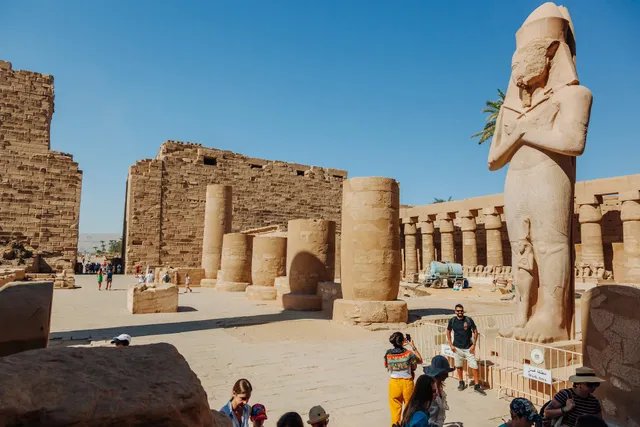
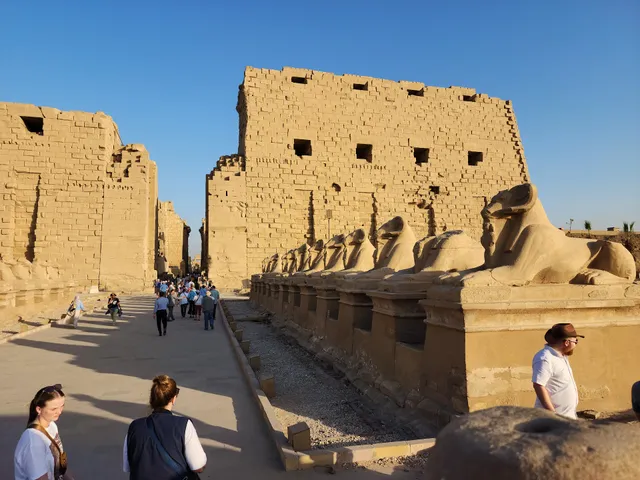
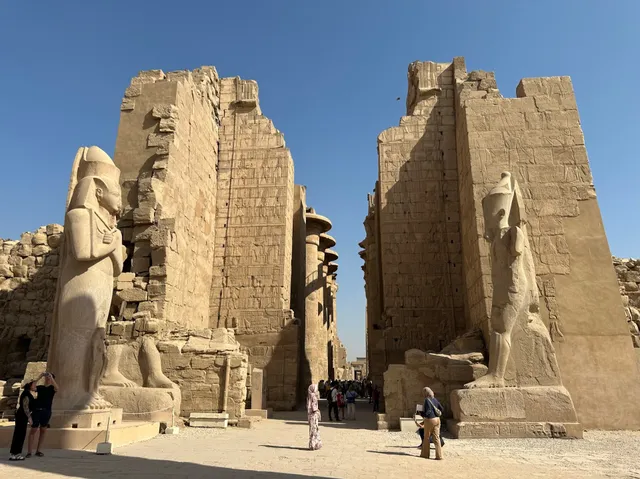
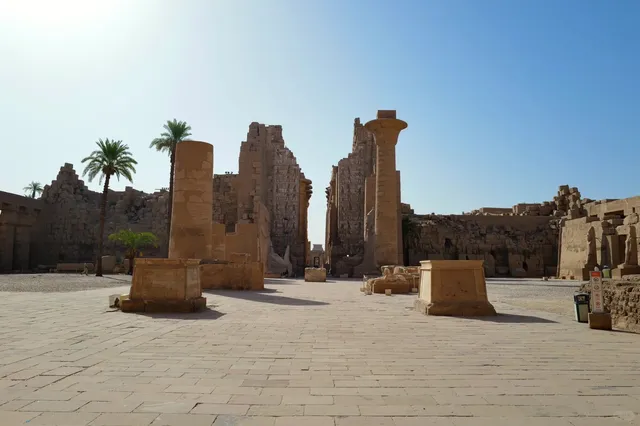
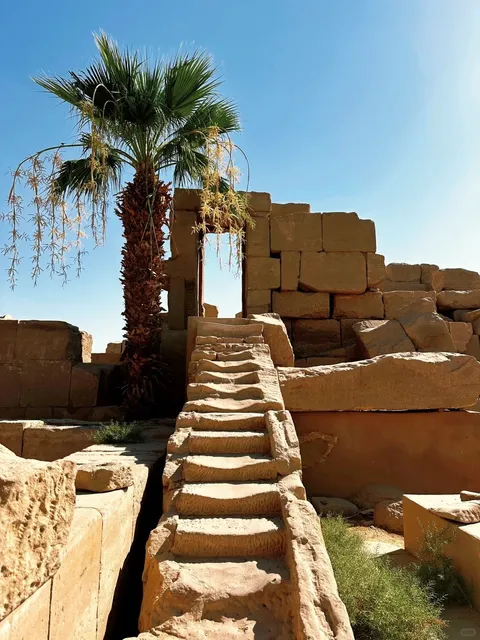
The Karnak Temple Complex, located in Luxor (ancient Thebes), Egypt, is one of the most significant and impressive historical sites in the world. It is a vast open-air museum that reflects the grandeur of ancient Egyptian civilization. Spanning over 200 acres, Karnak is not a single temple but a collection of temples, chapels, pylons, and other architectural wonders constructed over a period of approximately 2,000 years.
Dedicated primarily to Amun-Ra, the chief deity of Thebes, Karnak served as a central religious hub during the New Kingdom (1550–1070 BCE). The complex also honors other deities, including Mut, the wife of Amun, and their son, Khonsu, forming what is known as the Theban Triad. Successive pharaohs, eager to demonstrate their devotion to the gods and assert their power, contributed to the complex, expanding and embellishing it over centuries.
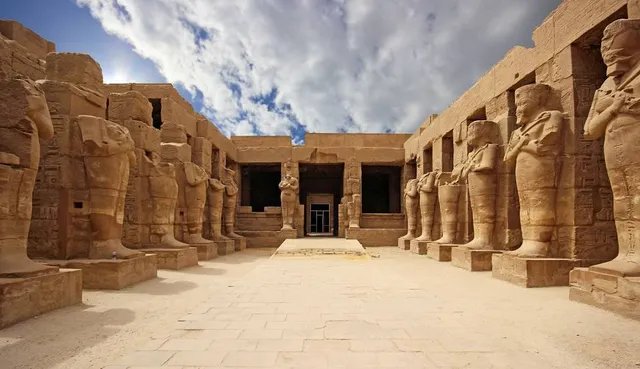
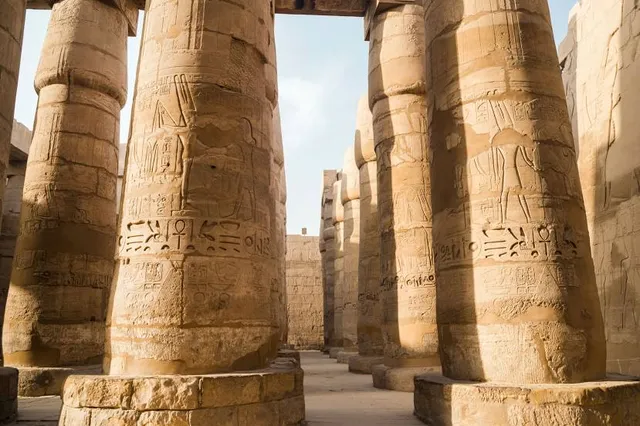
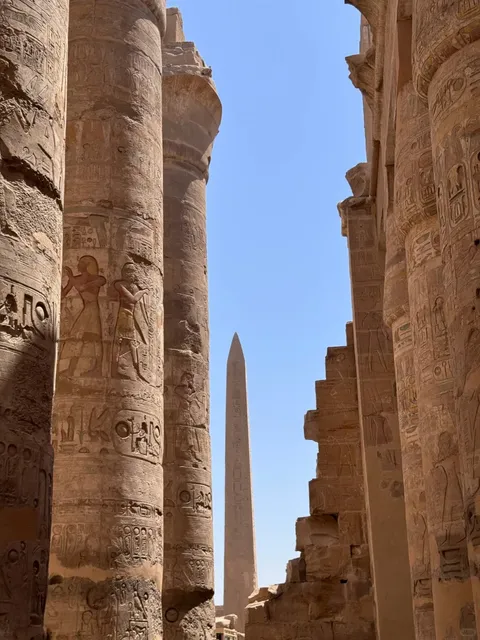
The most iconic structure within Karnak is the Great Hypostyle Hall. This vast hall, measuring 54,000 square feet, contains 134 massive columns arranged in 16 rows. The central columns, reaching a height of 21 meters (69 feet), create an awe-inspiring effect. The columns are adorned with intricate carvings of hieroglyphs and scenes depicting religious rituals, battles, and the achievements of the pharaohs, making the hall a masterpiece of ancient architecture.
Another remarkable feature is the Sacred Lake, a man-made body of water symbolizing the primeval waters of creation. It was used for purification rituals by priests. Nearby, visitors can find the Scarab Statue, associated with good fortune; circling it seven times is believed to bring luck.
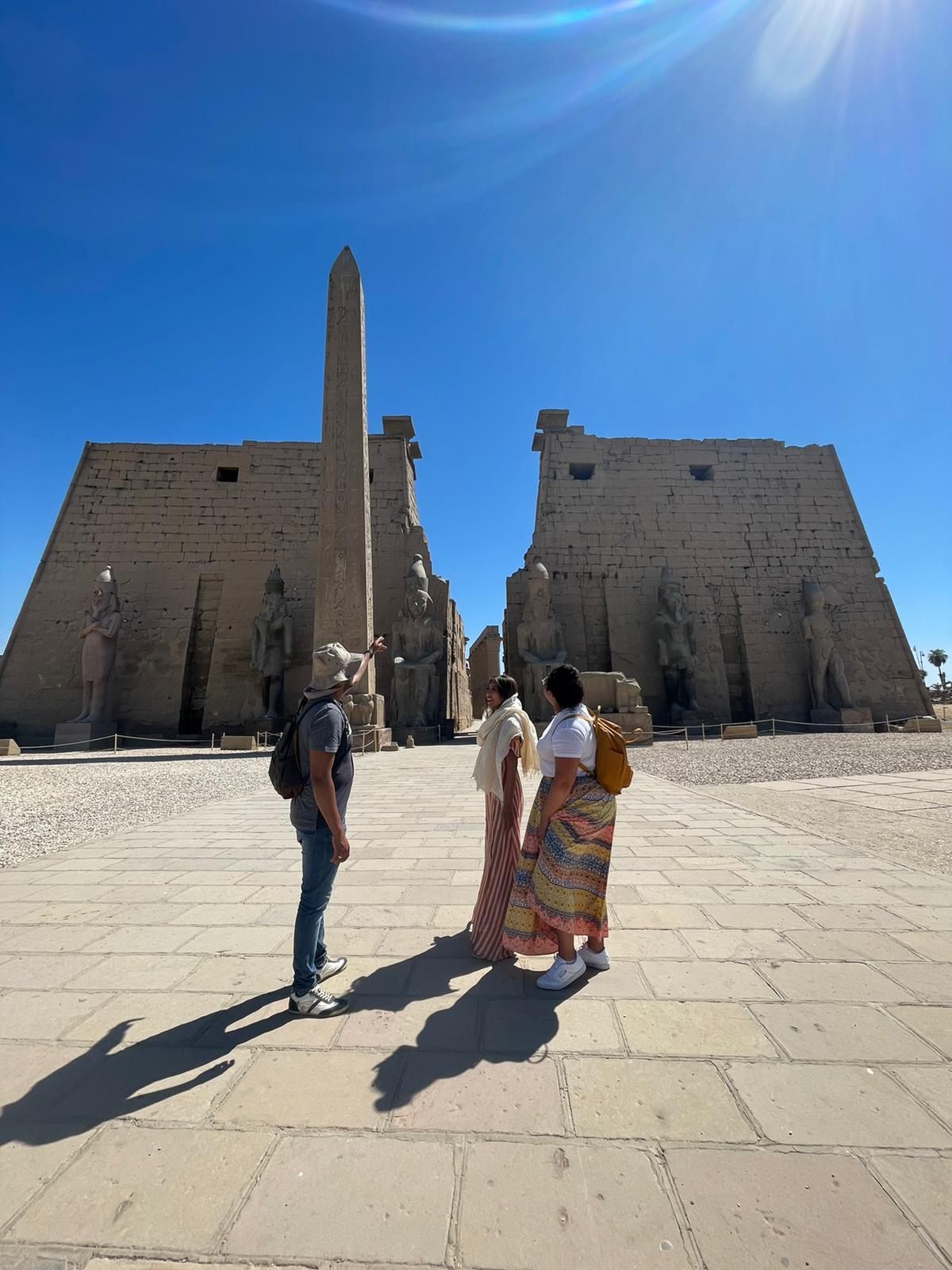
The Precinct of Amun-Ra, the main area of the complex, contains several obelisks erected by pharaohs such as Hatshepsut and Thutmose I. Hatshepsut’s obelisk, standing nearly 30 meters tall, is a testament to her reign as one of Egypt’s most powerful female pharaohs. The inscriptions on these obelisks praise the gods and immortalize the achievements of the rulers who commissioned them.
Beyond its architectural wonders, Karnak holds immense historical significance. It provides valuable insights into ancient Egyptian religion, politics, and society. The temple’s walls and pylons are adorned with inscriptions that document events such as military campaigns and festivals, offering a detailed narrative of Egypt’s history.
Karnak also served as a venue for significant religious ceremonies, including the Opet Festival. During this annual event, the statue of Amun-Ra was transported from Karnak to the Luxor Temple along the Nile, symbolizing the renewal of the pharaoh’s divine authority.
Today, Karnak remains a major tourist destination and a UNESCO World Heritage Site. Its sheer size, intricate details, and historical significance captivate visitors from around the globe. Walking through its colossal columns, towering obelisks, and ancient courtyards feels like stepping back in time to an era of unparalleled grandeur. Karnak stands as a testament to the ingenuity, faith, and ambition of the ancient Egyptians, preserving their legacy for generations to come in this...
Read moreVisited in December, when temperature for sight seeing is reasonable. The trip from Hurgada is long, be prepared for all day trip starting at 5am. 3.5 to 4 hour ride to Luxor, the same back in the evening, gives you around 6-9 hours for the city. We took a personal guide, which possibly gives you some flexibility, because you do not wait for 20+ people from your bus to take photos or visit bathrooms at every Luxor site. If you like ancient Egypt it is a great must have trip, you will see the stunning monuments you know from all the documentaries. What to be ready for: a lot of tourists, a lot of local "hunters" who try to squeeze money from you by all means. Whether they offer you to take picture with your phone, whether they allow you to go behind the barrier, always keep in mind it is for something. Pay extreme caution when they offer something for a dollar. Once you have the thing pushed to your hand, or worse, once you get dragged into their shop, nothing is for a dollar anymore. In extreme cases you may end up locked in their shop, forced to buy something to get out. If you do not want to have a bad experience, be careful, be ignorant. Watch out when paying by card at such places, especially if you just want to get rid of them after being pushed to such situation. It is a tourist hunt / trap, keep that in mind. Same applies to beggars on streets, especially kids. Of course, one dollar or euro given to a poor street kid is nothing for you, you may think you're doing good thing, but realize that these kids often roam on streets to get these 1eur donations instead of being at school. Often it is organized beggar gang. Imagine that salary is somewhere around 120 dollars a month, which is hard to live with, many locals have 2 jobs. If a kid manages to get even 5dollars a day by begging on a street, it effectivelly earns more per day than its parents... But what will be future motivation of such kid? Only the street. Keep your tips for staff at your hotel, who often relies on it heavilly as it forms quite some portion of their income. Also, if you decide to buy something, barter. They expect it and the first price they give you is often 2-3 times more than necessary. At the end it is up to you and your consideration. To Karnak itself, just stunning, monumental, must have been something extraordinary back then when it was full of colorful paintings from ground to the...
Read moreOne of the best historical places to visit in Egypt. It is among the list of go-to places in Egypt, which definitely must be there in your list during your visit to Egypt. Do not miss it.
It is situated right in the Luxor city, so is easily accessible and close to almost every hotel or resort in the city.
The best time to visit this temple is early in the morning, like as soon as it opens in the morning.
Because it is very less crowded at that time and you can easily click the best photos without any interruption of the people in the background. Also, the weather is best at the that time.
During the day, it becomes very hot and you will see at least 1000 people inside the campus, which makes it very difficult to click good photos. The tickets need not be booked in advance to avoid any online scam. They can be easily bought at the entrance. But if it is weekend or the daytime, you might have to wait for 10-15 minutes in the queue, which is not at all bad.
One very important point- you can buy the tickets only via your international debit or credit card. No tickets can be bought via cash. (This is applicant for all monuments in the entire country of Egypt)
The best photos can be clicked in white clothes; long white dresses for ladies and white linen shirt and linen bottoms for men. Only the photos clicked in white clothes come out to be the best at this place.
It will take you 1-2 hours to completely see the temple in detail. Might take you longer if you want to adore the beauty for longer and want to do a professional photo-shoot, but for that make sure you visit only in the early morning.
Do not carry a lot of weight/stuff with you here; try to be hands-free, as you have to walk a lot. Do carry a bottle of cold water with you; you won’t find any shops inside the temple, though there are many near the ticket counter, but no shops of water facility once you enter the premises.
Wear a cap/hat/scarf to cover your head if you are visiting...
Read more