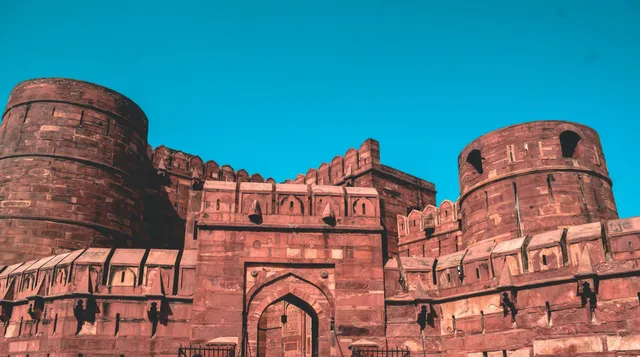
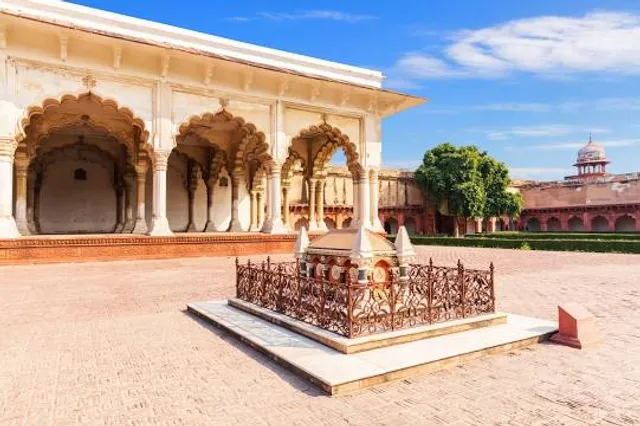
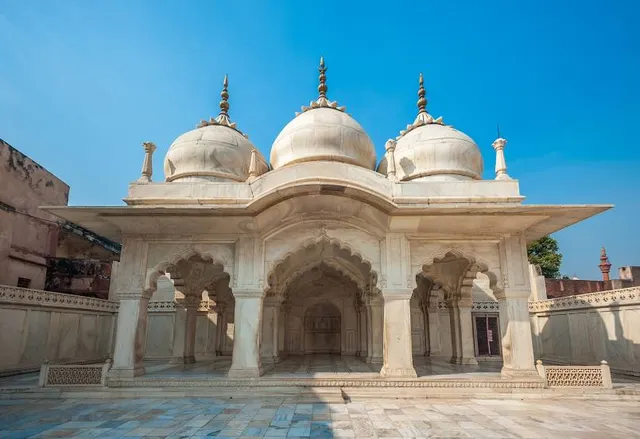
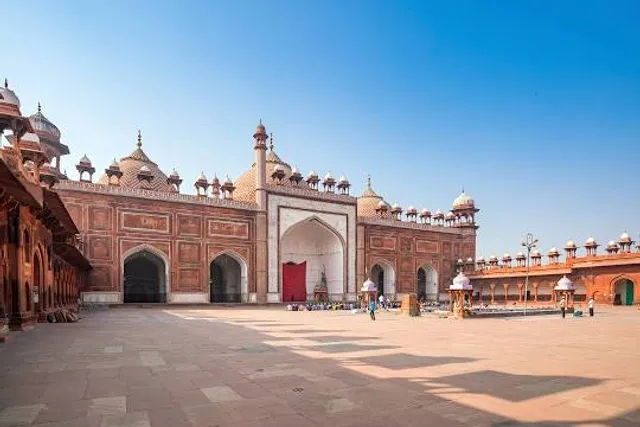
An era marked by invasions and fortifications, where power was symbolized by grand palaces and grander forts………during such time was built THE AGRA FORT. Fortification has always been and still is the prerogative of the mighty; the dividing line between the ruler and the ruled.The mighty towers and overwhelming facades instilling fear and awe in the bravest of the brave…….yet there were the few who overcame the daunting adversities and made their mark in history, a signature ……. that still exists.Structures built as a sign of prowess remind us all of the grit and valour of the brave men and women who captured, destroyed and built such overwhelming edifices.The entry to Agra Fort is allowed through the Amar Singh Gate only. Some portion of this fort is used by the Indian Army. The public access to that part has been prohibited. So you can not see that area. However as this fort is very expansive and contains many buildings that are worth a visit so you can very well check them out. On visiting the Agra Fort, you will come across Diwan-i-Am or the Hall of Public Audience. This hall with numerous pillars is said to be erected by Shah Jahan in the year 1628. On heading little forward, you will see Royal Pavilions abounding in elegant mosques including Nagina Masjid and Mina Masjid, palaces like Macchi Bhavan, Khas Mahal, Shish Mahal and Shah Jahani Mahal and the Zenana Mina Bazaar. On a visit to Agra Fort, you will be attracted to the intricate carvings and the pure marbles that are used in its making. Besides, the breathtaking views of the Yamuna River and Taj Mahal from the balconies of the pavilions will leave you absolutely mesmerized. Don't Drone camera is strictly prohibited inside the Taj Mahal. Eating and smoking is strictly prohibited inside Taj Mahal. Arms, ammunitions, fire, smoking items, tobacco products, liquor, eatables (Toffees), head phones, knives, wire, mobile charger, electric goods (except camera), Tripods are also prohibited. Mobile phones are to be kept switched off or on silent mode. Please avoid carrying big bags and books inside the monument, this may increase your security check time. Photography is prohibited inside the main mausoleum. No Polluting vehicles are allowed within 500 mts. Radius of Taj Mahal. Parking Facility is available at Shilpgram Avoid touching & scratching the walls & surfaces of the monument as these are heritage sites and need special care. Visitors are requested not to make noise inside the mausoleum. Above mentioned list of prohibited items along with mobile phones are banned for night viewing of the Taj Mahal. Video camera, extra batteries are prohibited though still camera is permitted after the security check. Do's Tourists must co-operate in keeping the monument neat & clean by using dustbins. Tourists are advised to hire approved guides & photographers who exhibit their identity cards. Taj Museum inside Taj Mahal Complex opens from 10.00 AM to 5.00 PM, entry free. No Polluting vehicles are allowed within 500 mts. radius of Taj Mahal. Parking Facility is available at Shilpgram The Agra Fort (Qila Agra) is a historical fort in the city of Agra, also known as Agra's Red Fort. Mughal emperor Humayun was crowned at this fort in 1530. It was later renovated by the Mughal emperor Akbar from 1565 and the present-day structure was completed in 1573. It served as the main residence of the rulers of the Mughal dynasty until 1638, when the capital was shifted from Agra to Delhi. It was also known as the "Lal-Qila" or "Qila-i-Akbari".Before being captured by the British, the last Indian rulers to have occupied it were the Marathas. In 1983, the Agra fort was inscribed as a UNESCO World Heritage Site because of its importance during Mughal rule.[2] It is about 2.5 kilometers (1.6 mi) northwest of its more famous sister monument, the Taj Mahal. The fort can be more accurately described as a walled city. It was later renovated by Shah Jahan.Like the rest of Agra, the history of Agra Fort prior to Mahmud of Ghazni's invasion is unclear. However, in the 15th century, the Chauhanrr
Visited July 26 2025 – Day 23 in India
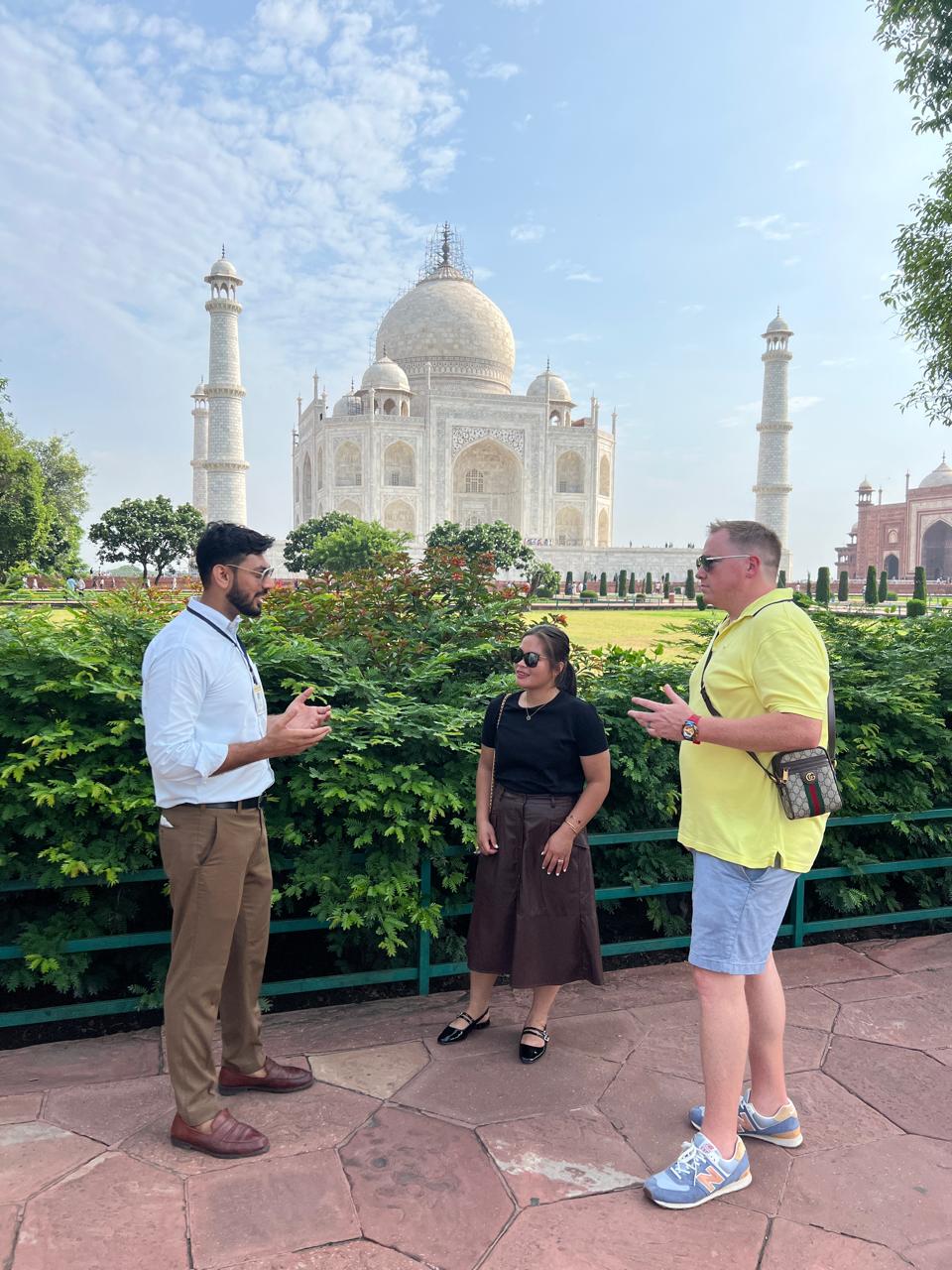
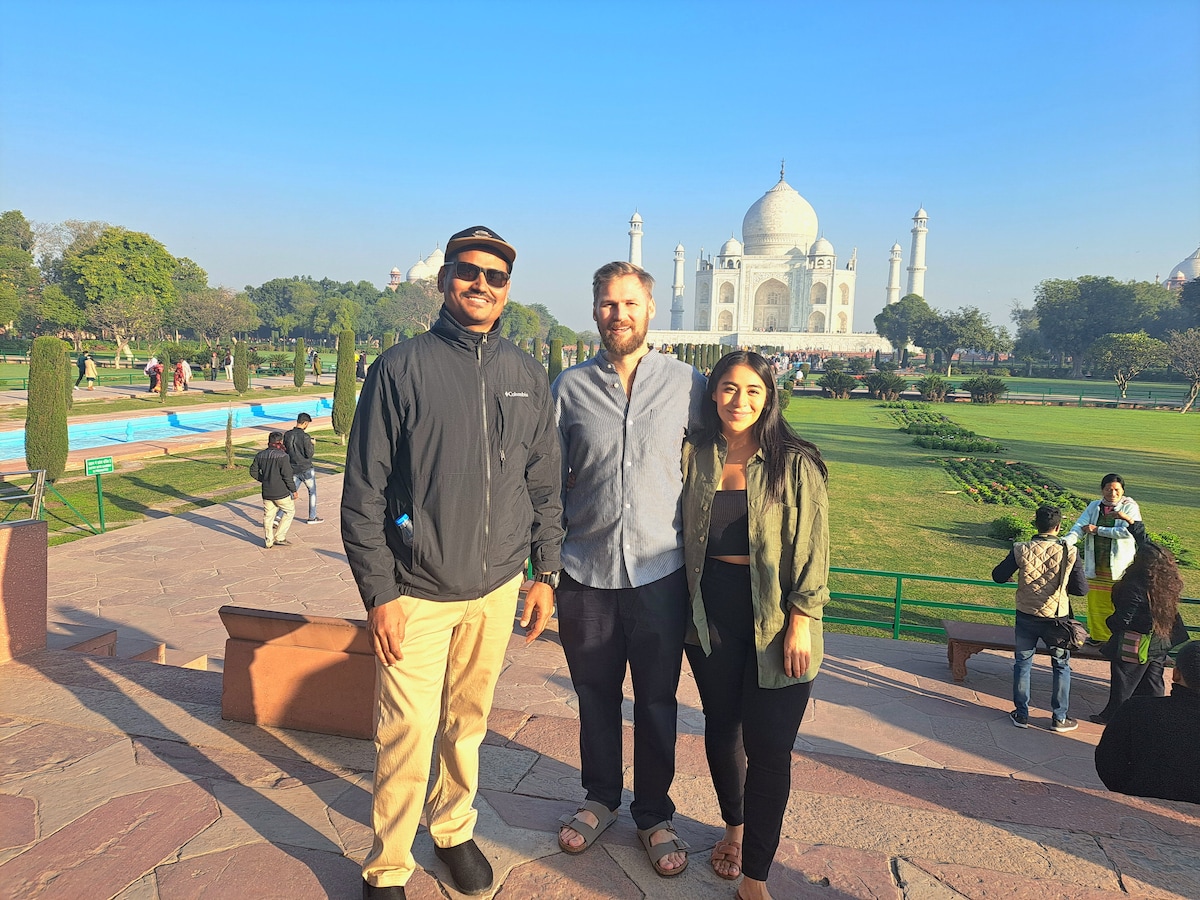
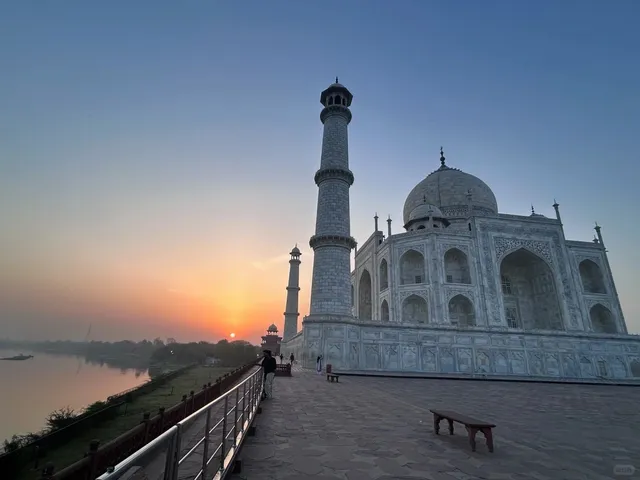
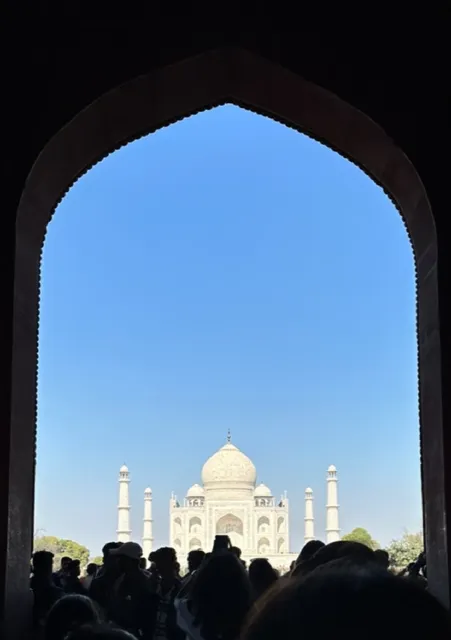
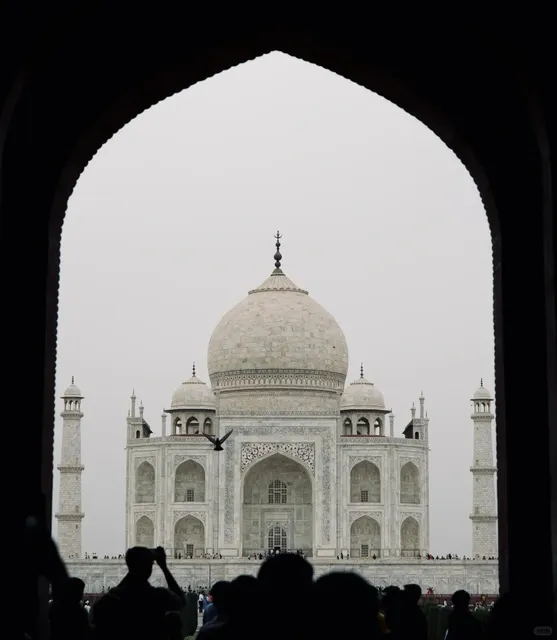
After waking up at 4 am to reach the Taj Mahal first thing in the morning, we began this day with peace, beauty, and wonder. We always like to visit the Taj early to avoid the crowds, and once again, this worked out perfectly. Back in 2015, we had done the same, but that time the monument was covered in fog. This time, the skies were clear and the weather was perfect. Seeing the Taj Mahal in the soft morning light felt magical, and starting our day there filled us with calm and appreciation.
Later that morning, after breakfast at our hotel, we made our way to Agra Fort — another deeply meaningful experience, and a very different one from the Taj.
This majestic red sandstone fort is not just a monument. It is a living piece of India’s history. The moment we entered through its massive gates, we felt its strength, its silence, and its stories.
Our guide Bindu, who had been with us since morning, continued to guide us through the fort with the same thoughtfulness and care. Right at the entrance, she pointed out a detail we had never noticed before. The steep, uneven path with sharp turns was deliberately designed to slow down enemies. Above the gate, small openings were built so boiling water or oil could be poured down during attacks. As she explained it, we could picture what life must have been like then — the tension, the strategy, the bravery required to protect the empire.
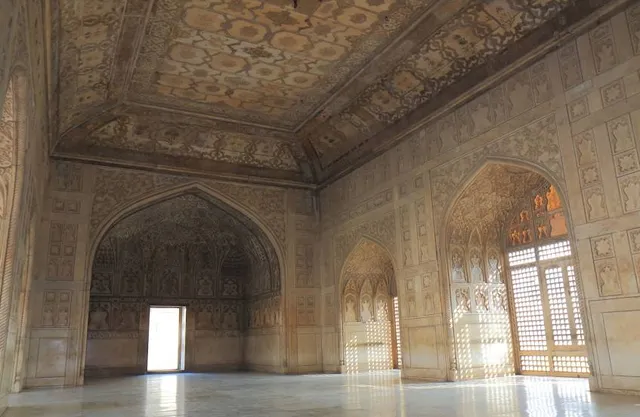
We walked through wide courtyards and royal audience halls. The architecture was strong yet elegant, with soaring pillars and finely carved arches. Light filtered gently through the jali windows, and the symmetry of the design reminded us of the Taj but with a very different energy — less about love and more about power, defense, and resilience.
The most emotional part of our visit was reaching the Musamman Burj, the marble tower that overlooks the Yamuna River. It was here that Shah Jahan was imprisoned by his son Aurangzeb. We told our daughters, aged 5 and 7, the story again — how the same emperor who built the Taj Mahal out of love spent his final years confined within these walls. They listened quietly, sadness written on their little faces. They still could not understand how a son could do something like that to his father.
We stood at the very spot where Shah Jahan is said to have sat day after day, gazing at the Taj Mahal in the distance. It was visible from there, faint but unmistakable. That image — of a grieving man, longing for his lost love, held captive and staring out at her tomb — stayed with all of us.
What softened that sadness was the story of his daughter Jahanara, who chose to remain with her father through his imprisonment. She gave up her royal privileges and stayed by his side. That bond between father and daughter touched us deeply, and I could see it brought some comfort to my girls. It became a moment not just of sorrow, but of strength and love.
We continued on to the Summer Palace, with its open verandas and cool breezes. The layout was airy and graceful, designed for beauty and comfort even in the heat.
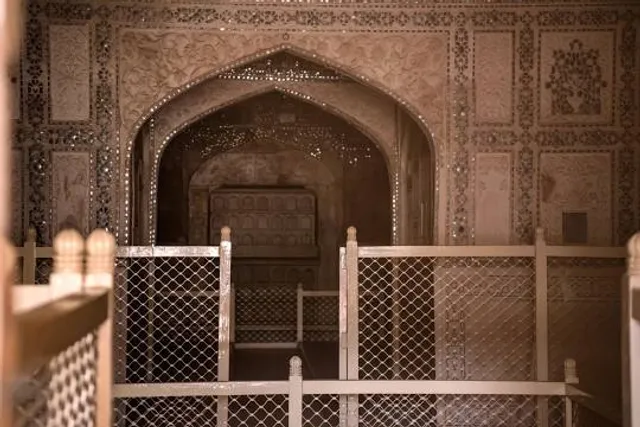
One place we had really wanted to visit was the hamam, the royal bath chamber, but unfortunately it was closed during our visit. We had heard it was inlaid with tiny mirrors that shimmer in the light, and we could imagine how magical it must have felt inside. My daughters were disappointed, but it only gave us another reason to come back one day.
Bindu led us through more arches, balconies, and shaded walkways, each space filled with the echoes of history. Her knowledge and kindness helped bring the past to life.
Agra Fort was not just another site to visit. It was a place that moved us — with its stories of ambition, betrayal, love, and loyalty. Seeing it through the eyes of my daughters made it even more powerful. From the drama of empires to the quiet love between a father and child, the emotions held in these walls still speak.
This visit, just like our morning at the Taj Mahal, is one I will carry in my heart forever.
Nestled in the historic city of Agra, Agra Fort stands as a majestic symbol of Mughal grandeur and architectural excellence. Originally built in brick, the present-day structure was commissioned by Emperor Akbar around 1565 and completed around 1573. It served as the main residence of the Mughal rulers until the capital shifted to Delhi in 1638. In 1983, it was designated a UNESCO World Heritage Site.
Architecture & Highlights
The fort is constructed primarily of red sandstone with later additions of white marble under Emperor Shah Jahan, creating a striking contrast of colours and styles. Inside you’ll discover grand halls, private palaces, serene balconies overlooking the Yamuna River, and intricate ornamental work.
Some must-see spots include the Diwan-i-Am (hall of public audience), Jahangiri Mahal, Sheesh Mahal (palace of mirrors), and Musamman Burj (marble tower with a view). These reflect the blend of Islamic, Persian and Hindu influences that define Mughal architecture.
Visitor Facilities & How to Reach
Location: Rakabganj, Agra, Uttar Pradesh, India (on the right bank of the Yamuna River)
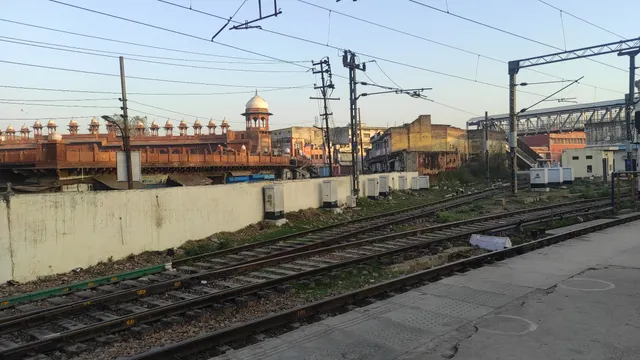
Access: From Agra Cantt railway station (~2-3 km), or by taxi/auto from other parts of Agra.
Entry & Security: Visitors enter through the Amar Singh Gate (also called Lahore Gate) – the other gates lead to restricted army areas.
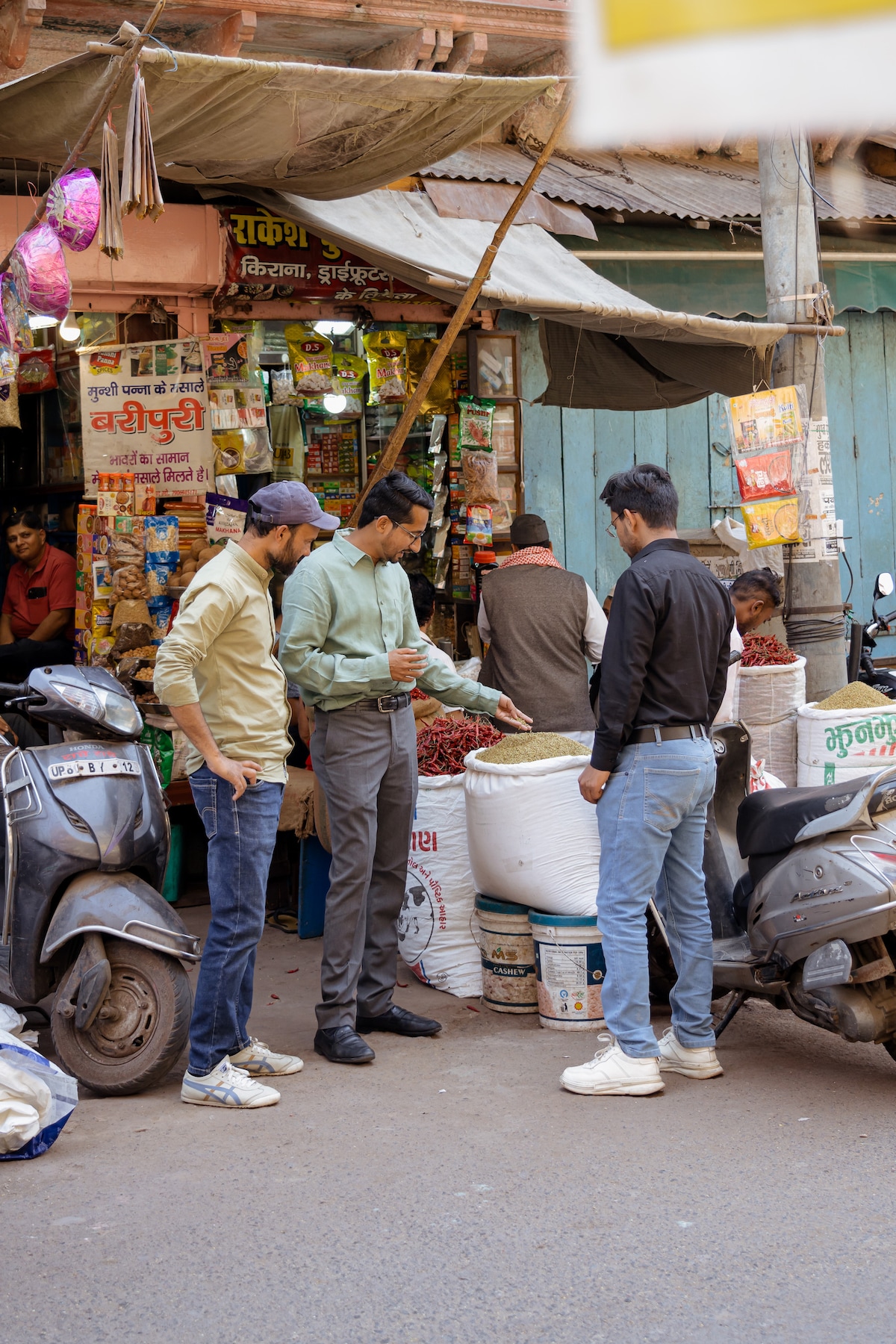
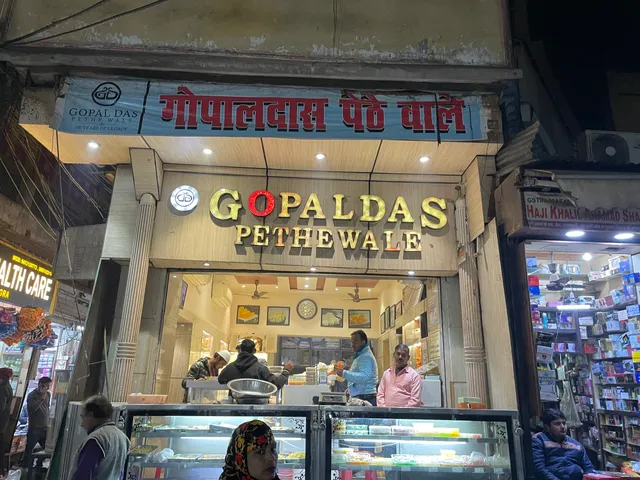
Facilities: Drinking water, restrooms, souvenir shops outside the main complex, seating in shaded areas. Guides approved by the Archaeological Survey of India (ASI) are available for hire.
Photography: Allowed in most areas (except restricted army-zones).
Duration: To experience it properly, plan for at least 2-3 hours of exploration.
Official Timings & Entry Fee
Opening Hours: Open every day of the week, from sunrise to sunset. For practical purposes this translates to approximately 6:00 AM to 6:00 PM.
Days of Operation: Every day; no regular weekly holiday.
Entry Fee (approximate):
Indian citizens: around ₹50 (some sources say ₹40)
Foreign visitors: around ₹650 (some sources say ₹600)
Children below 15 years: usually free.
Why Visit & What You’ll Experience
Walking through Agra Fort gives you a vivid sense of history: ramparts that once defended an empire, palaces that whispered royal life, and the Yamuna river view framing so much of India’s past. The blend of grandeur and serenity appeals to history lovers, architecture admirers, photographers and anyone seeking a meaningful visit.
Travel Tips & Suggestions
Wear comfortable footwear since you’ll cover uneven surfaces and stairs.
Visit early morning (6-9 AM) or late afternoon (3-5 PM) for better light and fewer crowds.
Carry water, a hat/sunscreen during hot days, and a light jacket if visiting in winter morning.
Respect restricted zones – keep to public areas marked for tourists.
Hiring a guide enhances your experience by revealing lesser-known stories and architectural details.
Avoid carrying large bags; many places enforce security checks.
Final Verdict
Agra Fort isn’t just another tourist spot — it’s a living testament to an age of innovation, empire and artistry. With its blend of red sandstone strength and white marble elegance, its historical weight and visual poetry, it deserves a place near the top of your Agra itinerary. If you’re in Agra for history, architecture or just a deep cultural experience — this site is non-negotiable.