New Delhi Today: An Overview
New Delhi, the capital of India, is a vibrant, bustling metropolis that blends modernity with deep-rooted history and culture. Today, the city stands as a political, cultural, and economic hub, playing a key role in shaping India’s future while preserving its historical identity. Here's a detailed look at New Delhi in its current context:
Political and Administrative Capital Government Hub: New Delhi serves as the seat of the Indian government. It houses the Rashtrapati Bhavan (the President's residence), the Parliament of India, the Supreme Court, and the offices of the Prime Minister and various ministries. Diplomatic Center: The city hosts numerous embassies and high commissions, making it the center for India’s foreign relations. The diplomatic enclave, located in Chanakyapuri, is home to embassies of various countries.
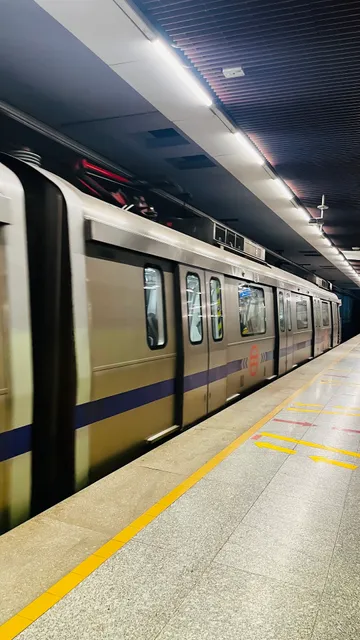
Urban Landscape and Infrastructure Modern Developments: New Delhi is undergoing rapid urbanization, with an expansion of high-rise buildings, commercial centers, and modern infrastructure projects. The city is a blend of colonial-era architecture (like India Gate, Connaught Place, and Lutyens’ Delhi) and modern developments (such as Cyber City, Okhla, and Dwarka). Metro System: The Delhi Metro is one of the largest and most efficient urban rail systems in the world, connecting various parts of the city and surrounding areas. It has become a vital part of daily life for millions of Delhiites. Traffic and Pollution: Despite infrastructure improvements, traffic congestion remains a major issue, especially during peak hours. Air pollution is a persistent problem, especially in the winter months, due to vehicular emissions, industrial pollution, and crop burning in neighboring states.
Cultural and Historical Significance Heritage Sites: New Delhi is rich in history, home to UNESCO World Heritage Sites like the Red Fort, Qutub Minar, Humayun's Tomb, and Jama Masjid. These historical landmarks reflect India’s Mughal, British, and ancient civilizations. Cultural Festivals: The city is a melting pot of diverse cultures and traditions, with celebrations of festivals like Diwali, Holi, Eid, and Christmas observed with fervor. Delhi also hosts numerous cultural festivals, including dance, music, and theater performances. Museums and Galleries: New Delhi is home to several prominent museums such as the National Museum, the National Gallery of Modern Art, and the Gandhi Smriti, which showcase India's art, history, and freedom struggle.
Economic Hub Business and Commerce: New Delhi is a center for national and international business. Areas like Connaught Place, Saket, and Gurgaon (in the National Capital Region, or NCR) are bustling commercial centers, attracting both local and multinational companies. Startups and Innovation: The city has emerged as a hotspot for startups, particularly in technology, education, and e-commerce sectors. The presence of tech parks, innovation hubs, and business incubators fosters entrepreneurship. Tourism: New Delhi is a major destination for international tourists. Visitors flock to the city for its historical landmarks, shopping districts (like Chandni Chowk and Dilli Haat), and culinary experiences. The tourism industry contributes significantly to the city's economy.
Education and Research Top Institutions: New Delhi is home to some of India's most prestigious educational institutions, such as the University of Delhi, Jawaharlal Nehru University (JNU), Jamia Millia Islamia, and the Indian Institute of Technology (IIT). These institutions attract students from across the country and globally. Think Tanks and Research Centers: The city also hosts several think tanks and research centers that influence national and international policy, such as the Observer Research Foundation (ORF) and the Indian Council of World Affairs (ICWA).
Social...
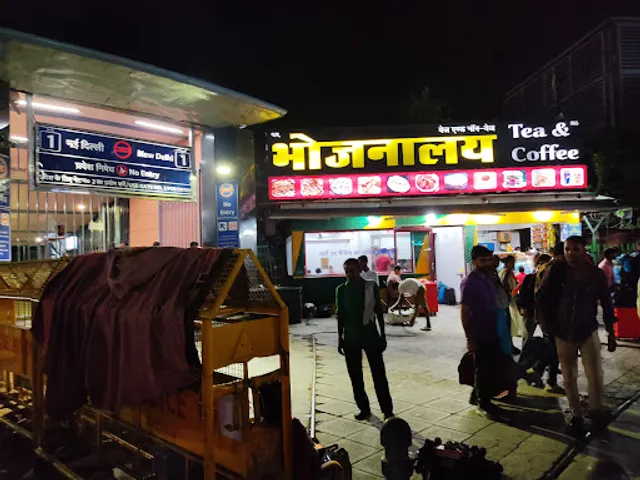
New Delhi Railway Station is the main railway station in Delhi, India. It is one of the busiest railway stations in Asia, handling over 600,000 passengers every day. The station is located in the heart of Old Delhi, and is a major transportation hub for the city.
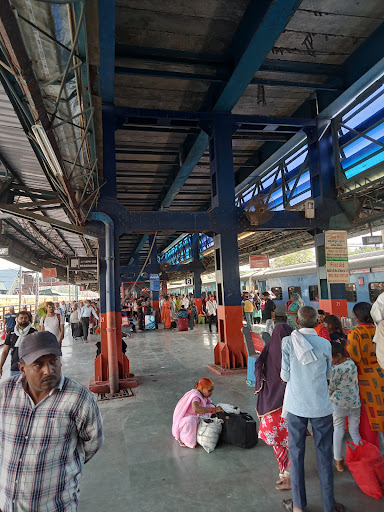
The station is a large, sprawling complex with 16 platforms and 18 tracks. It is a maze of corridors, staircases, and platforms, and can be quite overwhelming for first-time visitors. The station is also very crowded, and it can be difficult to find your way around.
Despite its size and crowds, New Delhi Railway Station is a relatively well-maintained station. The platforms are clean and well-lit, and there are plenty of food and drink vendors on hand. There are also a number of waiting rooms, both air-conditioned and non-air-conditioned, where you can relax and wait for your train.
If you are planning on traveling to Delhi by train, New Delhi Railway Station is a good option. It is a large, well-maintained station with plenty of facilities. However, it is important to be aware of the crowds and the maze-like layout of the station.
Here are some of the pros and cons of New Delhi Railway Station:
Pros:
Large and well-maintained station
Plenty of facilities, including food and drink vendors, waiting rooms, and toilets
Conveniently located in the heart of Old Delhi
Serves a wide range of destinations throughout India
Cons:
Can be very crowded
Can be difficult to find your way around
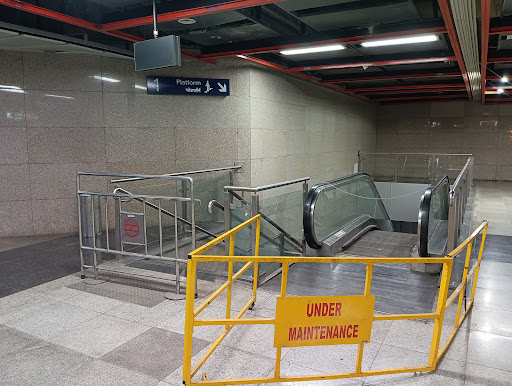
Not all platforms are accessible to people with disabilities
Can be noisy and chaotic
Overall, New Delhi Railway Station is a good option for travelers who are planning on traveling to Delhi by train. However, it is important to be aware of the crowds and the maze-like layout of the station.
Here are some tips for making your experience at New Delhi Railway Station as smooth as possible:
Arrive early to give yourself plenty of time to find your way around and check in for your train.
Be aware of your surroundings and keep your belongings close to you at all times.
Be prepared for crowds and noise.
If you are traveling with luggage, use the luggage trolleys to help you get around.
If you are traveling with a disability, there are special facilities available at the station.
If you are not sure where to go, ask for help from a station employee.
With a little planning, your experience at New Delhi Railway Station can be a...
Read moreDelhi, also officially known as the National Capital Territory of Delhi (NCT), is the bustling capital city of India and one of its most significant urban centers. It is located in northern India and serves as the country’s political, cultural, and historical heart. Delhi is a sprawling metropolis with a rich history dating back thousands of years and a vibrant contemporary character. Bordered by the states of Haryana to the west and Uttar Pradesh to the east, south, and northwest. The city is strategically located along the banks of the Yamuna River and covers an extensive area, making it one of the largest cities in India.
Delhi has a storied history that spans several millennia. It has witnessed the rise and fall of numerous dynasties, including the Mauryas, Guptas, Mughals, and British. The city has served as the capital of several empires, each leaving its mark on its culture and architecture. Delhi is a melting pot of traditions, cultures, and languages. It is home to people from diverse linguistic, religious, and ethnic backgrounds. Various parts of India contribute to the city’s cultural landscape through festivals, music, dance, and art. Delhi boasts a plethora of iconic landmarks and attractions. Some must-visit places include the Qutub Minar, Red Fort, India Gate, Humayun’s Tomb, Lotus Temple, and Akshardham Temple. In this essay, we delve into the multifaceted aspects of Delhi, exploring its geographical nuances, historical tapestry, architectural grandeur, cultural richness, and the contemporary challenges it faces. As we embark on this journey, we unravel the layers of Delhi, seeking to understand the city’s essence and role as a dynamic hub that bridges the past with the present while poised for a future of continued evolution. Delhi is a big city in India. And it’s the capital of India. Delhi has a long history. In Delhi, there are so many old buildings and beautiful places. And Delhi is famous for its market like chandani chowk. We can find people from all over India in Delhi. In the 1600s Delhi was an important city for emperors and rulers. They built beautiful places and forts like Red Fort and Jama Mahazid. And in Delhi, there are crowded streets and busy markets. And life in the 1600s in Delhi is very exciting. and Delhi is ruled by Akbar, Jahangir, and...
Read more