St Augustine Tower Goa
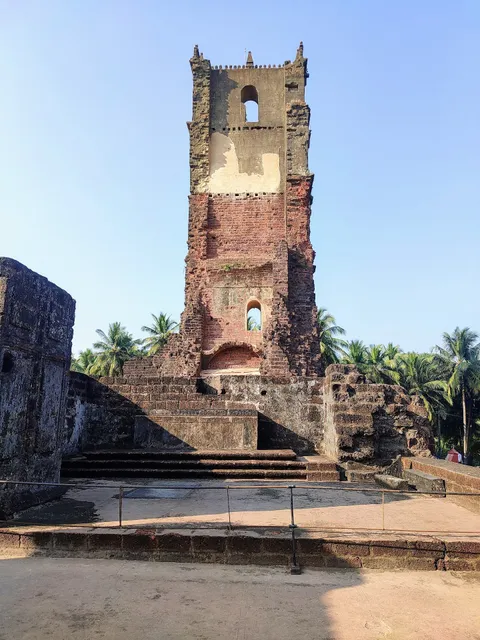
The St. Augustine Tower in Goa stands as a testament to the rich historical tapestry of India's coastal state. This towering structure is the only remaining fragment of what was once a sprawling church complex completed in 1602, now part of the UNESCO World Heritage Site, Churches and convents of Goa.
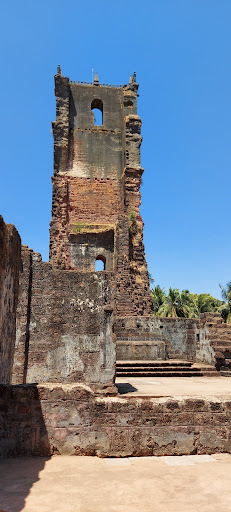
Perched atop the Monte Santo (Holy Hill) in Old Goa, the St. Augustine Tower is a four-storied laterite monument, soaring to a height of 46 meters. It was originally one of four towers belonging to the Church of Nossa Senhora da Graça (Our Lady of Grace), an imposing edifice built by the Augustinian friars who arrived in Goa in 1587.
The church complex was an architectural marvel of its time, featuring eight chapels, four altars, and a convent with numerous cells. However, the tower is not just a relic of architectural significance; it's a symbol of the tumultuous history that Goa has witnessed. The church was abandoned in 1835 following the eviction of many religious orders by the Portuguese government, leading to its gradual ruin. The vault collapsed in 1842, and by 1938, most of the structure had succumbed to time and neglect.
The St. Augustine Tower also holds a narrative of faith and resilience. It was here that archaeologists searched for the relics of St. Ketevan, the Georgian queen martyred in 1624 for refusing to renounce her faith. Excavations in the late 20th century led to the discovery of bone fragments, which DNA studies confirmed belonged to a woman, adding a layer of intrigue and historical significance to the site.
Today, the tower attracts tourists and history enthusiasts alike, who come to marvel at the remnants of a bygone era. Its presence on the landscape of Old Goa is a poignant reminder of the impermanence of human endeavors and the enduring nature of faith and history.
The St. Augustine Tower continues to be one of Goa's most visited tourist destinations, its ruins featured in popular culture, including Bollywood hits like 'Gumnaam Hai Koi' and 'Saathiya'. It stands not just as a monument, but as a chronicle of the past, inviting onlookers to ponder the stories etched within its walls.
For those interested in exploring the depths of Goa's historical richness, the St. Augustine Tower is a must-visit. It's a place where the whispers of the past meet the footsteps of the present, offering a unique glimpse into the legacy of the Augustinian friars and the enduring...
Read moreNestled in the historic city of Old Goa, St. Augustine Church stands as a timeless testament to the rich cultural heritage and profound spiritual significance of Goa. This magnificent church, despite its dilapidated state, continues to captivate visitors with its imposing ruins, intricate architecture, and a poignant reminder of Goa's colonial past.
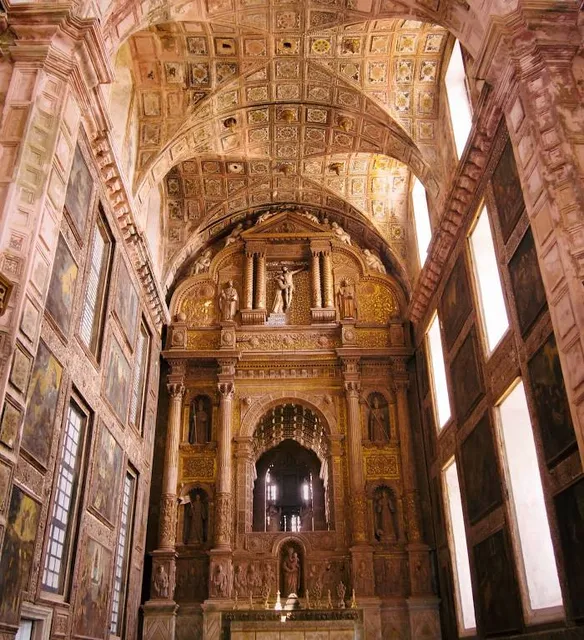
Stepping foot into St. Augustine Church is akin to stepping back in time. The weathered stone walls, crumbling arches, and towering belfry evoke a sense of grandeur and solemnity. Once a towering edifice, today only the majestic façade and the ornate bell tower remain, but their haunting beauty is awe-inspiring.
The intricate detailing of the architecture showcases a blend of Gothic and Corinthian influences, a testament to the mastery of the artisans who crafted it. Despite the ravages of time, the remaining sculptures and carvings offer a glimpse into the skill and devotion of those who created them.
For history enthusiasts, St. Augustine Church offers a captivating narrative of the rise and fall of the Portuguese empire. It was built in 1602 by the Augustinian friars and served as a prominent center of Catholicism for nearly two centuries. The echoes of prayers and chants that once filled the halls can still be felt, enveloping visitors in an aura of spirituality.
While the church's current condition may seem forlorn, efforts are being made to preserve and restore its glory. Visitors can witness ongoing restoration work, which serves as a reminder of the importance of preserving our shared cultural heritage.
St. Augustine Church is not just a place for history buffs; it is a pilgrimage for those seeking solace and spiritual reflection. The tranquil atmosphere within its ruins provides a perfect setting for quiet contemplation and introspection.
Despite its partial ruins, St. Augustine Church remains a must-visit destination for anyone visiting Goa. It carries the weight of centuries of history, exudes an undeniable charm, and leaves an indelible impression on all who witness its splendor. St. Augustine Church stands as a living testament to Goa's vibrant past, an ode to its enduring cultural legacy, and a symbol of resilience against the...
Read moreSt. Augustine Tower: Goa’s Tall Tale of Time ⛪⛱️ Where centuries-old stones still stand and gossip!
The St. Augustine Tower in Goa, a magnificent ruin standing tall in Old Goa, offers a fascinating glimpse into the region’s rich past and architectural grandeur. Constructed between 1597 and 1602 by Augustinian friars who arrived in Goa in 1587, this tower was originally part of the grand Church of St. Augustine. It was one of the three great Augustinian churches globally, alongside El Escorial and the Monastery of São Vicente de Fora.
The tower’s story is one of both splendor and misfortune. In 1835, the Portuguese government evicted many religious orders, leading to the church’s abandonment. By 1842, its vault collapsed, followed by the body of the church. In 1931 and again in 1938, further collapses left only one of the original four towers standing. Today, this remaining 46-meter-high laterite tower symbolizes resilience and history.
A visit to the St. Augustine Tower is like stepping back in time. The ruins, with their weathered stone walls and intricate carvings, tell tales of Goa’s colonial past. It’s a perfect spot for history buffs and photographers alike. Interestingly, the site was featured in Bollywood films such as "Gumnaam" and "Singham".
For those curious about peculiar legends, the site doesn’t disappoint. One notable story involves the installation of the church’s vault, which collapsed twice. On the third attempt, the designer, confident in his plan, had his son stand beneath the vault and ordered cannons to be fired at it. The vault held, and the boy emerged unscathed, proving the structure’s integrity.
The ruins are open from 9 AM to 5 PM daily, and the best time to visit is during the cooler months from November to February when Goa is at its most vibrant. The site is free to enter, making it an accessible destination for all. It’s located about 8.3 km from Panaji bus stand and near Karmali railway station.
Whether you’re a history aficionado or just looking to capture some stunning photos, the St. Augustine Tower is a must-visit, offering a blend of historical intrigue and scenic beauty that’s quintessentially Goan. Just watch your step—those old stones...
Read more