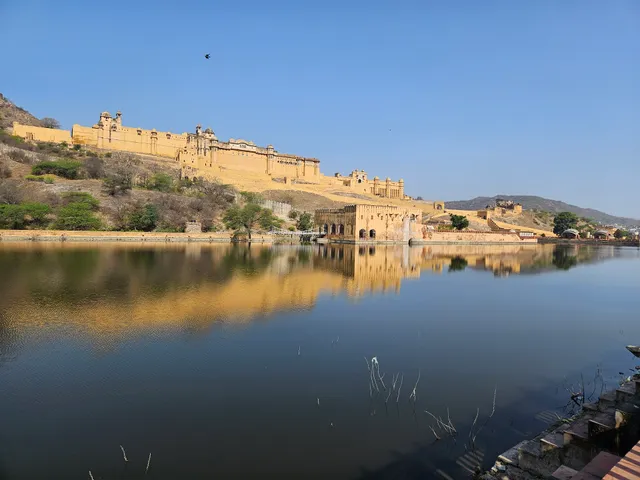
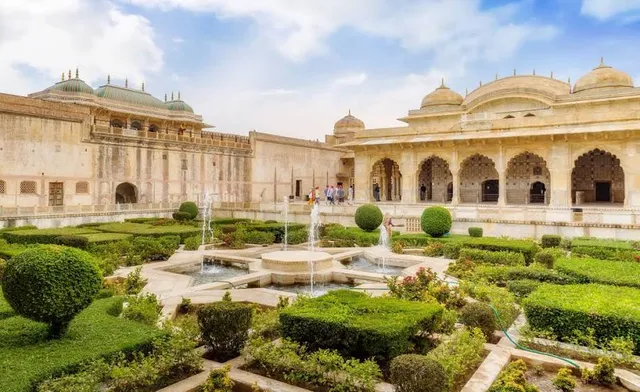
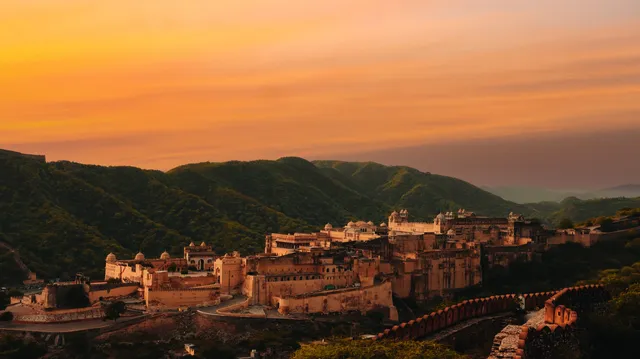
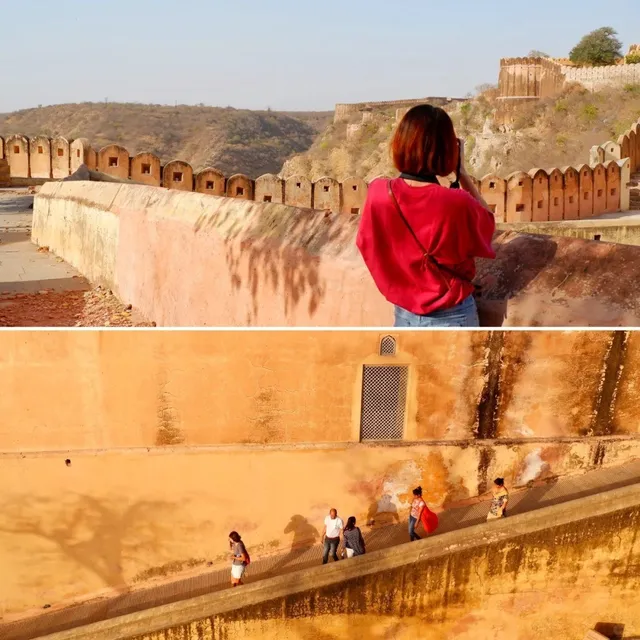
Amber Palace, commonly known as Amer Fort, is Jaipur’s premier heritage landmark—a majestic hilltop fortress famed for its grand architecture, royal history, and panoramic vistas. Located just 11 km from the Pink City, it combines formidable defense with palatial elegance, making it an unmissable stop for anyone visiting Jaipur
🏰 Architectural Grandeur & Layout Constructed from red sandstone and white marble, the fort artfully blends Rajput and Mughal design elements. It’s organized into four ascending levels, each featuring its own courtyard and entry gate—starting with the Suraj Pol (Sun Gate) that opens to a grand Jaleb Chowk used historically for parades and public gatherings
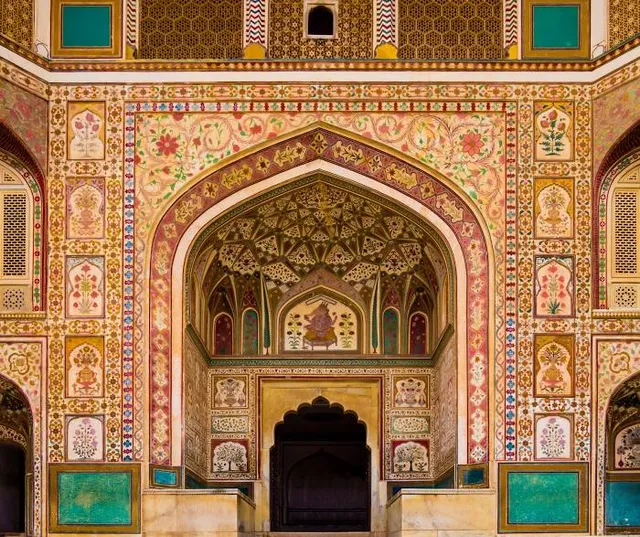
Highlights include the ornately carved Ganesh Pol, the Diwan-e-Aam (Public Audience Hall), and the smaller, richly decorated Diwan-e-Khas
Mirrored Splendor The third level houses the breathtaking Sheesh Mahal (Mirror Palace), where thousands of minute mirrors embedded in walls and ceilings reflect candlelight to create a starlit illusion
Adjacent is Sukh Niwas, a pleasure palace complete with sandalwood doors and an ingenious cooling system that channels water from Maota Lake to maintain a soothing temperature
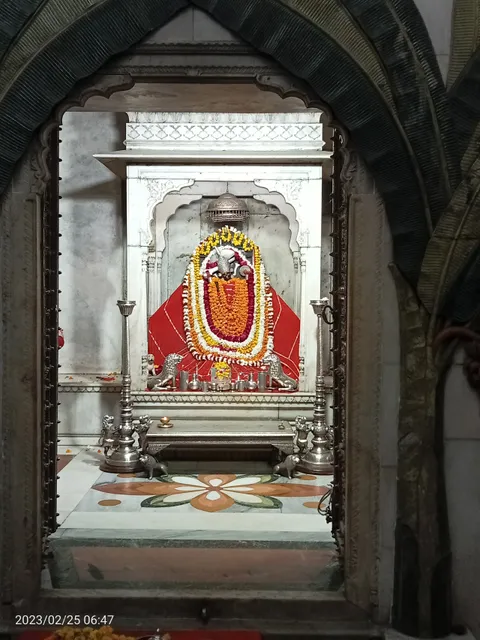
Royal Quarters & Spiritual Sanctity The zenana section on the highest level, accessible through Tripolia Gate, was the private quarters for royal women—designed to afford privacy and comfort Between courtyards, the Shila Devi Temple, built in 1604, houses the revered black-stone idol of Goddess Durga brought by Raja Man Singh, adding spiritual depth to the visit
Setting & Water Features Perched on a hill crest above Maota Lake, the fort capitalizes on its location both defensively and aesthetically
The Mughal-style Kesar Kyari garden on the lake’s central island offers superb photo opportunities, especially at sunset
The lake also historically served as the palace’s primary water source
Visitor Experience & Evenings Visitors can choose between ascending by jeep or opting for a traditional elephant ride through Suraj Pol—though ethical concerns have shifted preference toward jeeps Day visits run from 9 AM to 5:30 PM, while evening light‑and‑sound shows (in Hindi and English) recreate the fort’s saga with dramatic narration and lighting
Why It Stands Out Amber Fort’s charm lies in its multi-layered personality: a fortified bastion, a royal residence, a symbolic tribute to religion, and a stage for cultural heritage. Its elegance appeals to architecture enthusiasts, while its legends resonate with history lovers. The mirrored chambers, secret escape passages, sun-drenched courtyards, and temple sanctums together tell a captivating story of Rajasthan’s regal majesty Tips & Final Thoughts
Arrive early to beat crowds and capture better light. Don’t miss the light‑and‑sound show around sunset. Wear comfortable shoes—exploration involves steep steps and cobbled paths. Hire a guide for richer context about the murals, water systems, and hidden tunnels. Amber Palace isn't just a sightseeing spot—it’s an immersive voyage into the grandeur of Rajput legacy and Mughal artistry, offering breathtaking views and historic resonance. Whether you're chasing heritage, photography opportunities, or just a sense of awe, Amer Fort delivers a majestic narrative etched in...
Read moreAmer Fort, also known as Amber Fort, is one of the most iconic landmarks of Jaipur and a UNESCO World Heritage Site. Built in the 16th century by Raja Man Singh, the fort is a beautiful blend of Rajput and Mughal architecture, showcasing grand courtyards, intricate carvings, mirror work, and breathtaking views of the Aravalli hills and Maota Lake.
🏰 Architecture & Design
The fort is a masterpiece of red sandstone and marble. The Sheesh Mahal (Mirror Palace) is the highlight, with its walls covered in thousands of mirror pieces that sparkle even in dim light. The Ganesh Pol (main entrance), with its delicate frescoes, and the Diwan-i-Aam (Hall of Public Audience) are equally stunning.
🌅 Views & Experience
From the top, you get panoramic views of Jaipur city and the surrounding hills. Watching the sunset from the fort is unforgettable. The fort is spread over a large area, so be prepared for a lot of walking, but every corner has something worth admiring.
🎭 Cultural Touch
In the evenings, there is a light and sound show that narrates the history of the fort and Jaipur—highly recommended for history lovers.
🐘 Elephant & Jeep Rides
Visitors can either walk, take a jeep, or ride an elephant up to the fort gates. The elephant rides are popular with tourists, but many visitors now prefer jeeps due to concerns for animal welfare.
🎟️ Tickets & Timing • Entry Fee: Around ₹100 for Indians, higher for foreign tourists. • Timing: 8:00 AM – 5:30 PM (day visit), 6:30 PM onwards for the light & sound show.
✅ Pros: • Stunning Rajput architecture • Rich history and heritage • Great for photography • Light & sound show adds extra charm
❌ Cons: • Can get very crowded during peak season • Lots of walking (wear comfortable shoes) • Guides can sometimes overcharge if not negotiated
⸻
📝 Final Verdict
Amer Fort is not just a fort—it’s a journey into Rajasthan’s royal past. With its palaces, courtyards, and intricate artwork, it truly feels like stepping back in time. A must-visit if you’re in Jaipur, and one of the most beautiful...
Read moreAmer Fort (or Amber Fort) is famous for its stunning Mughal-influenced Rajput architecture, a magnificent Sheesh Mahal (Mirror Palace) with intricate mirror work, its inclusion as part of a UNESCO World Heritage site, and its role as a historically significant royal residence. Visitors are drawn to its grandeur, beautiful courtyards, and the unique experience of the underground tunnels connecting it to Jaigarh Fort
Sheesh Mahal (Mirror Palace): This is perhaps the fort's most iconic feature, known for its walls and ceilings adorned with mirror work that creates a dazzling effect when light reflects off them. Architectural Fusion: The fort showcases an outstanding example of Rajput architecture with strong Mughal influences, incorporating features like the maharaja's apartments, a hypostyle hall, and several temples. Vast Layout: The massive structure is divided into four main sections, each centered around its own courtyard, offering diverse architectural styles and spaces. Underground Tunnels: The fort is connected to Jaigarh Fort via underground tunnels, parts of which are now open to the public.
Amer Fort is a designated UNESCO World Heritage site, recognized alongside other Rajput fortresses. Former Capital: It served as the capital of the Kachwaha Rajputs for 600 years, making it a vital political and cultural center in its time. Bollywood Fame: The fort's picturesque beauty, especially its intricate carvings and the Sheesh Mahal, has been featured in popular Bollywood movies, enhancing its appeal for movie...
Read more