Exactly when Raja Jai Singh began construction in Jaipur is unknown, but several instruments had been built by 1728, and the construction of the instruments in Jaipur continued until 1738. During 1735, when construction was at its peak, at least 23 astronomers were employed in Jaipur, and due to the changing political climate, Jaipur replaced Delhi as Raja Jai Singh's main observatory and remained Jai Singh's central observatory until his death in 1743. The observatory lost support under Isvari Singh (r.1743-1750) because of a succession war between him and his brother. However, Mado Singh (r. 1750–1768), Isvari Singh's successor, supported the observatory, although it did not see the same level of activity as under Jai Singh. Although some restorations were made to the Jantar Mantar under Pratap Singh (r.1778-1803), activity at the observatory died down again. During this time, a temple was constructed and Pratap Singh turned the site of the observatory into a gun factory.Ram Singh (r. 1835–1880) completed restoring the Jantar Mantar in 1876, and even made some of the instruments more durable by inserting lead into the instruments' lines and using stone to restore some of the plaster instruments. However, the observatory soon became neglected again, and was not restored until 1901 under Madho Singh II (r. 1880–1922) The Palace is divided into six separate but main sections each with its own entry gate and courtyard. The main entry is through the Suraj Pol (Sun Gate) which leads to the first main courtyard. This was the place where armies would hold victory parades with their war bounty on their return from battles, which were also witnessed by the Royal family's womenfolk through the latticed windows.[20] This gate was built exclusively[clarification needed] and was provided with guards as it was the main entry into the palace. It faced east towards the rising sun, hence the name. Royal cavalcades and dignitaries entered the palace through this gate.[21]
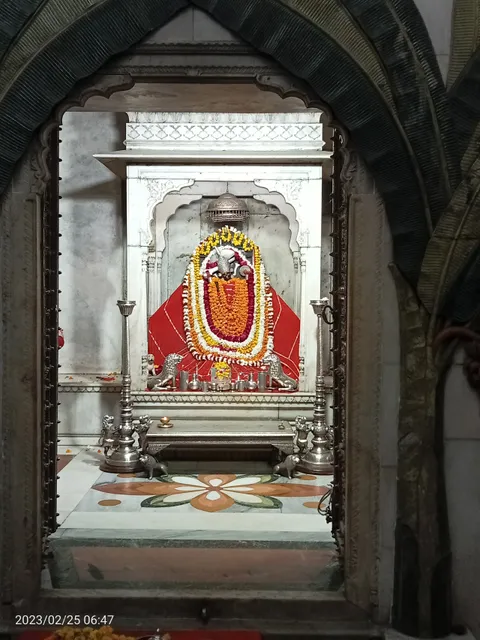
Jaleb Chowk is an Arabic phrase meaning a place for soldiers to assemble. This is one of the four courtyards of Amer Palace, which was built during Sawai Jai Singh's reign (1693–1743 AD). Maharaja's personal bodyguards held parades here under the command of the army commander or Fauj Bakshi. The Maharaja used to inspect the guards contingent. Adjacent to the courtyard were the horse stables, with the upper-level rooms occupied by the guards.[22]An impressive stairway from Jalebi Chowk leads into the main palace grounds. Here, at the entrance to the right of the stairway steps is the Sila Devi temple where the Rajput Maharajas worshipped, starting with Maharaja Mansingh in the 16th century until the 1980s, when the animal sacrifice ritual (sacrifice of a buffalo) practiced by the royalty was stopped.[20]
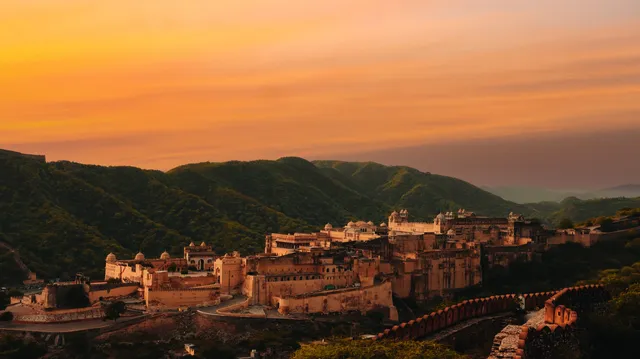
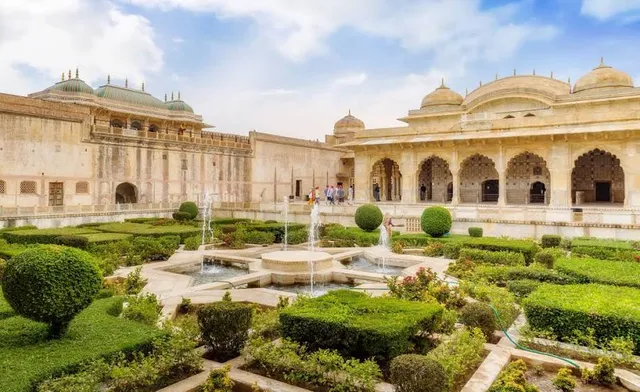
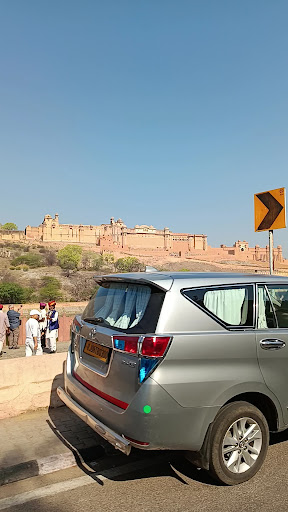
Ganesh Pol, or the Ganesh Gate, named after the Hindu god Lord Ganesh, who removes all obstacles in life, is the entry into the private palaces of the Maharajas. It is a three-level structure with many frescoes that were also built at the orders of the Mirza Raja Jai Singh (1621–1627). Above this gate is the Suhag Mandir where ladies of the royal family used to watch functions held in the Diwan-i-Aam through latticed marble windows called "jâlîs".[The Amber Fort were originally built by Raja Man Singh. Jai Singh I expanded it. Improvements and additions were done successive rulers over the next 150 years, until the Kachwahas shifted their capital to Jaipur during the time of Sawai Jai Singh II, in 1727.[1 Amer was known in the medieval period as Dhundar (meaning attributed to a sacrificial mount in the western frontiers) and ruled by the Kachwahas from the 11th century onwards – between 1037 and 1727 AD, till the capital was moved from Amer to Jaipur.[4] The history of Amer is indelibly linked to these rulers as they founded their...
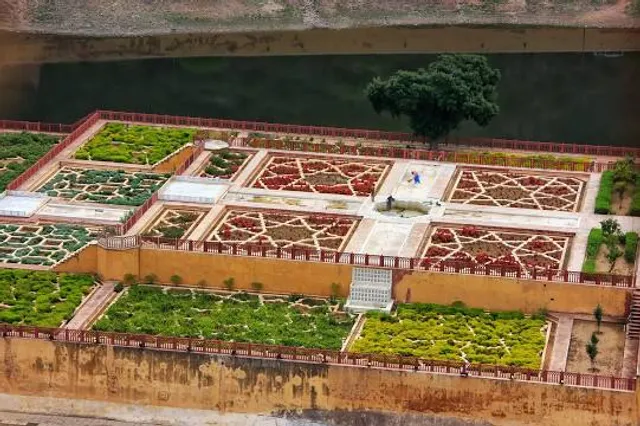
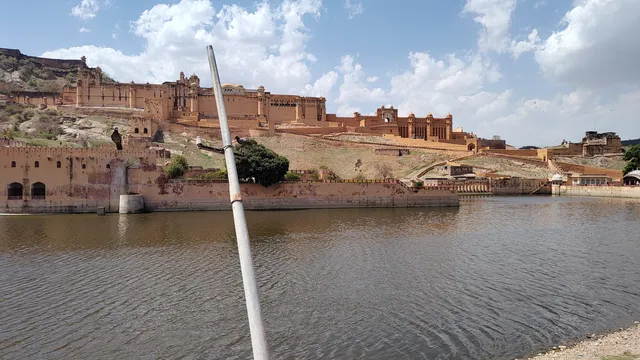
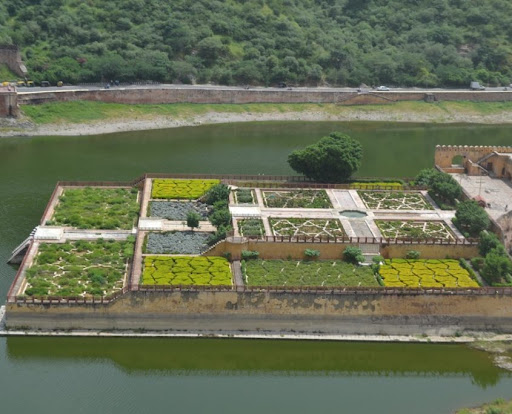
Read moreNestled in the tranquil waters of Maota Lake, the Kesar Kyari Garden is a testament to the ingenuity and aesthetic sensibilities of its creator, Raja Jai Singh II. This unique attraction, located in Amer, Jaipur, offers a breathtaking view from the ramparts of Amer Fort. It's a small island garden that captivates visitors with its distinct design. The garden's layout is a perfect example of the Persian Charbagh pattern, a four part garden design. Walkways divide the square plots, creating a symmetrical and visually pleasing arrangement. The intricate geometric patterns are a hallmark of Mughal garden design, and Kesar Kyari perfectly blends this traditional style with its stunning natural surroundings. Raja Jai Singh's vision was to recreate the conditions necessary for cultivating saffron, a spice more commonly grown in colder climates. He ingeniously created a unique micro-environment on this island. While saffron cultivation was ultimately unsuccessful, the garden's name, which translates to "saffron beds," serves as a reminder of this ambitious and creative endeavor. Today, the garden, with its lush greenery and serene location, is a beautiful and peaceful sight. It's a must-see for anyone visiting Amer Fort, offering a glimpse into a fascinating piece of history and landscape architecture. The sight of the island garden floating on the lake, with the majestic Aravalli hills in the background, is truly...
Read moreThis is Kesar Kyari Bagh is part of the Amber Fort complex near Jaipur. It was created around 1600 for the women of the harem to admire from above. According to Tom Turner, there was also an ingenious pulley system that allowed the women to reach the garden directly from their rooms, thus avoiding the risk of inappropriate male contact en route. The name translates as the saffron-growing garden, as originally it was this plant that grew in each star shape. The changing climate apparently means that saffron will no longer grow. Some scholars call it the Maunbari garden and argue that it was designed to be viewed at night, the pale marble partitions standing out in the moonlight like a pattern of lace against the dark plants.
What I love about about this garden is its triumphant artificiality. Nestled below rugged hills, it is striking because the whole thing is so obviously, gloriously man-made, from the dammed lake, square platform base, and stepped terraces to the intricate stone work and patterned planting. To anyone who argues that naturalistic designs are always to be preferred to “the Checks and Restraints of Art” – I’d simply show them...
Read more