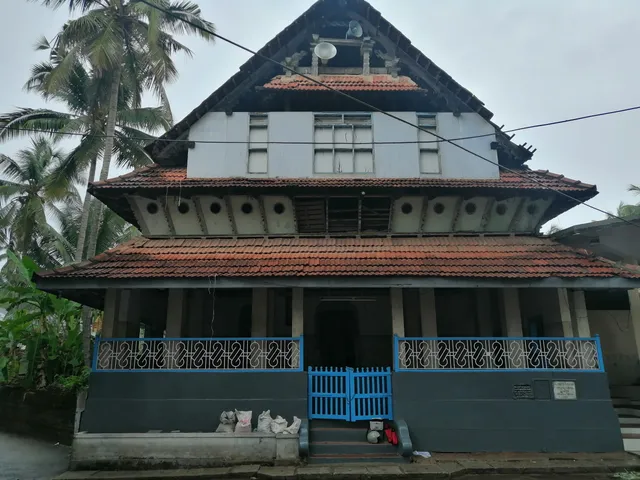
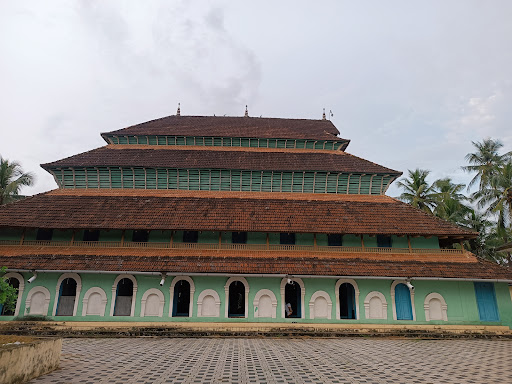
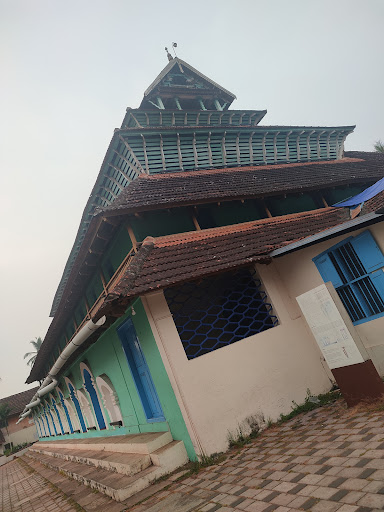
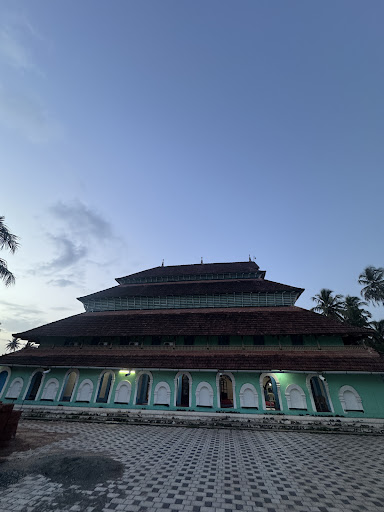
Kuttichira Mosque, also known as the Mishkal Mosque, located in Kozhikode, Kerala, is a magnificent representation of the region’s cultural and architectural heritage. This ancient mosque, built in the 14th century by a wealthy Arab merchant, Nakhooda Mishkal, is a testament to the harmonious blend of Islamic and Kerala architectural styles.
Architectural Beauty
What sets the mosque apart is its unique construction. Unlike traditional mosques with domes and minarets, Kuttichira Mosque features wooden architecture, sloping tiled roofs, and intricate carvings. The structure is primarily made of timber and does not follow the usual dome-and-minaret style, which reflects the regional influence. The four-story mosque originally had five floors, but part of it was damaged in an attack during colonial times.
Spiritual and Historical Significance
As one of the oldest mosques in India, Kuttichira holds immense historical significance. It symbolizes the long-standing trade relations between the Arabs and the Malabar region and the peaceful coexistence of different communities in Kozhikode. The mosque is not just a place of worship but also a cultural landmark, hosting various events and gatherings.
Atmosphere and Ambiance
Visiting the mosque is a serene experience. Its location near the Kuttichira pond adds to the tranquil setting, making it a perfect spot for spiritual reflection. The mosque's environment is welcoming, not only for devotees but also for history enthusiasts and tourists interested in exploring Kerala’s rich past.
Accessibility and Maintenance
The mosque is well-maintained, preserving its historical charm while catering to the needs of modern-day visitors. It is easily accessible from Kozhikode city, making it a convenient stop for travelers.
Conclusion
Kuttichira Mosque is more than just a religious site; it’s a historical and architectural gem that showcases Kerala’s multicultural past. Whether you’re a history buff, an architecture enthusiast, or someone seeking a peaceful retreat, this mosque is a must-visit. It’s a place where spirituality meets history, leaving visitors with a sense of awe...
Read moreMishkal Masjid, located in the heart of Kozhikode (Calicut), Kerala, is a remarkable monument that reflects the rich cultural and architectural heritage of the region. Built in the 14th century by a wealthy Arab merchant named Nakhooda Mishkal, this mosque stands out for its unique architectural style, which blends traditional Kerala craftsmanship with influences from Arab and Persian design.
One of the most striking features of Mishkal Masjid is its four-story structure, which is primarily made of wood. Unlike typical mosques, Mishkal Masjid does not have a dome or minaret, adhering instead to the indigenous architectural style of Kerala. The mosque originally had five stories, but the top floor was destroyed during a Portuguese attack in 1510. Despite this, the mosque remains an architectural marvel, with its intricately carved wooden pillars and beams that showcase the craftsmanship of the time.
The mosque is also notable for its large prayer hall, which can accommodate over a thousand worshippers. The hall is supported by nearly 47 wooden pillars, each adorned with intricate carvings. The open courtyard in front of the mosque is another distinctive feature, providing a serene space for reflection and prayer.
Mishkal Masjid is more than just a place of worship; it is a symbol of the deep-rooted historical ties between Kerala and the Arab world. It stands as a testament to the region's pluralistic heritage, where different cultures and religions have coexisted and enriched each other...
Read moreHistory
Mishkal Mosque, the four-storied mosque situated in Kuttichira, has a history of more than 650 years. The credit for constructing such a huge mosque with extensive use of timber goes to an Arab trader and ship owner, Nakhooda Mishkal and the mosque is named after him. The mosque was initially five storied, and it was reduced to a four-storied structure following a Portuguese attack in 1510. The damages made during the Portuguese attack are still visible here. The mosque is a fine example of the communal harmony that existed in the place, because it was the ruler of Kozhikode, the Zamorin, who donated wood to repair the damage following the Portuguese attack.
Architecture
This imposing wooden mosque is simply breathtaking. The outer paving with Italian tiles, 47 doors, 24 pillars decorated with carvings that support the entire structure, the big prayer hall capable of accommodating about 300 people and so on are some of the features that make this mosque truly remarkable. Unlike other mosques, this one lacks copulas and minarets. The noticeable resemblance to traditional temple architecture is reflected in the intricate carvings on the walls and ceilings and in the gopuram-style arches at the entrance. Square and rectangular tanks, a few yards away from the famous Kuttichira pond, can be seen attached to the mosque. The area inside the mosque is well-ventilated with mihrab-style doors. During its renovation, a wooden mimbar, with intricate motifs, was added to...
Read more