HTML SitemapExplore
logo
Find Things to DoFind The Best Restaurants

Sri Janardanaswamy Temple — Attraction in Kerala

Name
Sri Janardanaswamy Temple
Description
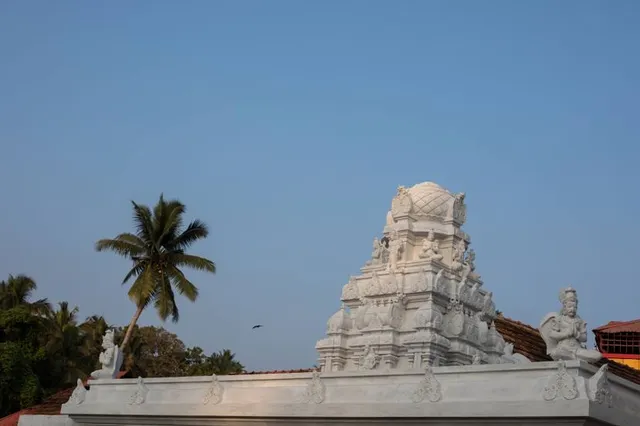
Janardana Swami Temple is a 2000+ year-old temple situated in the municipality of Varkala city in Thiruvananthapuram district. It is also known as Varkala Temple. Janardana Swami is a form of Vishnu.
Nearby attractions
Varkala Bali Mandapam
Varkala, Kerala 695141, India
CanFly Adventure
Varkala Helipad Road, Varkala, Kerala 695141, India
Varkala Cliff Beach
PPP3+7F6, Varkala, Kerala 695141, India
South Cliff Varkala Town
South Cliff, Temple Rd, Varkala, Kerala 695141, India
Nearby restaurants
Sree Padmam
PPM6+56R, Varkala, Kerala 695141, India
Cafe Sarwaa
Near Perungulam, Inside Mare Holidays, Varkala, Kerala 695141, India
Green Pepper Beach Resort
South Cliff Perumkulam, Varkala, Kerala 695141, India
Padbhanava Restaurant
PPM6+45W, Varkala, Kerala 695141, India
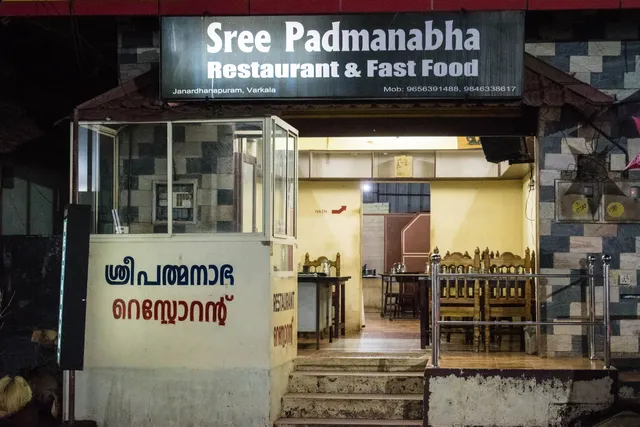
Sree Padmanabha Restaurant
PPM6+2C8, Varkala Helipad Road, Varkala, Kerala 695141, India
Cafe Hbr
1, Varkala Beach Rd, Varkala, Kerala 695141, India
Bonito Cafe Varkala papanasham Beach Sea food restaurant
Sea food restaurant, Bonito Cafe Varkala papanasham, Beach, 695141, India
Seasun Cafe
PPM4+6C7, Papanasam Beach Road, Varkala, Kerala 695141, India
Varkala Marine Palace Beach Restaurant
PPM4+C66, Varkala, Kerala 695141, India
Coastal Kitchen Restaurant - Gateway Varkala
Gateway, Janardhanapuram, Varkala, Kerala 695141, India
Nearby hotels
Nikhil Gardens
Ayillyam, Temple Rd, Janardhanapuram, Varkala, Kerala 695141, India
Indraprastha Beach Resorts Pvt. Ltd
Papanasam Beach Road, Papanasam Beach Rd, Janardhapuram, Varkala, Kerala 695141, India
Happy Turtles Wellness & Retreats (Warm Water Therapy & Homestay)
Kavuvila, Janardhanapuram, South Cliff, Varkala, Kerala 695141, India
Nalukettu Heritage Resort
padinjarae nada, Temple Rd, Varkala, Kerala 695141, India
Surendram Villa Resort
Varkala, Kerala 695141, India
Gouri's Homestay
Gouri's Homestay, Temple Road, Junction, near Kilitakkamukku, Varkala, Kerala 695141, India
Soul & Surf Kerala
Golden Beach, South Cliff, Janardhanapuram, Varkala, Kerala 695141, India
Ram's Gratitude Inn
beach road,near temple,Varkala Stay with us once,you will carry us forever!, Varkala, Kerala 695141, India
Green Grass Villa
Perukulam Road, Temple Rd, Janardhanapuram, Varkala, Kerala 695141, India
Akshay Beach Resort
Akshay beach resort, papanasam beach road, Varkala, Kerala 695141, India
Related posts
Keywords
Sri Janardanaswamy Temple tourism.Sri Janardanaswamy Temple hotels.Sri Janardanaswamy Temple bed and breakfast. flights to Sri Janardanaswamy Temple.Sri Janardanaswamy Temple attractions.Sri Janardanaswamy Temple restaurants.Sri Janardanaswamy Temple travel.Sri Janardanaswamy Temple travel guide.Sri Janardanaswamy Temple travel blog.Sri Janardanaswamy Temple pictures.Sri Janardanaswamy Temple photos.Sri Janardanaswamy Temple travel tips.Sri Janardanaswamy Temple maps.Sri Janardanaswamy Temple things to do.
Sri Janardanaswamy Temple things to do, attractions, restaurants, events info and trip planning
Sri Janardanaswamy Temple
IndiaKeralaSri Janardanaswamy Temple

Basic Info

Sri Janardanaswamy Temple

PPJ5+QX6, Varkala, Kerala 695141, India
4.7(1.8K)
Open 24 hours
Save
spot

Ratings & Description

Info

Janardana Swami Temple is a 2000+ year-old temple situated in the municipality of Varkala city in Thiruvananthapuram district. It is also known as Varkala Temple. Janardana Swami is a form of Vishnu.

Cultural
Accessibility
attractions: Varkala Bali Mandapam, CanFly Adventure, Varkala Cliff Beach, South Cliff Varkala Town, restaurants: Sree Padmam, Cafe Sarwaa, Green Pepper Beach Resort, Padbhanava Restaurant, Sree Padmanabha Restaurant, Cafe Hbr, Bonito Cafe Varkala papanasham Beach Sea food restaurant, Seasun Cafe, Varkala Marine Palace Beach Restaurant, Coastal Kitchen Restaurant - Gateway Varkala
logoLearn more insights from Wanderboat AI.

Plan your stay

hotel
Pet-friendly Hotels in Kerala
Find a cozy hotel nearby and make it a full experience.

hotel
Affordable Hotels in Kerala
Find a cozy hotel nearby and make it a full experience.

hotel
The Coolest Hotels You Haven't Heard Of (Yet)
Find a cozy hotel nearby and make it a full experience.

hotel
Trending Stays Worth the Hype in Kerala
Find a cozy hotel nearby and make it a full experience.

Reviews

Nearby attractions of Sri Janardanaswamy Temple

Varkala Bali Mandapam

CanFly Adventure

Varkala Cliff Beach

South Cliff Varkala Town
Varkala Bali Mandapam

Varkala Bali Mandapam

4.4

(111)

Open until 11:45 AM
Click for details
CanFly Adventure

CanFly Adventure

4.6

(115)

Open until 5:00 PM
Click for details
Varkala Cliff Beach

Varkala Cliff Beach

4.6

(69)

Open 24 hours
Click for details
South Cliff Varkala Town

South Cliff Varkala Town

4.5

(111)

Open 24 hours
Click for details

Nearby restaurants of Sri Janardanaswamy Temple

Sree Padmam

Cafe Sarwaa

Green Pepper Beach Resort

Padbhanava Restaurant

Sree Padmanabha Restaurant

Cafe Hbr

Bonito Cafe Varkala papanasham Beach Sea food restaurant
Seasun Cafe

Varkala Marine Palace Beach Restaurant

Coastal Kitchen Restaurant - Gateway Varkala

Sree Padmam

Sree Padmam

3.1

(47)

Click for details
Cafe Sarwaa

Cafe Sarwaa

4.5

(1.5K)

Click for details
Green Pepper Beach Resort

Green Pepper Beach Resort

4.1

(150)

$$

Click for details
Padbhanava Restaurant

Padbhanava Restaurant

3.3

(11)

Click for details
Get the Appoverlay
Get the AppOne tap to find yournext favorite spots!
Wanderboat LogoWanderboat

Your everyday Al companion for getaway ideas

CompanyAbout Us
InformationAI Trip PlannerSitemap
SocialXInstagramTiktokLinkedin
LegalTerms of ServicePrivacy Policy

Get the app

© 2025 Wanderboat. All rights reserved.
logo

Reviews of Sri Janardanaswamy Temple

4.7
(1,782)
avatar
5.0
17w

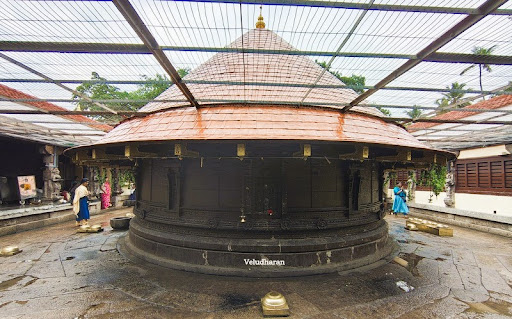
Moolavar : Sree Janadanaswamy Some of the salient features of this temple are…. The temple faces east with a Dwajasthambam, balipeedam in a mandapam. The balipeeda mandapa pillars are with Donor’s images and Pavai vilakku, Natarajar, Karaikal Ammaiyar, Kali, Krishna, Rathi, Manmathan, and Pichadanar. Are on the pillars of balipeeda mandapam. Dwarapalakas are at the entrance of sanctum sanctorum. Moolavar sanctum sanctorum is in the circular Sreekovil. In between the nalambalam, pradakshinaptha, Thulasi madam, Spatamatrikas, ashtadikpalakas in the form balipeedas covered with brass plates/ mouldings. In the nalambalam outer side are the Shiva Temple, Sastha, Vinayagar, and Nagars. ARCHITECTURE Gajalakshmi stucco image is after entrance mandapam and back side entrance of nalambala entrance top. The balipeeda mandapa front side may be constructed in recent years. The Janardanaswamy shrine is Circular on plan. The temple was built with stone from adhistanam to Prastaram. The adhistanam consists of jagathy, threpatta kumuda and kapotam. The Bhitti starts with vedikai. The pilasters are of Brahmakantha pilasters with kalasam, kudam, lotus petals mandi. A conical, eka tala vimanam is on the prastaram. The namaskara mandapam with a pyramidal roof is in front of sanctum sanctorum, which is open on four sides. The nalambala with entrance on four sides form an enclosure for the Sreekovil. The nalambalam outer sub shrines are constructed with stone from adhistanam to prastaram and the super structure was built with brick and cement. The adhistanam is of pada bandha adhistanam with jagathy, three patta kumudam, and pattikai. The koshtas are with bas reliefs of Maha Vishnu and ornamental works. HISTORY AND INSCRIPTIONS It is believed that the temple belongs to 1st Century CE Pandya period. (But the present structure may belongs to 12th to 13th century Pandya period). Later renovated during Venadu Kings and now under the control of Travancore Devaswom board. The temple as we see it now was built in the 13th century. According to a Tamil inscription in Vattezhuthu, found on the South base of the central shrine of Sri Janardhana Swamy, King Vira Padmanaba Marthanda Varma Thiruvadi (1240-1252 CE), of the Venad Dynasty, converted the temple of the Bhattaraka of Varkalai Udhayamarthandapuram to stone from Adhistanam to Prastaram. He further had the Sri Vimana covered with copper sheets, renewed the Namaskara mandapa/Mukha Mandapa and consecrated the temple on Karkataka Rasi, Wednesday, 21st day of the Rishabha Month, in the Kollam Year 425 (1252CE), (2/1084,T.A.S Vol 4, Page 151). Another inscription found on the North base of the mandapa in front of the Janardanaswamy shrine, containing a Sanskrit verse, written in Grantha characters. This inscription has been interpreted in depth by Prof Kielhorn in Epigraphia Indica Volume 4. It says King Goda Marthanda, had the god Hari, and bathed by Brahmins around mid-day on Thursday 11th May, in the Kollam Year 655 (1480 CE). The inscription mentions Varkala as Vayka. (Prof Kielhom is of the impression that it could also be referring to Vaikkom) An inscription in the East prahara, belonging to Raja Ravi Kulasekara Perumal, of Attingal Swarupam, who performed Hiranyagarbha and Tulabhara in Tiruvananthapuram, speaks about repairs executed to the temple in Kollam year 700 (1525 CE). An inscription on the East and North base of the Dwajasthamba, belonging to King Rama Varma (Kollam Year 1071-1896 CE) mentions that the fdwajasthambam was installed by the King on Thursday, the 4th day of the Makara month, when Sun was in Mrigasirsha. The temple has an ancient bell removed from a shipwreck, donated by the captain of a Dutch vessel which sank near Varkala without casualties. The bell inscription reads as “Peter von Belson' and 'Michelle Evarald' and the year inscribed as 1757 CE. One of the inscriptions indicates that the temple was partially renovated during the reign of Umayamma Rani who ruled this region in 1677–84 CE. Ref Temples of Kerala and Alayam...

   Read more
avatar
5.0
6y

Several myths, legends and stories are associated with the origin and history of the temple. Most popular among them is the story related to Lord Brahma and Sage Narada.  Once lord Brahma descended to earth to perform a Yaga (fire sacrifice). He chose the present Varkala as the Yaga bhoomi (place to perform the sacrifice).  The striate of lignite and mineral waters found in Varkala are attributed to this sacrifice. Engrossed with the ritual Brahma forgot his divine job of creation. Lord Vishnu became aware of this situation and came to Varkala to remind Lord Brahma about his duty. Lord Vishnu entered the Yagashala in the disguise of an old man.  The Brahmins assisting Lord Brahma received the old man and gave him food. But whatever he ate, his hunger was not satiated. Lord Brahma’s assistants went and told him about it. Realising that the old man is none other than Lord Vishnu Brahma came immediately to see him but was shocked to see Vishnu eating aabhojanam.

Lord Brahma then prevented Lord Vishnu from eating it and told him, “Lord, if you eat it, then the final deluge will swallow this world. “ Lord Vishnu then requested Lord Brahma to stop the Yaga and recommence his job of creation.

One day Sage Narada followed by Lord Vishnu was walking in the sky over Varkala. Lord Brahma who came there saluted Lord Vishnu. The nine prajapathis (Marichi, Atri, Angiras, Pulastya, Pulaha, Kratu, Vasishtha, Prachetas or Daksha, Bhrigu (Narada is the tenth prajapathi, they are the ten lords first created by Brahma) were watching this. who were watching this started laughing for they couldn’t see Lord Vishnu. They thought that Lord Brahma was saluting his own son Sage Narada. Then Lord Brahma corrected them. They felt sorry at having committed a sinful deed. Lord Brahma told them that the proper place to pray for their redemption would be shown to them by sage Narada. Sage Narada threw his Valkalam (cloth made of deer’s skin) that he was wearing towards the earth. The Valkalam landed in a place which was later called by the name Varkala. Later Lord Vishnu made a pond there using his Chakra (wheel) at the request of Narada for the Prajapathis who wanted it to do the atonement. The Prajapathis did thapas ther e and were pardoned for their sins.

The janardhana (Janardhana is another name of Lord Vishnu) temple is believed to have been built by the devas. But this temple became dilapidated and was later reconstructed by a Pandya king. The king was once affected by a ghost. He went on a pilgrimage but couldn’t cure himself from the sway of the evil spirit. When he came to the present day Varkala, he saw the remnants of a dilapidated temple by the side the sea. He prayed to God promising he would rebuild the temple there. Next day he had a dream in which he was told to go to the sea and stand near the dilapidated temple. Nearby he would see huge amount of flowers floating in the sea, if he searches there he would get an idol. The present Janardhana idol was recovered from the sea by him. He built the temple and laid down the rules for maintenance of the temple.

The idol of Janardhana has Aabhojana in its right hand. People believe that this hand is rising slowly toward his mouth. The day that the idol Janardhanaswami eats the aabhojana the kaliyuga will be over and the world will face the great deluge.

The Dutch Bell There is a huge bell placed in this temple on which it is marked as 1757 (probably the year in which it was cast). The story behind this bell goes like his. It is said that the bell was offered to the temple as an oblation. While sailing to Europe a Dutch ship refused to move as it passed by the temple. Hearing the chiming of the bell from the temple the captain of the ship promised to offer the bell in his ship as an oblation to Janardhana swamy if he allows the ship to continue its journey. Soon a wind came and moved the ship and the crew safely to the next port. The captain returned and kept...

   Read more
avatar
4.0
5y

Janardhana Swami Temple, Varkala, Kerala

The presiding deity of this temple is Sri Janardhana Swami is in standing position facing east. His right hand is positioned as if he is performing "Aachamanam" i.e. it is raised towards his mouth. The day, the idol is able to eat the aabhojana from his right hand; the world will face the great deluge. People believe that over years this hand is raising slowly.

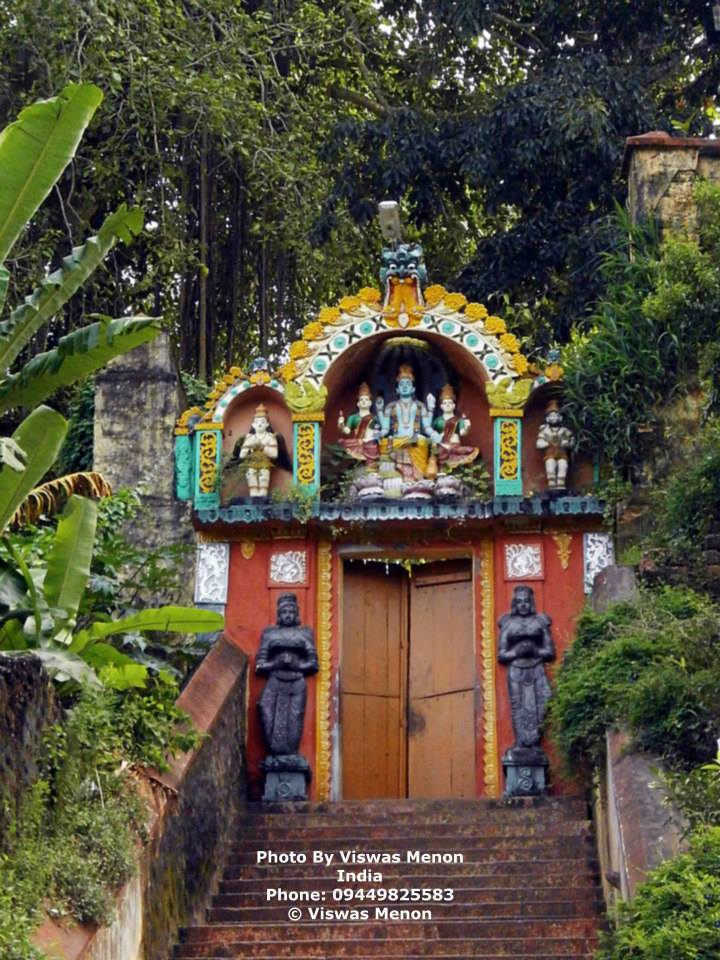
The temple is about 2000 years old. At the entrance to the inner shrine are the idols of Hanuman and Garuda on either side and in the main shrine is the idol of Sri. Janardana with Sri Devi and Bhoo Devi.

One of the inscriptions indicates that the temple was improved during the reign of Umayamma Rani, who ruled this region during 1677-84 A.D.

In the south-western corner and on the north-eastern side of the outer enclosure are the shrines of Sasta and Shiva with Nandi.

In times of yore, Brahma while performing a Yaga at Varkala was so much immersed in the Yaga that he forgot his job of creation. To remind Brahma, Vishnu came as a old man. The Brahmins assisting Brahma, received and fed the old man. But his hunger was not satiated. Brahma’s assistants informed Brahma about this. Brahma understood that the guest was Vishnu himself. He approached Vishnu,and found him trying to eat an Aabhojanam. Brahma prevented Vishnu from eating it and told him, “If you eat it, then the final deluge will swallow this world. “ Vishnu, then requested Brahma to stop the Yaga and recommence his job of creation.

After this one day Sage Narada followed by Lord Vishnu was walking in the sky over Varkala. Lord Brahma who came there saluted Lord Vishnu. The nine prajapathis who saw only sage Narada laughed at Lord Brahma, because they thought that Lord Brahma was saluting his own son Sage Narada. Lord Brahma corrected them. They felt sad at having committed a sinful deed. Lord Brahma told them that the proper place to pray for their redemption would be shown to them by sage Narada. Sage Narada threw the Valkala (deer’s skin) that he was wearing towards the earth. It fell in the present Varkala. Hence the town got the name Varkala.

The Prajapathis wanted a pond to do the atonement. Sage Narada requested lord Vishnu, who made a pond there; using his Chakra (wheel). The Prajapathis mediated there and were pardoned for their sins. It is believed that the devas constructed a temple of Lord Vishnu there and were worshipping the Lord Janardhana.

But over a period of time the temple dilapidated. During this time the Pandya king who was affected by a ghost, went on a pilgrimage but no where he was cured. When he came to the present day Varkala, he saw the remnants of a dilapidated temple by the side the sea. He prayed God saying that he would rebuild the temple there. Next day he had a dream and he was told to go to the sea and stand near the dilapidated temple and that he would see huge amount of flowers floating in the sea, and if he searched there he would get an idol without the left hand.

He was instructed to make a golden hand and attach it to the idol and build a temple round it. The present Janardhana idol was recovered from the sea by him. He built the temple and laid down the rules for maintenance of the temple.

There are small temples of Lord Shiva, Ganapathi, Sastha and Naga Devatha in this temple.

On the southern side of the temple two bells are tied. There is a story about it. It seems one Dutch ship was passing this way and suddenly the ship refused to move in spite of all efforts. The people told the captain of the ship to tie a bell in the Janardhana temple. The captain and his assistant came ashore and tied the bells. As soon as they tied the bells, the ship started moving. The names inscribed in the bell are Peter von Belson and Michelle Evarald.

Photos by Viswas Menon © Viswas Menon Write up compiled by...

   Read more
Page 1 of 7
Previous
Next

Posts

VeludharanVeludharan
Moolavar : Sree Janadanaswamy Some of the salient features of this temple are…. The temple faces east with a Dwajasthambam, balipeedam in a mandapam. The balipeeda mandapa pillars are with Donor’s images and Pavai vilakku, Natarajar, Karaikal Ammaiyar, Kali, Krishna, Rathi, Manmathan, and Pichadanar. Are on the pillars of balipeeda mandapam. Dwarapalakas are at the entrance of sanctum sanctorum. Moolavar sanctum sanctorum is in the circular Sreekovil. In between the nalambalam, pradakshinaptha, Thulasi madam, Spatamatrikas, ashtadikpalakas in the form balipeedas covered with brass plates/ mouldings. In the nalambalam outer side are the Shiva Temple, Sastha, Vinayagar, and Nagars. ARCHITECTURE Gajalakshmi stucco image is after entrance mandapam and back side entrance of nalambala entrance top. The balipeeda mandapa front side may be constructed in recent years. The Janardanaswamy shrine is Circular on plan. The temple was built with stone from adhistanam to Prastaram. The adhistanam consists of jagathy, threpatta kumuda and kapotam. The Bhitti starts with vedikai. The pilasters are of Brahmakantha pilasters with kalasam, kudam, lotus petals mandi. A conical, eka tala vimanam is on the prastaram. The namaskara mandapam with a pyramidal roof is in front of sanctum sanctorum, which is open on four sides. The nalambala with entrance on four sides form an enclosure for the Sreekovil. The nalambalam outer sub shrines are constructed with stone from adhistanam to prastaram and the super structure was built with brick and cement. The adhistanam is of pada bandha adhistanam with jagathy, three patta kumudam, and pattikai. The koshtas are with bas reliefs of Maha Vishnu and ornamental works. HISTORY AND INSCRIPTIONS It is believed that the temple belongs to 1st Century CE Pandya period. (But the present structure may belongs to 12th to 13th century Pandya period). Later renovated during Venadu Kings and now under the control of Travancore Devaswom board. The temple as we see it now was built in the 13th century. According to a Tamil inscription in Vattezhuthu, found on the South base of the central shrine of Sri Janardhana Swamy, King Vira Padmanaba Marthanda Varma Thiruvadi (1240-1252 CE), of the Venad Dynasty, converted the temple of the Bhattaraka of Varkalai Udhayamarthandapuram to stone from Adhistanam to Prastaram. He further had the Sri Vimana covered with copper sheets, renewed the Namaskara mandapa/Mukha Mandapa and consecrated the temple on Karkataka Rasi, Wednesday, 21st day of the Rishabha Month, in the Kollam Year 425 (1252CE), (2/1084,T.A.S Vol 4, Page 151). Another inscription found on the North base of the mandapa in front of the Janardanaswamy shrine, containing a Sanskrit verse, written in Grantha characters. This inscription has been interpreted in depth by Prof Kielhorn in Epigraphia Indica Volume 4. It says King Goda Marthanda, had the god Hari, and bathed by Brahmins around mid-day on Thursday 11th May, in the Kollam Year 655 (1480 CE). The inscription mentions Varkala as Vayka. (Prof Kielhom is of the impression that it could also be referring to Vaikkom) An inscription in the East prahara, belonging to Raja Ravi Kulasekara Perumal, of Attingal Swarupam, who performed Hiranyagarbha and Tulabhara in Tiruvananthapuram, speaks about repairs executed to the temple in Kollam year 700 (1525 CE). An inscription on the East and North base of the Dwajasthamba, belonging to King Rama Varma (Kollam Year 1071-1896 CE) mentions that the fdwajasthambam was installed by the King on Thursday, the 4th day of the Makara month, when Sun was in Mrigasirsha. The temple has an ancient bell removed from a shipwreck, donated by the captain of a Dutch vessel which sank near Varkala without casualties. The bell inscription reads as “Peter von Belson' and 'Michelle Evarald' and the year inscribed as 1757 CE. One of the inscriptions indicates that the temple was partially renovated during the reign of Umayamma Rani who ruled this region in 1677–84 CE. Ref Temples of Kerala and Alayam Kanden website
Viswas K.P MenonViswas K.P Menon
Janardhana Swami Temple, Varkala, Kerala The presiding deity of this temple is Sri Janardhana Swami is in standing position facing east. His right hand is positioned as if he is performing "Aachamanam" i.e. it is raised towards his mouth. The day, the idol is able to eat the aabhojana from his right hand; the world will face the great deluge. People believe that over years this hand is raising slowly. The temple is about 2000 years old. At the entrance to the inner shrine are the idols of Hanuman and Garuda on either side and in the main shrine is the idol of Sri. Janardana with Sri Devi and Bhoo Devi. One of the inscriptions indicates that the temple was improved during the reign of Umayamma Rani, who ruled this region during 1677-84 A.D. In the south-western corner and on the north-eastern side of the outer enclosure are the shrines of Sasta and Shiva with Nandi. In times of yore, Brahma while performing a Yaga at Varkala was so much immersed in the Yaga that he forgot his job of creation. To remind Brahma, Vishnu came as a old man. The Brahmins assisting Brahma, received and fed the old man. But his hunger was not satiated. Brahma’s assistants informed Brahma about this. Brahma understood that the guest was Vishnu himself. He approached Vishnu,and found him trying to eat an Aabhojanam. Brahma prevented Vishnu from eating it and told him, “If you eat it, then the final deluge will swallow this world. “ Vishnu, then requested Brahma to stop the Yaga and recommence his job of creation. After this one day Sage Narada followed by Lord Vishnu was walking in the sky over Varkala. Lord Brahma who came there saluted Lord Vishnu. The nine prajapathis who saw only sage Narada laughed at Lord Brahma, because they thought that Lord Brahma was saluting his own son Sage Narada. Lord Brahma corrected them. They felt sad at having committed a sinful deed. Lord Brahma told them that the proper place to pray for their redemption would be shown to them by sage Narada. Sage Narada threw the Valkala (deer’s skin) that he was wearing towards the earth. It fell in the present Varkala. Hence the town got the name Varkala. The Prajapathis wanted a pond to do the atonement. Sage Narada requested lord Vishnu, who made a pond there; using his Chakra (wheel). The Prajapathis mediated there and were pardoned for their sins. It is believed that the devas constructed a temple of Lord Vishnu there and were worshipping the Lord Janardhana. But over a period of time the temple dilapidated. During this time the Pandya king who was affected by a ghost, went on a pilgrimage but no where he was cured. When he came to the present day Varkala, he saw the remnants of a dilapidated temple by the side the sea. He prayed God saying that he would rebuild the temple there. Next day he had a dream and he was told to go to the sea and stand near the dilapidated temple and that he would see huge amount of flowers floating in the sea, and if he searched there he would get an idol without the left hand. He was instructed to make a golden hand and attach it to the idol and build a temple round it. The present Janardhana idol was recovered from the sea by him. He built the temple and laid down the rules for maintenance of the temple. There are small temples of Lord Shiva, Ganapathi, Sastha and Naga Devatha in this temple. On the southern side of the temple two bells are tied. There is a story about it. It seems one Dutch ship was passing this way and suddenly the ship refused to move in spite of all efforts. The people told the captain of the ship to tie a bell in the Janardhana temple. The captain and his assistant came ashore and tied the bells. As soon as they tied the bells, the ship started moving. The names inscribed in the bell are Peter von Belson and Michelle Evarald. Photos by Viswas Menon © Viswas Menon Write up compiled by Viswas Menon
rithahhhrithahhh
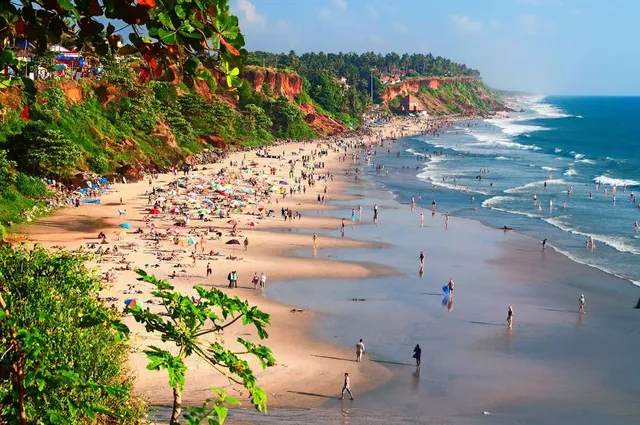
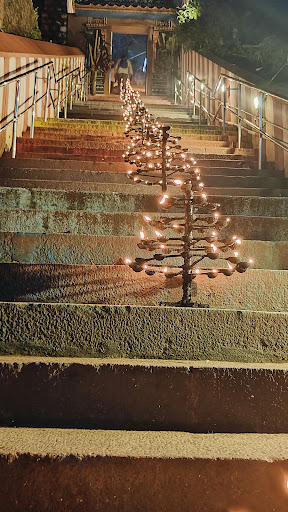
The Sree Janardhana Swami Temple in Varkala, Kerala, India. It's a famous Hindu temple dedicated to Lord Vishnu, also known as Janardhana Swami. Here are some key facts about the temple: Location: The temple is situated on a hilltop in Varkala, a coastal town in Thiruvananthapuram district, Kerala. Architecture: The temple has a unique architecture, blending Kerala and Dravidian styles. Deity: The main deity is Lord Janardhana Swami, a form of Lord Vishnu. History: The temple has a rich history dating back to the 12th century. Papanasam Beach: The temple is near the famous Papanasam Beach, believed to have holy waters with cleansing properties. Festivals: The temple celebrates various festivals, including the Arattu festival in March-April. Significance: The temple is considered sacred, and devotees believe that worshiping here can bring salvation and redemption. covering every step: *Step 1: Arrival and Parking* - Devotees arrive at the temple premises and park their vehicles in the designated parking area. *Step 2: Entrance and Security Check* - Visitors enter the temple through the main entrance, where security personnel conduct a brief check. *Step 3: Shoe Rack and Dress Code* - Devotees remove their shoes and place them in the designated shoe rack. - They must dress modestly, following the temple's dress code. *Step 4: Pradakshina (Circumambulation)* - Devotees perform pradakshina, walking clockwise around the temple, as a sign of respect. *Step 5: Nirmalyam (Offering)* - Devotees offer prayers and nirmalyam (flowers, coins, or other items) to the deity. *Step 6: Darshan (Sight)* - Devotees have darshan of the main deity, Lord Janardhana Swami. *Step 7: Puja and Abhishekam (Rituals)* - Devotees participate in puja (worship) and abhishekam (ritual bathing) of the deity. *Step 8: Prasadam (Offering)* - Devotees receive prasadam (blessed offerings) from the temple. *Step 9: Departure* - Devotees depart the temple premises, feeling spiritually uplifted and blessed. Additionally, the temple has specific rules and customs, such as: - No photography inside the temple - No mobile phones or electronic devices - No food or drink inside the temple - Respectful behavior and dress code Please note that these steps and rules may vary depending on the temple's specific traditions and customs. Also The pond near the Sree Janardhana Swami Temple in Varkala is a sacred water body with significant religious and spiritual importance.The pond is called the "Thirtha Kadinja Kulam" or "Papanaasam Pond".It's believed to have holy waters with cleansing properties, washing away sins and spiritual impurities. The pond is situated near the temple, adjacent to the Papanasam Beach. Devotees take a dip in the pond as part of their spiritual rituals, seeking purification and redemption.The pond is fed by a natural spring, which is believed to be a divine source.The temple authorities maintain the pond's cleanliness and purity. During festivals like the Arattu festival, the pond plays a significant role in the rituals and ceremonies. Devotees believe that taking a dip in the pond can bring spiritual rejuvenation, forgiveness of sins, and blessings from Lord Janardhana Swami. The pond's sacred waters are also believed to have healing properties, attracting devotees seeking physical and spiritual well-being.
See more posts
See more posts
hotel
Find your stay

Pet-friendly Hotels in Kerala

Find a cozy hotel nearby and make it a full experience.

Moolavar : Sree Janadanaswamy Some of the salient features of this temple are…. The temple faces east with a Dwajasthambam, balipeedam in a mandapam. The balipeeda mandapa pillars are with Donor’s images and Pavai vilakku, Natarajar, Karaikal Ammaiyar, Kali, Krishna, Rathi, Manmathan, and Pichadanar. Are on the pillars of balipeeda mandapam. Dwarapalakas are at the entrance of sanctum sanctorum. Moolavar sanctum sanctorum is in the circular Sreekovil. In between the nalambalam, pradakshinaptha, Thulasi madam, Spatamatrikas, ashtadikpalakas in the form balipeedas covered with brass plates/ mouldings. In the nalambalam outer side are the Shiva Temple, Sastha, Vinayagar, and Nagars. ARCHITECTURE Gajalakshmi stucco image is after entrance mandapam and back side entrance of nalambala entrance top. The balipeeda mandapa front side may be constructed in recent years. The Janardanaswamy shrine is Circular on plan. The temple was built with stone from adhistanam to Prastaram. The adhistanam consists of jagathy, threpatta kumuda and kapotam. The Bhitti starts with vedikai. The pilasters are of Brahmakantha pilasters with kalasam, kudam, lotus petals mandi. A conical, eka tala vimanam is on the prastaram. The namaskara mandapam with a pyramidal roof is in front of sanctum sanctorum, which is open on four sides. The nalambala with entrance on four sides form an enclosure for the Sreekovil. The nalambalam outer sub shrines are constructed with stone from adhistanam to prastaram and the super structure was built with brick and cement. The adhistanam is of pada bandha adhistanam with jagathy, three patta kumudam, and pattikai. The koshtas are with bas reliefs of Maha Vishnu and ornamental works. HISTORY AND INSCRIPTIONS It is believed that the temple belongs to 1st Century CE Pandya period. (But the present structure may belongs to 12th to 13th century Pandya period). Later renovated during Venadu Kings and now under the control of Travancore Devaswom board. The temple as we see it now was built in the 13th century. According to a Tamil inscription in Vattezhuthu, found on the South base of the central shrine of Sri Janardhana Swamy, King Vira Padmanaba Marthanda Varma Thiruvadi (1240-1252 CE), of the Venad Dynasty, converted the temple of the Bhattaraka of Varkalai Udhayamarthandapuram to stone from Adhistanam to Prastaram. He further had the Sri Vimana covered with copper sheets, renewed the Namaskara mandapa/Mukha Mandapa and consecrated the temple on Karkataka Rasi, Wednesday, 21st day of the Rishabha Month, in the Kollam Year 425 (1252CE), (2/1084,T.A.S Vol 4, Page 151). Another inscription found on the North base of the mandapa in front of the Janardanaswamy shrine, containing a Sanskrit verse, written in Grantha characters. This inscription has been interpreted in depth by Prof Kielhorn in Epigraphia Indica Volume 4. It says King Goda Marthanda, had the god Hari, and bathed by Brahmins around mid-day on Thursday 11th May, in the Kollam Year 655 (1480 CE). The inscription mentions Varkala as Vayka. (Prof Kielhom is of the impression that it could also be referring to Vaikkom) An inscription in the East prahara, belonging to Raja Ravi Kulasekara Perumal, of Attingal Swarupam, who performed Hiranyagarbha and Tulabhara in Tiruvananthapuram, speaks about repairs executed to the temple in Kollam year 700 (1525 CE). An inscription on the East and North base of the Dwajasthamba, belonging to King Rama Varma (Kollam Year 1071-1896 CE) mentions that the fdwajasthambam was installed by the King on Thursday, the 4th day of the Makara month, when Sun was in Mrigasirsha. The temple has an ancient bell removed from a shipwreck, donated by the captain of a Dutch vessel which sank near Varkala without casualties. The bell inscription reads as “Peter von Belson' and 'Michelle Evarald' and the year inscribed as 1757 CE. One of the inscriptions indicates that the temple was partially renovated during the reign of Umayamma Rani who ruled this region in 1677–84 CE. Ref Temples of Kerala and Alayam Kanden website
Veludharan

Veludharan

hotel
Find your stay

Affordable Hotels in Kerala

Find a cozy hotel nearby and make it a full experience.

Get the Appoverlay
Get the AppOne tap to find yournext favorite spots!
Janardhana Swami Temple, Varkala, Kerala The presiding deity of this temple is Sri Janardhana Swami is in standing position facing east. His right hand is positioned as if he is performing "Aachamanam" i.e. it is raised towards his mouth. The day, the idol is able to eat the aabhojana from his right hand; the world will face the great deluge. People believe that over years this hand is raising slowly. The temple is about 2000 years old. At the entrance to the inner shrine are the idols of Hanuman and Garuda on either side and in the main shrine is the idol of Sri. Janardana with Sri Devi and Bhoo Devi. One of the inscriptions indicates that the temple was improved during the reign of Umayamma Rani, who ruled this region during 1677-84 A.D. In the south-western corner and on the north-eastern side of the outer enclosure are the shrines of Sasta and Shiva with Nandi. In times of yore, Brahma while performing a Yaga at Varkala was so much immersed in the Yaga that he forgot his job of creation. To remind Brahma, Vishnu came as a old man. The Brahmins assisting Brahma, received and fed the old man. But his hunger was not satiated. Brahma’s assistants informed Brahma about this. Brahma understood that the guest was Vishnu himself. He approached Vishnu,and found him trying to eat an Aabhojanam. Brahma prevented Vishnu from eating it and told him, “If you eat it, then the final deluge will swallow this world. “ Vishnu, then requested Brahma to stop the Yaga and recommence his job of creation. After this one day Sage Narada followed by Lord Vishnu was walking in the sky over Varkala. Lord Brahma who came there saluted Lord Vishnu. The nine prajapathis who saw only sage Narada laughed at Lord Brahma, because they thought that Lord Brahma was saluting his own son Sage Narada. Lord Brahma corrected them. They felt sad at having committed a sinful deed. Lord Brahma told them that the proper place to pray for their redemption would be shown to them by sage Narada. Sage Narada threw the Valkala (deer’s skin) that he was wearing towards the earth. It fell in the present Varkala. Hence the town got the name Varkala. The Prajapathis wanted a pond to do the atonement. Sage Narada requested lord Vishnu, who made a pond there; using his Chakra (wheel). The Prajapathis mediated there and were pardoned for their sins. It is believed that the devas constructed a temple of Lord Vishnu there and were worshipping the Lord Janardhana. But over a period of time the temple dilapidated. During this time the Pandya king who was affected by a ghost, went on a pilgrimage but no where he was cured. When he came to the present day Varkala, he saw the remnants of a dilapidated temple by the side the sea. He prayed God saying that he would rebuild the temple there. Next day he had a dream and he was told to go to the sea and stand near the dilapidated temple and that he would see huge amount of flowers floating in the sea, and if he searched there he would get an idol without the left hand. He was instructed to make a golden hand and attach it to the idol and build a temple round it. The present Janardhana idol was recovered from the sea by him. He built the temple and laid down the rules for maintenance of the temple. There are small temples of Lord Shiva, Ganapathi, Sastha and Naga Devatha in this temple. On the southern side of the temple two bells are tied. There is a story about it. It seems one Dutch ship was passing this way and suddenly the ship refused to move in spite of all efforts. The people told the captain of the ship to tie a bell in the Janardhana temple. The captain and his assistant came ashore and tied the bells. As soon as they tied the bells, the ship started moving. The names inscribed in the bell are Peter von Belson and Michelle Evarald. Photos by Viswas Menon © Viswas Menon Write up compiled by Viswas Menon
Viswas K.P Menon

Viswas K.P Menon

hotel
Find your stay

The Coolest Hotels You Haven't Heard Of (Yet)

Find a cozy hotel nearby and make it a full experience.

hotel
Find your stay

Trending Stays Worth the Hype in Kerala

Find a cozy hotel nearby and make it a full experience.

The Sree Janardhana Swami Temple in Varkala, Kerala, India. It's a famous Hindu temple dedicated to Lord Vishnu, also known as Janardhana Swami. Here are some key facts about the temple: Location: The temple is situated on a hilltop in Varkala, a coastal town in Thiruvananthapuram district, Kerala. Architecture: The temple has a unique architecture, blending Kerala and Dravidian styles. Deity: The main deity is Lord Janardhana Swami, a form of Lord Vishnu. History: The temple has a rich history dating back to the 12th century. Papanasam Beach: The temple is near the famous Papanasam Beach, believed to have holy waters with cleansing properties. Festivals: The temple celebrates various festivals, including the Arattu festival in March-April. Significance: The temple is considered sacred, and devotees believe that worshiping here can bring salvation and redemption. covering every step: *Step 1: Arrival and Parking* - Devotees arrive at the temple premises and park their vehicles in the designated parking area. *Step 2: Entrance and Security Check* - Visitors enter the temple through the main entrance, where security personnel conduct a brief check. *Step 3: Shoe Rack and Dress Code* - Devotees remove their shoes and place them in the designated shoe rack. - They must dress modestly, following the temple's dress code. *Step 4: Pradakshina (Circumambulation)* - Devotees perform pradakshina, walking clockwise around the temple, as a sign of respect. *Step 5: Nirmalyam (Offering)* - Devotees offer prayers and nirmalyam (flowers, coins, or other items) to the deity. *Step 6: Darshan (Sight)* - Devotees have darshan of the main deity, Lord Janardhana Swami. *Step 7: Puja and Abhishekam (Rituals)* - Devotees participate in puja (worship) and abhishekam (ritual bathing) of the deity. *Step 8: Prasadam (Offering)* - Devotees receive prasadam (blessed offerings) from the temple. *Step 9: Departure* - Devotees depart the temple premises, feeling spiritually uplifted and blessed. Additionally, the temple has specific rules and customs, such as: - No photography inside the temple - No mobile phones or electronic devices - No food or drink inside the temple - Respectful behavior and dress code Please note that these steps and rules may vary depending on the temple's specific traditions and customs. Also The pond near the Sree Janardhana Swami Temple in Varkala is a sacred water body with significant religious and spiritual importance.The pond is called the "Thirtha Kadinja Kulam" or "Papanaasam Pond".It's believed to have holy waters with cleansing properties, washing away sins and spiritual impurities. The pond is situated near the temple, adjacent to the Papanasam Beach. Devotees take a dip in the pond as part of their spiritual rituals, seeking purification and redemption.The pond is fed by a natural spring, which is believed to be a divine source.The temple authorities maintain the pond's cleanliness and purity. During festivals like the Arattu festival, the pond plays a significant role in the rituals and ceremonies. Devotees believe that taking a dip in the pond can bring spiritual rejuvenation, forgiveness of sins, and blessings from Lord Janardhana Swami. The pond's sacred waters are also believed to have healing properties, attracting devotees seeking physical and spiritual well-being.
rithahhh

rithahhh

See more posts
See more posts