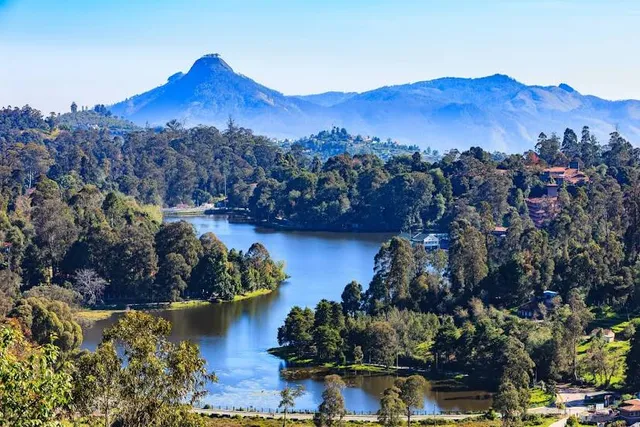
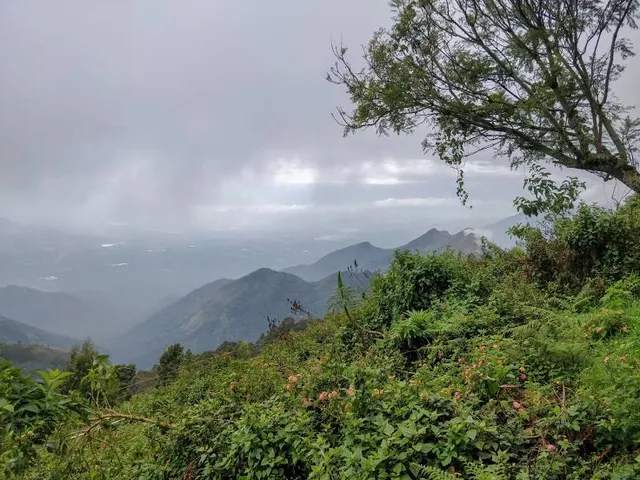
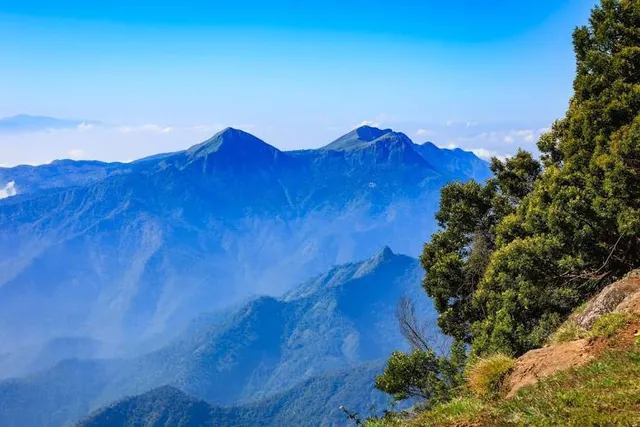
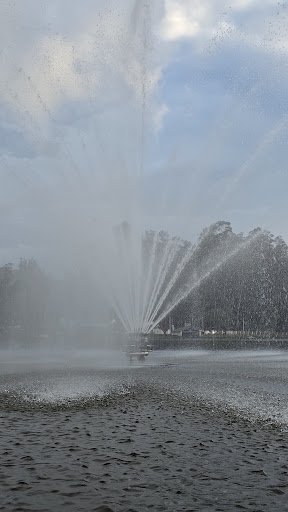
There are places you visit, and then there are places that quietly stay with you. Kodaikanal Lake belongs to the second kind. At first glance, it’s simply a serene body of water — star-shaped, embraced by the lush hills of the Palani range — but if you pause, you realize you’re standing at the edge of over 160 years of history.
This lake is no natural accident. In 1863, Sir Vere Henry Levinge, then Collector of Madurai, envisioned and created this marvel. Out of his own funds, he transformed what was once a swampy marshland into the stunning lake we see today. It soon became the heart of Kodaikanal — a heart that hums with stories of travelers from colonial times to the present day.
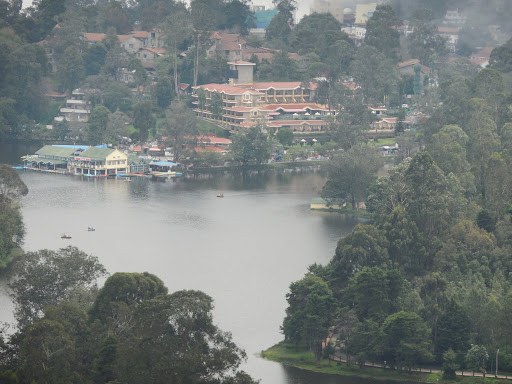
I began at the boating point, a lively yet peaceful place marked by the iconic green-and-yellow boathouse. The covered walkway to the boats has a sign that reads: “Due to heavy rain/wind, no refund.” Practical, yes — but also a gentle reminder that here, nature calls the shots.
Boating options are varied: colorful pedal boats for a slow, scenic ride or rowboats with local guides who weave in stories as you drift along. I chose a pedal boat, and within minutes, I was mid-lake, surrounded by gentle ripples, cool breezes, and panoramic views of tree-covered hills and colonial buildings. The kind of beauty that makes your camera feel inadequate but fills your mind with stillness.
What stayed with me was the unhurried pace. Nothing felt rushed — not the water, not the clouds drifting overhead, not even the quiet laughter from other boats. Along the shore, cyclists traced the 5 km loop around the lake, locals chatted under the shade of eucalyptus trees, and the boathouse prepared the next set of eager visitors.
There’s a romance to Kodaikanal Lake that’s hard to capture. Maybe it’s how it bridges past and present — the Victorian vision of Sir Levinge still alive, yet surrounded by modern-day activity. Or perhaps it’s that even in the midst of tourists, there are moments where you feel utterly alone with the lake, just you and the rhythmic splash of water against the hull.
A few tips for fellow visitors:
Best time: Early morning or late afternoon for softer light, thicker mist, and fewer crowds. Cycle the loop: Take it slow — there are scenic points and snack stalls worth stopping for. Rainy charm: Don’t avoid the lake in the rain; under grey skies, it’s a different kind of beautiful. When I left the boating point that day, it didn’t feel like I’d just ticked off an activity. It felt like I’d stepped into a living chapter of Kodaikanal’s story — one that’s been quietly unfolding for over a century, waiting for anyone willing to slow...
Read moreKodaikanal Lake (Tamil: கொடைக்கானல் ஏரி), also known as Kodai Lake, is a manmade lake located in the Kodaikanal city in Dindigul district in Tamil Nadu, India. Sir Vere Henry Levinge,the then Collector of Madurai, was instrumental in creating the lake in 1863, amidst the Kodaikanal town which was developed by the British and early missionaries from USA.The lake is said to be Kodaikanal's most popular geographic landmark and tourist attraction.
Over the years a boat club, boathouse and boat service (with rowing boats and pedalling boats and a public ferry) for the public and tourists has become fully functional and is of aesthetic significance for tourism. Boat Pageant and Flower Shows are a regular feature in the summer season which attracts tourists
railway line extended from Chennai to Tirunelveli with an intermediate station at Ammaianayakkanur (later renamed Kodai Road) was built in 1875, to provide a gateway to Kodaikanal town and there on to the lake through a foot trek of 18 km from the railhead. The nearest railheads to the lake presently are the Kodai Road railway Station at 80 km and the Palani Railway station at 64 km distance, from the town. Madurai (at 121 km) and Coimbatore (at 135 km) airports are the closest to the Lake. Kodai Lake is well connected by road with regular bus services operating to Madurai, Palani, Kodaikanal Road, Theni, Dindigul, Thiruchirapalli, Kumili, Munnar, Erode, Bangalore and Coimbatore.
Human health risk assessment of the physico-chemical parameters of the lake water[10] reveals that: A study conducted by the Department of Atomic Energy confirmed that Kodaikanal Lake has been contaminated by mercury emissions by the thermometer factory of Hindustan Unilever Limited.[11] As per microbial analysis, the water is not potable and needs to be processed prior to domestic use. Several ecological factors have influenced the plankton diversity and abundance. Eight aquatic macroinvertebrate taxa have been identified. Tourists and nearby residents are causative factors for lake contamination and water pollution; Encroachment of the banks of the lake by buildings has violated the court order which prohibits constructions within 70 metres from the banks of the lake; The impact on the quality of water is transitory as compared to closed water body. High pollution loads of organic matter from hotels and other commercial establishments around the lake are...
Read moreExploring Kodaikanal, the ‘Princess of Hill Stations,’ was an exquisite journey steeped in natural splendor and historical significance. Nestled in the Palani Hill range of Tamil Nadu, this breathtaking hill station offers an array of holidaying options, catering to honeymooners, adventure enthusiasts, and families seeking a mesmerizing retreat.
At the heart of this charming hill station lies the iconic Kodaikanal Lake, a star-shaped wonder spanning 60 acres and creating a mesmerizing allure that’s hard to resist. Built in 1983 by Sir Vere Henry Levinge, the former District Collector of Madurai, this star-shaped marvel paved the way for Kodaikanal’s namesake.
Boating across the lake and leisurely pony rides around its periphery provided us with tranquil moments, enveloped by the refreshing greenery that embraced this stunning waterbody. The serene setting coupled with the lush tarred road extending for 5 kilometers offered a tranquil respite from the hustle and bustle of daily life.
Beyond the enchantment of Kodaikanal Lake, the hill station boasts an array of tourist spots that beckon exploration. Berijam Lake, Bryant Park, Kurinjiandavar Temple, Green Valley View/Suicide Point, Pillar Rocks, Silent Valley View, Devil’s Kitchen, Guna Caves, Pine Forest, Shanthi Valley, Silver Cascade, Telescope House, Kukal Cave, and Shenbaganur Museum, each adding a unique flavor to our unforgettable journey.
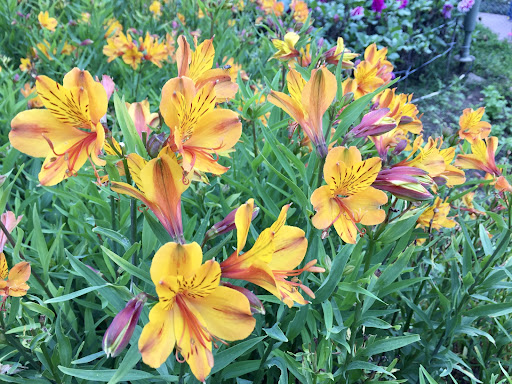
The unique charm of Kodaikanal’s Kurinji flower, which blooms once every 12 years and last graced the area in 2004, added to the magical aura surrounding Kodaikanal Lake. Its breathtaking beauty, coupled with the picturesque hills, served as an enchanting backdrop for a memorable picnic. Leisurely strolls, horse rides, cycling, and the option of fishing, coupled with a cool breeze kissing our skin, made every moment surreal.
The inclusion of luxury boats for tourists and private boats from select hotels further enhanced the experience, offering a luxurious exploration of the lake’s captivating beauty.
As we reveled in Kodaikanal’s natural splendor, each tourist spot unfolded a unique facet of the hill station’s charm, leaving an indelible mark on our hearts. From tranquil lakes to mysterious caves, Kodaikanal’s rich tapestry of attractions ensured an enriching and captivating journey for our...
Read more