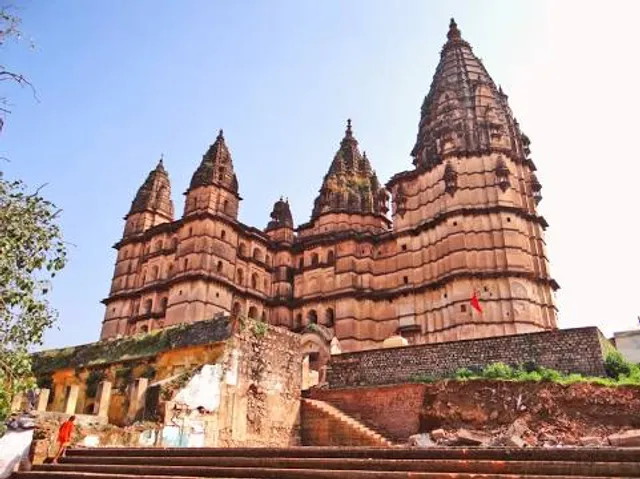
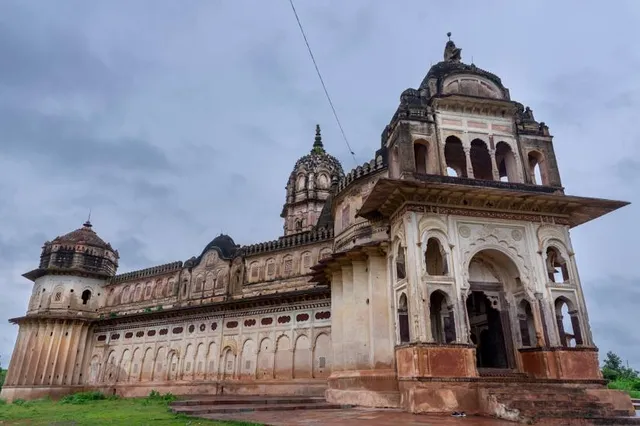
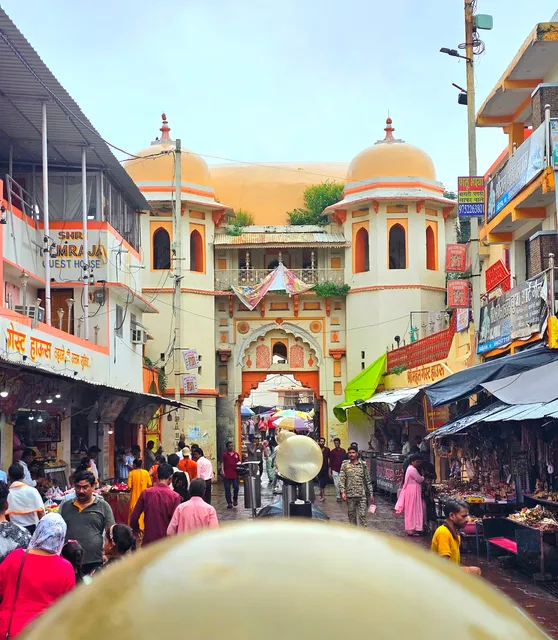
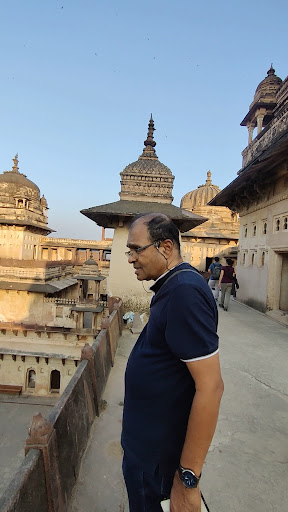
The Orchha Fort complex is an absolute marvel, a testament to the rich history and architectural brilliance of the Bundela dynasty. Stepping across the arched causeway that leads to this magnificent island fort, you're immediately transported to a bygone era, where tales of valor and grandeur seem to echo through the ancient stones. What truly sets Orchha Fort apart is its unique blend of Rajput and Mughal architectural styles. The Jahangir Mahal is a breathtaking example of this fusion, with its grand courtyards, intricate latticework (jalis), projecting balconies, and impressive domes. It's said to have been built overnight to commemorate Emperor Jahangir's visit, and the sheer scale and detailed craftsmanship are astounding. Exploring its numerous levels, you discover cleverly designed passages and chambers where sunlight and shadow play across the walls, creating different moods throughout the day. The rooftop views from Jahangir Mahal are simply spectacular, offering panoramic vistas of the surrounding Orchha town, the meandering Betwa River, and the lush landscape. Equally captivating is the Raja Mahal, the older of the two main palaces, which served as the residence for the Bundela kings. While its exterior is more austere, the interior is a riot of color and art. The murals depicting religious themes, mythical animals, and courtly life are remarkably well-preserved, offering a vivid glimpse into the cultural and social fabric of the time. The thoughtful layout, with its central courtyard and symmetrically arranged rooms, makes it easy to navigate and appreciate its design without feeling overwhelmed. Beyond the major palaces, the entire complex is a treasure trove of discovery. The tranquil Phool Bagh, a beautifully laid-out garden blending Mughal and Bundela styles, provides a refreshing respite. You'll also encounter the Sheesh Mahal, parts of which have been converted into a heritage hotel, allowing visitors to truly immerse themselves in the regal ambiance. The surrounding environment adds immensely to the fort's charm. Perched on a rocky island with the Betwa River flowing gracefully nearby, the setting is incredibly picturesque. The sound of the gushing river, particularly during the monsoon, enhances the serene and timeless atmosphere. Unlike some of the larger, more bustling forts in India, Orchha Fort offers a remarkably peaceful and intimate experience. While guides are available and can provide fascinating insights, the fort is also perfectly enjoyable to explore at your own pace, allowing for quiet contemplation and appreciation of its historical significance. It's a place where you can truly connect with the past, making it a highly recommended destination for anyone with an interest in Indian history, architecture, or simply seeking a serene and beautiful escape. The well-maintained pathways and clear signage make it accessible, and the relatively uncrowded nature of the site allows for a truly immersive and...
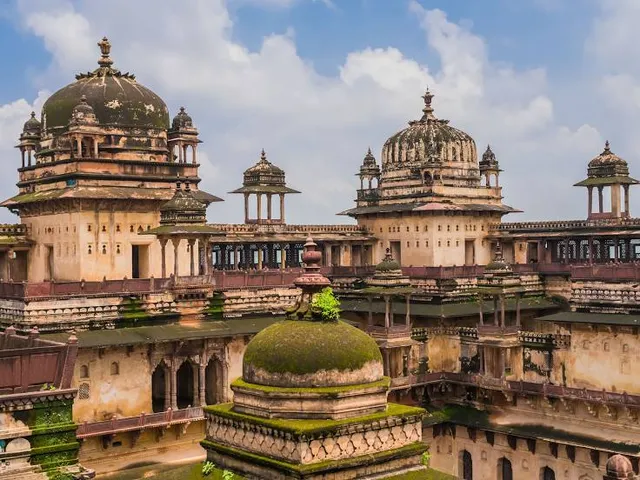
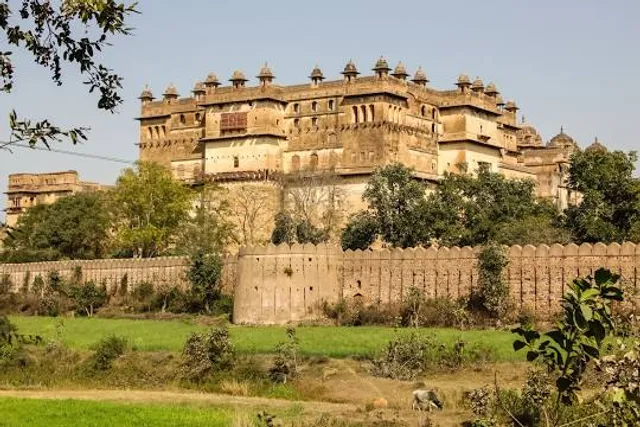
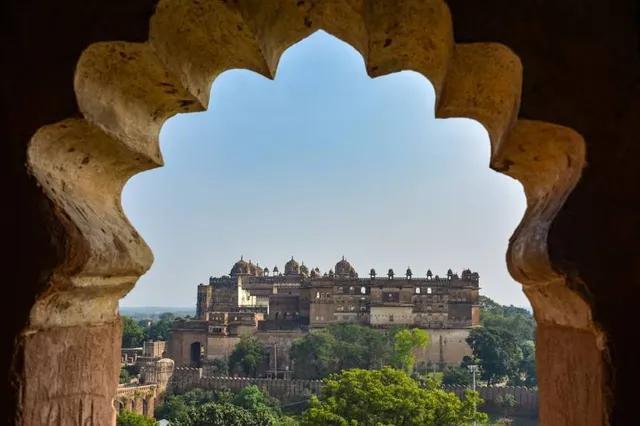
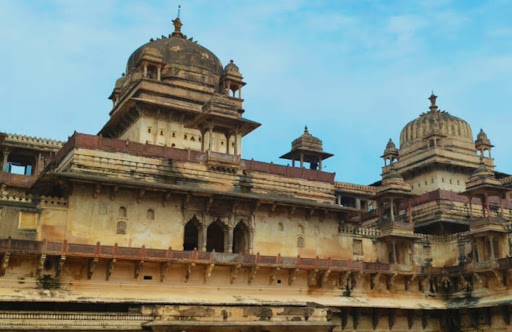
Read moreJahangir Mahal in Orchha, Madhya Pradesh, stands as a breathtaking testament to the confluence of Mughal and Bundela architectural brilliance, situated within the historic fort complex overlooking the serene Betwa River.
This palace was built in the early 17th century by Raja Bir Singh Deo, as a grand gesture to honor Mughal Emperor Jahangir, commemorating his visit to Orchha. Despite its monumental scale and opulence, legend has it that Jahangir stayed here for just one night, a fleeting visit that belies the palace’s enduring legacy.
The structure is a harmonious blend of Hindu and Islamic architectural styles, evident in its ornate domes, chhatris, and intricate latticework. The eastern entrance, adorned with turquoise tiles and flanked by stone elephants with bells dangling from their trunks, sets the tone for the grandeur within.
Inside, the palace unfolds across three stories, featuring over 100 rooms, expansive courtyards, and eight graceful domes. The layout is both majestic and functional.
The underground chambers designed to offer respite from the scorching summers, while the upper terraces provide panoramic views of the surrounding landscape and the meandering Betwa.
One of the most striking features is the central courtyard, a vast square space surrounded by arched doorways embellished with peacock and lotus motifs.
The palace’s defensive fort-like exterior, complete with massive bastions and a formidable wooden gate, contrasts with the delicate interior details with glazed tiles, lapis lazuli inlays, and jaali screens that filter sunlight into intricate patterns. The Gavaksh balconies, typical of Rajput architecture, add a touch of elegance, while the deities of the eight cardinal directions, carved into the domes, reflect the spiritual undertones of the design.
Today, Jahangir Mahal is a cornerstone of Orchha’s heritage tourism, meticulously preserved by the Madhya Pradesh Archaeology Department.
Visitors can explore its labyrinthine passages, climb narrow staircases to hidden terraces, and imagine the palace’s heyday when it buzzed with royal intrigue.
The adjacent Sheesh Mahal, now a heritage hotel, and the nearby Raj Mahal further enrich the historical tapestry of the site. A light and sound show in the evenings brings the palace’s storied past to life, weaving tales of friendship, betrayal, and architectural ambition.
The best time to visit is between October and March, when the weather is mild, allowing for unhurried exploration.
This is accessible from Jhansi (just 20 km away), and Orchha is a tranquil escape where history whispers through every stone.
Whether you’re an architecture enthusiast, a history buff, or simply a traveler seeking beauty, Jahangir Mahal offers a timeless journey into...
Read moreWe think of monuments and we think of these feats of scale and architecture. Orchha was a vibrant place where people lived and worked and died. What this project has enabled us to do is narrow down to one individual, gives us insight in a very different way.
Jahangir Mahal which is one of the main sightseeing places of Orchha and tourists still get mesmerized by its grandeur and architecture. This palace was built by Veer Singh Dev before the arrival of his best friend Mughal Emperor Jahangir in Orchha in the seventeenth century. When Jahangir rebelled against his father Akbar as a prince and declared himself king in Prayagraj, Veer Singh Deo then the ruler of Orchha, at the behest of his friend Jahangir, beheaded Abul Fazal, one of the courtesans of Mughal emperor Akbar, at Narwar near Shivpuri and sent Jahangir to Prayagraj. As soon as Jahangir became the emperor, Veer Singh Deo was awarded the title of king and during this period, Orchha made extensive progress in the fields of economic, cultural, literary and military power etc. Infact it was the golden period of the Orchha.
The main gate of this three-storied palace is in the east which is towards the Betwa river. The main gate made of red sandstone is a unique piece of architecture. On either side of which are sculptures of decorated elephants with bells in their trunks and facing the entrance. The upper storey of the gate is closed by a stone lattice which is the place for the royal ladies to welcome Emperor Jahangir.
This palace exhibits exquisite workmanship and Mughal architecture and Rajput architecture. As soon as you enter the gatehouse or abode from the entrance, you will notice the magnificent ceiling made of polished red stones with white marble mosaic. This square palace has a square courtyard in the middle with fountain and many stairs to reach the upper floors. There are clearly visible marks of painting with natural colours. There are many rooms and halls in this palace. The outer walls of the harem are made of stone lattices from which the panoramic views of the outside can be enjoyed. The palace has innumerable features including domes, canopies, terraces, use of turquoise colored tiles that glow in the moonlit night, hanging balconies, archways, stone carvings for decoration etc. besides another huge gate leading to the king's palace.
This excellent palace is still in very good condition and is the main attraction of Orchha. This is located near king's palace and Sheesh Mahal which is a hotel of the tourism department. The best months to visit are from November to March and can be easily reached by train from Veerangana Laxmibai Railway Station. The entry...
Read more