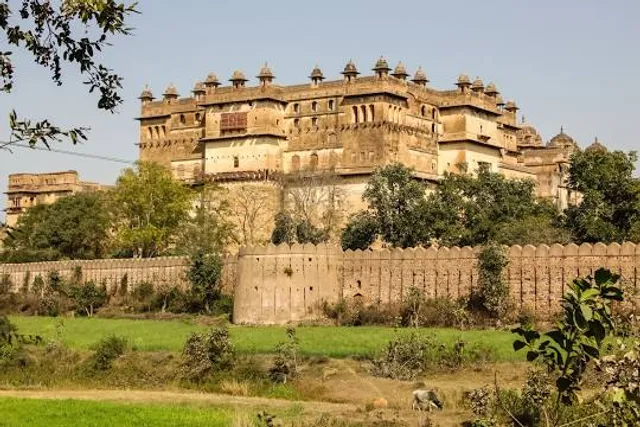
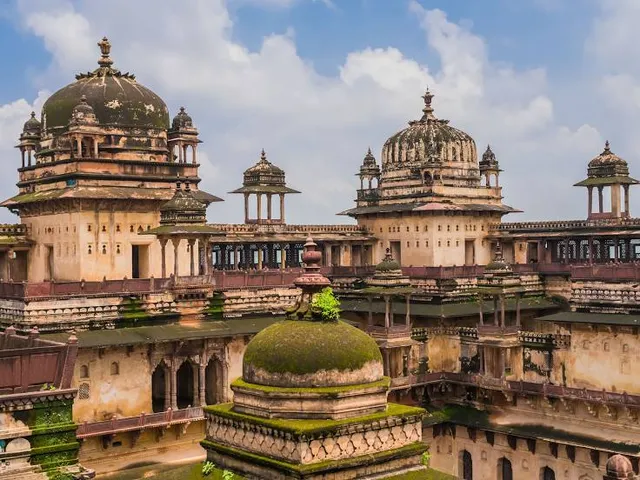
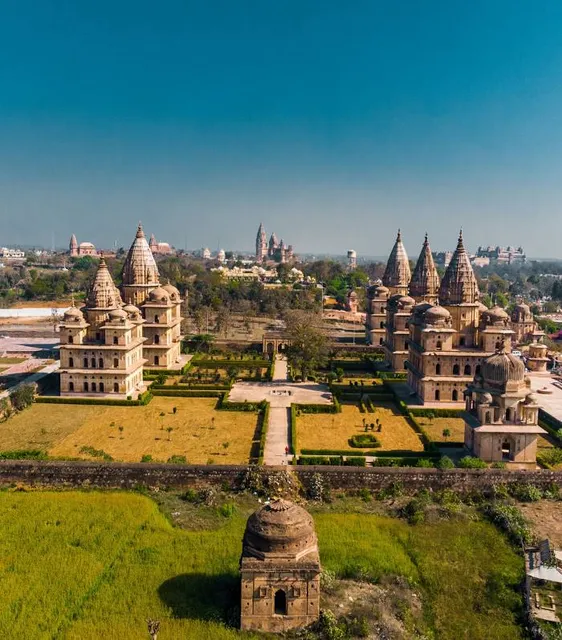
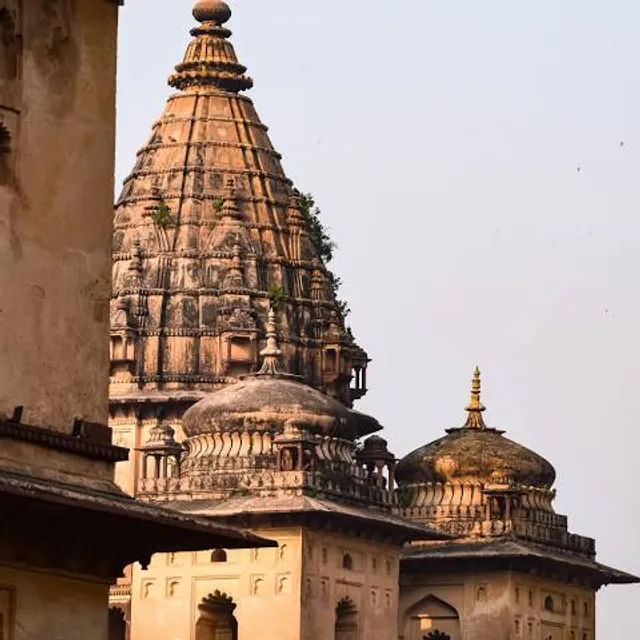
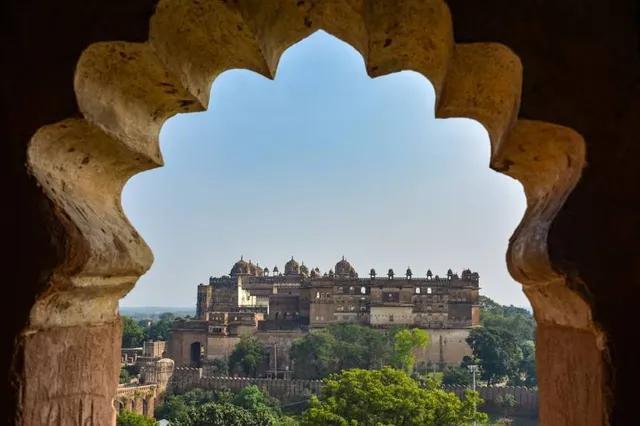
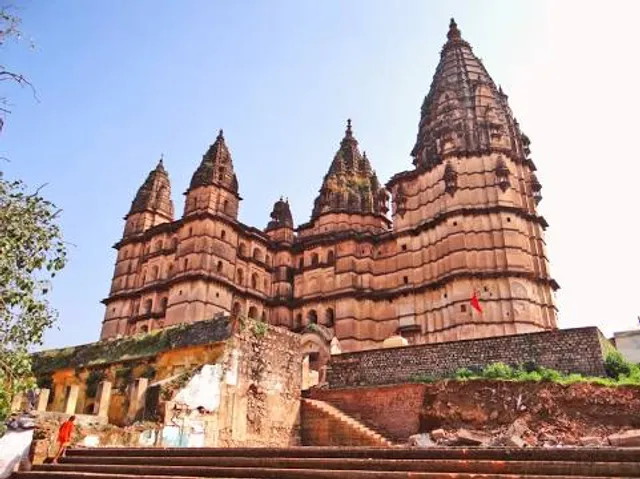
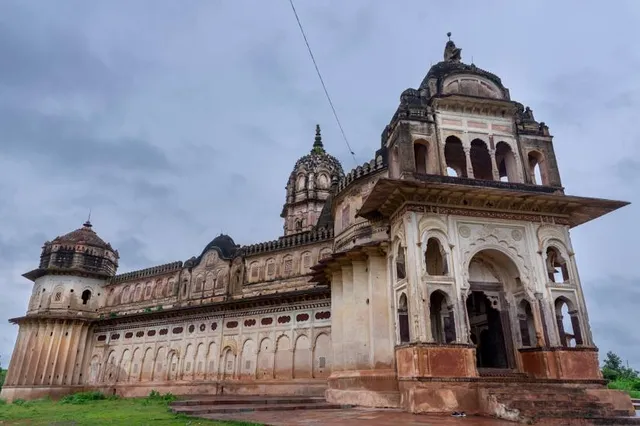
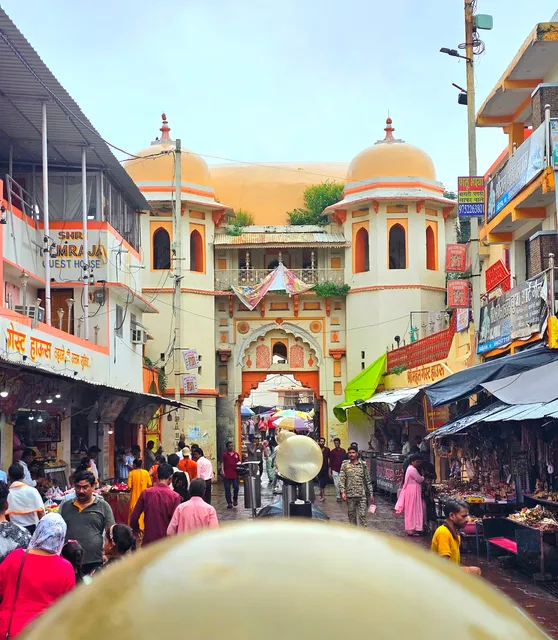
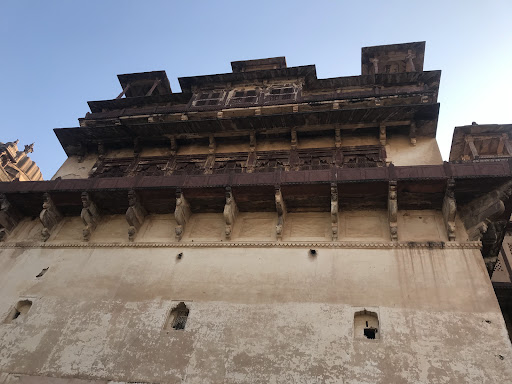
Raja Mahal, Orchha The royal residence of erstwhile kings of Orchha, Raja Mahal is situated in Tikamgarh district, Madhya Pradesh. Beautiful towers decorate the exterior of this magnificent palace, and outstanding mural paintings adorn the interiors.
The palace houses two rectangular courtyards, which follows the ancient Indian concept of the mandapa. The most important feature inside the palace is the Diwan-i-Khaas, which is widely admired for its fantastic motifs. A 17th century monument that withstood the ravages of time is a worthy for a watch.
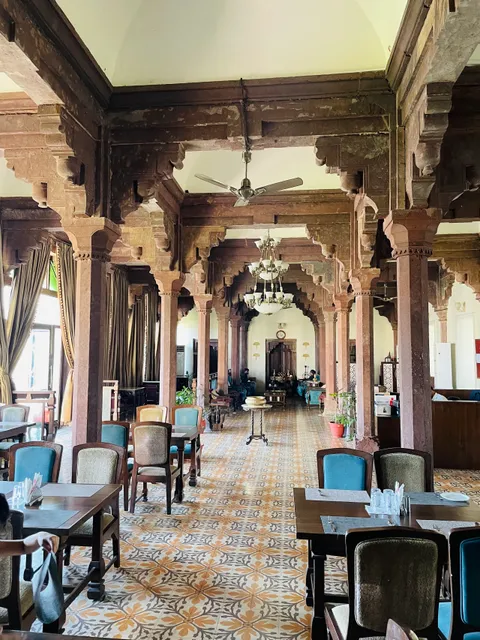
The Raja Mahal is a fine example of Mughal architecture with typical stone jali (lattice) work and multifaced arches at the entrance. The palace is in the shape of a perfect square that is further divided into two courtyards. The main courtyard is flanked by the palace which has a four-storeyed building at one end of it. The other three sides have five-storeyed apartments. The Raja Mahal’s facade is simplicity personified with hardly any ornamental detailing, but the interiors house some splendid paintings. The outer courtyard has some beautiful arches arranged in floral patterns and carved out in lime mortar.
Work on the Raja Mahal was started by Raja Rudra Pratap, but he died in 1531, leaving the construction incomplete. His son, Bharti Chand, completed the front and the main portion of the palace, but could not complete the building during his lifetime. The final touches to the Raja Mahal were added by one of the most prominent rulers of Orchha, Madhukar Shah built several other monuments in the...
Read moreबहुत पुराने जहाँगीर महल के बगल में राजा महल है। ऐसा माना जाता है कि इस इमारत का निर्माण बीर सिंह देव के पिता राजा मधुकर शाह ने करवाया था, जो 1554 से 1592 तक जीवित रहे। पर्सी ब्राउन के अनुसार, महल का निर्माण 1575 में हुआ था, लेकिन दूसरों का मानना है कि इसका निर्माण राजा रुद्र प्रताप सिंह ने शुरू करवाया था, जो 1501 से 1539 तक जीवित रहे, जबकि उनके उत्तराधिकारी और बेटे राजा भारती चंद ने इसके अंतिम भव्यता के लिए ज़िम्मेदारी ली। बहुत पुराने राजा महल और जहाँगीर महल के बीच महत्वपूर्ण असमानताएँ हैं । सबसे स्पष्ट तथ्य यह है कि पहले में एक भी गुंबद नहीं है। दूसरे, सादे बाहरी हिस्से में विभिन्न स्तरों की उपस्थिति नहीं दिखती है, जिसके परिणामस्वरूप यह एक-मंजिला संरचना प्रतीत होती है। यह भ्रामक है क्योंकि, वास्तव में, राजा महल में 5 मंजिलें हैं। अंदर कदम रखते ही आगंतुक को एक सुखद आश्चर्य का सामना करना पड़ता है। सादे बाहरी भाग के विपरीत, अंदर का भाग रंगीन ढंग से सजाया गया है। निचली मंजिल की छतों और दीवारों पर, शाही कक्षों में जीवंत चमकीले रंगों में भित्तिचित्र हैं जो पूरी इमारत को खुशनुमा बनाते हैं। विषय धार्मिक प्रकृति के हैं। सबसे उल्लेखनीय हैं विष्णु के 10 अवतारों या दशावतार का भव्य चित्रण, कृष्ण द्वारा गोवर्धन पर्वत को उठाते हुए एक दृश्य, राम के दरबार में हनुमान, कृष्ण अपनी गोपियों के साथ, समुंद्र मंथन की एक पेंटिंग, और महाभारत के विभिन्न दृश्य, उदाहरण के लिए, कौरवों को भीम द्वारा पेड़ों से उखाड़ फेंकना।
द्वादशनरी कुंजर भित्तिचित्र एक वास्तविक कौतूहल का विषय है। इसमें एक महावत को हाथी के रूप में व्यवस्थित 12 युवतियों या नायिकाओं द्वारा सवार दिखाया गया है। भगवान कार्तिकेय और उनके मोर, गाय के दान या गौ-दान की रस्म, मोर महिलाओं या महापौर नायिकाओं के साथ-साथ शाही दरबार के दृश्यों को भी देखें। विष्णु के मछली अवतार या मत्स्य अवतार के भित्तिचित्र में ग्रे-नीले रंगों में केशव दास का चित्रण है। एक और आकर्षक चित्र चुंगुल का है, जो हाथी के सिर और शेर के शरीर वाला एक पौराणिक प्राणी है। दृश्य में आमतौर पर एक मोर प्राणी के सिर पर वार करता हुआ दिखाई देता है। विभिन्न कक्षों की छतें जटिल डिजाइनों के साथ रंगीन फ़ारसी कालीनों जैसी दिखती हैं। यह सजावट और कला की ओरछा शैली में उत्तरी फ़ारसी-तुर्की परंपराओं की घुसपैठ का स्पष्ट प्रमाण है। यह समावेश ग्वालियर शासकों के दरबार में भी हुआ। जीवंत रंग वनस्पति और जड़ी-बूटियों के रंगों के उपयोग से प्राप्त किए गए थे।
प्रख्यात संरक्षक संजय धर का मानना है कि भित्तिचित्र और भित्तिचित्र राजा महल के प्रारंभिक डिजाइन का हिस्सा नहीं थे। उनके अनुसार, उनके बेतरतीब निष्पादन से यह साबित होता है कि वे संभवतः बाद में जोड़े गए थे।
सबसे ऊपरी मंजिल पर कई दीवारों पर बेहतरीन तरीके से किए गए पुराने दर्पण के काम के अवशेष हैं, साथ ही छत की भित्तिचित्रों के बीच कुछ कांच के पैनलिंग के अवशेष भी हैं। जैसे ही सूरज की किरणें प्रवेश करती हैं, पूरा स्थान शानदार ढंग से जगमगा उठता है।
राजा महल की वास्तुकला योजना मुगल और राजपूत शैलियों का मिश्रण दिखाती है, जैसे पत्थर में जाली का काम और प्रवेश द्वारों के बहु-पन्नीदार मेहराब। प्रवेश द्वार पर, दाईं ओर, एक दरबार-ए-आम या हॉल है जिसका उपयोग सार्वजनिक दर्शकों के लिए किया जाता है, जबकि निजी दर्शकों या दरबार-ए-खास के लिए क्षेत्र बाईं ओर है। बाद की छत और दीवारों को ज्यामितीय डिजाइन, इनले और पुष्प पैटर्न में समृद्ध रूप से सजाया गया है। सार्वजनिक गैलरी एक खुले क्षेत्र में खुलती है, जिसका उपयोग संभवतः संगीत और नृत्य प्रदर्शन के लिए एक मंच के रूप में किया जाता है। ऐसा कहा जाता है कि मूसलाधार बारिश भी उल्लास को रोक नहीं पाती थी; वे बस आंगन में एक खंभे वाली छत वाले क्षेत्र में चले गए। राजा महल को एक चौकोर योजना पर डिज़ाइन किया गया था। परिसर को केंद्रीय स्तंभों वाली गैलरी द्वारा 2 पंखों में विभाजित किया गया है। बाहर के हिस्से में दर्शकों के लिए बड़े क्षेत्र हैं जबकि अंदर के हिस्से में राजघरानों के निजी अपार्टमेंट हैं। हालाँकि परिसर विशाल है, लेकिन यह संरचनात्मक उपचार इसे और अधिक अंतरंग एहसास देता है, जो जहाँगीर महल की पहचान है, जो इसके अविभाजित विशाल केंद्रीय प्रांगण द्वारा लाया गया है। आगंतुकों को सावधान रहना चाहिए; राज महल की सभी सीढ़ियाँ खड़ी हैं, जहाँगीर...
Read moreRaja Mahal, a testament to the architectural brilliance and regal lifestyle of the Bundela rulers. Built in the early 16th century, this palace, once the residence of the Orchha kings, has now become an iconic landmark, drawing visitors from across the globe to experience its rich historical tapestry.
The Raja Mahal's exterior, though simple and unassuming, belies the grandeur that awaits within. As you enter the palace, you are transported into a bygone era, where the echoes of royalty still linger in the air. The palace's layout, divided into two wings, reflects the distinct roles of public and private life in the royal household. The outer wing, with its spacious audience halls and courtyards, was the center of political and social gatherings, while the inner wing housed the private chambers of the royal family.
The walls and ceilings of the Raja Mahal are adorned with exquisite murals, depicting scenes from mythology, history, and everyday life. These vibrant paintings, though faded with time, offer a glimpse into the cultural ethos and artistic sensibilities of the Bundela rulers. The murals, a blend of Hindu and Islamic influences, showcase the harmonious coexistence of diverse traditions that prevailed...
Read more