HTML SitemapExplore
logo
Find Things to DoFind The Best Restaurants

Ellora Cave No. 29 The Dhumar Lena — Attraction in Maharashtra

Name
Ellora Cave No. 29 The Dhumar Lena
Description
Nearby attractions
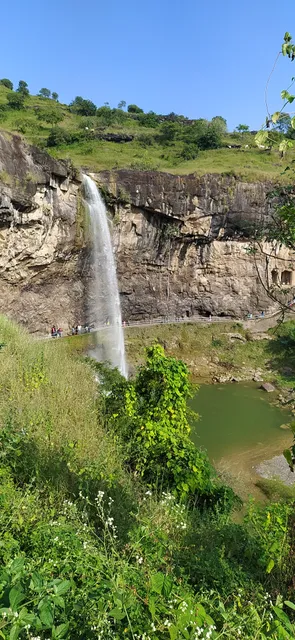
Waghora Waterfall
25HH+927, Water Fall of Verul, Ellora, Maharashtra 431102, India
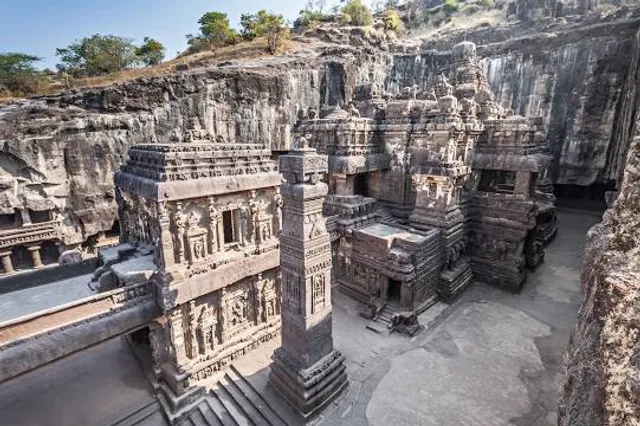
Kailasa Temple
Ellora, Verul, Maharashtra 431102, India
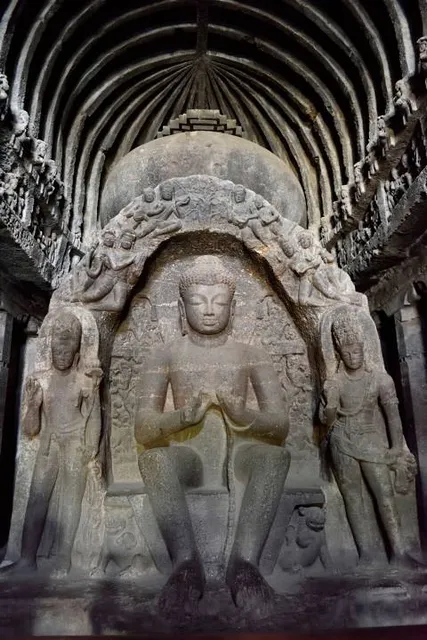
Ellora Cave No. 10
25CH+CV4, Ellora Cave Rd, Verul, Maharashtra 431102, India
Nearby restaurants
Mast Tea Center
25GG+JCR, Verul, Maharashtra 431102, India
Garikipati Restaurant
Garikipati restaurant ,post Ellora caves, tq, Maharashtra 431102, India
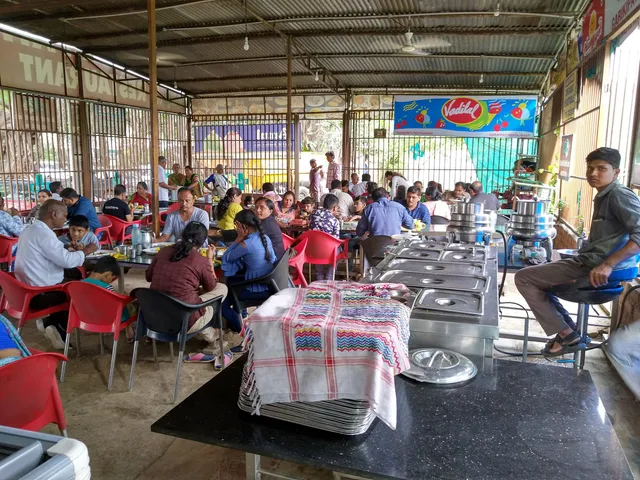
Ellora Restaurant
Front of Ellora caves, Main Road, get, Chhatrapati Sambhajinagar, Ellora, Maharashtra 431102, India
Tulsi Family Restaurant
Grushnewar Temple, beside Ellora, Verul, Maharashtra 431102, India
Vrindavan Restaurant
25FF+668, Verul, Maharashtra 431102, India
Modern Restaurant
Samartha Nagar, Aurangabad SH-22, Dhule Daulatabad, Nagpur - Aurangabad - Mumbai Hwy, Aurangabad, Maharashtra 431102, India
Hotel Kanhaiya Pure Veg Restaurant
Verul, Khuldabad, Maharashtra 431102, India
MAHARAJA RESTAURANT
SHOP NO 3, Verul, Maharashtra 431102, India
modern hotel
25FH+664, near restaurant, Ellora, Verul, Maharashtra 431102, India
Quality Restaurant
Samartha Nagar, Aurangabad, SH-22, Dhule Daulatabad Highway, Aurangabad, Aurangabad, Maharashtra 431102, India
Nearby hotels
Hotel Kailas
NH. 211, Opp Ellora Caves, Aurangabad, Maharashtra 431102, India
Abhayanand Agro Tourism
behind Tulsi Restaurant, near Ellora Caves, Aurangabad, Verul, Maharashtra 431102, India
Hotel Vrindavan
Near, Ellora Cave Rd, Ellora, Verul, Maharashtra 431102, India
HOTEL KANHAIYA & RESTAURANT
25FC+HJH, Verul, Maharashtra 431102, India
Hotel Ellora view
25FC+GWV, Verul, Maharashtra 431102, India
Hotel Tulsi Inn
Hotel Tulsi inn, Ghrushneshwar Mandir Rd, Ellora, Verul, Maharashtra 431102, India
Related posts
Keywords
Ellora Cave No. 29 The Dhumar Lena tourism.Ellora Cave No. 29 The Dhumar Lena hotels.Ellora Cave No. 29 The Dhumar Lena bed and breakfast. flights to Ellora Cave No. 29 The Dhumar Lena.Ellora Cave No. 29 The Dhumar Lena attractions.Ellora Cave No. 29 The Dhumar Lena restaurants.Ellora Cave No. 29 The Dhumar Lena travel.Ellora Cave No. 29 The Dhumar Lena travel guide.Ellora Cave No. 29 The Dhumar Lena travel blog.Ellora Cave No. 29 The Dhumar Lena pictures.Ellora Cave No. 29 The Dhumar Lena photos.Ellora Cave No. 29 The Dhumar Lena travel tips.Ellora Cave No. 29 The Dhumar Lena maps.Ellora Cave No. 29 The Dhumar Lena things to do.
Ellora Cave No. 29 The Dhumar Lena things to do, attractions, restaurants, events info and trip planning
Ellora Cave No. 29 The Dhumar Lena
IndiaMaharashtraEllora Cave No. 29 The Dhumar Lena

Basic Info

Ellora Cave No. 29 The Dhumar Lena

25HG+FM3, Ellora Cave Rd, Verul, Maharashtra 431102, India
4.7(110)
Open 24 hours
Save
spot

Ratings & Description

Info

Cultural
Scenic
Family friendly
Accessibility
attractions: Waghora Waterfall, Kailasa Temple, Ellora Cave No. 10, restaurants: Mast Tea Center, Garikipati Restaurant, Ellora Restaurant, Tulsi Family Restaurant, Vrindavan Restaurant, Modern Restaurant, Hotel Kanhaiya Pure Veg Restaurant, MAHARAJA RESTAURANT, modern hotel, Quality Restaurant
logoLearn more insights from Wanderboat AI.

Plan your stay

hotel
Pet-friendly Hotels in Maharashtra
Find a cozy hotel nearby and make it a full experience.
hotel
Affordable Hotels in Maharashtra
Find a cozy hotel nearby and make it a full experience.
hotel
The Coolest Hotels You Haven't Heard Of (Yet)
Find a cozy hotel nearby and make it a full experience.
hotel
Trending Stays Worth the Hype in Maharashtra
Find a cozy hotel nearby and make it a full experience.

Reviews

Nearby attractions of Ellora Cave No. 29 The Dhumar Lena

Waghora Waterfall

Kailasa Temple

Ellora Cave No. 10

Waghora Waterfall

Waghora Waterfall

4.6

(64)

Open 24 hours
Click for details
Kailasa Temple

Kailasa Temple

4.8

(4.2K)

Closed
Click for details
Ellora Cave No. 10

Ellora Cave No. 10

4.8

(229)

Open 24 hours
Click for details

Nearby restaurants of Ellora Cave No. 29 The Dhumar Lena

Mast Tea Center

Garikipati Restaurant

Ellora Restaurant

Tulsi Family Restaurant

Vrindavan Restaurant

Modern Restaurant

Hotel Kanhaiya Pure Veg Restaurant

MAHARAJA RESTAURANT

modern hotel

Quality Restaurant

Mast Tea Center

Mast Tea Center

5.0

(2)

Click for details
Garikipati Restaurant

Garikipati Restaurant

4.3

(588)

Click for details
Ellora Restaurant

Ellora Restaurant

3.6

(37)

Click for details
Tulsi Family Restaurant

Tulsi Family Restaurant

2.9

(335)

Click for details
Get the Appoverlay
Get the AppOne tap to find yournext favorite spots!
Wanderboat LogoWanderboat

Your everyday Al companion for getaway ideas

CompanyAbout Us
InformationAI Trip PlannerSitemap
SocialXInstagramTiktokLinkedin
LegalTerms of ServicePrivacy Policy

Get the app

© 2025 Wanderboat. All rights reserved.
logo

Reviews of Ellora Cave No. 29 The Dhumar Lena

4.7
(110)
avatar
5.0
7y

Construction in the early Hindu caves commenced before any of the Buddhist or Jaina caves. These early caves were generally dedicated to the Hindu god Shiva, although the iconography suggests that the artisans gave other gods and goddesses of Hinduism prominent and equal reverence. A common feature of these cave temples was a rock cut linga-yoni within the core of the shrine with each being surrounded by a space for circumambulation (parikrama).

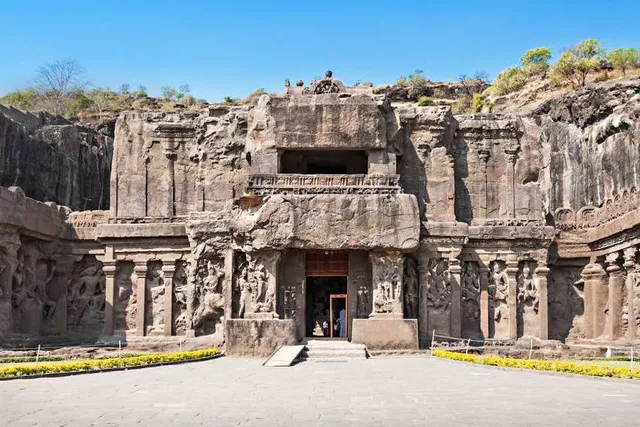
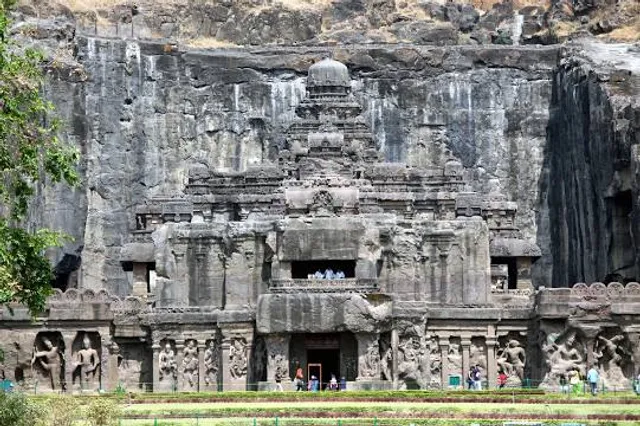
Cave 29, also called Dhumar Lena, is one of earliest excavations in Ellora and among the largest. Early Hindu temple building in the cave centred around the "Vale Ganga", a natural waterfall that was integrated into the monument.The waterfall is visible from a rock carved balcony to the south and has been described as "falling over great Shiva's brow", particularly during monsoon season. The carvings in this cave are larger than life size but, according to author Dhavalikar, they are "corpulent, stumpy with disproportionate limbs" compared to those found in other Ellora caves.

The Hindu caves were constructed during the Kalachuris period, from the mid 6th century to the end of the 8th century in two phases. Nine cave temples were excavated early in the 6th century, followed by a further four caves (caves 17–29). Work first commenced, in order, on Caves 28, 27 and 19 then Caves 29 and 21, which were excavated concurrently with Caves 20 and 26. Caves 17 and 28 were the last ones to be started.

The later caves, 14, 15 and 16, were constructed during the Rashtrakuta period, some being dated to between the 8th to 10th centuries. Work first began in Caves 14 and 15 with Cave 16, the world's largest monolith,being the last of the three to be constructed.These caves were completed in the 8th-century with the support of...

   Read more
avatar
5.0
14w

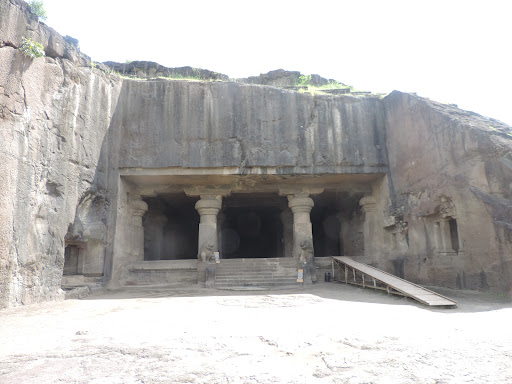
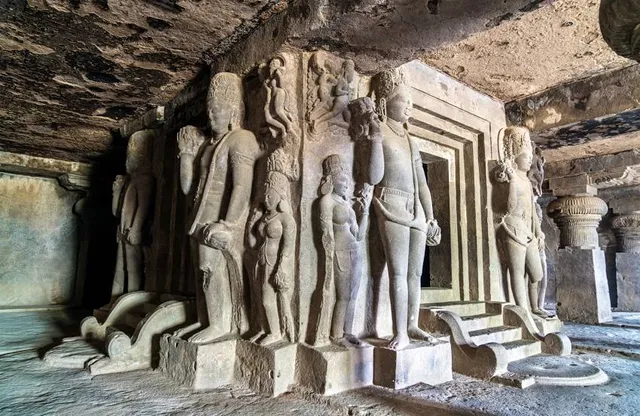
There are two ways to reach this cave, one lies on the road from the Kailasa to the Jaina caves, while the second goes via the narrow strip under the cliff. Carved in a projecting scarp to the north of the waterfall, it is the largest Brahmanical cave. The hall, shaped as a cruciform, has is the main one. This is indicated by the figures of lions and elephants guarding its steps as well as by the Nandi-platform in front of it. The cave also has twenty-six massive kalasa-topped pillars, with necks on some of the kalasas. A flight of steps leads one from the southern entrance to the stream formed by the waterfall. Each of the entrances is flanked by large sculptures that are beautifully executed.

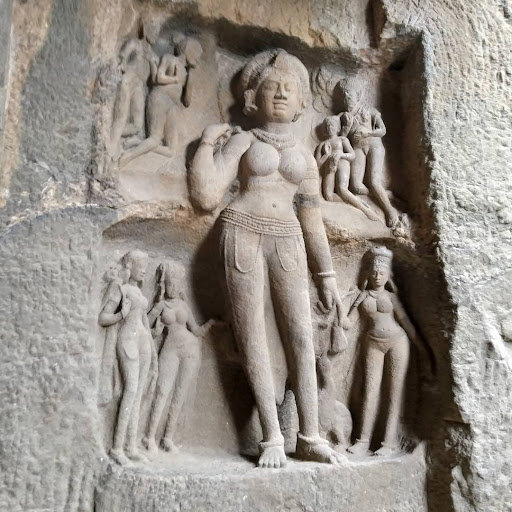
The eastern wall of the south entrance has a magnificent sculpture representing the marriage of Siva with Parvati. To the south of this panel is a larger-than-life sculpture probably of Sarasvati. The western wall has a sculpture in two sections, the upper one showing Siva and Parvati playing dice and the lower one Brahma, Vishnu and Nandi. At the upper ends are beautiful representations of dikpalas on their mounts and others. Ravana shaking the Kailasa mountain and Andhakari are seen respectively on the south and north walls of the western entrance. The east wall of the northern entrance has Lakulisa seated on a lotus supported by Nagarajas, while the west wall has a powerful dancing Siva. To the north of Lakulisa is a sculpture of Yamuna standing on a tortoise.

The shrine, containing a linga, is in the rear of the cave. It is open on all four sides, each of which is guarded by a pair of gigantic but exquisitely-finished dvarapalas...

   Read more
avatar
3.0
2y

Also Known as Dumar Lena, Cave 29 is another important excavation at Ellora by the side of Sita-Ki-Nahani, a pool created by a waterfall in the Elaganga River. Dated to late 6th century AD, Cave 29 is said to be influenced by the pattern of the Elephanta Caves near Mumbai.

This cave is compared with the ones at Elephanta and Jogeswari Caves but this one is larger, finer and of a later age. This is the best preserved and largest of all the three, which were executed on the same plan. The Dumar Lena consists of an isolated shrine located within a group of halls arranged on a cruciform plan. The entire excavation extends to almost 250 feet. The shrine houses a huge linga entered through four entrances flanked by huge dwarapalas. Two large lions with small elephants under their paws guard the steps which lead to the hall from three sides.

The halls are adorned with six huge sculptural panels depicting various episodes connected with Lord Siva. They are Ravana Shaking Mount Kailasa, the celestial marriage between Lord Siva and Parvati, Andhakasuravadamurti, Siva and Parvati playing chausar, Nataraja, Lakulisa (form of Lord Siva). River goddesses are positioned outside the north and south entrance. This cave also has two mysterious sculpted depressions, one on south and other on the north. The exact function of these depressions is not clearly understood. Various identifications have been proposed, the prominent among them is that they are religious Vedic altars used at specific important religious rituals.

Timings: 6 AM to 6 PM on all days except...

   Read more
Page 1 of 7
Previous
Next

Posts

Vikas SinghVikas Singh
There are two ways to reach this cave, one lies on the road from the Kailasa to the Jaina caves, while the second goes via the narrow strip under the cliff. Carved in a projecting scarp to the north of the waterfall, it is the largest Brahmanical cave. The hall, shaped as a cruciform, has is the main one. This is indicated by the figures of lions and elephants guarding its steps as well as by the Nandi-platform in front of it. The cave also has twenty-six massive kalasa-topped pillars, with necks on some of the kalasas. A flight of steps leads one from the southern entrance to the stream formed by the waterfall. Each of the entrances is flanked by large sculptures that are beautifully executed. The eastern wall of the south entrance has a magnificent sculpture representing the marriage of Siva with Parvati. To the south of this panel is a larger-than-life sculpture probably of Sarasvati. The western wall has a sculpture in two sections, the upper one showing Siva and Parvati playing dice and the lower one Brahma, Vishnu and Nandi. At the upper ends are beautiful representations of dikpalas on their mounts and others. Ravana shaking the Kailasa mountain and Andhakari are seen respectively on the south and north walls of the western entrance. The east wall of the northern entrance has Lakulisa seated on a lotus supported by Nagarajas, while the west wall has a powerful dancing Siva. To the north of Lakulisa is a sculpture of Yamuna standing on a tortoise. The shrine, containing a linga, is in the rear of the cave. It is open on all four sides, each of which is guarded by a pair of gigantic but exquisitely-finished dvarapalas attended by women.
Shankar RajasekharanShankar Rajasekharan
Construction in the early Hindu caves commenced before any of the Buddhist or Jain caves. These early caves were generally dedicated to the Hindu god Shiva, although the iconography suggests that the artisans gave other gods and goddesses of Hinduism prominent and equal reverence. A common feature of these cave temples was a rock-cut linga-yoni within the core of the shrine with each being surrounded by a space for circumambulation (parikrama). Cave 29, also called Dhumar Lena, is one of earliest excavations in Ellora and among the largest. Early Hindu temple building in the cave centred around the "Vale Ganga", a natural waterfall that was integrated into the monument. The waterfall is visible from a rock carved balcony to the south and has been described as "falling over great Shiva's brow", particularly during monsoon season.[30] The carvings in this cave are larger than life size but, according to author Dhavalikar, they are "corpulent, stumpy with disproportionate limbs" compared to those found in other Ellora caves.
Nimesh DedhiaNimesh Dedhia
Cave 29 at Ellora, also known as Dumar Lena, is another fascinating Hindu excavation. This cave is dating to the 6th century AD, it bridges the gap between simpler caves and elaborate temples like Kailasa. This cruciform-shaped cave boasts a central shrine with a massive Shiva linga. Look out for depictions of Ravana shaking Mount Kailasa and Shiva playing dice with Parvati. This cave Shows architectural inspiration from Elephanta Caves near Mumbai. This cave is Situated north of Kailasa temple, near a waterfall-fed pool (Sita-Ki-Nahani).
See more posts
See more posts
hotel
Find your stay

Pet-friendly Hotels in Maharashtra

Find a cozy hotel nearby and make it a full experience.

There are two ways to reach this cave, one lies on the road from the Kailasa to the Jaina caves, while the second goes via the narrow strip under the cliff. Carved in a projecting scarp to the north of the waterfall, it is the largest Brahmanical cave. The hall, shaped as a cruciform, has is the main one. This is indicated by the figures of lions and elephants guarding its steps as well as by the Nandi-platform in front of it. The cave also has twenty-six massive kalasa-topped pillars, with necks on some of the kalasas. A flight of steps leads one from the southern entrance to the stream formed by the waterfall. Each of the entrances is flanked by large sculptures that are beautifully executed. The eastern wall of the south entrance has a magnificent sculpture representing the marriage of Siva with Parvati. To the south of this panel is a larger-than-life sculpture probably of Sarasvati. The western wall has a sculpture in two sections, the upper one showing Siva and Parvati playing dice and the lower one Brahma, Vishnu and Nandi. At the upper ends are beautiful representations of dikpalas on their mounts and others. Ravana shaking the Kailasa mountain and Andhakari are seen respectively on the south and north walls of the western entrance. The east wall of the northern entrance has Lakulisa seated on a lotus supported by Nagarajas, while the west wall has a powerful dancing Siva. To the north of Lakulisa is a sculpture of Yamuna standing on a tortoise. The shrine, containing a linga, is in the rear of the cave. It is open on all four sides, each of which is guarded by a pair of gigantic but exquisitely-finished dvarapalas attended by women.
Vikas Singh

Vikas Singh

hotel
Find your stay

Affordable Hotels in Maharashtra

Find a cozy hotel nearby and make it a full experience.

Get the Appoverlay
Get the AppOne tap to find yournext favorite spots!
Construction in the early Hindu caves commenced before any of the Buddhist or Jain caves. These early caves were generally dedicated to the Hindu god Shiva, although the iconography suggests that the artisans gave other gods and goddesses of Hinduism prominent and equal reverence. A common feature of these cave temples was a rock-cut linga-yoni within the core of the shrine with each being surrounded by a space for circumambulation (parikrama). Cave 29, also called Dhumar Lena, is one of earliest excavations in Ellora and among the largest. Early Hindu temple building in the cave centred around the "Vale Ganga", a natural waterfall that was integrated into the monument. The waterfall is visible from a rock carved balcony to the south and has been described as "falling over great Shiva's brow", particularly during monsoon season.[30] The carvings in this cave are larger than life size but, according to author Dhavalikar, they are "corpulent, stumpy with disproportionate limbs" compared to those found in other Ellora caves.
Shankar Rajasekharan

Shankar Rajasekharan

hotel
Find your stay

The Coolest Hotels You Haven't Heard Of (Yet)

Find a cozy hotel nearby and make it a full experience.

hotel
Find your stay

Trending Stays Worth the Hype in Maharashtra

Find a cozy hotel nearby and make it a full experience.

Cave 29 at Ellora, also known as Dumar Lena, is another fascinating Hindu excavation. This cave is dating to the 6th century AD, it bridges the gap between simpler caves and elaborate temples like Kailasa. This cruciform-shaped cave boasts a central shrine with a massive Shiva linga. Look out for depictions of Ravana shaking Mount Kailasa and Shiva playing dice with Parvati. This cave Shows architectural inspiration from Elephanta Caves near Mumbai. This cave is Situated north of Kailasa temple, near a waterfall-fed pool (Sita-Ki-Nahani).
Nimesh Dedhia

Nimesh Dedhia

See more posts
See more posts