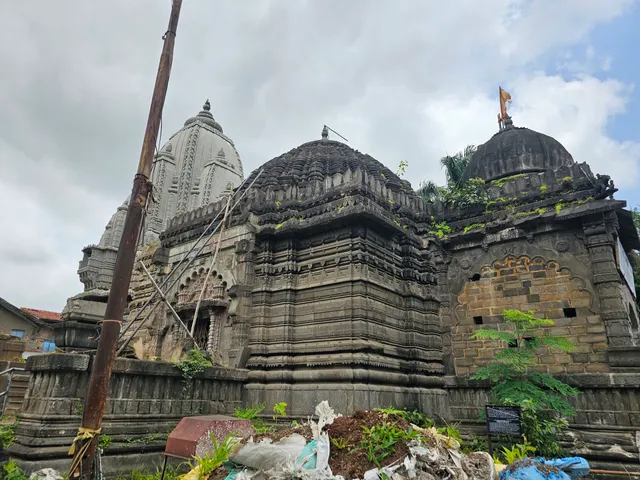
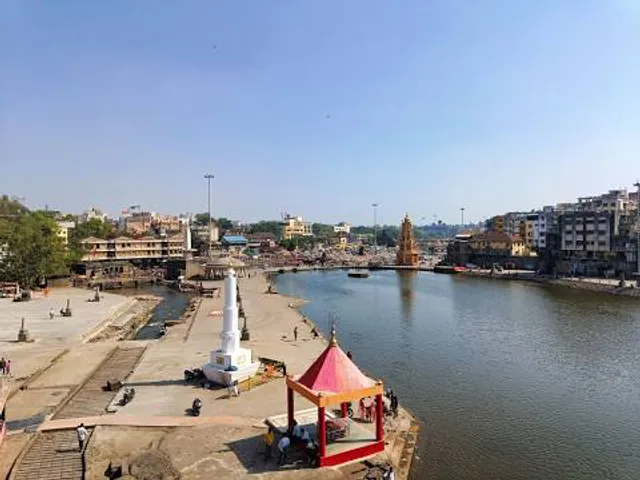
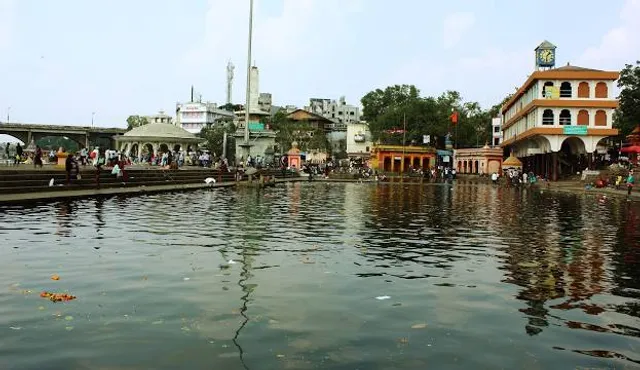
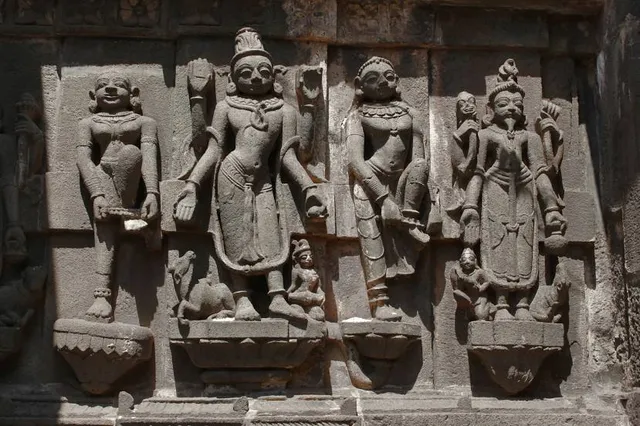
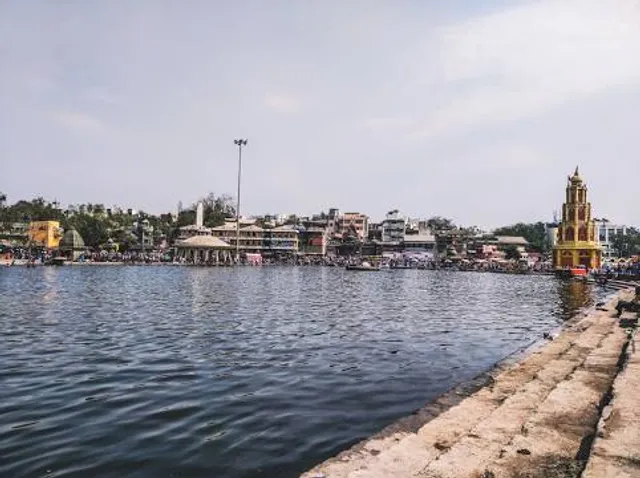
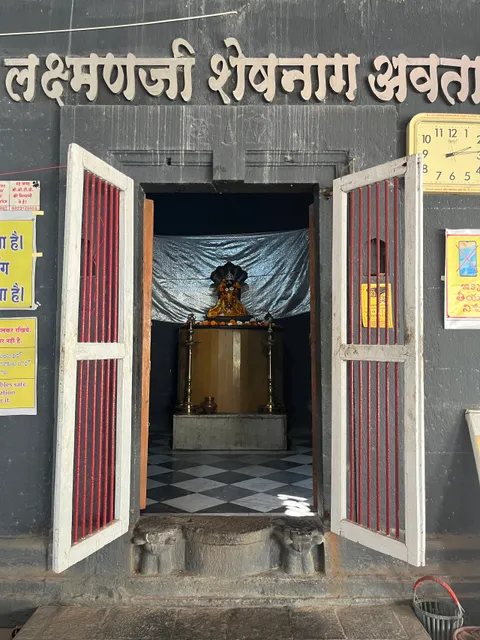
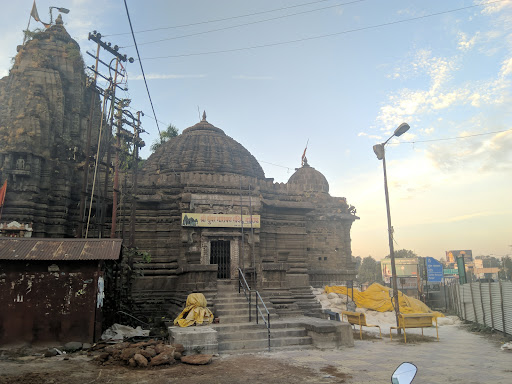
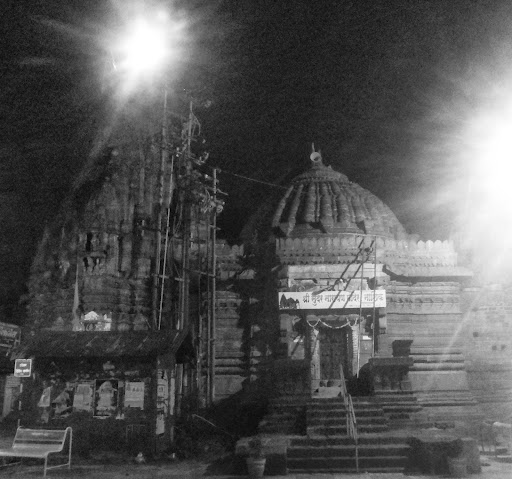
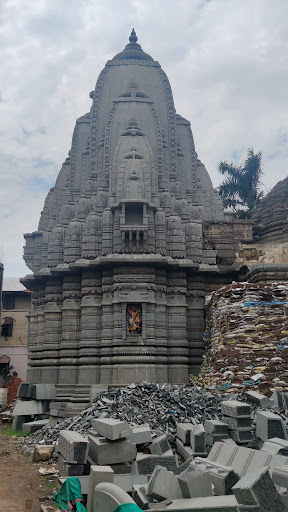
Sundarnarayan temple is situated at the corner of Ahillyabai Holkar Bridge. The story goes like this : Vrinda Devi was a very pious and faithful wife of Jalandar – a wicked demon. Jalandar, a mighty crook, was the devotee of Lord Shiva. Pleased with his prayers and impressed by Jalandar’s wife’s chastity, Lord Shiva gave him a boon that made him immortal. With this boon, Jalandar became vicious and started creating havoc on earth. He not only troubled human beings, but alsodisturbed the Gods. He even ventured to pick up a quarrel with Lord Shiva himself. It became necessary to eliminate him which was contrary to the boon given by Lord Shiva. The only way out was to suspect Vrinda Devi’s chastity. For this task Lord Vishnu duplicated himself to look like Jalandar and lived with Vrinda Devi. Thus her chastity was suspected and the boon given to Jalandar was withdrawn and he was destroyed. When Vrinda Devi came to know of the trick played by Lord Vishnu, she got furious and cursed Lord Vishnu. His attractive body turned black due to the curse. Lord Vishnu took a holy bath in the river Godavari and regained his complexion. Sincehe became beautiful again, – the Lord is named as Sundarnarayana. Sundar in Marathi means beautiful.The Sundarnarayan temple is built by Gangadhar Yashwant Chandrachud in 1756. The entrance of the temple is to the East. The two Mandaps may be small but their architecture is attractive and theround dome is made by little ornamental cordons. The arched recesses are impressions by Mughal style because during the Mughal Regime many temples were demolished by Muslims and graveyards were built in their place. The main deity is of Lord Vishnu – alias Narayana . To his left and right are Laxmi and Saraswati respectively. Fine design is carved on the stones of the temple. On the road leading towards Godavari River there is pond named Badarika Sangam Pond. It is said that the king of Devgiri bathed and performed rites in this pond. We also find a mention of this pond in the holy book Dnyaneshwari. One remarkable thing about this temple is that it is built at such an angle that on 21st March, rays of the rising Sun first fall exactly...
Read moreSaptashrungi temple is dedicated to goddess Saptashrungi, located within the seven mountain peaks in Nanduri village near Nashik. The temple is one among the 51 Shakti Peethas in the Indian subcontinent and also three and half Shakti Peethas of Maharashtra.
Trimbakeshwar Temple

Trimbakeshwar Shiva Temple is one of the 12 Jyotirlingas of Lord Shiva, situated in the Nashik district. The temple complex is the source of the Godavari river and one of the must visit religious center in Maharashtra.
Panchvati

Panchavati is a pilgrimage site and the place where the Kumbh Mela held near the Godavari river in Nashik. The complex has many tourist attractions such as Tapovan,Ramkund,Naroshankar Temple and Sundarnarayan Temple.
Sita Gufa
Sita Gumpha Caves is one of the popular tourist destination in Nasik and the place has religious significance and a pilgrimage spot. This place is located in Panchavati near Kalaram temple where Sita have stayed for some time.
Kalaram Temple

Kalaram Temple is dedicated to Lord Rama and the most important Hindu shrine in the city of Nashik. The temple has the black statue of Lord Rama and known to be one of the most famous temple of Lord Rama in India.
Pandavleni Caves

Pandavleni Caves are group of 24 rock cut caves, located about 8 km south of Nashik in Maharashtra. The caves are known as Trirashmi Buddhist Caves situated high in the mountains of Trirashmi and a popular attraction in Nasik.
Kapaleshwar Temple
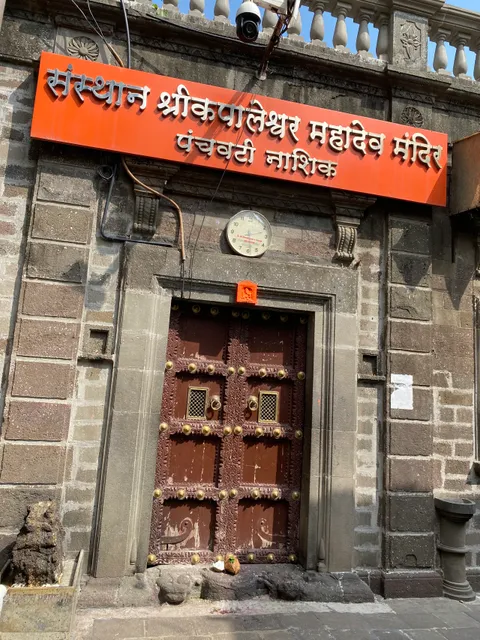
Kapaleshwar Mahadev Temple is one of the oldest temple in Nashik and the only temple of Lord Shiva without Nandi idol. Shree Kapaleshwar Mandir along with Gayatri Devi Mandir and Maruti Mandir are among the most important place in Nashik city.
Anjaneri Hills

Anjaneri Hills is located 20 km away from Nasik and one of the exquisite attractions of Nasik city. Anjaneri is the birthplace of Hanuman, surrounded by mountain ranges, forests and...
Read moreThe Sundarnarayan Temple in Nashik is a significant Hindu temple dedicated to Lord Vishnu, located on the banks of the Godavari River. Here are some key details:
Historical and Religious Significance: Deity: The temple is dedicated to Lord Vishnu, who is worshipped here as Sundarnarayan. Architecture: It showcases exquisite Hemadpanti style architecture with intricate carvings and a blend of religious and mythological themes. Legend: According to legend, Lord Vishnu, pleased with the devotion of a devotee named Shankaracharya, appeared here in his beautiful form as Sundarnarayan, hence the temple's name.
Features: Temple Structure: The temple features a sanctum sanctorum (garbhagriha) with a statue of Lord Vishnu, flanked by idols of Lakshmi and Saraswati. Location: It is situated near the Ahilyabai Holkar Bridge, making it accessible for pilgrims and tourists visiting Nashik.
Cultural Importance: Festivals: Major Hindu festivals such as Ram Navami, Janmashtami, and Diwali are celebrated with great enthusiasm at the temple. Pilgrimage: It is a key destination for pilgrims, especially during the Kumbh Mela held in Nashik.
Visiting Information: Timings: The temple is generally open from early morning till late evening, with specific hours for morning and evening aarti (ritual worship). Access: The temple is easily accessible from various parts of Nashik, with nearby transportation options like buses and...
Read more