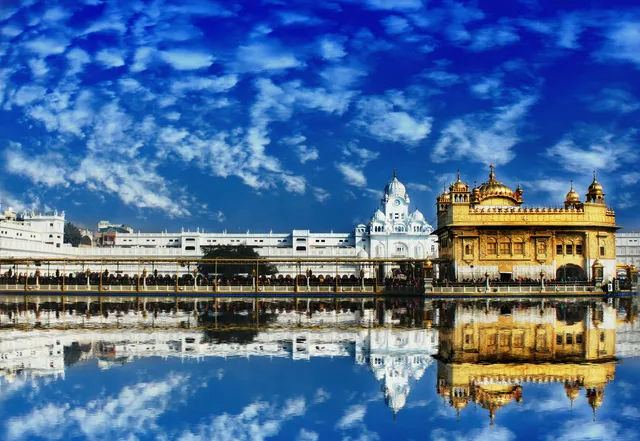
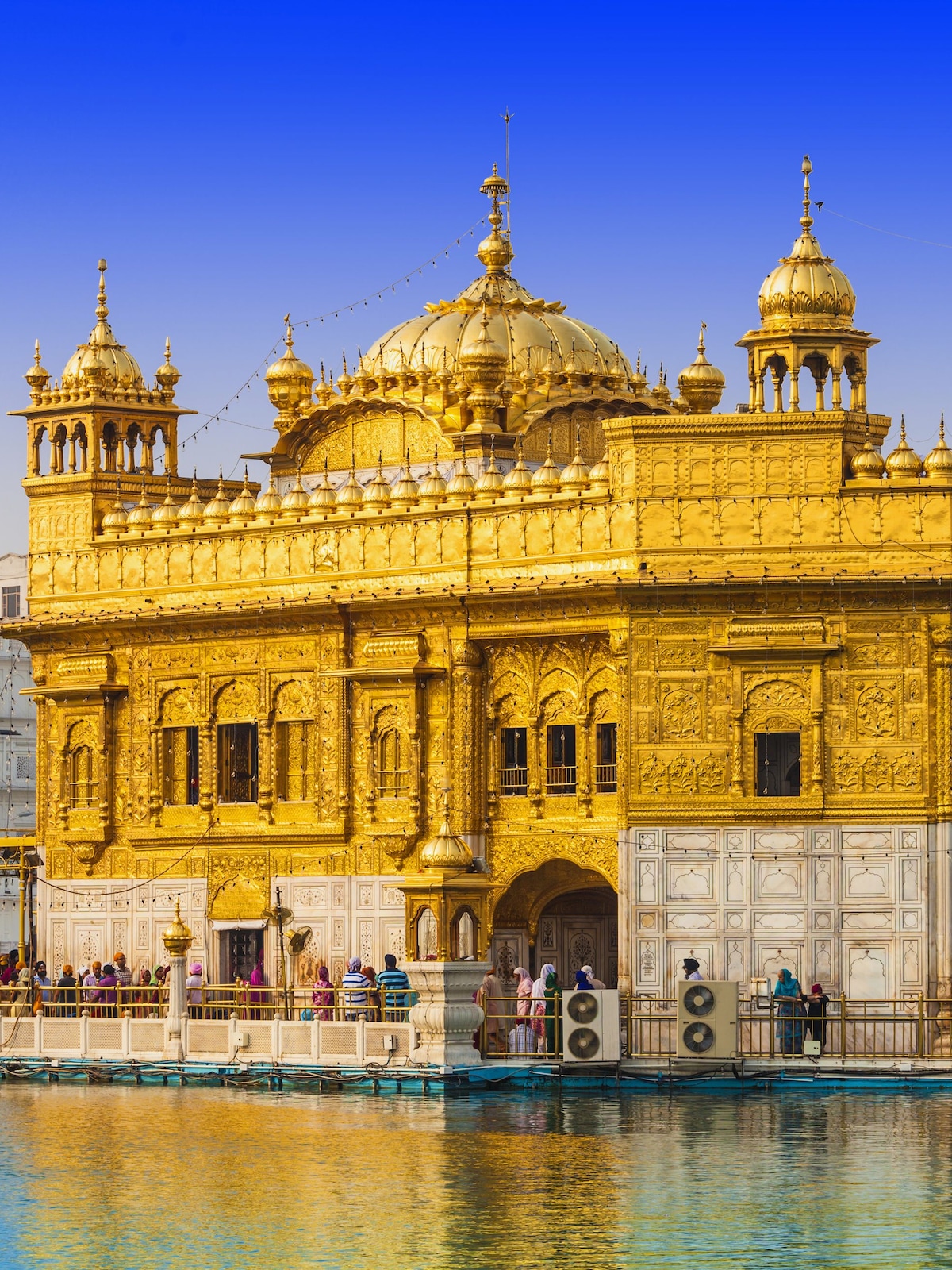
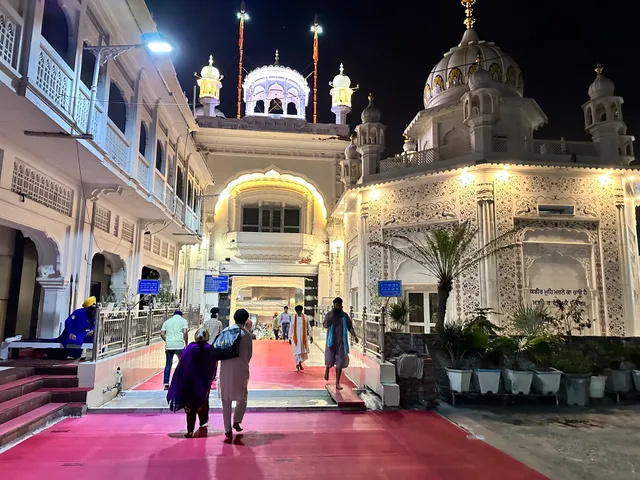
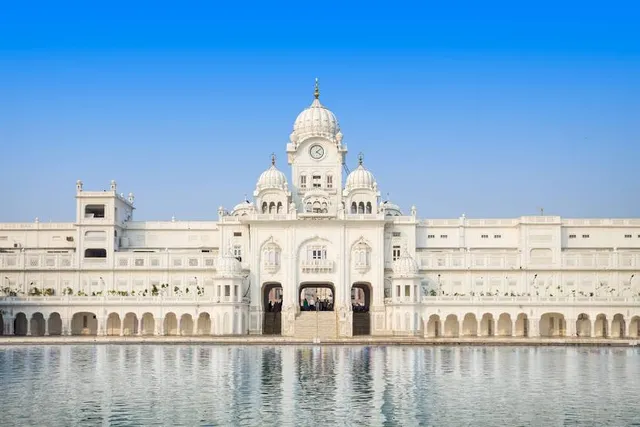
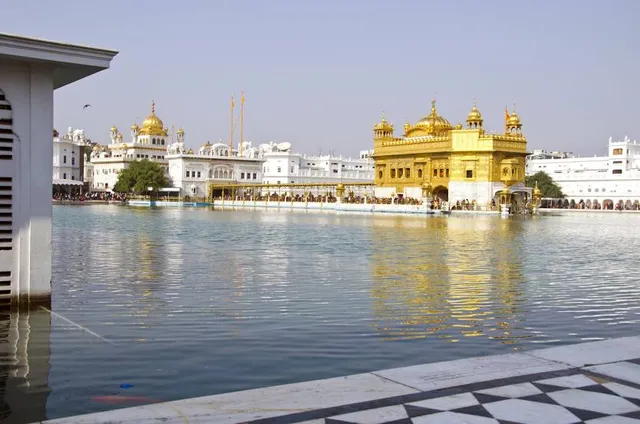
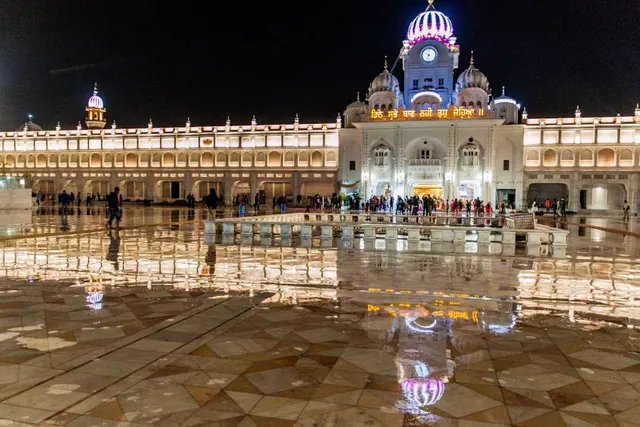
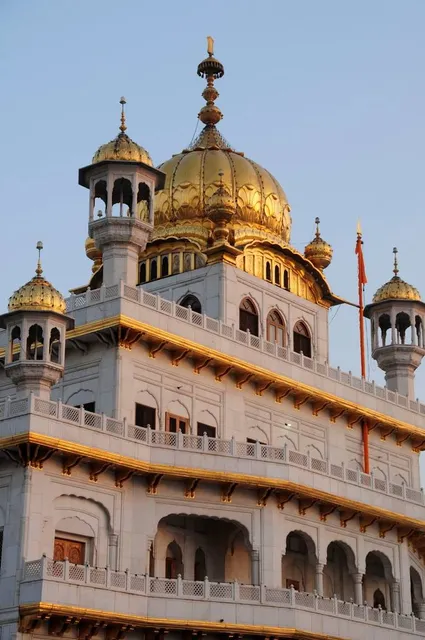
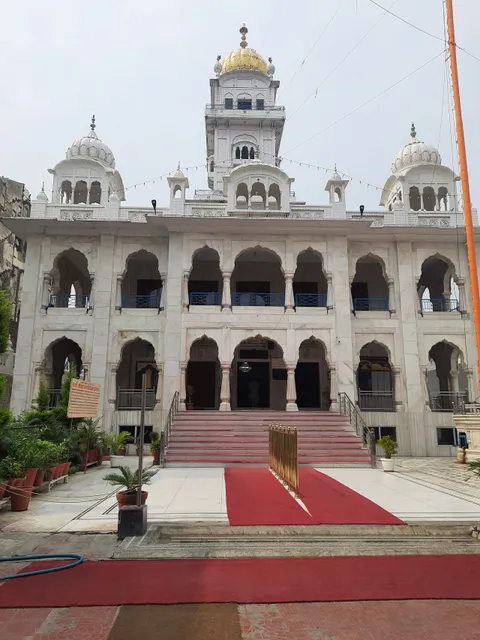
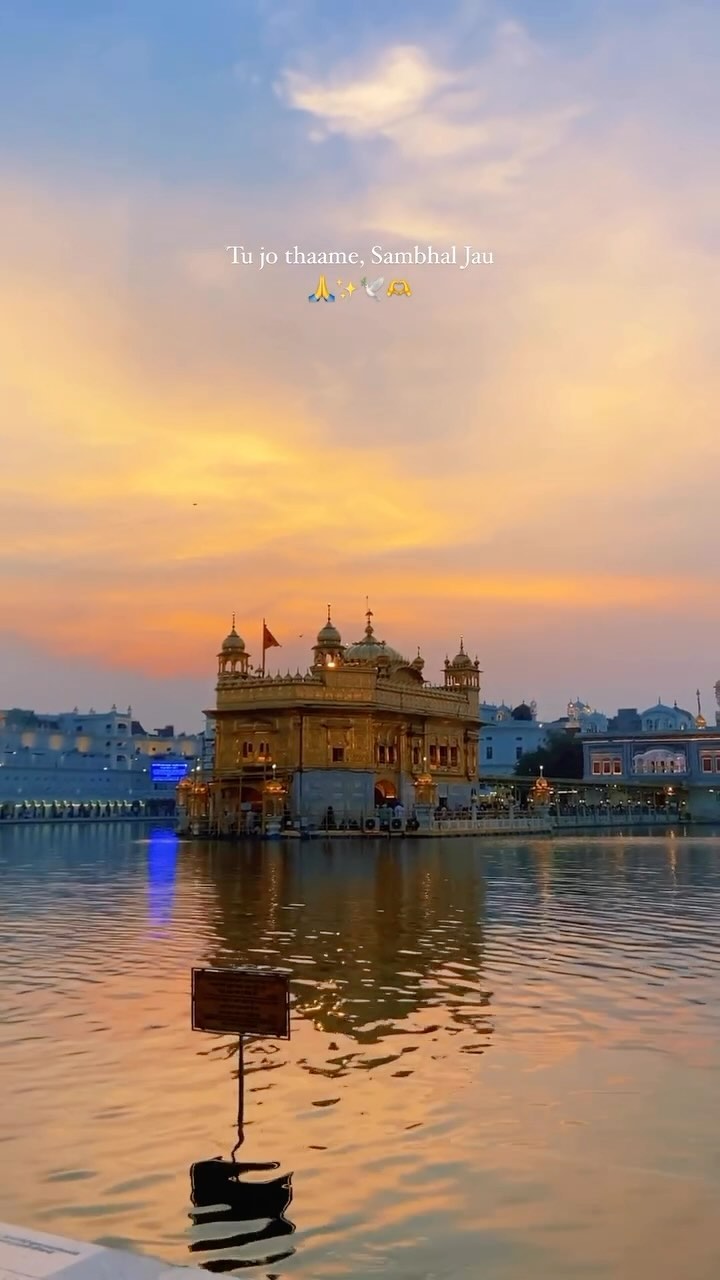
The Golden Temple, or Harmandir Sahib, is the focus of a complex of buildings that form the heart of Sikhism. The temple itself occupies a small island in the center of a tank, or pool, called the Amrita Saras (“Pool of Nectar”)—the source of the city’s name—and is connected to land on its west side by a marble causeway running across the pool. Situated facing the entrance to the causeway is the Akal Takht (“Throne of the Timeless One”), the chief center of authority of Sikhism and the headquarters of the Shiromani Akali Dal (Supreme Akali Party), the main political party of the Sikhs in Punjab. On the north side of the tank is the main entrance to the complex and the Teja Singh Samudri Hall (Clock Tower), which houses the main offices of the Shiromani Gurdwara Parbandhak Committee (Supreme Committee of Temple Management), which oversees the main Sikh gurdwaras. Among several buildings on the east side of the tank are the Assembly Hall and the Guru Ram Das Langar, the latter a large dining hall that serves meals to thousands of pilgrims and other visitors each day. The first Harmandir Sahib was built in 1604 by Arjan, the fifth Sikh Guru, who symbolically had it placed on a lower level so that even the humblest had to step down to enter. He also included entrances on all four sides, signifying that it was open to worshippers of all castes and creeds. The foundation stone was laid by Mian Mīr, a Sufi Muslim saint from Lahore (now in Pakistan). The temple was destroyed several times by Afghan invaders and was finally rebuilt by 1776. The temple is notable for its blend of Mughal (Islamic) and Rajput (Hindu) architectural styles. During the reign (1801–39) of Maharaja Ranjit Singh, who founded the Sikh empire, the lower stories of the central temple were faced with white marble inlaid with designs made of precious gems, the interior walls were adorned with frescoes and mirror and gold leaf decorations, and the upper stories were overlaid with gilded copper panels. The structure thus became known as the Golden Temple.
The buildings of the Golden Temple complex, particularly the Akal Takht, sustained damage in June 1984 during Operation Blue Star, an Indian army attack to dislodge Sikh separatists from the site. The military operation, ordered by Indian Prime Minister Indira Gandhi, was a reaction to the occupation of the Akal Takht in 1982 by a young Sikh fundamentalist, Jarnail Singh Bhindranwale, and his armed followers who sought the creation of an independent Sikh-majority country called Khalistan. Bhindranwale and dozens of his followers were killed in the military assault, while more than 80 soldiers and at least hundreds of pilgrims caught in the crossfire were confirmed dead according to government officials (although Sikh sources suggest the number of soldiers and civilians killed may have exceeded 1,000). The Akal Takht has since been repaired, and the Golden Temple complex now includes a memorial to those killed in the raid.The Golden Temple is open to anyone regardless of caste, religion, or race, provided that pilgrims cover their heads, remove shoes, and wash feet and hands before entering, as is the norm at gurdwaras. The most important ritual practice at the Golden Temple is the daily continuous gurbani (sayings of the Gurus) kirtan (singing). This singing begins early in the morning with the opening of the doors of the Akal Takht, where the sacred book, the Adi Granth (also reverently called the Guru Granth Sahib since the book is regarded as a living Guru),rests each night. After the doors open in the early hours of the morning and singing begins, the Adi Granth is brought to the central main room, or sanctum sanctorum, of the Golden Temple. Devotees sing gurbani kirtan throughout the day until late in the night when the Adi Granth is returned to the Akal Takht.Pilgrims to the Golden Temple complex bathe in the pool and circumambulate the central temple. Of particular importance for visitors to the Golden Temple is the langar, a free kitchen that feeds a vegetarian meal to approximately...
Read moreThe Golden Temple, also known as Harmandir Sahib, is the holiest shrine in Sikhism and a major pilgrimage site located in Amritsar, Punjab. Renowned for its stunning architecture and spiritual ambiance, it attracts millions of visitors annually.
Visitor Experiences:
Spiritual Atmosphere: Visitors often describe the temple as a place of profound peace and spirituality. The serene environment, combined with the melodious hymns, offers a deeply moving experience. TRIPADVISOR
Langar (Community Kitchen): The temple's langar serves free meals to thousands daily, embodying the Sikh principles of equality and selfless service. Many visitors find participating in or observing this service to be a highlight of their visit. TRIPADVISOR
Architectural Beauty: The temple's gold-plated façade, surrounded by the Amrit Sarovar (holy tank), is particularly mesmerizing during sunrise and sunset, leaving visitors in awe of its beauty. MINUBE
Visitor Tips:
Dress Code: All visitors are required to cover their heads and remove their shoes before entering the temple complex. Scarves and head coverings are usually available at the entrance. TRIPADVISOR
Best Time to Visit: Early mornings and late evenings are recommended to experience the temple's tranquility and to avoid large crowds. Witnessing the Palki Sahib ceremony, which occurs early morning and late night, is a unique experience. TRIPADVISOR
Accommodation: The temple offers free accommodation to pilgrims, though donations are welcome. Additionally, there are numerous hotels nearby for those seeking more comfort. BOOKING.COM
Additional Information:
Accessibility: The temple complex is wheelchair accessible, and volunteers are available to assist visitors with special needs. TRIPADVISOR
Photography: While photography is allowed in the outer complex, it is prohibited inside the main sanctum. Visitors are advised to respect this rule to maintain the sanctity of the place. TRIPADVISOR
Overall, the Golden Temple offers a spiritually enriching experience, combining religious significance with cultural and architectural splendor. Visitors often leave with a sense of peace and admiration for the temple's inclusive and welcoming ethosThe Golden Temple in Amritsar, also known as Harmandir Sahib, is one of India’s most iconic spiritual destinations and the holiest shrine in Sikhism. Here’s a quick overview of visitor reviews and experiences:
Highlights: Spiritual Experience:
Described as a place of immense peace and tranquility. The soothing chants and the serene Sarovar (holy tank) provide a deeply meditative atmosphere. Langar (Community Kitchen):
A must-experience for visitors; serves free meals to thousands every day regardless of caste, creed, or religion. Known for its sense of inclusivity and community service. Architectural Grandeur:
The stunning gold-plated temple reflects beautifully in the surrounding water, especially at sunrise and sunset. The intricate carvings and the overall ambiance leave visitors in awe. Unique Ceremonies:
The Palki Sahib ceremony, performed early morning and late at night, is a major attraction. Tips for Visitors: Head Covering: Mandatory for all visitors; scarves are provided at the temple entrance. Best Times to Visit: Early mornings or late evenings to avoid crowds and witness the temple’s beauty under soft lighting. Footwear: Shoes must be removed, and feet washed before entering. Accessibility: Wheelchair accessible with volunteers always ready to assist. Common Feedback: Cleanliness: Visitors often praise the temple for its well-maintained premises. Crowd Management: Despite the large number of visitors, the atmosphere remains calm and organized. Visitor Sentiment: Many describe their visit to the Golden Temple as a life-changing experience, marked by the temple’s peaceful environment and the warmth of its volunteers. It’s not just a religious site but a cultural and humanitarian marvel.
Would you like recommendations on nearby attractions or...
Read moreThe Golden Temple, or Sri Harmandir Sahib, is the most sacred and spiritual site in Sikhism, located in the city of Amritsar, Punjab, India. It is a major pilgrimage destination and a symbol of universal brotherhood and equality.
History and Significance Foundation: The land for the temple was acquired by Guru Ram Das, the fourth Sikh Guru, in 1577, who also completed the holy pool (Sarovar) around which the temple is built.
Construction: The fifth Sikh Guru, Guru Arjan Dev, began the construction of the temple in 1588, with the foundation stone being laid by the Sufi Muslim saint, Sai Mian Mir. This act symbolized the Sikh principle of inclusivity.
Reconstruction: The original structure was repeatedly destroyed by Afghan and Mughal invaders in the 18th century. Maharaja Ranjit Singh, who founded the Sikh Empire, rebuilt the temple in the early 19th century, using marble and copper and overlaying the sanctum with gold leaf, which gave it the name "Golden Temple."
Egalitarian Principles: The temple's design reflects the core tenets of Sikhism. Unlike most Hindu temples that are elevated, the Golden Temple is built on a lower level, requiring visitors to step down, which symbolizes humility. It also has four entrances, facing each cardinal direction, signifying that it is open to people of all castes, creeds, and religions.
Architecture The Golden Temple's architecture is a unique blend of Mughal and Rajput styles. Key features include:
The Sarovar: The temple complex is centered around the "Amrit Sarovar" (Pool of Nectar), a large, holy water tank believed to have healing powers. The temple itself appears to float in the middle of this pool.
The Sanctum Sanctorum: The central shrine, covered in gold leaf, houses the Guru Granth Sahib, the holy scripture of Sikhism. It is connected to the land by a marble causeway. The Akal Takht: Located across the causeway from the main temple, the Akal Takht is the supreme seat of authority for Sikhism, dealing with spiritual and secular matters.
Visitor Information Timings: The temple is open to visitors 24/7, though certain rituals and ceremonies occur at specific times. The doors generally open around 4:00 AM and close around 10:00 PM. The Palki Sahib ceremony, in which the holy scripture is carried to and from the Akal Takht, is performed in the early morning and late evening. Langar (Community Kitchen): A key part of the temple's ethos is the free community meal, or "Langar," which is served to thousands of people daily, regardless of their background. The langar is open 24 hours a day.
Dress Code and Rules: Head Covering: All visitors, both men and women, must cover their heads with a scarf or handkerchief before entering the complex.
Modest Attire: Visitors are required to dress modestly, with clothing that covers their shoulders and knees. Shorts, mini-skirts, and sleeveless tops are discouraged. Footwear: Shoes and socks must be removed and can be left at the free shoe storage facilities. Photography: Photography is generally prohibited inside the main sanctum but is allowed in the outer walkway (Parikrama). Prohibitions: Smoking, alcohol, and tobacco are strictly forbidden within the...
Read more