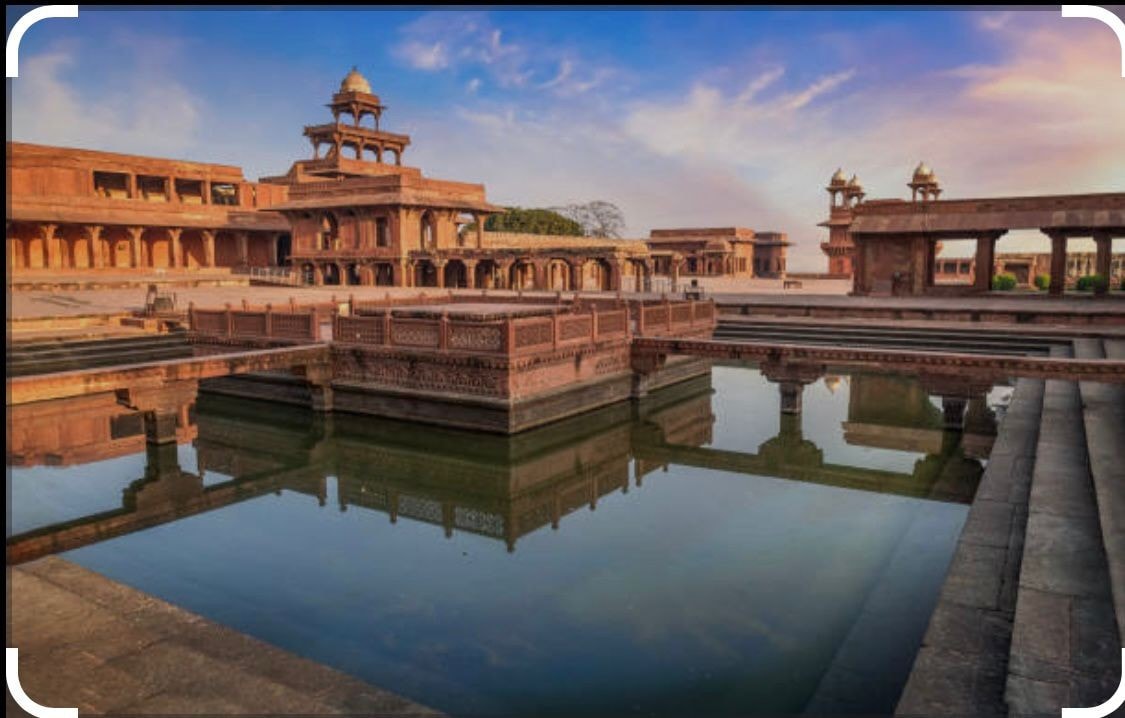
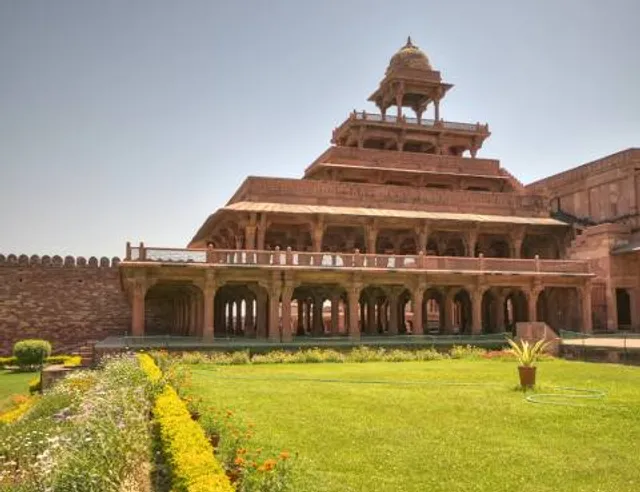
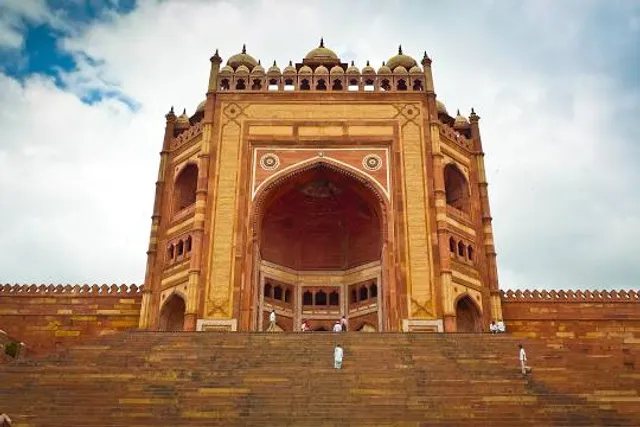
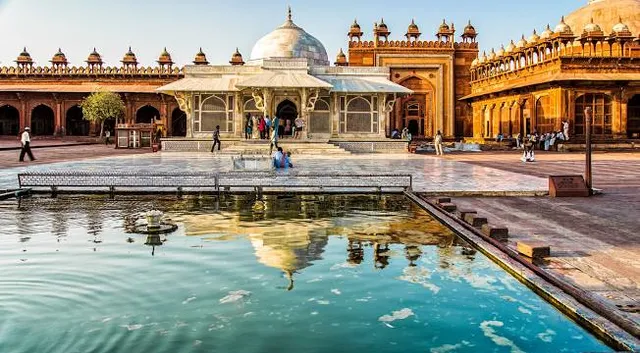
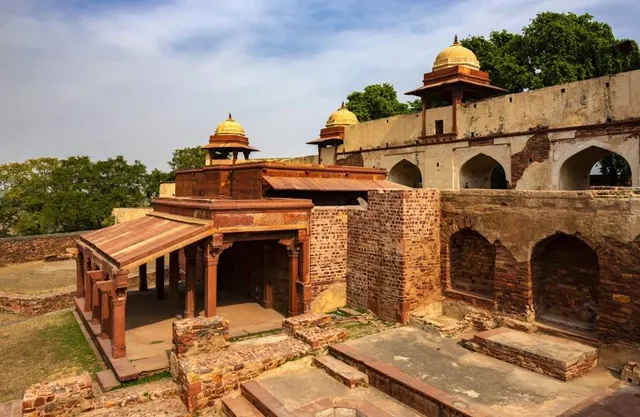
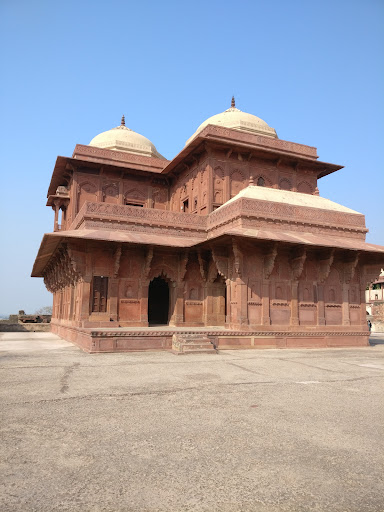
The moment you step into the premises of the Fatehpur Sikri in Uttar Pradesh in India, you are transported to an era of the past, which still surrounds almost the entirety of the complex. The streets, today deserted take you past the lives and days of the great Mughals, an era which can be said to constitute what today is known as the golden era of the history of India. A definite must include if you are planning a tour itinerary to Uttar Pradesh a trip to Fatehpur Sikri is a wonderful way of rediscovering our rich heritage and culture. One of the most important Monuments in Fatehpur Sikri, the Birbal Bhawan, Fatehpur Sikri can be said to be one of the most important tourist attractions of the entirety of Fatehpur Sikri.
History of the Birbal Bhawan, Fatehpur Sikri
Built as a form of homage to the memory of the memory of the great Sufi saint, Sheikh Salim Chisti, who, it is said, blessed the emperor with an heir to the Mughal throne in India, who was to be later known as Jahangir, Fatehpur Sikri was built in 1571 and stood as the capital of the Mughal empire till the year 1585. One of the most striking relics of the rich history and culture of India, the entirety of the complex of Fatehpur Sikri has been awarded by UNESCO by putting the monument as an important part in the prestigious list of heritage monuments in the world. Perhaps, no other monument in Fatehpur Sikri can take credit for this honor as can the Birbal Bhawan, Fatehpur Sikri. Seen to be the residence of Birbal, one of the Navaratna or Nine Jewels of the court of Emperor Akbar, the Birbal Bhawan in Fatehpur Sikri can be rated as one of the most important tourist attractions of Fatehpur Sikri.
Description of the Birbal Bhawan, Fatehpur Sikri
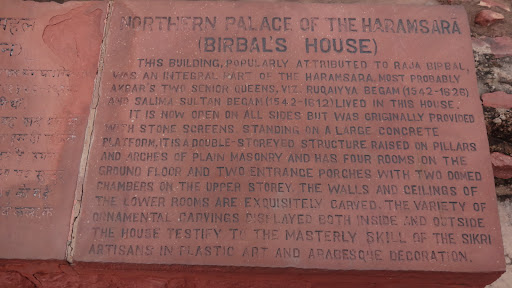
It is easy to imagine the life that set the pulse of the bustling capital of the ancient Mughals racing even by looking at the ruins of Fatehpur Sikri today. Narrow intersecting roads, which lead to some of the most spectacular palaces, gardens and holy places, had probably been the only lives the subjects of Akbar knew at the time. Till the fort was abandoned due to a severe scarcity of water, all the palaces and roads of this ancient land mark remained well maintained. Throwing light on the city are the various monuments of Fatehpur Sikri, notable among which is the Birbal Bhawan, Fatehpur Sikri. Though it cannot be ascertained that the palace ever housed this importat jewel of Akbar's court, the palace is connected via a screened passage to the Haram sara viaduct, which in turn leads to the Hathi Pol, one of the most prominent attractions of...
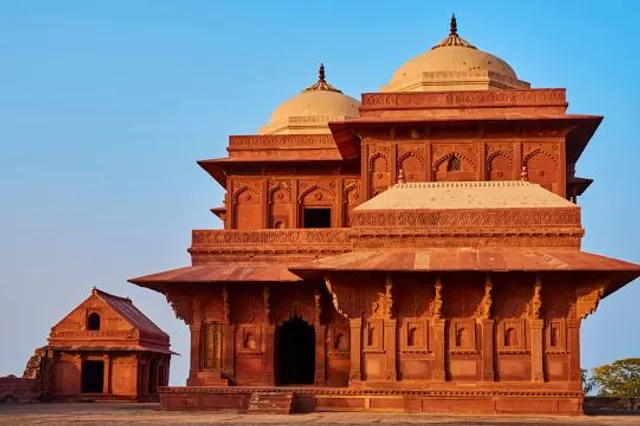
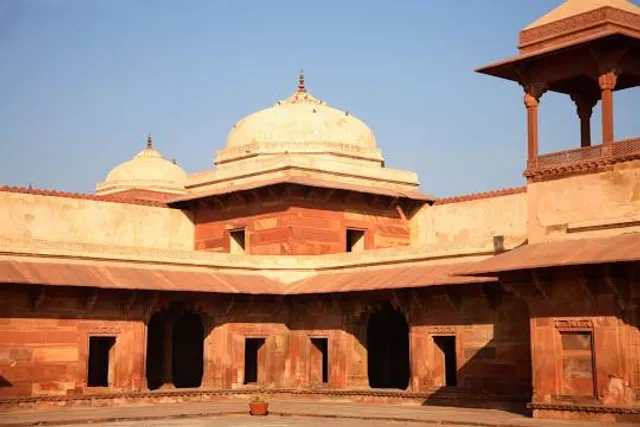
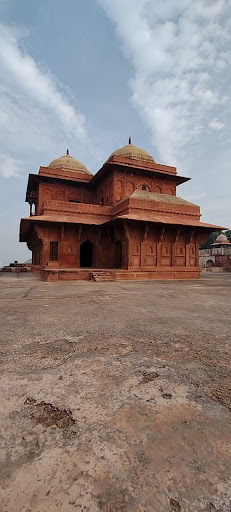
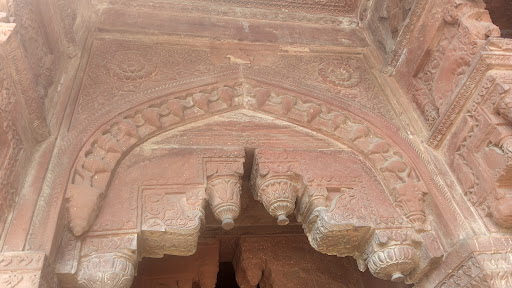
Read moreAccording to popular beliefs the most probable occupants of this palace were Akbar's two senior queens, Ruqayya Begum and Salima Sultan Begum. Birbal's house stands near the northwest corner of Jodhbai's palace. It is one of the marvelous buildings of imperial Harem. It was built in 1571. It consists of fours-quare rooms, each measuring 16'-10" (5.13m) square side, all interconnected through open doorways and two oblong entrance porches on Northwest and Southeast corners. While all the four rooms, have flat ceilings, porches have triangular chhappar ceiling with pyramidal roof. The interior of the building is divided into three days by richly carved pilasters. Shafts of these pilasters have been divided into three zones, which contain three different kind of decoration like single border designs, arabesque geometrical designs and stylized floral designs.
Capitals of these pilaster bears lotus petals and stalactite designs. The first floor has beautiful Jharokhas overlooking the court below and a simple chajja. Each dome of the upper rooms rests on an octagonal drum, which is also carved with a raised trefoil pattern. The domes are crowned by an inverted lotus and kalash finials and also bear traces of tile work. Though the entire construction is composed of lintels and beams, but beautifully carved brackets have been used to span the spaces between the pillars and ornamental arches. These brackets are carved on both faces with lotus and arabesque designs. Spandrels of the arches also bear arabesque and...
Read moreBirbal's Palace, located within the Agra Fort in India, is a splendid example of Mughal architecture and a testament to the grandeur of the Mughal Empire. Built in the late 16th century by Emperor Akbar, the palace was named after his close advisor and one of the nine jewels of his court, Raja Birbal. The structure is renowned for its intricate design, blending Persian, Islamic, and Hindu architectural styles.
The palace is relatively small compared to other structures within the fort but stands out due to its elegant carvings and detailed decorations. The red sandstone used in its construction gives it a distinct appearance, and the beautiful jharokhas (overhanging enclosed balconies) add to its charm. The interiors are equally impressive, with well-preserved frescoes and ornate ceilings that reflect the artistic excellence of the period.
Visitors to Birbal's Palace are often struck by the harmony and balance in its design, which exemplifies the Mughal's architectural prowess. The palace not only offers a glimpse into the luxurious lifestyle of the Mughal elite but also provides insight into the cultural and historical context of Akbar's reign. Overall, Birbal's Palace is a must-visit for anyone interested in Mughal history and...
Read more