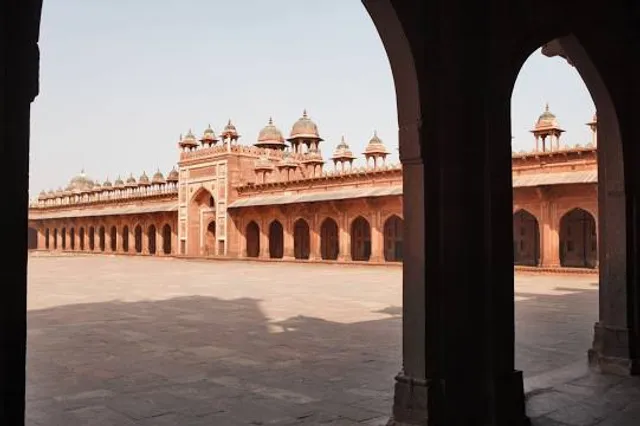
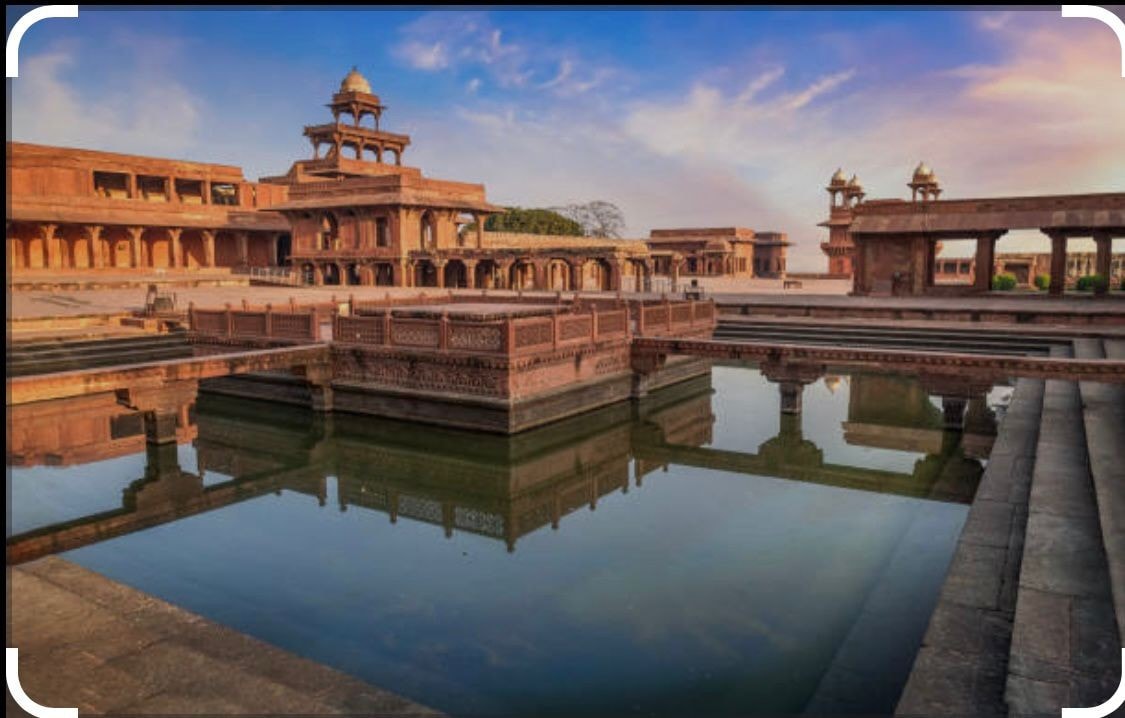
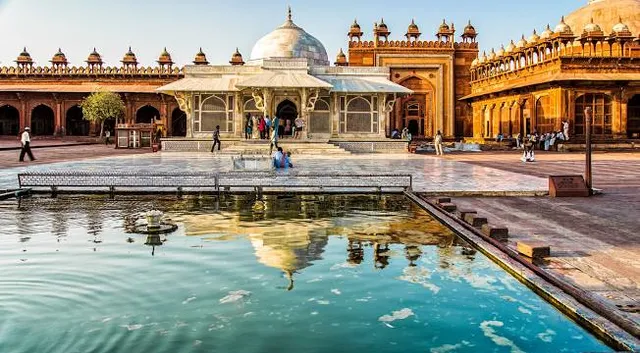
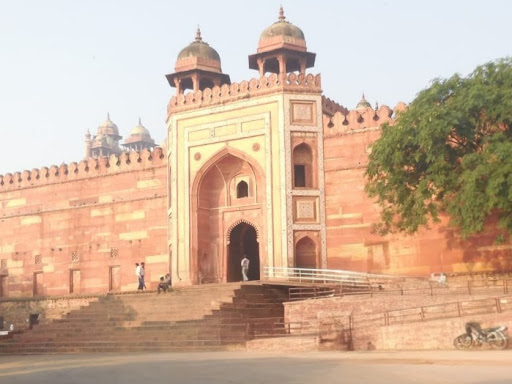
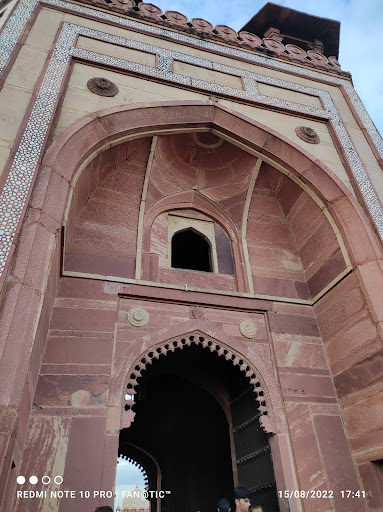
The King's Gate (or Rajwada Gate) at Fatehpur Sikri, situated near the iconic Jama Masjid, is an exceptional architectural feature that stands as a testament to the grandeur of Mughal design. Built during the reign of Emperor Akbar, Fatehpur Sikri itself is a remarkable city that blends Islamic, Persian, Hindu, and even Central Asian influences. The King's Gate, part of the larger complex, offers a perfect example of the Mughal style's beauty and engineering prowess.
The gate is a monumental entry point into the inner quarters of the royal palace, offering an imposing yet graceful design that reflects the opulence of the Mughal Empire. It is strategically located, acting as both a symbol of the emperor’s power and a functional barrier for those wishing to enter the royal grounds. As with much of Fatehpur Sikri, the gate exhibits an intricate mix of red sandstone, marble inlay work, and delicate carvings, giving it a regal yet robust look.
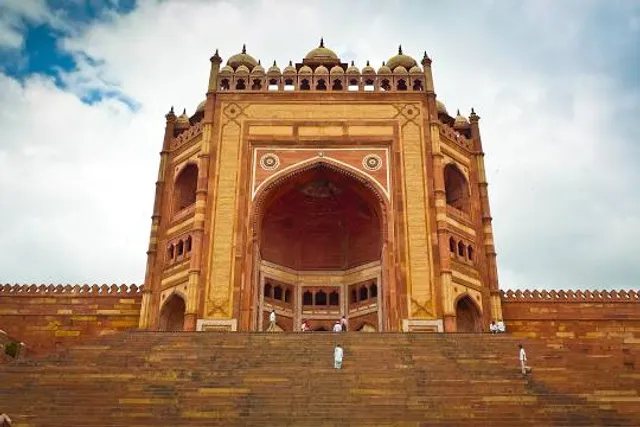
Upon first approaching the gate, visitors are struck by its impressive scale. The archway is framed with elaborate carvings, featuring floral patterns, calligraphy, and motifs inspired by Persian and Central Asian art. The gate is crowned by domes and towers, and the overall composition is balanced and symmetrical. This harmony is one of the defining features of Mughal architecture, where beauty is not just in the aesthetics but also in the proportion and design of the space.
The King's Gate is flanked by a series of steps, leading visitors up to its elevated platform. This upward movement is symbolic of the transition from the mundane world into the sacred or royal spaces of the palace. It’s a brief but immersive experience, allowing visitors to pause and take in the surrounding structures, including the nearby Jama Masjid, one of the largest mosques in India. The mosque itself is a spectacular example of Mughal mosque design, and its proximity to the King's Gate enhances the spiritual and regal ambiance of the area.
What sets the King's Gate apart from other similar structures is the meticulous detailing in its construction. The balance between simplicity and intricate decoration is impressive. Unlike some other gates that may overwhelm with ornamentation, this gate blends elegant simplicity with refinement, inviting visitors to admire the craftsmanship without feeling overstimulated. The use of red sandstone, a hallmark of Mughal architecture, gives the structure a warm glow, especially at sunset when the fading light gives the entire area a golden hue.
Overall, the King's Gate at Fatehpur Sikri, along with its proximity to the Jama Masjid, is a must-see for anyone visiting this historical city. It offers a glimpse into the splendor of the Mughal Empire and showcases the meticulous attention to detail that defined Akbar's reign. Whether you’re a history enthusiast or simply an admirer of fine architecture, this gate is an impressive landmark that encapsulates the grandeur and cultural fusion that makes Fatehpur...
Read moreNestled within the ethereal red sandstone expanse of Fatehpur Sikri, the Shahi Darwaza, also known as Badshahi or King's Gate, stands as a testament to Emperor Akbar's imperial vision. Constructed around 1571 as the eastern royal entrance to the Jama Masjid and Hazrat Salim Chishti's shrine, it symbolized the Mughals' Sufi-infused legitimacy, reserved exclusively for the emperor's processions during congregational prayers. This gateway, facing Agra, facilitated Akbar's spiritual and political convergence until the city's abandonment in 1585 due to water scarcity. The exterior exudes Mughal grandeur with its two storyed facade of robust red and buff sandstone, crowned by three ornate kiosks and a crenellated parapet evoking fortress like vigilance. Flanked by octagonal towers, its arched portal is framed by intricate geometric carvings and bands of contrasting sandstone, harmonizing Persian symmetry with indigenous motifs, while subtle inlaid marble accents gleam under the sun. Architecturally, the Darwaza blends Indo-Islamic styles: a central horseshoe arch dominates the lower level, supported by sturdy pillars, leading to a spacious courtyard vista. The upper story, housing guards' posts for royal security, features balconies with jharokhas, overhanging latticed windows, for surveillance, all elevated on a plinth that underscores its ceremonial elevation. Inside, the passageway unfolds into exquisitely ornamented chambers, where walls shimmer with cut mosaic floral arabesques, Quranic calligraphy in black marble, and delicate pietra dura inlays of semi precious stones. Vaulted ceilings boast interlocking geometric patterns, their buff tones warming the shadowed interiors, evoking a hushed sanctity reserved for the divine. As a heritage lover, I find Shahi Darwaza's subtle opulence a poetic prelude to the mosque's majesty, less bombastic than Buland Darwaza, yet profoundly intimate. It whispers of Akbar's eclectic empire, where architecture bridges faith and power, inviting modern pilgrims to trace echoes of a...
Read moreThe King's Gate, also known as the Buland Darwaza, in Fatehpur Sikri is an awe-inspiring example of Mughal architecture. Built by Emperor Akbar in 1601 to commemorate his victory over Gujarat, this grand gateway is the highest in the world, standing at an impressive height of 54 meters. Its sheer size and intricate design make it a must-visit for anyone exploring the historical city of Fatehpur Sikri.
The Buland Darwaza is constructed from red and buff sandstone, embellished with white and black marble inlays. The gateway features a series of steps leading up to its majestic arch, creating a sense of grandeur as visitors approach. The inscriptions on the gate, which include verses from the Quran, add to its spiritual and historical significance. The blend of Persian and Indian architectural styles is evident in its design, showcasing the cultural synthesis that was a hallmark of Akbar's reign.
Visitors to the King's Gate are often struck by its imposing presence and the panoramic views it offers of the surrounding landscape. The gate serves as a powerful reminder of the might and vision of the Mughal Empire. Its well-preserved condition and the efforts made to maintain its historical integrity make it a highlight of any visit to Fatehpur Sikri.
In summary, the King's Gate in Fatehpur Sikri is not just a gateway but a monumental symbol of Mughal architectural prowess and historical grandeur. It stands as a testament to the rich cultural heritage of India and is a must-see for anyone interested in the country's...
Read more