HTML SitemapExplore
logo
Find Things to DoFind The Best Restaurants

Shree Ram Janmabhoomi Temple — Attraction in Uttar Pradesh

Name
Shree Ram Janmabhoomi Temple
Description
Nearby attractions
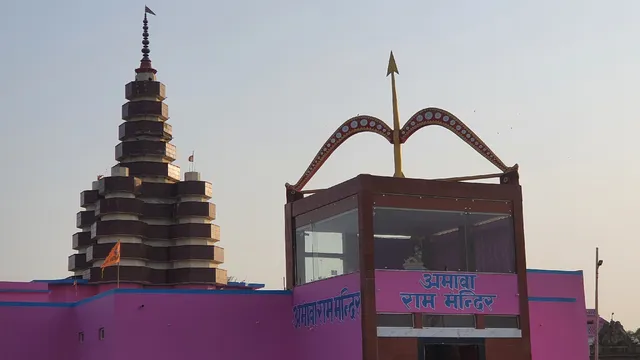
Amawa Ram Mandir
Ramkot, Ayodhya, Uttar Pradesh 224123, India
Shri RamLala Devsthanam Temple
Q5WW+QMR, Sai Nagar, Ayodhya, Uttar Pradesh 224123, India
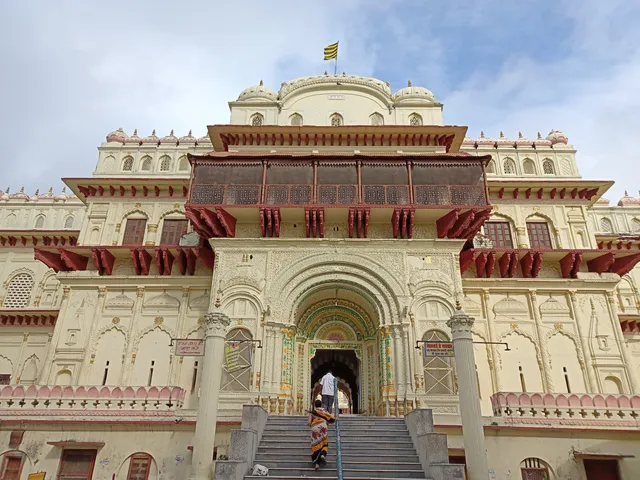
Kanak Bhawan
Janmabhoomi Path, Tulsi Nagar, Ayodhya, Uttar Pradesh 224123, India
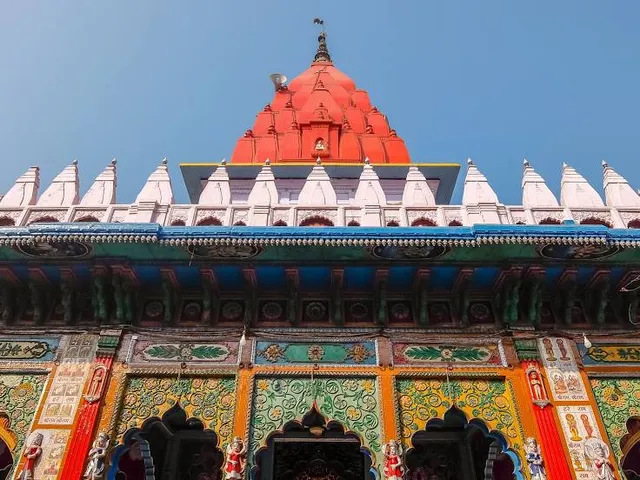
Shri Hanuman Garhi Mandir
Sai Nagar, Ayodhya, Uttar Pradesh 224123, India
Dashrath Mahal Ayodhya
Q5WX+HWC, Ram Path Rd, Sai Nagar, Ayodhya, Uttar Pradesh 224123, India
Dashrath Bhawan
Q5WX+JP8, Sai Nagar, Ayodhya, Uttar Pradesh 224123, India
Sugreev Kila
Q5VX+9WP, Ram Path Rd, Sai Nagar, Ayodhya, Uttar Pradesh 224123, India
Nearby restaurants
Shri Sita Rasoi Bhojnalaya & Atithi Niwas
Q5WW+GGR Ram janm Bhoomi, Shree, Mandir, Near kanak bhawan mandir Dakshin Gate, Sai Nagar, Ayodhya, Uttar Pradesh 224123, India
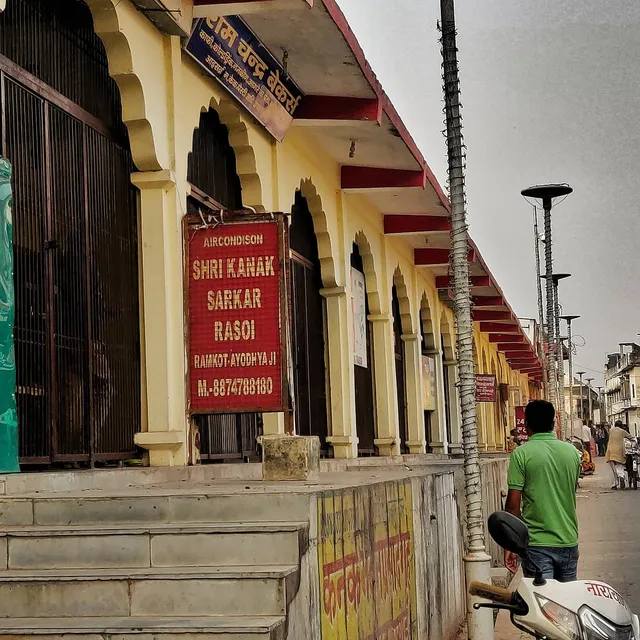
Shri Kanak Sarkar Rasoi, Ayodhya Ji
Kanak Bhawan Rd, Tulsi Nagar, Ayodhya, Uttar Pradesh 224123, India
Anandam Restaurant
Sita Rajmahal mandir, near kanak bhawan, Sai Nagar, Ayodhya, Uttar Pradesh 224123, India
Shri Kanak Bhawan Prasad Grih
Kanak Bhawan, Sri Ayodhya Ji, Kanak Bhawan Rd, Tulsi Nagar, Ayodhya, Uttar Pradesh 224123, India
Amma Ji Ki Rasoi/अम्मा जी की रसोई
Kanak bhawan temple tulsi nagar rajkot, Tulsi Nagar, Ayodhya, Uttar Pradesh 224123, India
Shri Ram Rasoi
Q6V2+884, Main Road, Sai Nagar, Ayodhya, Uttar Pradesh 224123, India
BEST RESTAURANT IN AYODHYA PARAG MILK BAR & CAFETERIA
near BARAMSTHAN RANOPALI, Ram Nagar, Ayodhya, Uttar Pradesh 224123, India
Chandra Marwadi - Best Restaurant/Best Veg/Bhojnalaya/Best Family Restaurant in Ayodhya
Shringar Haat, Walking distance from Hanuman Ghadi and, Janmabhoomi Path, Tulsi Nagar, Ayodhya, Uttar Pradesh 224123, India
आयु ढाबा &फैमिली रेस्टूरेंट आयु फ़ास्ट फ़ूड
Barai khurd front indian petrol pump, Uttar Pradesh 224123, India
Shri Narayan Bhojnalaya
24/2/10, Gudri Bazar Chauraha, Shringar Hat, Sai Nagar, Ayodhya, Uttar Pradesh 224123, India
Nearby hotels
Raghunath Das ashram
Q5WV+2QH, Sai Nagar, Ayodhya, Uttar Pradesh 224123, India
Praveg Tent City Ayodhya, Brahma Kund
behind Bramh kund Gurudwara, Sai Nagar, Ayodhya, Uttar Pradesh 224123, India
Raghupati Raghav Raja Ram Inn
HN.13/3/39, D, Tedhi Bazar Rd, behind KOSELESE SADAN, near UNMMAL BARRIER, Awas Vikas Colony, RAMKOT, Ayodhya, Uttar Pradesh 224123, India
Ayodhya Residency
Q5WR+PQF, Sai Nagar, Ayodhya, Uttar Pradesh 224123, India
भगवान श्री राम कृष्ण मंदिर सेवा ट्रस्ट
Sai Nagar, Ayodhya, Uttar Pradesh 224123
HARI OM RESIDENCY
Brahm Kund Pachkosi, Parikarma Marg, Awas Vikas Colony, Ayodhya, Uttar Pradesh 224123, India
Balaji Palace Guest house
near Shree Randra Mandir, Q5XW+HP3Q5XW+PMV, Awas Vikas Colony, Ayodhya, Uttar Pradesh 224123, India
Ayodhya Darshanam
Q5XW+H77, Ved Mandir Rd, Awas Vikas Colony, Ayodhya, Uttar Pradesh 224123, India
Siyaram kunj Hotel
Haridas Colony, Ramkot near Ram Janambhumi, Swetambar Jain Mandir Rd, Ayodhya, Uttar Pradesh 224123, India
Narayanam Homestay
Q5RV+H24 Vashisth kund, Sai Nagar, Ayodhya, Uttar Pradesh 224123, India
Related posts
Keywords
Shree Ram Janmabhoomi Temple tourism.Shree Ram Janmabhoomi Temple hotels.Shree Ram Janmabhoomi Temple bed and breakfast. flights to Shree Ram Janmabhoomi Temple.Shree Ram Janmabhoomi Temple attractions.Shree Ram Janmabhoomi Temple restaurants.Shree Ram Janmabhoomi Temple travel.Shree Ram Janmabhoomi Temple travel guide.Shree Ram Janmabhoomi Temple travel blog.Shree Ram Janmabhoomi Temple pictures.Shree Ram Janmabhoomi Temple photos.Shree Ram Janmabhoomi Temple travel tips.Shree Ram Janmabhoomi Temple maps.Shree Ram Janmabhoomi Temple things to do.
Shree Ram Janmabhoomi Temple things to do, attractions, restaurants, events info and trip planning
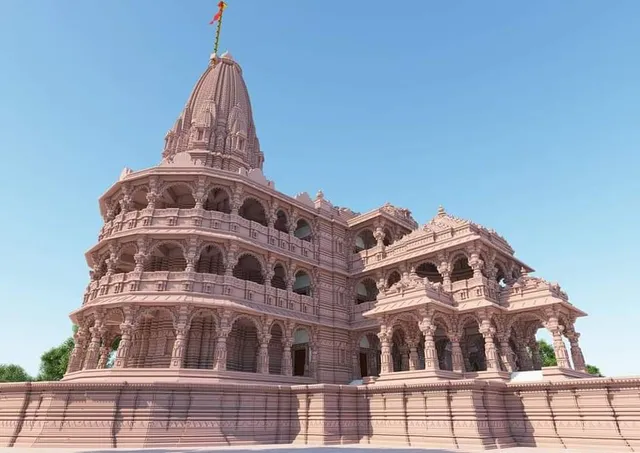
Shree Ram Janmabhoomi Temple
IndiaUttar PradeshShree Ram Janmabhoomi Temple

Basic Info

Shree Ram Janmabhoomi Temple

near Ayodhya Railway Staion, near Hanuman ghadi ramkot, Sai Nagar, Ayodhya, Uttar Pradesh 224123, India
4.7(5K)
Open 24 hours
Save
spot

Ratings & Description

Info

Cultural
Family friendly
Accessibility
attractions: Amawa Ram Mandir, Shri RamLala Devsthanam Temple, Kanak Bhawan, Shri Hanuman Garhi Mandir, Dashrath Mahal Ayodhya, Dashrath Bhawan, Sugreev Kila, restaurants: Shri Sita Rasoi Bhojnalaya & Atithi Niwas, Shri Kanak Sarkar Rasoi, Ayodhya Ji, Anandam Restaurant, Shri Kanak Bhawan Prasad Grih, Amma Ji Ki Rasoi/अम्मा जी की रसोई, Shri Ram Rasoi, BEST RESTAURANT IN AYODHYA PARAG MILK BAR & CAFETERIA, Chandra Marwadi - Best Restaurant/Best Veg/Bhojnalaya/Best Family Restaurant in Ayodhya, आयु ढाबा &फैमिली रेस्टूरेंट आयु फ़ास्ट फ़ूड, Shri Narayan Bhojnalaya

logoLearn more insights from Wanderboat AI.
Phone
+91 80095 22111
Website
srjbtkshetra.org

Plan your stay

hotel
Pet-friendly Hotels in Uttar Pradesh
Find a cozy hotel nearby and make it a full experience.
hotel
Affordable Hotels in Uttar Pradesh
Find a cozy hotel nearby and make it a full experience.
hotel
The Coolest Hotels You Haven't Heard Of (Yet)
Find a cozy hotel nearby and make it a full experience.
hotel
Trending Stays Worth the Hype in Uttar Pradesh
Find a cozy hotel nearby and make it a full experience.

Reviews

Nearby attractions of Shree Ram Janmabhoomi Temple

Amawa Ram Mandir

Shri RamLala Devsthanam Temple

Kanak Bhawan

Shri Hanuman Garhi Mandir

Dashrath Mahal Ayodhya

Dashrath Bhawan

Sugreev Kila

Amawa Ram Mandir

Amawa Ram Mandir

4.7

(404)

Open 24 hours
Click for details
Shri RamLala Devsthanam Temple

Shri RamLala Devsthanam Temple

4.7

(190)

Open 24 hours
Click for details
Kanak Bhawan

Kanak Bhawan

4.7

(1.5K)

Open 24 hours
Click for details
Shri Hanuman Garhi Mandir

Shri Hanuman Garhi Mandir

4.7

(14.6K)

Open 24 hours
Click for details

Nearby restaurants of Shree Ram Janmabhoomi Temple

Shri Sita Rasoi Bhojnalaya & Atithi Niwas

Shri Kanak Sarkar Rasoi, Ayodhya Ji

Anandam Restaurant

Shri Kanak Bhawan Prasad Grih

Amma Ji Ki Rasoi/अम्मा जी की रसोई

Shri Ram Rasoi

BEST RESTAURANT IN AYODHYA PARAG MILK BAR & CAFETERIA

Chandra Marwadi - Best Restaurant/Best Veg/Bhojnalaya/Best Family Restaurant in Ayodhya

आयु ढाबा &फैमिली रेस्टूरेंट आयु फ़ास्ट फ़ूड

Shri Narayan Bhojnalaya

Shri Sita Rasoi Bhojnalaya & Atithi Niwas

Shri Sita Rasoi Bhojnalaya & Atithi Niwas

4.8

(274)

Click for details
Shri Kanak Sarkar Rasoi, Ayodhya Ji

Shri Kanak Sarkar Rasoi, Ayodhya Ji

4.0

(331)

Click for details
Anandam Restaurant

Anandam Restaurant

4.3

(17)

Click for details
Shri Kanak Bhawan Prasad Grih

Shri Kanak Bhawan Prasad Grih

4.3

(143)

Click for details
Get the Appoverlay
Get the AppOne tap to find yournext favorite spots!
Wanderboat LogoWanderboat

Your everyday Al companion for getaway ideas

CompanyAbout Us
InformationAI Trip PlannerSitemap
SocialXInstagramTiktokLinkedin
LegalTerms of ServicePrivacy Policy

Get the app

© 2025 Wanderboat. All rights reserved.
logo

Posts

SUJAY KALESUJAY KALE
Shri Ram Janmabhoomi Mandir, Ayodhya – A Divine Legacy Introduction Shri Ram Janmabhoomi Mandir in Ayodhya is one of the most sacred and historically significant temples in India. It marks the birthplace of Lord Ram, the seventh incarnation of Lord Vishnu, and stands as a symbol of faith, devotion, and cultural heritage. This grand temple is not just a place of worship but a spiritual and national icon that attracts millions of devotees from across the world. Religious and Historical Significance Ayodhya is one of the seven most sacred cities in Hinduism, and Shri Ram Janmabhoomi is its holiest site. According to Hindu scriptures, this is the exact location where Lord Ram was born to King Dasharatha and Queen Kaushalya. The temple represents the epic journey of Ramayana, a scripture that has shaped the spiritual and moral values of Hindu culture for centuries. Historically, the site has been a focal point of religious devotion and cultural identity for Hindus. After centuries of devotion and legal battles, the foundation stone for the grand temple was laid on August 5, 2020, and the temple was inaugurated in January 2024. This marked the fulfillment of a centuries-old dream of millions of devotees. Temple Architecture and Design The Shri Ram Janmabhoomi Mandir is a magnificent architectural marvel, built in the Nagara style of temple architecture, which is traditional to North India. Some key highlights include: Grand Structure: The temple stands at 161 feet in height and is built on a massive platform, symbolizing strength and stability. Ornate Carvings: Every pillar and wall of the temple is adorned with intricate carvings depicting scenes from the Ramayana. Sanctum Sanctorum: The main sanctum houses a divine idol of Ram Lalla (infant Lord Ram), radiating a powerful spiritual presence. Pillars and Domes: The temple has three floors with 392 intricately carved pillars and five domes, symbolizing the grandeur of Indian temple architecture. Materials Used: Built with pink sandstone from Rajasthan, the temple is designed to stand for thousands of years. No iron or steel has been used in its construction, ensuring longevity and authenticity. Spiritual Experience and Darshan Visiting Shri Ram Janmabhoomi Mandir is an experience of unparalleled devotion. Devotees enter the temple premises through beautifully constructed pathways, chanting the sacred name of Lord Ram. The divine aura of the Ram Lalla idol, glowing with divinity, instills a deep sense of peace and devotion. The temple complex is designed to accommodate lakhs of visitors daily, ensuring a smooth darshan experience. The morning and evening aartis are truly mesmerizing, with bhajans, bells, and chants filling the air, creating an unforgettable spiritual ambiance. Cultural and National Importance Shri Ram Janmabhoomi Mandir is not just a religious site but a symbol of India’s cultural and civilizational identity. It unites millions of devotees, representing faith, perseverance, and the spiritual strength of Sanatan Dharma. The temple also boosts tourism, bringing pilgrims and visitors from around the world to witness the grandeur of Ram’s birthplace. With the construction of the temple, Ayodhya has transformed into a global spiritual hub, attracting scholars, saints, and tourists interested in the legacy of Lord Ram and the Ramayana. Facilities for Devotees The temple complex is designed to offer the best facilities to visitors, including: Spacious pathways and queue systems for smooth darshan Free prasad distribution for devotees Pilgrim assistance centers for guidance and support Accommodation and dharamshalas for visitors Security arrangements ensuring a safe and peaceful visit Additionally, the government and temple authorities have developed better roadways, railway connectivity, and an international airport in Ayodhya to make the pilgrimage accessible to everyone. Conclusion A visit to Shri Ram Janmabhoomi Mandir is more than just a pilgrimage—it is a soul-stirring experience that deepens one’s connection with Lord Ram and the ti
Prajeesh M Nambiar OnlinePrajeesh M Nambiar Online
Ram Mandir is a Hindu temple that is being built in Ayodhya, Uttar Pradesh, India, at the site of Ram Janmabhoomi, according to the Ramayana the birthplace of Rama, a principal deity of Hinduism. The temple construction is being supervised by the Shri Ram Janmabhoomi Teerth Kshetra. The ground-breaking ceremony was performed on 5 August 2020 by India’s prime minister Narendra Modi. The temple premises will include temples dedicated to deities Surya, Ganesha, Shiva, Durga, Vishnu and Brahma. Rama, an incarnation of god Vishnu, is a widely worshiped Hindu deity. According to the ancient Indian epic, Ramayana, Rama was born in Ayodhya. In the 16th century, the Mughals constructed a mosque, the Babri Masjid which is believed to be the site of the Ram Janmabhoomi, said to be birthplace of Rama. A violent dispute arose in the 1850s. In the 1980s, the VHP collected funds and bricks with "Jai Shree Ram" written on them. Later, the Rajiv Gandhi government gave the VHP permission for Shilanyas ( the foundation stone ceremony ), with the then Home Minister Buta Singh formally conveying the permission to the VHP leader Ashok Singhal. Initially the centre and state governments had agreed upon the conducting of the Shilanyas outside of the disputed site. However, on 9 November 1989, a group of VHP leaders and Sadhus laid the foundation stone by digging a 200-litre (7-cubic-foot) pit adjacent to the disputed land. The singhdwar (main entrance) of the sanctum was laid here. Kameshwar Chaupal (a Dalit leader from Bihar) became one of the first people to lay the stone. The Shri Ram Janmabhoomi Teerth Kshetra trust began the first phase of construction of the Ram Temple in March 2020. However, the COVID-19 pandemic lockdown in India followed by the 2020 China–India skirmishes caused a temporary suspension of the construction. During ground-leveling and excavation of the construction site a Shivaling, pillars and broken idols were found.[33] On 25 March 2020, Ram's idol was moved to a temporary location in the presence of Chief Minister Yogi Adityanath. In preparation for its construction, the Vishwa Hindu Parishad organised a 'Vijay Mahamantra Jaap Anushthan ', in which individuals would gather at different places to chant the Vijay Mahamantra – Shri Ram, Jai Ram, Jai Jai Ram, on 6 April 2020. This was said to ensure "victory over hurdles" in the construction of the temple. Larsen & Toubro offered to oversee the design and construction of the temple free of cost and is the contractor of the project. Central Building Research Institute, National Geophysical Research Institute and the Indian Institute of Technology (such as those Bombay, Guwahati and Madras) are assisting in areas such as soil testing, concrete and design. Reports emerged that the Indian Space Research Organisation (ISRO) had identified a stream of the Sarayu which flows under the temple. Tata Consulting Engineers has been designated as a project management consultant The construction work will be accomplished with 600 thousand cubic feet of sandstone Bansi mountain stones from Rajasthan.Thirty years ago, more than two hundred thousand bricks etched with the 'Sri Rama' in several languages had arrived from various parts of the country; these will be utilized in the foundation.Traditional techniques will be used to create the shrine while at the same time it will be made sure that the shrine will be strong enough to sustain natural calamities such as earthquakes. There will be no use of iron in the construction of the temple. The fusing of the stone blocks will require ten thousand copper plates.
Deepak BasnetDeepak Basnet
Ram Janmabhoomi – The Birthplace of Lord Ram Ram Janmabhoomi, located in Ayodhya, Uttar Pradesh, is one of the holiest sites in Hinduism. It is believed to be the birthplace of Lord Ram, the seventh incarnation of Lord Vishnu. Lord Ram, the central figure of the epic Ramayana, was born to King Dasharatha and Queen Kaushalya in the Ikshvaku dynasty. His birth is considered divine, marking the beginning of a life dedicated to dharma (righteousness) and the protection of humanity. Historical and Religious Significance Ayodhya has been a sacred city for Hindus for thousands of years. The Ram Janmabhoomi has been a place of worship and pilgrimage for devotees who believe that Lord Ram was born at this site. Ancient texts, including the Ramayana and Skanda Purana, mention Ayodhya as a glorious and prosperous kingdom ruled by Ram. The site has been revered as a spiritual center, with many temples dedicated to Ram, Sita, and other deities from the Ramayana. The Babri Masjid and Dispute In 1528, during the reign of the Mughal emperor Babur, a mosque known as the Babri Masjid was constructed at the site. This led to long-standing disputes between Hindus and Muslims regarding the ownership of the land. Hindus believed that the mosque was built after demolishing a temple marking Ram's birthplace. Over the centuries, the issue remained unresolved, leading to several conflicts and legal battles. In 1949, idols of Lord Ram were placed inside the Babri Masjid, leading to increased tensions. The site was locked by the government, and in 1992, the mosque was demolished by a large group of Hindu activists. This incident led to nationwide riots and political turmoil. Supreme Court Verdict and Ram Mandir Construction After decades of legal battles, the Supreme Court of India, in a historic verdict on November 9, 2019, ruled in favor of the Hindu claimants. The court allowed the construction of a Ram temple at the disputed site and allotted five acres of land to the Muslim community for building a mosque elsewhere in Ayodhya. Following the verdict, the Shri Ram Janmbhoomi Teerth Kshetra Trust was formed to oversee the temple construction. The foundation stone was laid by Prime Minister Narendra Modi on August 5, 2020. The temple, built in the grand Nagara style of architecture, is a symbol of faith, devotion, and cultural heritage. Conclusion Ram Janmabhoomi in Ayodhya is more than just a religious site; it represents the spiritual and historical identity of India. The construction of the Ram Mandir marks a new chapter in the nation’s cultural and religious unity, bringing peace and harmony among communities.
See more posts
See more posts
hotel
Find your stay

Pet-friendly Hotels in Uttar Pradesh

Find a cozy hotel nearby and make it a full experience.

Shri Ram Janmabhoomi Mandir, Ayodhya – A Divine Legacy Introduction Shri Ram Janmabhoomi Mandir in Ayodhya is one of the most sacred and historically significant temples in India. It marks the birthplace of Lord Ram, the seventh incarnation of Lord Vishnu, and stands as a symbol of faith, devotion, and cultural heritage. This grand temple is not just a place of worship but a spiritual and national icon that attracts millions of devotees from across the world. Religious and Historical Significance Ayodhya is one of the seven most sacred cities in Hinduism, and Shri Ram Janmabhoomi is its holiest site. According to Hindu scriptures, this is the exact location where Lord Ram was born to King Dasharatha and Queen Kaushalya. The temple represents the epic journey of Ramayana, a scripture that has shaped the spiritual and moral values of Hindu culture for centuries. Historically, the site has been a focal point of religious devotion and cultural identity for Hindus. After centuries of devotion and legal battles, the foundation stone for the grand temple was laid on August 5, 2020, and the temple was inaugurated in January 2024. This marked the fulfillment of a centuries-old dream of millions of devotees. Temple Architecture and Design The Shri Ram Janmabhoomi Mandir is a magnificent architectural marvel, built in the Nagara style of temple architecture, which is traditional to North India. Some key highlights include: Grand Structure: The temple stands at 161 feet in height and is built on a massive platform, symbolizing strength and stability. Ornate Carvings: Every pillar and wall of the temple is adorned with intricate carvings depicting scenes from the Ramayana. Sanctum Sanctorum: The main sanctum houses a divine idol of Ram Lalla (infant Lord Ram), radiating a powerful spiritual presence. Pillars and Domes: The temple has three floors with 392 intricately carved pillars and five domes, symbolizing the grandeur of Indian temple architecture. Materials Used: Built with pink sandstone from Rajasthan, the temple is designed to stand for thousands of years. No iron or steel has been used in its construction, ensuring longevity and authenticity. Spiritual Experience and Darshan Visiting Shri Ram Janmabhoomi Mandir is an experience of unparalleled devotion. Devotees enter the temple premises through beautifully constructed pathways, chanting the sacred name of Lord Ram. The divine aura of the Ram Lalla idol, glowing with divinity, instills a deep sense of peace and devotion. The temple complex is designed to accommodate lakhs of visitors daily, ensuring a smooth darshan experience. The morning and evening aartis are truly mesmerizing, with bhajans, bells, and chants filling the air, creating an unforgettable spiritual ambiance. Cultural and National Importance Shri Ram Janmabhoomi Mandir is not just a religious site but a symbol of India’s cultural and civilizational identity. It unites millions of devotees, representing faith, perseverance, and the spiritual strength of Sanatan Dharma. The temple also boosts tourism, bringing pilgrims and visitors from around the world to witness the grandeur of Ram’s birthplace. With the construction of the temple, Ayodhya has transformed into a global spiritual hub, attracting scholars, saints, and tourists interested in the legacy of Lord Ram and the Ramayana. Facilities for Devotees The temple complex is designed to offer the best facilities to visitors, including: Spacious pathways and queue systems for smooth darshan Free prasad distribution for devotees Pilgrim assistance centers for guidance and support Accommodation and dharamshalas for visitors Security arrangements ensuring a safe and peaceful visit Additionally, the government and temple authorities have developed better roadways, railway connectivity, and an international airport in Ayodhya to make the pilgrimage accessible to everyone. Conclusion A visit to Shri Ram Janmabhoomi Mandir is more than just a pilgrimage—it is a soul-stirring experience that deepens one’s connection with Lord Ram and the ti
SUJAY KALE

SUJAY KALE

hotel
Find your stay

Affordable Hotels in Uttar Pradesh

Find a cozy hotel nearby and make it a full experience.

Get the Appoverlay
Get the AppOne tap to find yournext favorite spots!
Ram Mandir is a Hindu temple that is being built in Ayodhya, Uttar Pradesh, India, at the site of Ram Janmabhoomi, according to the Ramayana the birthplace of Rama, a principal deity of Hinduism. The temple construction is being supervised by the Shri Ram Janmabhoomi Teerth Kshetra. The ground-breaking ceremony was performed on 5 August 2020 by India’s prime minister Narendra Modi. The temple premises will include temples dedicated to deities Surya, Ganesha, Shiva, Durga, Vishnu and Brahma. Rama, an incarnation of god Vishnu, is a widely worshiped Hindu deity. According to the ancient Indian epic, Ramayana, Rama was born in Ayodhya. In the 16th century, the Mughals constructed a mosque, the Babri Masjid which is believed to be the site of the Ram Janmabhoomi, said to be birthplace of Rama. A violent dispute arose in the 1850s. In the 1980s, the VHP collected funds and bricks with "Jai Shree Ram" written on them. Later, the Rajiv Gandhi government gave the VHP permission for Shilanyas ( the foundation stone ceremony ), with the then Home Minister Buta Singh formally conveying the permission to the VHP leader Ashok Singhal. Initially the centre and state governments had agreed upon the conducting of the Shilanyas outside of the disputed site. However, on 9 November 1989, a group of VHP leaders and Sadhus laid the foundation stone by digging a 200-litre (7-cubic-foot) pit adjacent to the disputed land. The singhdwar (main entrance) of the sanctum was laid here. Kameshwar Chaupal (a Dalit leader from Bihar) became one of the first people to lay the stone. The Shri Ram Janmabhoomi Teerth Kshetra trust began the first phase of construction of the Ram Temple in March 2020. However, the COVID-19 pandemic lockdown in India followed by the 2020 China–India skirmishes caused a temporary suspension of the construction. During ground-leveling and excavation of the construction site a Shivaling, pillars and broken idols were found.[33] On 25 March 2020, Ram's idol was moved to a temporary location in the presence of Chief Minister Yogi Adityanath. In preparation for its construction, the Vishwa Hindu Parishad organised a 'Vijay Mahamantra Jaap Anushthan ', in which individuals would gather at different places to chant the Vijay Mahamantra – Shri Ram, Jai Ram, Jai Jai Ram, on 6 April 2020. This was said to ensure "victory over hurdles" in the construction of the temple. Larsen & Toubro offered to oversee the design and construction of the temple free of cost and is the contractor of the project. Central Building Research Institute, National Geophysical Research Institute and the Indian Institute of Technology (such as those Bombay, Guwahati and Madras) are assisting in areas such as soil testing, concrete and design. Reports emerged that the Indian Space Research Organisation (ISRO) had identified a stream of the Sarayu which flows under the temple. Tata Consulting Engineers has been designated as a project management consultant The construction work will be accomplished with 600 thousand cubic feet of sandstone Bansi mountain stones from Rajasthan.Thirty years ago, more than two hundred thousand bricks etched with the 'Sri Rama' in several languages had arrived from various parts of the country; these will be utilized in the foundation.Traditional techniques will be used to create the shrine while at the same time it will be made sure that the shrine will be strong enough to sustain natural calamities such as earthquakes. There will be no use of iron in the construction of the temple. The fusing of the stone blocks will require ten thousand copper plates.
Prajeesh M Nambiar Online

Prajeesh M Nambiar Online

hotel
Find your stay

The Coolest Hotels You Haven't Heard Of (Yet)

Find a cozy hotel nearby and make it a full experience.

hotel
Find your stay

Trending Stays Worth the Hype in Uttar Pradesh

Find a cozy hotel nearby and make it a full experience.

Ram Janmabhoomi – The Birthplace of Lord Ram Ram Janmabhoomi, located in Ayodhya, Uttar Pradesh, is one of the holiest sites in Hinduism. It is believed to be the birthplace of Lord Ram, the seventh incarnation of Lord Vishnu. Lord Ram, the central figure of the epic Ramayana, was born to King Dasharatha and Queen Kaushalya in the Ikshvaku dynasty. His birth is considered divine, marking the beginning of a life dedicated to dharma (righteousness) and the protection of humanity. Historical and Religious Significance Ayodhya has been a sacred city for Hindus for thousands of years. The Ram Janmabhoomi has been a place of worship and pilgrimage for devotees who believe that Lord Ram was born at this site. Ancient texts, including the Ramayana and Skanda Purana, mention Ayodhya as a glorious and prosperous kingdom ruled by Ram. The site has been revered as a spiritual center, with many temples dedicated to Ram, Sita, and other deities from the Ramayana. The Babri Masjid and Dispute In 1528, during the reign of the Mughal emperor Babur, a mosque known as the Babri Masjid was constructed at the site. This led to long-standing disputes between Hindus and Muslims regarding the ownership of the land. Hindus believed that the mosque was built after demolishing a temple marking Ram's birthplace. Over the centuries, the issue remained unresolved, leading to several conflicts and legal battles. In 1949, idols of Lord Ram were placed inside the Babri Masjid, leading to increased tensions. The site was locked by the government, and in 1992, the mosque was demolished by a large group of Hindu activists. This incident led to nationwide riots and political turmoil. Supreme Court Verdict and Ram Mandir Construction After decades of legal battles, the Supreme Court of India, in a historic verdict on November 9, 2019, ruled in favor of the Hindu claimants. The court allowed the construction of a Ram temple at the disputed site and allotted five acres of land to the Muslim community for building a mosque elsewhere in Ayodhya. Following the verdict, the Shri Ram Janmbhoomi Teerth Kshetra Trust was formed to oversee the temple construction. The foundation stone was laid by Prime Minister Narendra Modi on August 5, 2020. The temple, built in the grand Nagara style of architecture, is a symbol of faith, devotion, and cultural heritage. Conclusion Ram Janmabhoomi in Ayodhya is more than just a religious site; it represents the spiritual and historical identity of India. The construction of the Ram Mandir marks a new chapter in the nation’s cultural and religious unity, bringing peace and harmony among communities.
Deepak Basnet

Deepak Basnet

See more posts
See more posts

Reviews of Shree Ram Janmabhoomi Temple

4.7
(5,035)
avatar
5.0
4y

Ram Janmabhoomi (literally, "Rama's birthplace") is the site that is believed to be the birthplace of Rama, the seventh avatar of the Hindu deity Vishnu. The Ramayana states that the location of Rama's birthplace is on the banks of the Sarayu river in a city called "Ayodhya".

Ram Janmabhoomi


Ayodhya

Ayodhya (Uttar Pradesh)

Alternative nameBirth place of lord RamLocationAyodhyaRegionUttar PradeshCoordinates26.7956°N 82.1943°ESite notesOwnershipShri Ram Janmabhoomi Teerth Kshetra1]

Some Hindus claim that the exact site of Rama's birthplace is where the Babri Masjid once stood in the present-day Ayodhya, Uttar Pradesh. According to this theory, the Mughals demolished a Hindu shrine that marked the spot, and constructed a mosque in its place. People opposed to this theory state that such claims arose only in the 18th century, and that there is no evidence for the spot being the birthplace of Rama.

The political, historical and socio-religious debate over the history and location of the Babri Mosque, and whether a previous temple was demolished or modified to create it, is known as the Ayodhya dispute.

In 1992, the demolition of the Babri Masjid by Hindu nationalists triggered widespread Hindu-Muslim violence.

Several other sites, including places in other parts of India, Afghanistan, and Nepal, have been proposed as birthplaces of Rama.

The five judges Supreme Court bench heard the title dispute cases from August to October 2019.[2 On 9 November 2019, the Supreme Court ordered the land to be handed over to a trust to build the Hindu temple. It also ordered to the government to give alternate 5 acre land to Sunni Waqf Board to build the mosque.[4] On 5 February 2020, the trust known as Shri Ram Janmabhoomi Teerth Kshetra was created by the Government of India. The trust will oversee the construction of the Ram Mandir. The foundation stone for construction of the temple was laid on 5 August 2020 by Prime Minister Narendra Modi.[5]

Babri Masjid site

Further information: Baqi Tashqandi


Ayodhya disputed site map

The Ramayana, a Hindu epic whose earliest portions date back to 1st millennium BCE, states that the capital of Rama was Ayodhya.[6] According to the local Hindu belief, the site of the now-demolished Babri Mosque in Ayodhya is the exact birthplace of Rama. The Babri mosque is believed to have been constructed during 1528–29 by a certain 'Mir Baqi' (possibly Baqi Tashqandi), who was a commander of the Mughal emperor Babur (r. 1526–1530).[7] However, the historical evidence for these beliefs is scant.[8]

In 1611, an English traveller William Finch visited Ayodhya and recorded the "ruins of the Ranichand [Ramachand] castle and houses". He made no mention of a mosque.[9] In 1634, Thomas Herbert described a "pretty old castle of Ranichand [Ramachand]" which he described as an antique monument that was "especially memorable".[10] However, by 1672, the appearance of a mosque at the site can be inferred because Lal Das's Awadh-Vilasa describes the location of birthplace without mentioning a temple or "castle".[11] In 1717, the Moghul Rajput noble Jai Singh II purchased land surrounding the site and his documents show a mosque.[12] The Jesuit missionary Joseph Tiefenthaler, who visited the site between 1766 and 1771, wrote that either Aurangazeb (r. 1658–1707) or Babur had demolished the Ramkot fortress, including the house that was considered as the birthplace of Rama by Hindus. He further stated that a mosque was constructed in its place, but the Hindus continued to offer prayers at a mud platform that marked the birthplace of Rama.[13] In 1810, Francis Buchanan visited the site, and stated that the structure destroyed was a temple dedicated to Rama, not a house. Many subsequent sources state that the mosque was constructed after demolishing a temple.[13]

Police officer and writer Kishore Kunal states that all the claimed inscriptions on the Babri mosque were fake. They were affixed sometime around 1813 (almost 285 years after the supposed construction of the mosque in 1528 CE), and...

   Read more
avatar
5.0
43w

Shri Ram Janmabhoomi Mandir, Ayodhya – A Divine Legacy

Introduction Shri Ram Janmabhoomi Mandir in Ayodhya is one of the most sacred and historically significant temples in India. It marks the birthplace of Lord Ram, the seventh incarnation of Lord Vishnu, and stands as a symbol of faith, devotion, and cultural heritage. This grand temple is not just a place of worship but a spiritual and national icon that attracts millions of devotees from across the world.

Religious and Historical Significance

Ayodhya is one of the seven most sacred cities in Hinduism, and Shri Ram Janmabhoomi is its holiest site. According to Hindu scriptures, this is the exact location where Lord Ram was born to King Dasharatha and Queen Kaushalya. The temple represents the epic journey of Ramayana, a scripture that has shaped the spiritual and moral values of Hindu culture for centuries.

Historically, the site has been a focal point of religious devotion and cultural identity for Hindus. After centuries of devotion and legal battles, the foundation stone for the grand temple was laid on August 5, 2020, and the temple was inaugurated in January 2024. This marked the fulfillment of a centuries-old dream of millions of devotees.

Temple Architecture and Design

The Shri Ram Janmabhoomi Mandir is a magnificent architectural marvel, built in the Nagara style of temple architecture, which is traditional to North India. Some key highlights include:

Grand Structure: The temple stands at 161 feet in height and is built on a massive platform, symbolizing strength and stability.

Ornate Carvings: Every pillar and wall of the temple is adorned with intricate carvings depicting scenes from the Ramayana.

Sanctum Sanctorum: The main sanctum houses a divine idol of Ram Lalla (infant Lord Ram), radiating a powerful spiritual presence.

Pillars and Domes: The temple has three floors with 392 intricately carved pillars and five domes, symbolizing the grandeur of Indian temple architecture.

Materials Used: Built with pink sandstone from Rajasthan, the temple is designed to stand for thousands of years. No iron or steel has been used in its construction, ensuring longevity and authenticity.

Spiritual Experience and Darshan

Visiting Shri Ram Janmabhoomi Mandir is an experience of unparalleled devotion. Devotees enter the temple premises through beautifully constructed pathways, chanting the sacred name of Lord Ram. The divine aura of the Ram Lalla idol, glowing with divinity, instills a deep sense of peace and devotion.

The temple complex is designed to accommodate lakhs of visitors daily, ensuring a smooth darshan experience. The morning and evening aartis are truly mesmerizing, with bhajans, bells, and chants filling the air, creating an unforgettable spiritual ambiance.

Cultural and National Importance

Shri Ram Janmabhoomi Mandir is not just a religious site but a symbol of India’s cultural and civilizational identity. It unites millions of devotees, representing faith, perseverance, and the spiritual strength of Sanatan Dharma. The temple also boosts tourism, bringing pilgrims and visitors from around the world to witness the grandeur of Ram’s birthplace.

With the construction of the temple, Ayodhya has transformed into a global spiritual hub, attracting scholars, saints, and tourists interested in the legacy of Lord Ram and the Ramayana.

Facilities for Devotees

The temple complex is designed to offer the best facilities to visitors, including:

Spacious pathways and queue systems for smooth darshan

Free prasad distribution for devotees

Pilgrim assistance centers for guidance and support

Accommodation and dharamshalas for visitors

Security arrangements ensuring a safe and peaceful visit

Additionally, the government and temple authorities have developed better roadways, railway connectivity, and an international airport in Ayodhya to make the pilgrimage accessible to everyone.

Conclusion

A visit to Shri Ram Janmabhoomi Mandir is more than just a pilgrimage—it is a soul-stirring experience that deepens one’s connection with Lord...

   Read more
avatar
5.0
25w

The Ayodhya Ram Mandir stands as a testament to faith, architectural grandeur, and historical significance. Having recently been inaugurated, it has quickly become a pivotal pilgrimage site and a landmark monument in India. Aesthetics and Massive Scale: The temple's beauty is rooted in its traditional Nagara style of architecture, a classical North Indian temple design characterized by its towering spires (shikharas) and intricate carvings. Crafted primarily from pink sandstone sourced from Rajasthan, the temple presents a majestic and aesthetically pleasing sight. Every detail, from the delicate filigree work to the vibrant paintings, is said to reflect immense devotion and artistic mastery. Its sheer size is truly impressive. Spanning an area of approximately 28,000 square feet, the main temple measures a staggering 380 feet long (east to west), 250 feet wide, and rises to a height of 161 feet. It's a three-storied structure, with each floor boasting a palatial 20 feet in height. The temple is supported by a remarkable 392 pillars and features 44 doors, contributing to its grand and accessible design. The main entrance, the Singh Dwar, is approached by an ascent of 32 stairs, promising a grand entry for devotees. The entire complex is enclosed by a rectangular compound wall called Parkota, measuring 732 meters in length, further emphasizing its massive scale. Beyond the main temple, the complex includes five mandapas (pavilions) – Nritya (dance), Rang (color), Sabha (assembly), Prarthna (prayer), and Kirtan (chanting) – each serving a distinct purpose and adding to the architectural richness. The use of varied materials from across India, like granite from Karnataka, teakwood from Maharashtra, and bells from Tamil Nadu, highlights a pan-Indian collaborative effort in its construction. Significance: The Ayodhya Ram Mandir holds profound significance for millions of Hindus worldwide: Birthplace of Lord Rama: At its core, the temple is believed to stand on the sacred site of Ram Janmabhoomi, the birthplace of Lord Rama, the seventh avatar of Lord Vishnu and the central figure of the epic Ramayana. This belief makes it an exceptionally revered pilgrimage destination, offering a tangible connection to their beloved deity. Symbol of Faith and Devotion: For centuries, the site has been a focal point of religious fervor. The construction and consecration of the temple represent the culmination of a long-standing aspiration and profound devotion for countless devotees, symbolizing the triumph of faith. Cultural Heritage and Identity: Lord Rama embodies virtue, righteousness (dharma), and ideal human qualities for millions. The temple, therefore, is not merely a religious structure but also a powerful symbol of India's cultural identity and collective heritage, reflecting the ethos shaped by the Ramayana. National Unity and Integration: After decades of complex history and disputes surrounding the site, the temple's construction is viewed by many as a step towards healing historical wounds and fostering a sense of national unity and integration, bringing together people from diverse backgrounds under a shared cultural and spiritual narrative. Spiritual Pilgrimage: Visiting the Ayodhya Ram Mandir is more than just a trip; it's a spiritual pilgrimage for devotees seeking solace, guidance, and a deeper connection with the divine. The serene and spiritual atmosphere, combined with the grandeur of the temple, creates a truly transformative experience. In essence, the Ayodhya Ram Mandir is a magnificent architectural marvel that embodies the deep-rooted faith and cultural spirit of India, standing as a beacon of spirituality and a testament to a...

   Read more
Page 1 of 7
Previous
Next