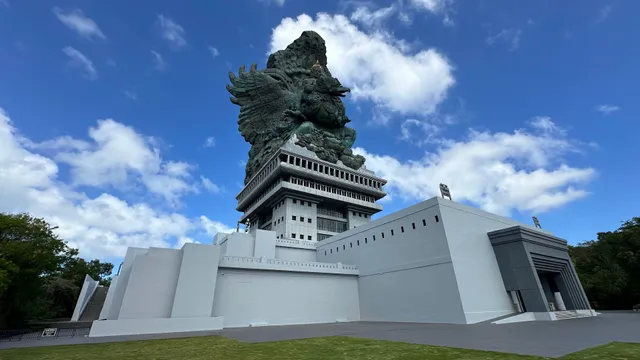
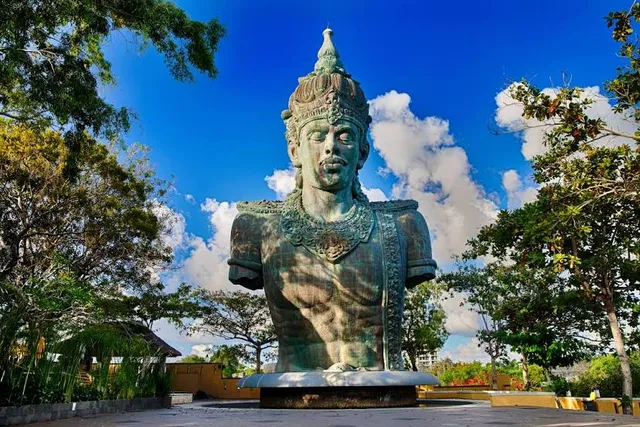
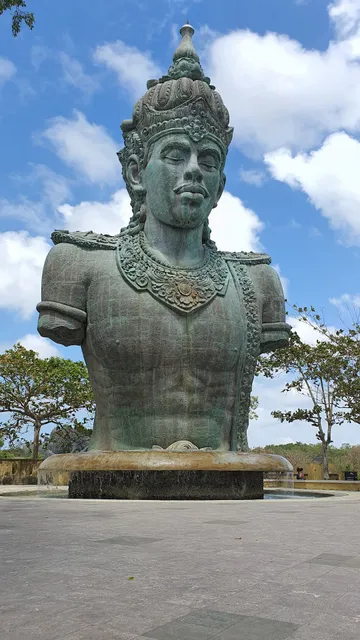
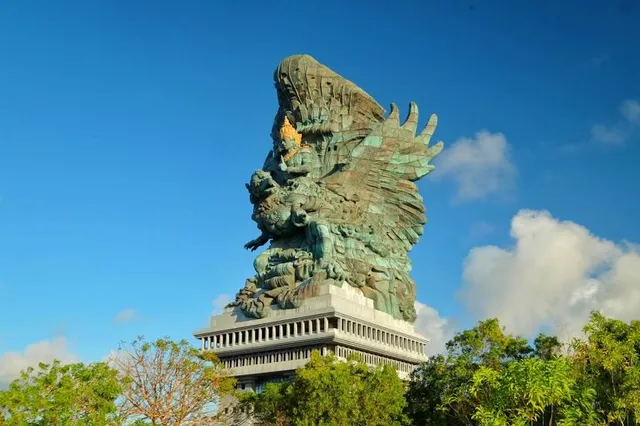
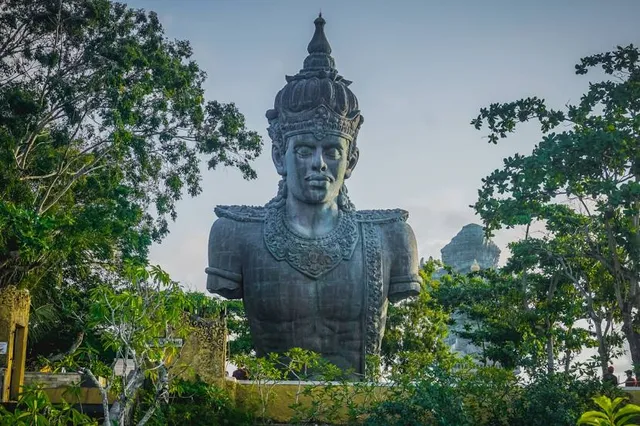
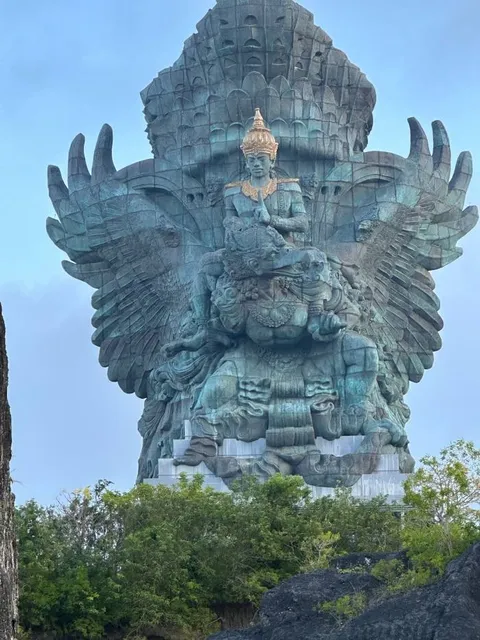
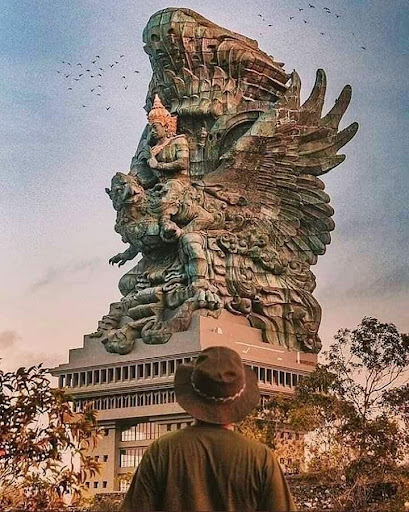
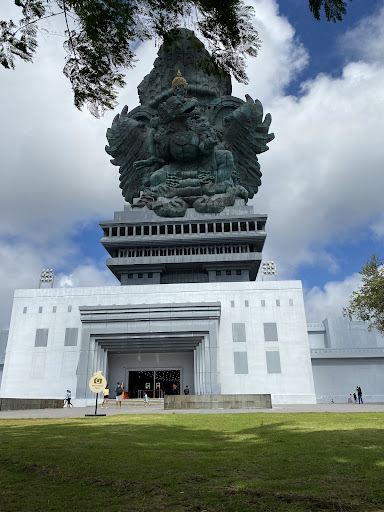
Garuda Wisnu Kencana statue also GWK statue is a 122-meter tall statue located in Garuda Wisnu Kencana Cultural Park, Bali, Indonesia. It was designed by Nyoman Nuarta and inaugurated in September 2018. The total height of the monument, including the 46-meter base pedestal is 122 m 400 ft. The statue is about 30 m 98 ft higher than the Statue of Liberty, but Liberty is tall and thin, while Garuda is almost as wide as it is high — its wingspan is 64 m 210 ft. The statue was designed to be the Indonesia’s tallest statue, that was inspired by a Hindu myth about the search for Amrita the elixir of life. According to this myth, Garuda agreed to be ridden by Vishnu in return for the right to use the elixir to liberate his enslaved mother. The monument was completed on 31 July 2018 and inaugurated by Indonesian President Joko Widodo on 22 September, 2018.It took twenty-eight years and around $100 million to build the statue. GWK was designed back in 1990 by Nyoman Nuarta under the auspices of then tourism minister Joop Ave,energy minister IB Sudjana and Bali governor IB Oka.The groundbreaking event of the statue’s construction took place 1997. In the late 1990s, the project was brought to a sudden halt by the combining force of the global economic crisis.Construction resumed in 2013 after a sixteen year hiatus, when property developer PT. Alam Sutera Realty Tbk ASR agreed to financing the construction of the statue and the project.The idea for the monument was not without controversy; religious authorities on the island complained that its massive size might disrupt the spiritual balance of the island, and that its commercial nature was inappropriate, but some groups agree with the project, because it will be a new tourist attraction.The statue was assembled in Bali from 754 discrete modules that were constructed in Bandung, West Java and then transported to the work site. The modules were cut into 1,500 smaller pieces to accommodate the cranes maximum load. The last piece that was placed onto the gigantic artwork was at its tail, which is located at the highest point of the statue.Garuda's shape is so complex that engineers have designed special joints in the supporting structure, with up to 11 enormous steel girders coming together at the same point, whereas normal construction joints have four or six girders. The Garuda Wisnu Kencana statue is designed to withstand storms and earthquakes, and expected to last for the next 100 years.The completed monument is about as tall as a 21-storey building. It weighs 4000 tonnes, making it the heaviest statue in Indonesia. The artwork is made of copper and brass supported by 21,000 steel bars, and bolts of 170,000. The statue is made of copper and brass sheeting, with a stainless steel frame and skeleton, as well as a steel and concrete core column. The outer covering measures 22000 m in area. The crown of Vishnu is covered with golden mosaics and the statue has a dedicated lighting arrangement. The sculpture sits atop a building base which will function as a restaurant, museum, and...
Read moreGaruda Wisnu Kencana (GWK) Park in Bali is a masterpiece that seamlessly blends cultural heritage, mythological symbolism, and modern artistry. My recent visit to this iconic park left me captivated by its unique offerings, the towering statue of Lord Vishnu riding Garuda, and the array of features that make it a multifaceted and memorable destination.
Uniqueness of Garuda Wisnu Kencana: What sets GWK apart is its ambitious vision and scale. The park houses the iconic Garuda Wisnu Kencana statue, one of the tallest in the world, standing at an impressive height of 121 meters. The sheer uniqueness of this colossal sculpture, depicting the mythical characters of Lord Vishnu and Garuda, makes GWK a cultural and artistic landmark.
Statue Details: The centerpiece of GWK is the monumental statue of Lord Vishnu riding the mythical eagle, Garuda. The attention to detail is staggering, from the intricate carvings on Garuda's feathers to the serene expression on Lord Vishnu's face. The statue serves as a visual narrative of Hindu mythology, embodying the divine synergy between gods and mythical creatures.
Park Features:
Amphitheater: The park features a vast amphitheater that hosts cultural performances, dance shows, and events. The open-air setting allows visitors to enjoy traditional Balinese performances against the backdrop of the majestic statue and surrounding landscapes.
Lotus Pond: The Lotus Pond is a tranquil water feature adorned with intricate sculptures and a view of the Garuda Wisnu Kencana statue. The serene surroundings make it a perfect spot for relaxation and reflection.
Street Theatre: GWK occasionally hosts street theatre performances, bringing a dynamic and interactive element to the cultural experience. The performances showcase traditional stories and folklore, providing visitors with a deeper understanding of Balinese culture.
Cultural Exhibitions: The park frequently hosts cultural exhibitions, showcasing Balinese art, craftsmanship, and traditional artifacts. These exhibitions contribute to the immersive experience, allowing visitors to appreciate the rich cultural tapestry of Bali.
Indraloka Garden: The beautifully landscaped Indraloka Garden offers a peaceful retreat with lush greenery and statues depicting scenes from Hindu mythology. It provides a serene contrast to the vibrant energy of the main statue area.
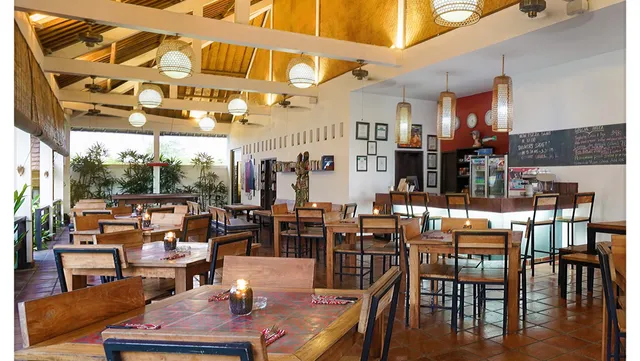
Jendela Bali Restaurant: The park features the Jendela Bali Restaurant, offering panoramic views of the surrounding landscapes and the GWK statue. The restaurant allows visitors to savor traditional Indonesian cuisine while enjoying the artistic and natural beauty.
Cultural Significance: Garuda Wisnu Kencana is deeply rooted in Hindu mythology, symbolizing the eternal bond between Lord Vishnu, the preserver, and Garuda, the mythical eagle. The statue embodies the concept of dharma, righteousness, and the triumph of good over evil. As a cultural landmark, GWK serves as a testament to Bali's spiritual and...
Read moreBest activity if you enjoy photography. Navigation is somewhat confusing. You must arrive as early as possible if you wish to pay to enjoy the most expensive option, which is recommended to do.
Bring plenty of water, sunscreen, hat and most importantly your powerbank - you’ll be taking photos like crazy.
Arriving there is a breeze. There is a very visible grand entrance. Proceed quite some distance to the parking area. From there get a free shuttle bus to the ticketing area.
At the ticketing drop zone you’ll follow everyone to the ticketing lines. There are many so you’ll not wait long.
Decide if you’ll pay for general admission or a lot extra for access to a tour to the top of the biggest statue. It’s the 4th tallest in the world. Easily visible from your aircraft and as far away as Canggu and beyond.
You may pay Rp. 40k for a person to drive you to the biggest statue. You’ll miss all the photo opportunities but avoid a lot of walking.
After buying your ticket you must proceed to the rear of the ticketing building. So, you exit then turn right twice. Walk alongside the side of the building. Cross a courtyard and go up some stairs.
Proceed up along a walkway, past lots of souvenir shops and eating places.
On your right you’ll see a fountain area. Walk through here, take lots of photos and don’t get too wet!
Through a rear opening and turn left. More food and souvenir outlets. The pujasera / food court here is your cheapest option in the complex.
Up to here everything is free. You will have had glimpses of the huge statues along the way.
At the ticket gate you proceed. Enjoy the lovely garden area with the pond and cute little turtle statues. After photos proceed up the stairs.
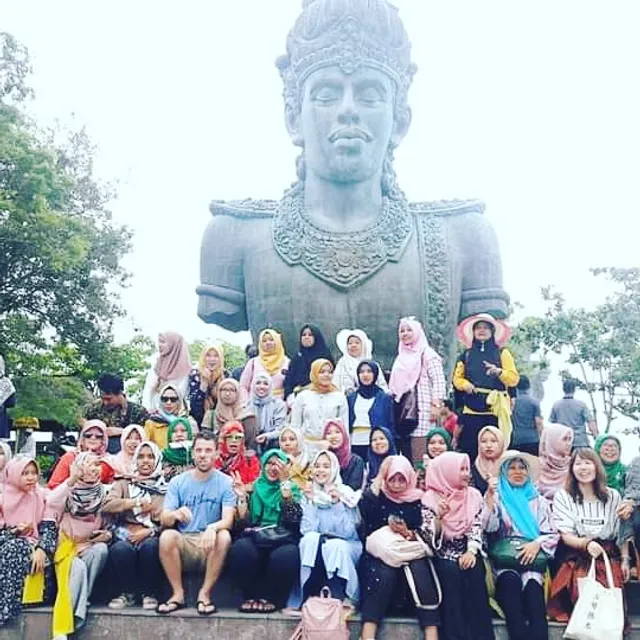
Along the way to the main statue are several other rather grand statues, depicting Krisna, Garuda etc. Tons of walking and photo opportunities.
Along the way is an amphitheatre. Every hour is a 30 minute Balinese dance performance. Each hour is different. 3pm is the most popular so arrive 30 minutes early. That’s the Barong and Legong dances. All the performances are excellent and some feature audience participation. But no spoilers!
At the far end is the main GWK statue. Only ten people at a time may rise to the top. You decide when this will be at the time of ticket purchase at the park entrance or at the GWK statue itself.
If you arrive at the park at, say, 12pm there will be extremely limited slots available. You should have grabbed the earliest slot possible and then build your day around that.
Careful, staff don’t respect slot bookings and they allow people to queue jump if they are angry. Advice: immediately upon arrival proceed to the check in counter at the back. Register. Then go back outside / walk around for photos...
Read more