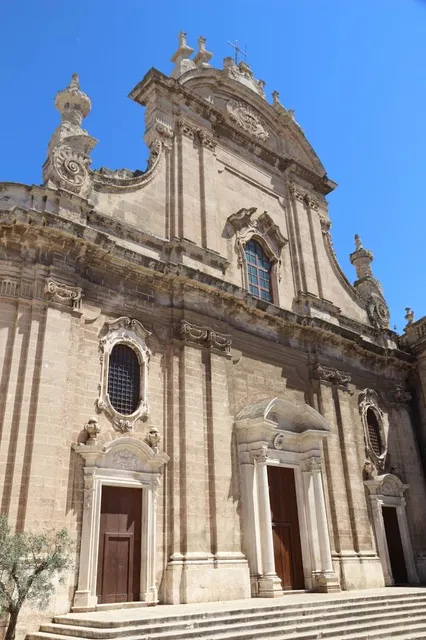
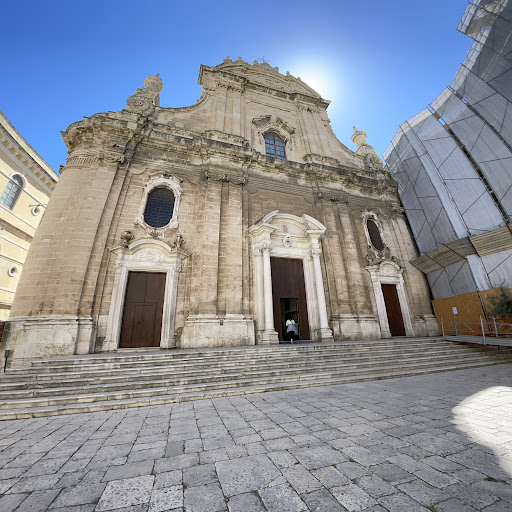
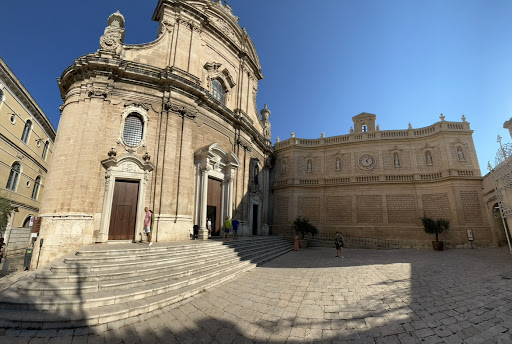
This Cathedral was built from 1740 to 1770 on a site which had been previously used by man for at least 4000 years. In fact, in the Bronze Age, some huts were built in this same place. Then, 2500 years ago, the first tombs of the Necropolis of a Messapian* town were built. From that time this place became sacred and stayed sacred even when the main religion changed, from Paganism to Christianity. Originally, a Pagan temple was located on the site; in 256 A.D. a Christian church was built instead. In 1107, Bishop Romualdo started the construction of a Romanesque church. According to the tradition, the church could not come to completation because there was not enough wood to build the roof. In 1117 the wooden beams arrived at the seaport in the form of a raft which carried the Byzantine Icon of Our Lady with Child. In 1742 the Romanesque church was demolished because it was unsafe and too small for the increasing population. Therefore, the new Baroque church was built. it preserves the Byzantine Icon that arrived to the seaport, in 1117, on a raft. The altar was built with precious marbles that came from different quarries. The Neapolitan Andrea de Blasio made the silver frame and the silver imperial crown in 1720 and 1724. Around the chapel you can see six paintings made by Michele del Pezzo in 1798. The pictorial series called "The Virgin's Stories" includes "The Purifying of the Virgin", "The Visitation", "The Introduction to the Temple" and the ovals "The Nativity of the Virgin" and "The Nativity of Jesus". On the sides of the chapel there are two other paintings made by The Neapolitan Pietro Bardellino in 1788: "The Iconoclast campaign" on the right (*) and "The Arrival at the Seaport" on the left. The two statues on the sides of the altar represent the Archangel Michael and St. Joseph; they were made in 1752 by Giuseppe Sammartino, better known for his "Veiled Christ" (Sansevero Chapel, Naples). The little organ was built in 1762 by Pietro de...
Read moreMy visit to the Basilica Cattedrale Maria Santissima della Madonna in Monopoli, Italy, was an unforgettable experience that left me in awe. I had the pleasure of visiting this magnificent church with my parents, and it was wonderful to share this moment with them. The moment we stepped inside, we were all struck by the sheer scale and beauty of this stunning church. The interior is a masterpiece, adorned with vibrant marbles, stunning frescoes, and intricate stucco work that creates a breathtakingly beautiful atmosphere. The religious art, including beautiful canvases and sculptures, adds to its grandeur, showcasing the rich cultural and spiritual heritage of the region.
What I found particularly intriguing were the walls adorned with the skulls of past priests—a grim yet fascinating aspect that adds to the church’s mystique. This unique feature not only highlights the church’s history but also serves as a poignant reminder of the lives dedicated to faith. The combination of stunning architecture, beautiful art, and historical significance makes this church a must-visit destination for anyone interested in history, art, and spirituality.
I highly recommend visiting the Basilica Cattedrale Maria Santissima della Madonna. It is not only a place of worship but also a cultural and artistic treasure that will leave you with lasting memories. Whether you are drawn by its religious significance or its architectural beauty, this church is sure to captivate and inspire you. Sharing this experience with my family made it even more special, and I am grateful for the opportunity to have explored such a remarkable...
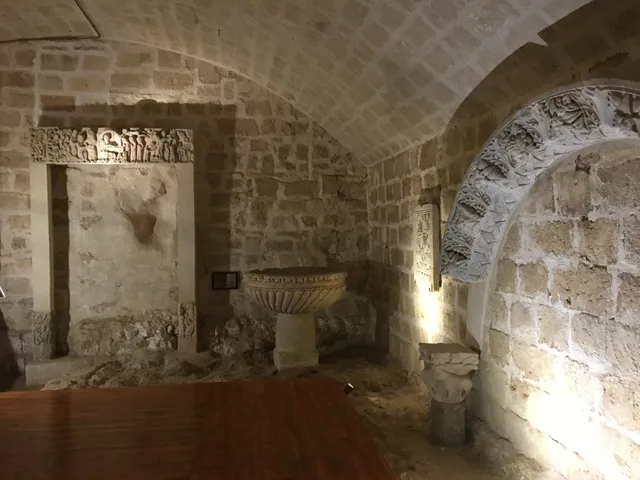
Read moreIl luogo su cui sorge la basilica cattedrale della Madonna della Madia in Monopoli si è rivelato, grazie agli scavi archeologici avviati in loco nel 1986[2], zona di antiche e complesse stratificazioni temporali che, partendo dal 4500 a.C. circa giungono fino ai nostri giorni. Il luogo su cui sorge la basilica cattedrale della Madonna della Madia in Monopoli presenta tracce di frequentazione umana fin dall'età del Bronzo, come testimoniano i fori di palificazione scavati nella roccia sottostante il pavimento dell'antica cripta della cattedrale romanica, edificata a partire dal 1107 probabilmente sui resti di un antico tempio pagano dedicato al culto delle divinità mediterranee Maia e Mercurio. Sotto la suddetta cripta sono state del resto ritrovate testimonianze di frequentazione messapica della zona come una sepoltura di cui è visibile la controfossa, all'interno della quale - esemplare unico nel suo genere - è stata ritrovata una trozzella in materiale bronzeo e non di terracotta, come invece per gli altri ritrovamenti dello stesso genere. Ancora, sono stati rintracciate numerose tombe a camera di età messapica e corridoi sotterranei utilizzati forse come vie per giungere al tempio di Mercurio/Ermes. La seconda stratificazione temporale visibile al di sotto della cripta è determinata dalla presenza di alcune fosse votive, di Epoca ellenistica, di cui particolare è risultata la presenza di uno scheletro completo di infante con orecchini circolari in filo d'argento e una sepoltura d'adulto con corredo in vasellame. La successiva stratificazione rivela un sepolcreto di età alto medioevale e dunque sepolture cristiane: le fosse, scavate nella roccia e orientate in direzione ovest - est (con il capo rivolto verso il sole nascente, simbolo di rinascita - Risurrezione), presentano una parte inferiore slargata e un rialzo nella parte superiore, dove probabilmente appoggiava il capo il defunto, a mo' di cuscino di roccia. La cattedrale romanica di Monopoli fu costruita abbattendo un precedente edificio di culto dedicato a san Mercurio[4] di età paleocristiana o altomedievale, sorto intorno al 256 d.C. È tradizione che questo antico tempietto fosse stato innalzato sulle rovine di un tempio pagano dedicato alla divinità omonima Mercurio e a Maia, come leggibile in un'epigrafe in greco oggi visibile nella sagrestia della Cattedrale settecentesca.[6] La cattedrale sorse nel XII secolo in stile romanico, su iniziativa del vescovo Romualdo (1077 - 1118) e con il contributo del duca Roberto d'Altavilla, ma ben presto i lavori furono interrotti per la mancanza del materiale adatto alla costruzione del tetto. Secondo la tradizione, nella notte del 16 dicembre 1117 una zattera approdò nel porto della città all'ingresso del porto canale fatto insabbiare dal normanno Ugo Tutabovi primo conte di Monopoli (1042-1049), trasportando l'icona della Madonna della Madia[7], e con le travi della zattera, trentuno secondo la testimonianza del Glianes, fu ultimata la chiesa. Essa fu consacrata solo il 1º ottobre 1442: l'impianto basilicale era a tre navate, con transetto e abside. Le dimensioni erano in lunghezza di 31,90 m e in larghezza di 17 m.[8]. A partire dal Cinquecento furono apportate significative modifiche alla cattedrale. Infatti nel 1501 tra l'altare maggiore e l'abside fu edificato un retablo a 16 nicchie con altrettante statue, e sopra di questo fu ricavata una piccola cappella sopraelevata per la custodia dell'icona venerata. Per la prima volta veniva adottata questa disposizione di una cappella sopraelevata al posto dell'abside. Tra il Cinquecento ed il Seicento furono aggiunte otto cappelle laterali, quattro per parte. Nell'ordine, partendo dalla navata destra in prossimità del portale
Da Wikipedia,...
Read more