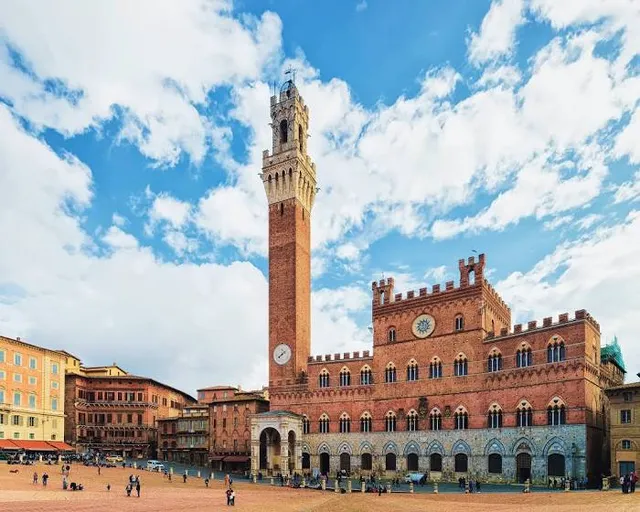
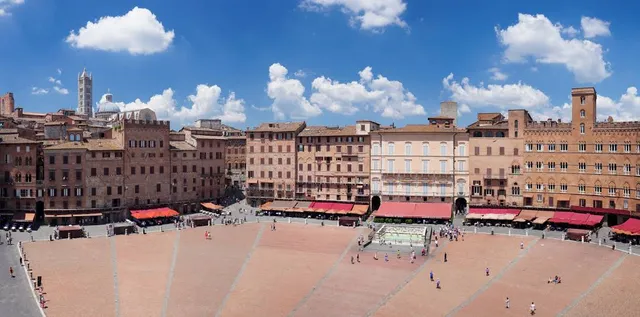
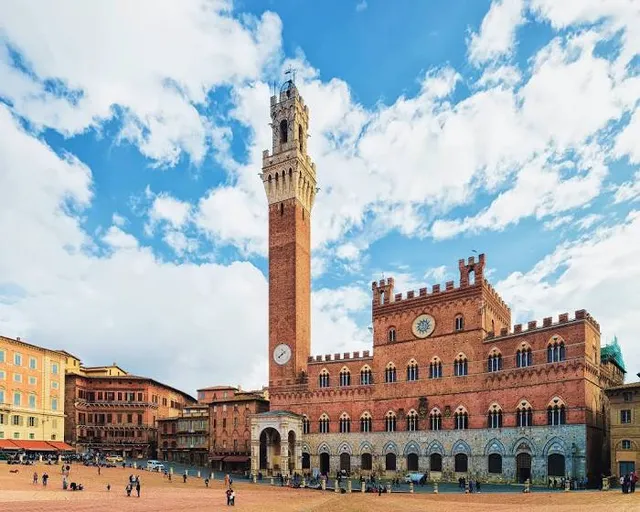
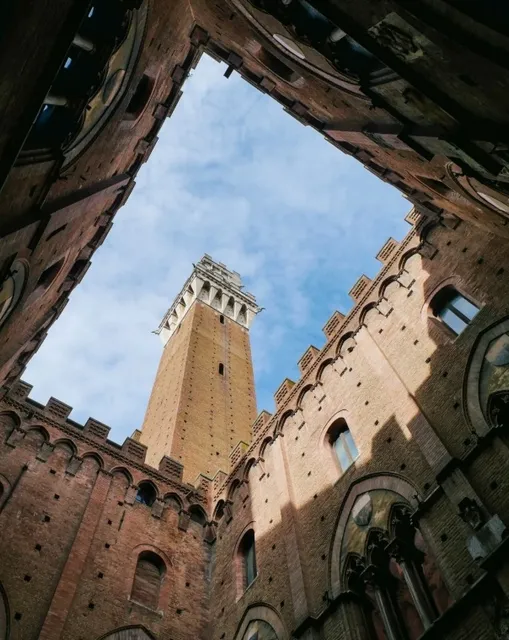
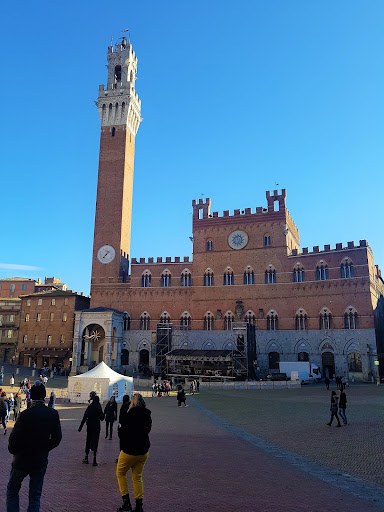
The Palazzo Pubblico is one of the most famous Sienese monuments. Arriving on the square (Piazza del Campo) immediately catches the eye beautiful building Palazzo Publico. We are delighted by the beautiful atmosphere at Piazza del Campo with the inevitable observation of the beautiful Palace. It can be noticed immediately that the Palace was built in different periods and in different materials.The foundations up to the first floor are made of stone and the rest is of brick. The history of this Palace is extremely interesting, to me. It was built after the order of its construction was given by the Government of the Nine, a council consisting of merchants and bankers whose sole purpose was to govern Siena, in the late 13th century. On the façade, the majesty and elegance of the Palazzo Pubblico unfolds, whose front and one of the most celebrated Gothic civil architecture in Italy. The windows of the palace are typical of Siena, with three arches resting on small columns, on each window we find a white and black balzana, which is the symbol of the city itself. From the left corner of the palace, elegant tower stands out Torre del Mangia. The interior of the Palace is beautiful. Many rooms, corridors and staircases abound in beautiful decorations, frescoes, paintings that leave no one indifferent. From the atrium you pass to the vestibule (the vestibule is a room or passage between the entrance door and the interior of a building) divided into four section, whose walls are placed two stone wolves and ornamental motifs by Giovanni Pisano of the fourteenth century, flanked by a statue of Moses by Federighi. On the first floor of the Palazzo Pubblico there is the large hall where the Council of the Republic of Siena, known as Sala delle Balestre or more commonly known as Sala del Mappamondo, met. Next to the Sala del Mappamondo, there is the equally beautiful Sala della Pace (Peace Hall), which was the historic public seat of the Government of the Nine. The walls of this room are entirely covered by the most famous cycle of frescoes in the city, the Allegoria del Buono e del Mal Governo (Allegance of the Good and Bad Government), painted by Ambrogio Lorenzetti between 1338 and 1340. A universal masterpiece. The Palace is extremely richly decorated so that other halls are beautiful as well, such as the Sala dei Pilastri (Pillars Hall), The room called Anticappella, Cappella di Palazzo (Palace Chapel), Sala dei Cardinali (Cardinals Hall), Sala del Concistoro (Consistory Hall), Sala di Balia (Balia Hall), Sala del Risorgimento and La Loggia (The Lodge). Today the palace is home to the municipal administration and the...
Read moreThe Palazzo Publico in Siena, Italy, is a stunning architectural marvel steeped in history and significance. Its Gothic design, with its towering bell tower, intricate façade, and imposing stature, commands attention in the heart of Siena's Piazza del Campo. The interior is equally impressive, featuring magnificent frescoes by artists such as Ambrogio Lorenzetti, depicting scenes of civic virtue and governance.
Visitors are transported back in time as they explore the grand halls and chambers where Siena's government once convened. The highlight of any visit is undoubtedly the breathtaking Sala del Mappamondo, adorned with Simone Martini's iconic Maestà fresco, a masterpiece of medieval artistry.
Aside from its architectural and artistic splendor, the Palazzo Publico offers panoramic views of Siena and the surrounding Tuscan countryside from its panoramic terrace, providing a perfect vantage point for capturing memorable photographs.
Overall, the Palazzo Publico is a must-visit destination for history enthusiasts, art aficionados, and anyone seeking to immerse themselves in the rich cultural heritage of Siena. Its combination of architectural grandeur, artistic treasures, and panoramic vistas make it a truly...
Read moreIl Palazzo Pubblico di Siena è un edificio fatto costruire tra il 1297 e il 1310 dal Governo dei Nove della Repubblica di Siena, come propria sede. Tale funzione si riflette anche oggi, come sede dell'amministrazione comunale, oltre che del Museo civico. Sorge sulla piazza del Campo ed è affiancato dalla snella Torre del Mangia. All'interno conserva capolavori del periodo d'oro dell'arte senese, tra cui il celeberrimo affresco dell'Allegoria ed effetti del Buono e del Cattivo Governo di Ambrogio Lorenzetti, tra le rappresentazioni profane più significative del Trecento europeo, ed altre celebri opere di Simone Martini, Duccio di Buoninsegna, Sodoma e Beccafumi.
La storia del palazzo è legata a quella di Piazza del Campo, è nel 1280, con il Governo dei Quindici che si pensa ad una sede per il governo senese, nel 1284 si ha un primo nucleo di quello che sarà il Palazzo Comunale, ed entro il 1310 tutto il palazzo è stato terminato perché il Governo dei Nove vi si trasferì in quell'anno, nel 1350 è stata completata anche la Loggia del secondo piano, al Palazzo Comunale viene aggiunta la Torre del Mangia che fu costruita tra il 1325 e il 1348. Tutt'oggi il Palazzo comunale è ancora oggi la sede dell'amministrazione comunale moderna ed ospita gli uffici del sindaco ed alcuni uffici comunali.
All'interno è visitabile il Museo Civico della città, allestito negli anni 30, con numerose sale visitabili. La prima sala è detta della Quadreria, la successiva è la Sala del Risorgimento, contiene opere realizzate apposta dopo l'annessione del Granducato di Toscana. Sala dei Priori (Anche conosciuta come Sala della Balia), è divisa in due sezioni in cui alle pareti spicca il ciclo sulla Vita di Papa Alessandro III, papa senese, dipinti da Spienello Aretino e dal figlio Parri Spienello (1407). Dopo la Sala dei Cardinali (Anticamera del Concistoro), attraverso un portale marmoreo si passa alla Sala del Concistoro, sulle volte, si trovano affreschi allegorici dedicati alle Virtù pubbliche e alla loro pratica nell'antichità (eseguiti con interruzioni dal 1529 al 1535). Le vicende degli uomini virtuosi dell'antichità greca e romana, tratte per lo più da Valerio Massimo, si ricollegano tutte a tre valori fondamentali rappresentati al centro della volta: l'Amor patrio, la Giustizia e la "Mutua Benevolenza" (o Concordia). Si prosegue con l'Anticappella affrescata da Taddeo Di Bartolo (1415) su temi cari al comune come quelli mitologici e di storia romana; Nella Cappella è possibile ammirare altri affreschi di Taddeo, Vita della Vergine, Santi, Evangelisti, Profeti e Virtù.
E si arriva nelle sale più belle, famose e prestigiose come la La sala più grande e più famosa è la Sala del Mappamondo o, Sala del Consiglio, che conserva due grandi affreschi: la Maestà di Simone Martini (1312-1315) e Guidoriccio da Fogliano all'Assedio di Montemassi, e sotto vi è l'affresco della "Presa di un Castello", la più antica decorazione del palazz; Sulle arcate, potete ammirare due grandi affreschi sulle vittorie militari di Siena come la Vittoria dei Senesi nella Battaglia di Val di Chiana" e la Vittoria dei Senesi sui Fiorentini al Poggio Imperiale di Poggibonsi. Fino alla famosa Sala dei Nove o Sala della Pace affrescata da Ambrogio Lorenzetti con gli "Effetti del Buono e del Cattivo Governo" (1338-1339) uno degli esempi più celebri e famosi dell'arte senese medioevale, e che un poco ognuno di noi ha conosciuto grazie ai libri di scuola. Imperdibile se si è a Siena da vedere almeno una...
Read more