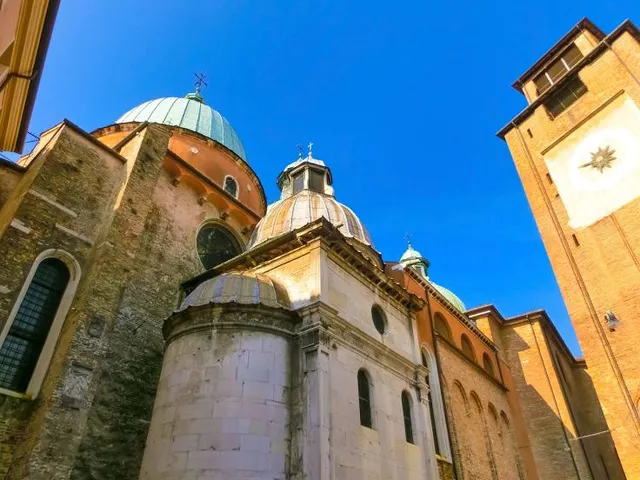
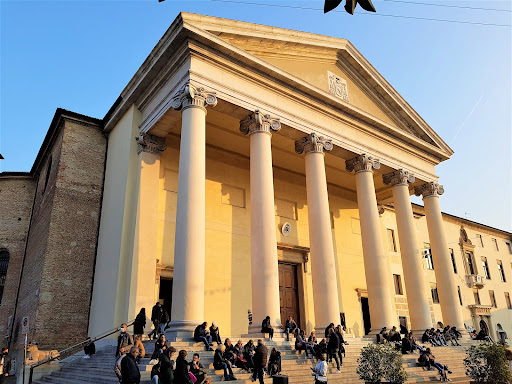
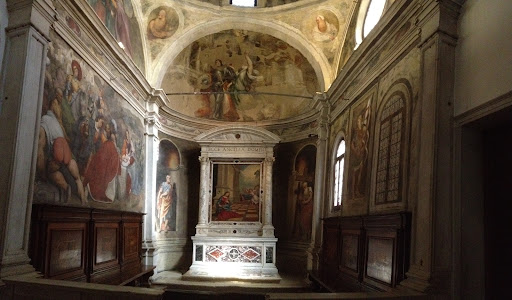
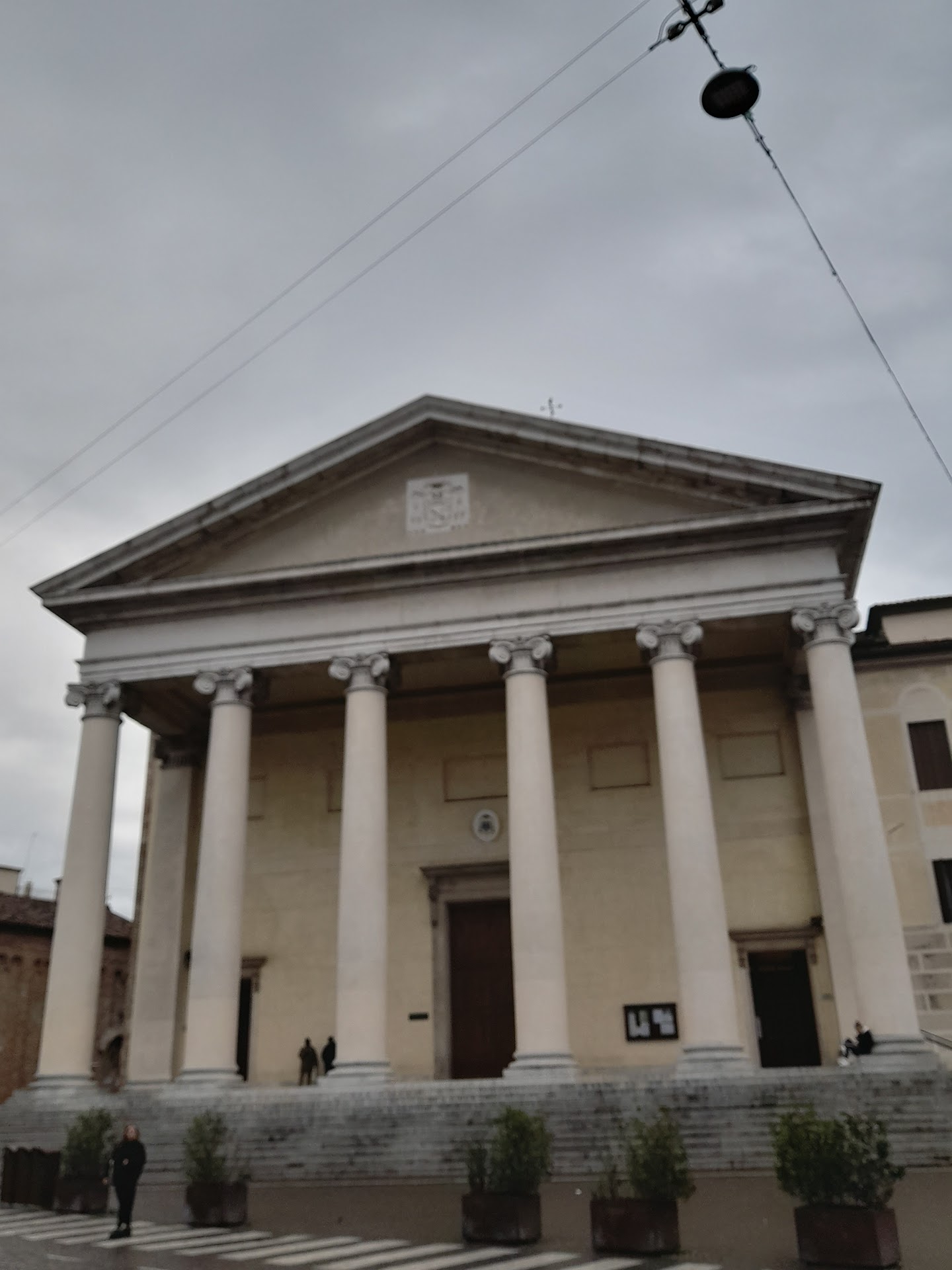
The cathedral of San Pietro Apostolo, better known as "Duomo", is the main place of worship in the city of Treviso and the seat of the diocese of the same name. Consecrated to the St. Peter the Apostle. The beautiful monumental church was originally built in Romanesque style in the 11th-12th centuries. It is located in the center of Treviso in Piazza Duomo. From the 15th to the 16th century the Cathedral was restored in Neoclassical style, performed by Andrea Memmo and Giannantonio Selva, following the project of the castle architect Giordano Riccati, a portico with cross vaults replaced the old portico with column-bearing lions, and only the crypt remaining from the previous edifice. Today the main façade of the Duomo (Cathedral) is ornamented by a wide staircase open on three sides erecting a pronaos with six Ionic columns. The majestic indoors we may see a system made by three naves, which are divided by strong composite pillars supporting barrel vaults and domes alternatively. The apsidal portion rises above the remaining floor of the Church by several steps and it is superimposed upon the crypt. The presbytery gathers up the main altar dedicated to Saints Tabra, Tabrata, Teonisto, designed by Tullio and Antonio Lombardo. The main work of art is the magnificent „Annuciazione" by Tiziano in the Malchiostro (Malchin) chapel in perfect Renaissance style chapel, located in the background, while there is an "Adorazione dei magi" by Pordenone on the wall of the left side. The left chapel preserves some sculptures by Bregno and the works by Francesco Bassano and Antonio Zanchi located just beyond the "Redentore" by Pennacchi. We may see some paintings by Domenico Capriolo, by Girolamo D’Aviano, by Paris Bordone and by Pomponio Amalteo in the right chapel. The church has an unfinished bell tower, whose construction, according to the tradition, was stopped by the Venetian government to prevent it from becoming taller than the campanile of St....
Read moreMany people who visit northern Italy visit Venice, but they should also visit Treviso! A good place to start is Treviso Cathedral, built in the neoclassical style with its imposing row of columns at the main door. Inside it is quite light with many interesting features to see. Everybody goes to visit "The Annunciation" by Titian, (in a chapel next to the sanctuary) but we should also remember that one of its famous sons is Joseph Sarto - Pope Saint Pius X. He was Cathedral Canon, Diocesan Chancellor and Spiritual Director of the seminary from 1875 to 1884, before being appointed Bishop of Mantua. To the right of the sanctuary is the altar dedicated to Saint Pius X, with a bronze statue sculpted by Toni Benetton in 1954 (the year of his beatification). Inside the sanctuary are two paintings depicting him as pope as well as a carved inscription above the Canons seat that he occupied in the cathedral as Canon. The crypt is also very interesting, housing the tombs of the Treviso bishops. Around the back is the Diocesan Museum – well worth a visit (but only open a few days a week) and also a recently discovered Roman mosaic, possible from some ancient Roman...
Read moreLa Cattedrale di San Pietro Apostolo, conosciuta meglio come "il Duomo", è il principale luogo di culto della città di Treviso e sede della diocesi omonima. Consacrata a San Pietro, si affaccia su piazza del Duomo. È monumento nazionale italiano e sede della Parrocchia di San Pietro Apostolo nella Cattedrale. Le sue origini risalgono all'età paleocristiana (VI secolo) e fu costruito in un'area centralissima della città dove, come testimoniano i reperti, sorgevano un tempio, un teatro e, forse, delle terme. Tra l'XI e il XII secolo, per iniziativa del vescovo Rotario, l'area assunse l'impianto attuale e lo stesso duomo fu modificato secondo lo stile romanico (di questo periodo è la cripta).
A partire dal 1759, l'edificio fu ricostruito in stile neoclassico dallo studioso e architetto castellano Giordano Riccati; dell'antico duomo romanico vennero conservate le tre cappelle absidali lombardesche. Tuttavia il progetto del Riccati subì varie modifiche in corso d'opera, contestate dall'architetto stesso. A causa delle polemiche sorte intorno al progetto della nuova cattedrale, e della mancanza di fondi, la costruzione dell'edificio si fermò nel 1782, e rimase in sospeso per anni. L'interno venne completato dal 1790 da Giannantonio Selva. La facciata con il pronao neoclassico e la scalinata risale al 1836, opera di Francesco Bomben e Gaspare Petrovich. Sul finire del XX secolo si pose mano all'adeguamento liturgico che comportò la modifica degli ambienti presbiteriali e la costruzione di un nuovo grande organo. Il tutto fu inaugurato per il Giubileo del 2000. Successivamente fu anche ricostruito, verso l'interno, l'antico portale quattrocentesco smontato con la costruzione dell'odierna facciata.
Il duomo è caratterizzato da sette cupole, cinque poste nella navata centrale ed altre due che chiudono le cappelle nel transetto. La facciata attuale, progettata e completata nel 1836 da Francesco Bomben e dall'ingegnere comunale Gaspare Petrovich, è costituita da un'ampia scalinata coronata da un imponente pronao a sei colonne ioniche. Ai lati della scalinata sono posti i due leoni stilofori in marmo Rosso di Verona che reggevano il protiro dell'edificio romanico. Un altro reperto della fase romanica ancora esistente è l'antico portale, ritrovato nella corte delle Canoniche Vecchie e ricostruito all'interno, addossato alla controfacciata, nel 2005[1]. Sul lato destro dell'edificio, verso Calmaggiore, si può notare un bassorilievo romano raffigurante una baccante inglobato nella muratura.
Il maestoso interno si presenta a tre navate, con cappelle laterali e tre absidi finali; sotto di essi si trova l'antica cripta con le tombe dei vescovi della città. Nel tempio sono sepolti i santi martiri Teonisto, Tabra e Tabrata, San Fiorenzo, San Vendemiano e san Liberale, patrono della città. Nell'altare prossimo alla cappella del Santissimo Sacramento, dedicato a Santa Giustina si conservano le spoglie del vescovo della città beato Andrea Giacinto Longhin, trasferitovi dalla cripta in occasione della beatificazione, mentre presso nel primo altare in cornu Epistulae dall'ingresso si trova il corpo del beato Enrico da Bolzano, morto a Treviso nel 1315. Nello stesso altare dov'è sepolto il beato Longhin, sono poste le spoglie di san Parisio, monaco camaldolese morto a...
Read more