I still remember the quiet hum of Marrakech waking up as I stepped out of my riad just after dawn. The air was cool, tinged with the faint smell of spices from yesterday’s market, and our driver, Achraf, greeted us with the kind of smile that makes you instantly trust a journey. Sliding into the van, I didn’t realize how transformative a simple Marrakech to Casablanca day trip could feel.
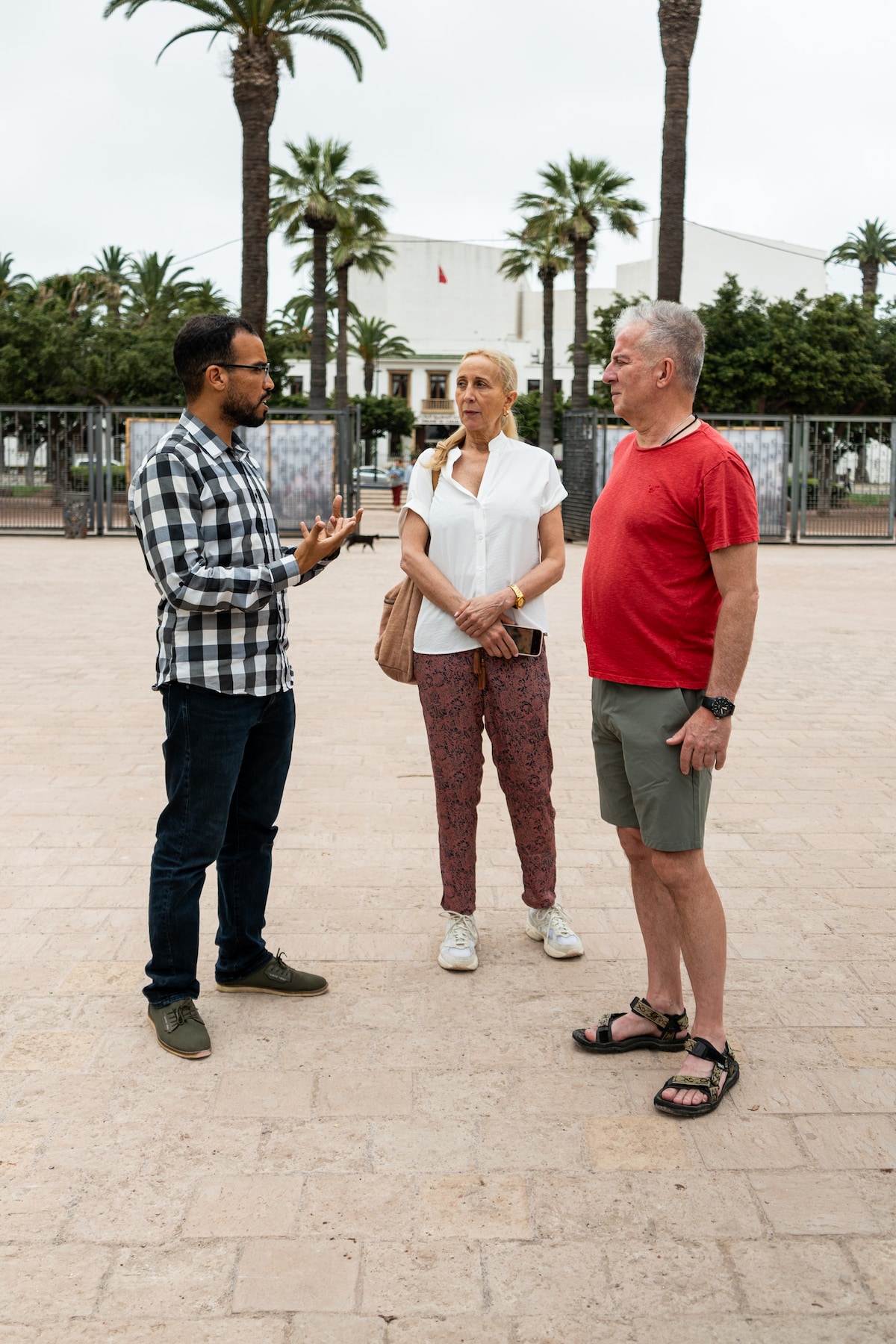
The road stretched before us, a ribbon connecting two worlds: the warm chaos of Marrakech and the Atlantic calm of Casablanca. Achraf drove with an easy confidence, pointing out villages and landscapes, while our guide, Abdo, shared stories about Moroccan history and the way French and Arabic cultures blend here. I remember sipping Moroccan mint tea at a roadside stop, the sweetness mingling with the brisk morning air.
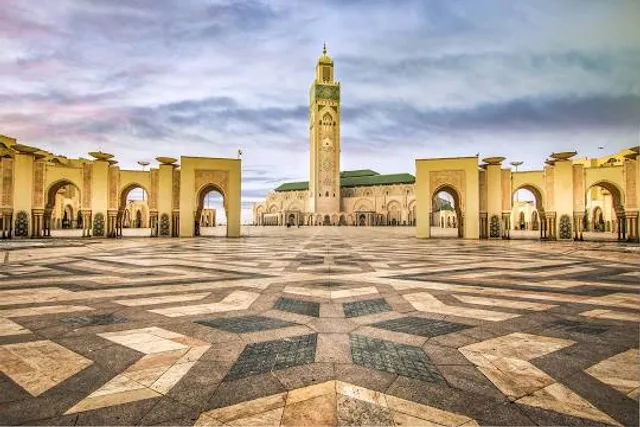
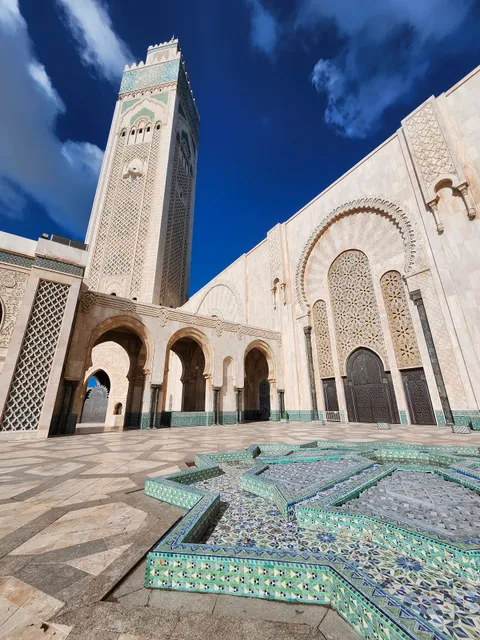
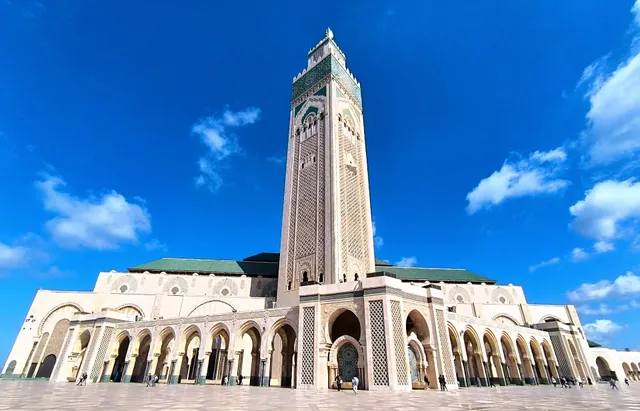
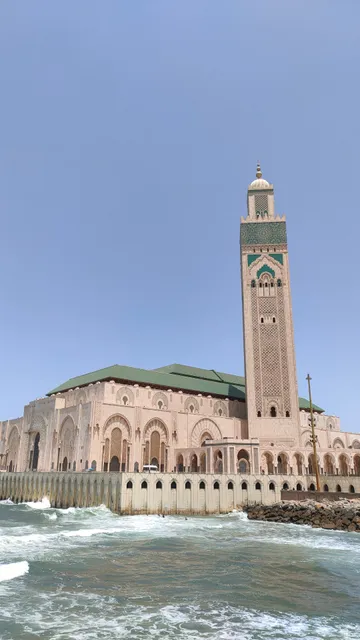
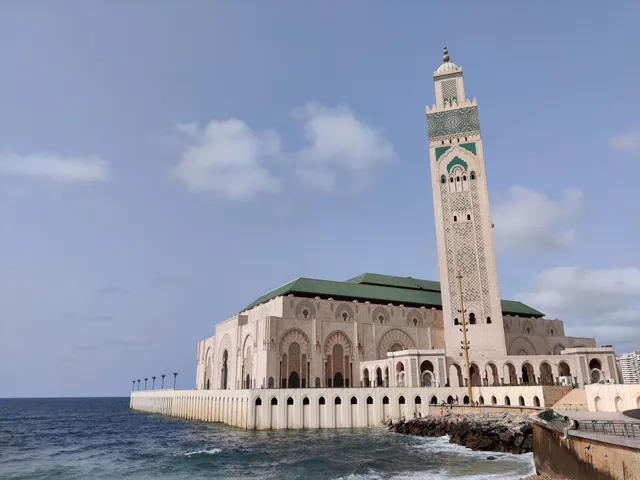
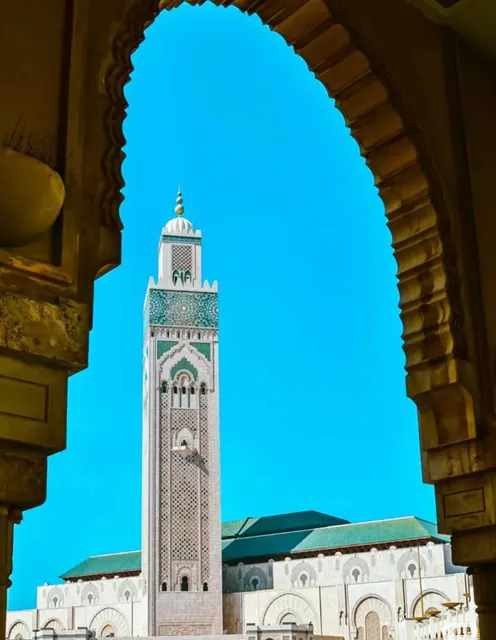
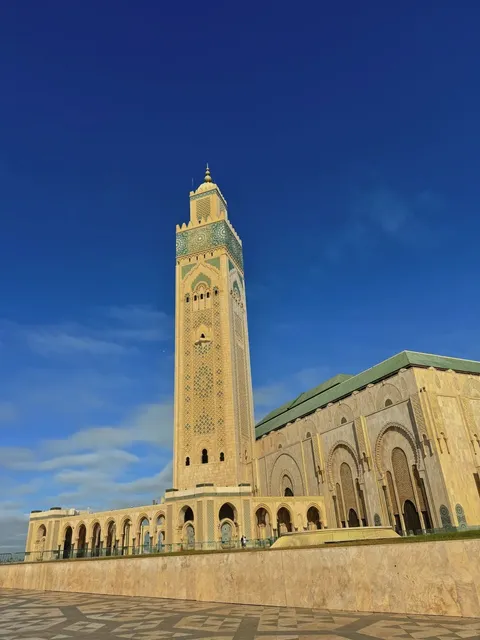
Our first true moment of awe came at the Hassan II Mosque. I had seen pictures, but standing before its towering minaret, the ocean waves crashing just beside it, was something else entirely. The call to prayer drifted across the Atlantic breeze, and for a moment the entire group fell silent, almost reverent. Inside, the craftsmanship of marble, cedar, and tilework was so intricate I found myself running my fingers gently across the walls, as though touching history itself.
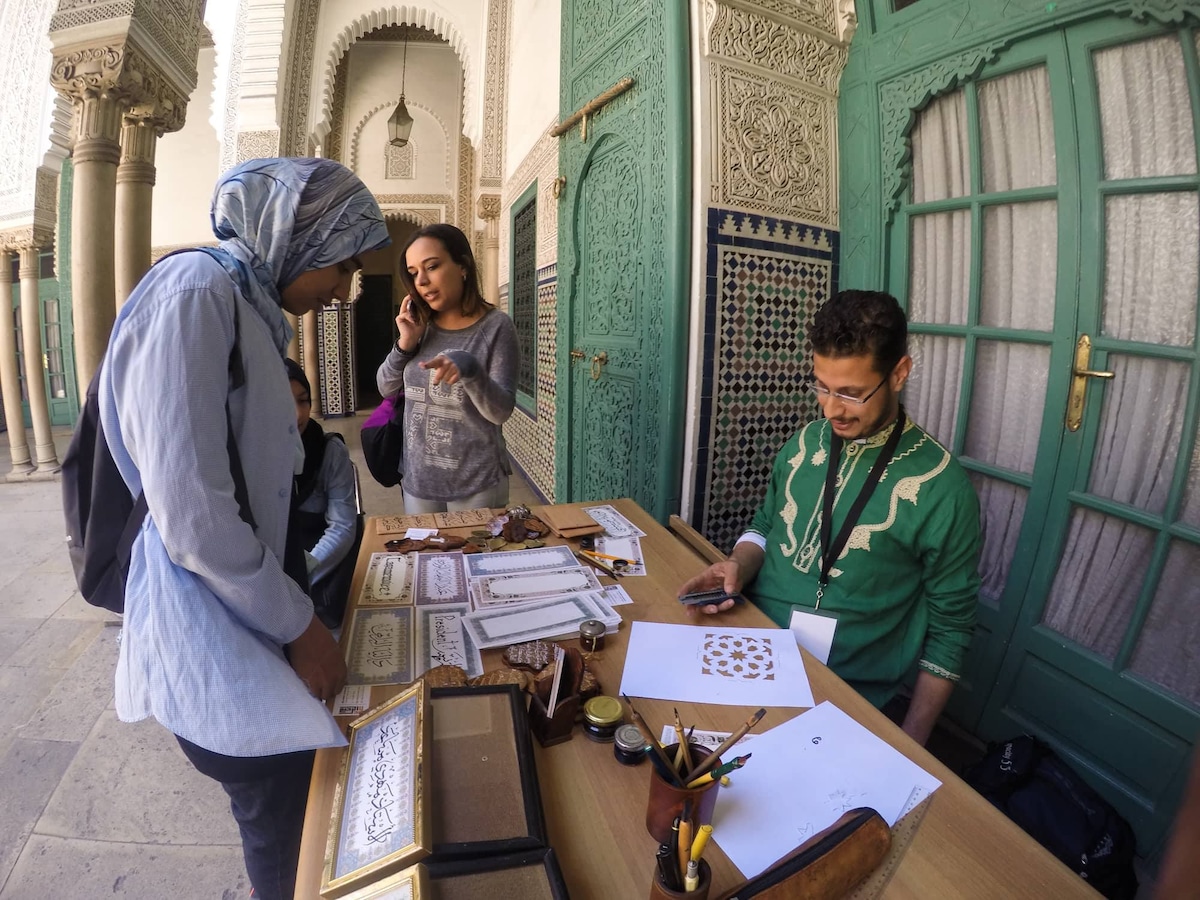
From there, we walked along the Corniche, the salty wind tangling my hair and laughter rising from seaside cafés. Casablanca surprised me—it wasn’t just modern business buildings but pockets of soulful character. At the Quartier Habous, with its arches and bookshops, I felt transported. French-Arabic architecture framed little streets where bakers pulled fresh bread from stone ovens, the smell lingering in the air. Abdo encouraged us to try kalinte, a chickpea tart, and it melted in my mouth—simple, comforting, unforgettable.
Later at Mohammed V Square, pigeons scattered as children played, and I thought about how cities are alive in ways photos never capture. Our final stop, a drink at Rick’s Café, was playful and cinematic—a nod to nostalgia, but also a reminder of Casablanca’s unique cultural blend.
On the drive back, the sun sank over the horizon, painting the sky in shades of rose and orange. I leaned against the window, reflecting on how in a single day I’d felt both peace and inspiration. Traveling Marrakech to Casablanca isn’t just about seeing monuments—it’s about feeling Morocco’s pulse, its harmony of old and new, sea and desert, silence and song.
Don’t miss this unforgettable Marrakech to Casablanca day trip—it will stay with you long after you...
Read more🕌 Hassan II Mosque City of Casablanca
🟨 The Hassan II Mosque is located near the old city of Casablanca, on the Atlantic coast.
🟨 It is the largest mosque in Morocco, the second largest in Africa, and the 13th largest in the world. Its minaret, designed in the Andalusian style, rises 210 meters (689 feet), making it the second tallest religious building in the world. The mosque spans an area of 625 square meters and is adorned with zellige (mosaic tiles) and marble. It features two large main doors, four side doors, and a dedicated entrance for women. Inside, there are stairs and a fast elevator that can take visitors to the top of the minaret in under a minute.
🟨 Designed by French architect Michel Pinseau and constructed by the French group Bouygues, the project was managed by its Moroccan subsidiary, Bymaro. The mosque covers 20,000 square meters and can accommodate up to 25,000 worshippers inside, and 80,000 including the courtyard. Construction began in 1987 and was completed during the celebration of the Prophet Muhammad's birth in 1993.
🟨 The mosque includes a large prayer hall for women, ablution facilities for both men and women, baths, and a large parking garage for cars.
🟨 The Hassan II Mosque incorporated advanced technology to serve both modern construction and traditional Moroccan craftsmanship. This involved 2,500 workers, 10,000 craftsmen, and 50,000 hours of labor. The tallest crane in the world was custom-designed to match the height of the minaret, which reaches 200 meters and is crowned with a shining lantern. Reinforced concrete, four times stronger than usual, was used—not for supporting a tunnel, but to build this unmatched minaret.
🟨 Ultimately, the Hassan II Mosque is a continuation of a long tradition of Islamic architecture, particularly of the Andalusian heritage, with Moroccan influences. It draws its beauty from the ancient Al-Qarawiyyin Mosque in Fez, which is over a thousand years old. It also inherits much of the grandeur from the Hassan Tower in Rabat, the Koutoubia Mosque in Marrakesh, and the Giralda in Seville, all built by the Almohad Sultan, Yaqub al-Mansur.
🟨 Like the Marinid schools, the Hassan II Mosque also houses a library, but the attached museum elevates it to a true cultural complex, adding richness to the building as it fulfills its religious mission. The mosque's connection to the ocean gives it a unique character, symbolizing the spread of Islam across both the Atlantic and the Mediterranean. Its design is inspired by the Quranic verse: "And His Throne was upon the water"...
Read moreThe Hassan II Mosque in Casablanca, Morocco, is a breathtaking testament to faith, craftsmanship, and architectural ambition. Commissioned by King Hassan II and completed in 1993, this magnificent structure was built partly over the Atlantic Ocean—paying homage to the Quranic verse that God’s throne rests over water. Its towering 210‑metre minaret, among the tallest in the world, features a laser at the apex directed toward Mecca, symbolizing spiritual connection.
Spanning a 9‑hectare complex, the mosque holds up to 105,000 worshippers—with 25,000 inside and 80,000 in the courtyard. Its prayer hall is both vast and intricately detailed, with a six-storey retractable roof, 78 decorative pillars, Murano-glass chandeliers weighing over a ton each, and a massive hand‑crafted marble floor etched with zellij and cedar carvings by Moroccan artisans.
Built between 1986 and 1993 under the design of French architect Michel Pinseau, the mosque blends Moorish and Andalusian aesthetics enriched by modern engineering. Thousands of Moroccan craftsmen collaborated on its construction using local materials—white marble, cedar, onyx, and mosaic tilework—while notable exceptions like Italian chandeliers add an international flair. The structure includes a museum, hammam, mosque school, and library, enhancing its cultural resonance.
A visit here is more than sightseeing—it’s a deeply sensory and spiritual experience. Step into the grand prayer hall and bask in the light flooding through stained-glass windows. Pause at the ablution halls in the basement, adorned with 41 fountains and 600 taps. Walk around the courtyard where waves crash gently nearby. Whether at sunrise, sunset, or under the evening lights that make the mosque glow against the Atlantic, its grandeur remains unforgettable.
As Morocco’s only mosque open to non‑Muslim visitors, Hassan II Mosque welcomes guests with guided tours that explain its history, artistry, and spiritual symbolism. The experience remains respectful and immersive—guided tours ensure you see highlights like the prayer hall, minaret lift, ablution rooms, and museum, all while adhering to dress codes and prayer-time etiquette.
The Hassan II Mosque is not merely a monument—it’s a contemporary shrine to Moroccan identity, Islamic art, and human vision. It invites visitors to reflect on harmony between tradition and innovation and to experience architecture that elevates both the soul...
Read more