HTML SitemapExplore
logo
Find Things to DoFind The Best Restaurants

Holy Trinity Statue — Attraction in Timișoara

Name
Holy Trinity Statue
Description
Nearby attractions
Union Square
Piața Unirii 13, Timișoara 300085, Romania
Timișoara Art Museum
Piața Unirii 1, Timișoara 300085, Romania
Saint George’s Catholic Cathedral
Piața Unirii 12, Timișoara, Romania
Brück House
Piața Unirii 2, Timișoara, Romania
Maria Theresia Bastion
Strada Hector, Timișoara, Romania
The National Museum of Banat
"Maria Theresia" Bastion, Strada Martin Luther 4, Timișoara 305500, Romania
Victory Square
Piața Victoriei, Timișoara, Romania
The Stronghold Synagogue
Strada Mărășești 6, Timișoara, Romania
Lloyd Palace
Palatul Lloyd, Piața Victoriei 2, Timișoara 300006, Romania
Fish Fountain
Piața Victoriei, Timișoara, Romania
Nearby restaurants
Nearby hotels
Hostel Cornel
Strada Oituz 5, Timișoara 300086, Romania
Atlas Hotel Timisoara
Piața Sfântul Gheorghe 2-3, Timișoara 300085, Romania
Old Town Hotel
Strada Emanoil Ungureanu 2, Timișoara 300079, Romania
CASA MIRON UNIRII
Strada Matei Corvin 3, Timișoara, Romania
VISAJ Downtown
Strada Florimund Mercy 7, Timișoara 300085, Romania
Hotel Timisoara
Strada Mărășești 1-3, Timișoara 300086, Romania
ApartHotel No.6
Strada General Eremia Grigorescu Nr. 6, Timișoara 300079, Romania
The Industrique Home
Strada Vasile Alecsandri 5, Timișoara 300078, Romania
InVerve
Strada Mărășești 10, Timișoara 300074, Romania
Do Stil Boutique Hotel
Bulevardul Take Ionescu nr. 8, Timișoara 300070, Romania
Related posts
Keywords
Holy Trinity Statue tourism.Holy Trinity Statue hotels.Holy Trinity Statue bed and breakfast. flights to Holy Trinity Statue.Holy Trinity Statue attractions.Holy Trinity Statue restaurants.Holy Trinity Statue travel.Holy Trinity Statue travel guide.Holy Trinity Statue travel blog.Holy Trinity Statue pictures.Holy Trinity Statue photos.Holy Trinity Statue travel tips.Holy Trinity Statue maps.Holy Trinity Statue things to do.
Holy Trinity Statue things to do, attractions, restaurants, events info and trip planning
Holy Trinity Statue
RomaniaTimișTimișoaraHoly Trinity Statue

Basic Info

Holy Trinity Statue

Piața Unirii, Timișoara, Romania
4.7(363)
Open 24 hours
Save
spot

Ratings & Description

Info

Cultural
Scenic
attractions: Union Square, Timișoara Art Museum, Saint George’s Catholic Cathedral, Brück House, Maria Theresia Bastion, The National Museum of Banat, Victory Square, The Stronghold Synagogue, Lloyd Palace, Fish Fountain, restaurants:
logoLearn more insights from Wanderboat AI.
Phone
+40 256 408 300

Plan your stay

hotel
Pet-friendly Hotels in Timișoara
Find a cozy hotel nearby and make it a full experience.
hotel
Affordable Hotels in Timișoara
Find a cozy hotel nearby and make it a full experience.
hotel
The Coolest Hotels You Haven't Heard Of (Yet)
Find a cozy hotel nearby and make it a full experience.
hotel
Trending Stays Worth the Hype in Timișoara
Find a cozy hotel nearby and make it a full experience.

Reviews

Nearby attractions of Holy Trinity Statue

Union Square

Timișoara Art Museum

Saint George’s Catholic Cathedral

Brück House

Maria Theresia Bastion

The National Museum of Banat

Victory Square

The Stronghold Synagogue

Lloyd Palace

Fish Fountain

Union Square

Union Square

4.8

(4.4K)

Open 24 hours
Click for details
Timișoara Art Museum

Timișoara Art Museum

4.7

(861)

Closed
Click for details
Saint George’s Catholic Cathedral

Saint George’s Catholic Cathedral

4.8

(290)

Open 24 hours
Click for details
Brück House

Brück House

4.6

(81)

Open 24 hours
Click for details

Things to do nearby

Candlelight: Vivaldis Four Seasons
Sat, Dec 13 • 6:00 PM
Piața Unirii 12, Timișoara, 300085
View details
Investigate Timisoaras history
Mon, Dec 8 • 9:00 AM
Timișoara, Timiș, 300006, Romania
View details
Deep Dive into Quantum Emulation with Evidens Qaptiva - Quantum Masterclass @ UPT
Mon, Dec 8 • 12:00 PM
Bulevardul Republicii, Timișoara, Romania
View details
Get the Appoverlay
Get the AppOne tap to find yournext favorite spots!
Wanderboat LogoWanderboat

Your everyday Al companion for getaway ideas

CompanyAbout Us
InformationAI Trip PlannerSitemap
SocialXInstagramTiktokLinkedin
LegalTerms of ServicePrivacy Policy

Get the app

© 2025 Wanderboat. All rights reserved.
logo

Reviews of Holy Trinity Statue

4.7
(363)
avatar
5.0
8y

This is a review of the historical fountain situated near the statue.

CONTEXT

During the Austrian-Ottoman war, Eugeniu de Savoya conquered Timişoara in 1716. The city started its evolution from a fortress to an economical and industrial nexus, recording an unprecedented growth in population. The city’s new administration became increasingly preoccupied with the construction of a water sanitation system. The pest epidemics and cholera outbreaks during the 18th century greatly contributed to this decision.

In 1732 a hydraulic machinery was built in Fabric district, and was upgraded to a water tower in 1774. Representing a technical masterpiece of the times, this water tower was featured on the city’s first coat-of-arms.

From this tower, the water was distributed to the city through a system of wooden conduits which supplied the water to a network of drinking fountains. One such fountain was erected in Unirii Square around 1780.

During the siege of 1849 the tower and the water distribution system suffered a high degree of damage, and access to clean water became a big problem. In parallel with trying to find a solution for a new water distribution system, the administration ordered the drilling of fountains in strategical parts of the city.

FACTS

In 1890 the administration commissioned the drilling of a fountain in Unirii Square to Iulius Seidl from Vrsac, drilling expert. After four years of drilling to a depth of 406 m, in 1894 the fountain was finally ready. The authorities deemed the water “undrinkable”, due to its high temperature and high content of iron and other minerals. Nevertheless, the fountain quickly became a favorite of the people of Timisoara, who believed the water had many medicinal properties, especially in treating heartburn disease.

In 1986, a new fountain was drilled at approximately the same location. The depth was 206 m and the water source was a different one. In 2004, due to the decay of the equipment, another fountain was drilled at the same depth. This is the existent fountain; the mineral content is still high, although not as high as the predecessor’s.

In 2015, the exterior of the fountain was renovated as we see it today, as part of the renovation process of the whole Unirii Square.

DATA SOURCES:

Wikipedia - Timisoara Alimentarea cu apa a Timisoarei - Vlaicu, Hategan Forarea de noi fantani publice, document primarie...

   Read more
avatar
5.0
6y

Wonderful area and a must see if you are in Timișoara. Some of the most appealing historical buildings are here. The arts museum is here. Two beautiful chruches and one of the oldest schools in town are here. Some of the fanciest (although most expensive) bars and cafes are here. And if all of that was not enough, you can rest in the middle and enjoy the nice sculptures and architecture from a grassy field. You also have benches all throughout and a fountain with...

   Read more
avatar
5.0
6y

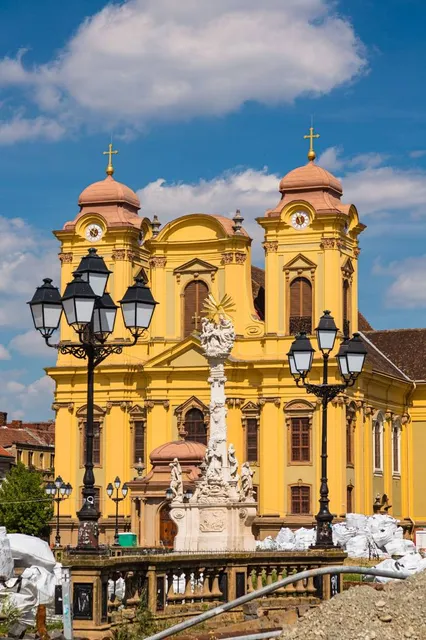
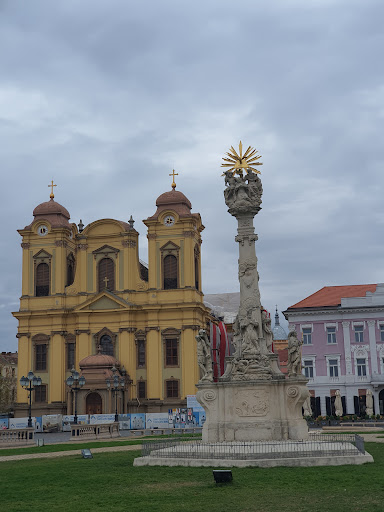
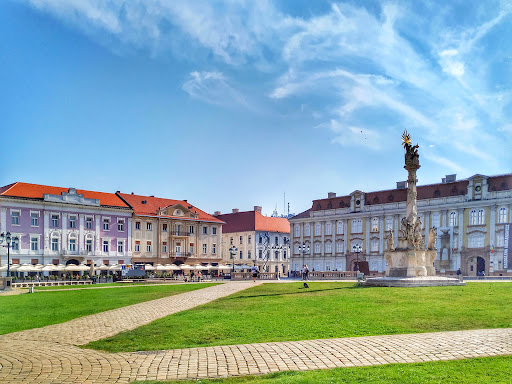
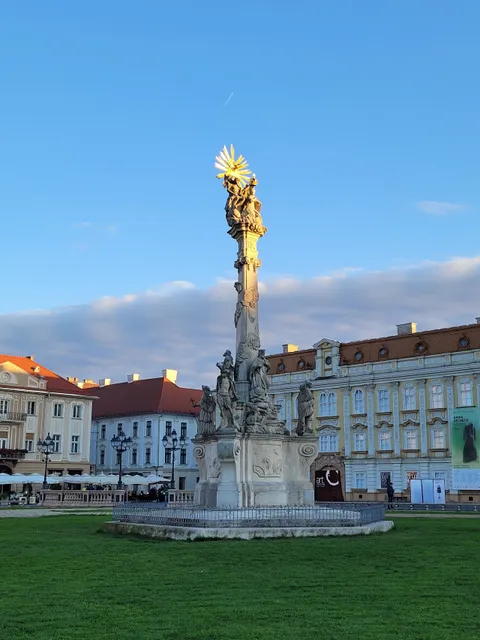
The Holy Trinity statue also known as The Plague monument is one of the most iconinc statues you will find throughout Timisoara. At the base of the column you can find the statues of Saint John of Nepomuk, king David and Saint Barbara, patron of miners as well as Saint Rozalia. On the monument you can also find the statues of Saint Rochus, Saint Sebastian and Saint...

   Read more
Page 1 of 7
Previous
Next

Posts

ExpRO360ExpRO360
This is a review of the historical fountain situated near the statue. CONTEXT During the Austrian-Ottoman war, Eugeniu de Savoya conquered Timişoara in 1716. The city started its evolution from a fortress to an economical and industrial nexus, recording an unprecedented growth in population. The city’s new administration became increasingly preoccupied with the construction of a water sanitation system. The pest epidemics and cholera outbreaks during the 18th century greatly contributed to this decision. In 1732 a hydraulic machinery was built in Fabric district, and was upgraded to a water tower in 1774. Representing a technical masterpiece of the times, this water tower was featured on the city’s first coat-of-arms. From this tower, the water was distributed to the city through a system of wooden conduits which supplied the water to a network of drinking fountains. One such fountain was erected in Unirii Square around 1780. During the siege of 1849 the tower and the water distribution system suffered a high degree of damage, and access to clean water became a big problem. In parallel with trying to find a solution for a new water distribution system, the administration ordered the drilling of fountains in strategical parts of the city. FACTS In 1890 the administration commissioned the drilling of a fountain in Unirii Square to Iulius Seidl from Vrsac, drilling expert. After four years of drilling to a depth of 406 m, in 1894 the fountain was finally ready. The authorities deemed the water “undrinkable”, due to its high temperature and high content of iron and other minerals. Nevertheless, the fountain quickly became a favorite of the people of Timisoara, who believed the water had many medicinal properties, especially in treating heartburn disease. In 1986, a new fountain was drilled at approximately the same location. The depth was 206 m and the water source was a different one. In 2004, due to the decay of the equipment, another fountain was drilled at the same depth. This is the existent fountain; the mineral content is still high, although not as high as the predecessor’s. In 2015, the exterior of the fountain was renovated as we see it today, as part of the renovation process of the whole Unirii Square. DATA SOURCES: Wikipedia - Timisoara Alimentarea cu apa a Timisoarei - Vlaicu, Hategan Forarea de noi fantani publice, document primarie Timisoara Fotografie aspect 1894
Aleksandar MladenovićAleksandar Mladenović
Trg ujedinjenja u Temišvaru je najstariji gradski trg građen u baroknom stilu. U prošlosti poznat kao Glavni trg, još od prvih nacrta koji datiraju iz 1733. godine pa do prvih početaka gradnje 1786. godine na površini od 150h110 metara. Trg je veoma značaj za Srpsku nacionalnu manjinu koja bituje u Rumuniji, kao i u samom gradu, nazivaju ga još i starim srpskim jezgrom. Trg Ujedinjenja je danas najprometnija turistička destinacija u gradu Temišvaru na kom dominira Saborna srpska pravoslavna crkva sa zgradom Vikarijata Eparhije Temišvarske Srpske pravoslavne crkve i starim sedištem Saveza Srba Rumunije, kao i sa Muzejom baroka u kom je nastala i formirana Srpska Vojvodina i Tamiški Banat. Miloš Crnjanski je svoje detinjstvo proveo na ovom trgu kojim je bio fasciniran i kojeg opisivao u svojim delima. Srbi iz Temišvar-grada, kako se inače među lokalnim Srbima zove ovaj deo gradu, podigli su mu spomenik u dvorištu Crkvene zgrade. Srpska saborna crkva u Temišvaru na Trgu ujedinjenja je najvažnije crkveno zdanje srpske zajednice u Rumuniji. To je i prestona crkva Temišvarske eparhije
Misha SmileyMisha Smiley
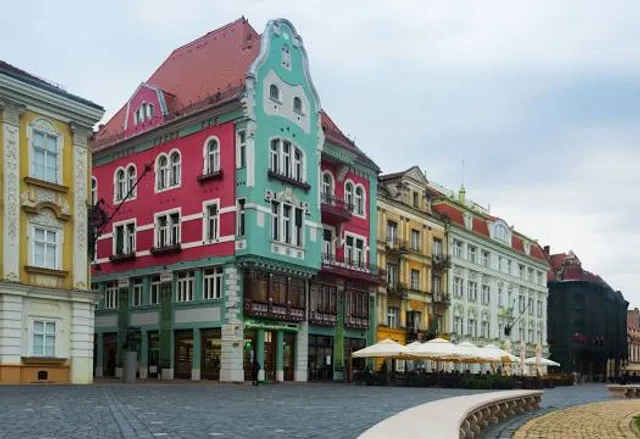
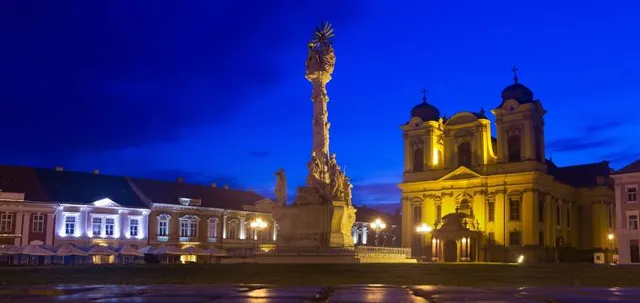
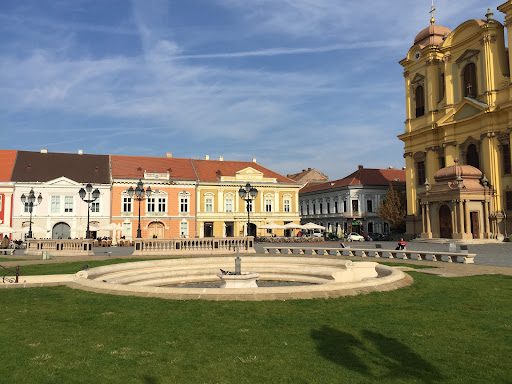
A stunning and historic monument in the heart of Timișoara’s Union Square. The Holy Trinity Statue stands as a powerful symbol of faith and resilience, beautifully crafted with impressive detail. Surrounded by charming architecture and colorful buildings, it makes for a perfect photo stop and a great place to pause and admire the city’s rich history.
See more posts
See more posts
hotel
Find your stay

Pet-friendly Hotels in Timișoara

Find a cozy hotel nearby and make it a full experience.

This is a review of the historical fountain situated near the statue. CONTEXT During the Austrian-Ottoman war, Eugeniu de Savoya conquered Timişoara in 1716. The city started its evolution from a fortress to an economical and industrial nexus, recording an unprecedented growth in population. The city’s new administration became increasingly preoccupied with the construction of a water sanitation system. The pest epidemics and cholera outbreaks during the 18th century greatly contributed to this decision. In 1732 a hydraulic machinery was built in Fabric district, and was upgraded to a water tower in 1774. Representing a technical masterpiece of the times, this water tower was featured on the city’s first coat-of-arms. From this tower, the water was distributed to the city through a system of wooden conduits which supplied the water to a network of drinking fountains. One such fountain was erected in Unirii Square around 1780. During the siege of 1849 the tower and the water distribution system suffered a high degree of damage, and access to clean water became a big problem. In parallel with trying to find a solution for a new water distribution system, the administration ordered the drilling of fountains in strategical parts of the city. FACTS In 1890 the administration commissioned the drilling of a fountain in Unirii Square to Iulius Seidl from Vrsac, drilling expert. After four years of drilling to a depth of 406 m, in 1894 the fountain was finally ready. The authorities deemed the water “undrinkable”, due to its high temperature and high content of iron and other minerals. Nevertheless, the fountain quickly became a favorite of the people of Timisoara, who believed the water had many medicinal properties, especially in treating heartburn disease. In 1986, a new fountain was drilled at approximately the same location. The depth was 206 m and the water source was a different one. In 2004, due to the decay of the equipment, another fountain was drilled at the same depth. This is the existent fountain; the mineral content is still high, although not as high as the predecessor’s. In 2015, the exterior of the fountain was renovated as we see it today, as part of the renovation process of the whole Unirii Square. DATA SOURCES: Wikipedia - Timisoara Alimentarea cu apa a Timisoarei - Vlaicu, Hategan Forarea de noi fantani publice, document primarie Timisoara Fotografie aspect 1894
ExpRO360

ExpRO360

hotel
Find your stay

Affordable Hotels in Timișoara

Find a cozy hotel nearby and make it a full experience.

Get the Appoverlay
Get the AppOne tap to find yournext favorite spots!
Trg ujedinjenja u Temišvaru je najstariji gradski trg građen u baroknom stilu. U prošlosti poznat kao Glavni trg, još od prvih nacrta koji datiraju iz 1733. godine pa do prvih početaka gradnje 1786. godine na površini od 150h110 metara. Trg je veoma značaj za Srpsku nacionalnu manjinu koja bituje u Rumuniji, kao i u samom gradu, nazivaju ga još i starim srpskim jezgrom. Trg Ujedinjenja je danas najprometnija turistička destinacija u gradu Temišvaru na kom dominira Saborna srpska pravoslavna crkva sa zgradom Vikarijata Eparhije Temišvarske Srpske pravoslavne crkve i starim sedištem Saveza Srba Rumunije, kao i sa Muzejom baroka u kom je nastala i formirana Srpska Vojvodina i Tamiški Banat. Miloš Crnjanski je svoje detinjstvo proveo na ovom trgu kojim je bio fasciniran i kojeg opisivao u svojim delima. Srbi iz Temišvar-grada, kako se inače među lokalnim Srbima zove ovaj deo gradu, podigli su mu spomenik u dvorištu Crkvene zgrade. Srpska saborna crkva u Temišvaru na Trgu ujedinjenja je najvažnije crkveno zdanje srpske zajednice u Rumuniji. To je i prestona crkva Temišvarske eparhije
Aleksandar Mladenović

Aleksandar Mladenović

hotel
Find your stay

The Coolest Hotels You Haven't Heard Of (Yet)

Find a cozy hotel nearby and make it a full experience.

hotel
Find your stay

Trending Stays Worth the Hype in Timișoara

Find a cozy hotel nearby and make it a full experience.

A stunning and historic monument in the heart of Timișoara’s Union Square. The Holy Trinity Statue stands as a powerful symbol of faith and resilience, beautifully crafted with impressive detail. Surrounded by charming architecture and colorful buildings, it makes for a perfect photo stop and a great place to pause and admire the city’s rich history.
Misha Smiley

Misha Smiley

See more posts
See more posts