The construction did not go to plan, however, with work having to be halted in 1877 due to a lack of funds. The following years saw more problems, with Bishop Sillani dying in Rome in 1878, and Fr. Tabarrani leaving Ceylon in 1880 (and dying just two years later in Rome). Nevertheless, May 1880 saw Fr. Bonifiglio Baldoni take charge of the project, the four planned arches being completed by the end of August. Nearly a year later, "at 11.00, the last keystone was driven in place.” The work on most of the main portion of the cathedral, despite the many problems in funding, had been completed. The church celebrated "the Great Day", with Bishop Clement Pagnani (now Vicar Apostolic of Colombo) blessing the nave and the aisles of the new Cathedral and opening it for public worship. The highlight of the day was the first Holy Mass offered for the benefactors of the Cathedral. Construction was far from done, however, and in 1883 the new Vicar Apostolic, Bishop Bonjean, appointed Fr. Tanganelli to carry on the building of the cathedral. Less than a year later, both men had left Ceylon (Bonjean to Rome, and Tanganelli to China), leaving the project in the hands of Fr. Joseph Mary Louise Boisseau. Boisseau, by 1885, had completed work on the Sanctuary vault and the Southern vault, with the final one being completed in December of that year. It would not be until 1902, however, that the last of the work would be completed and the scaffolding removed. Pope Leo XIII, in his apostolic brief of 1885 conferred a number of privileges on St. Lucia’s Cathedral, one of which was it being declared the Cathedral Church of the 'Vicariate of Colombo’. Bishop Bonjean returned to the island soon after this, bringing with him an authentic portion of the bones of St. Lucy, which are preserved in the cathedral to this day. 6 January 1887 was a significant date for Catholicism in Ceylon: the Church's hierarchy was formally established, and the first Episcopal Synod was held in the country. A Papal Delegate and the Bishops of the Island were gathered in the Cathedral to witness this singular event in the history of the Church of Ceylon. On 12 December, the vigil for the feast of St. Lucy, the patroness of the newly completed Cathedral, was formally held. With construction still ongoing, September 1889 saw the crypt dedicated to the Sacred Passion of the Lord being declared open for public worship. The first Holy Mass was celebrated on the first Friday of that month. By the end of the construction project, the church had costed a total of Rs. 160,000- an enormous amount of money in the last century, provided by the Ceylonese Catholics...
Read moreSt. Lucy of Sicily whose feast falls on December 13 is venerated the world over as the protectress against eye trouble. Legend has it that she had the most beautiful pair of eyes and that she pulled them out to present them to an unwelcome suitor who was enamoured by their beauty. However her eyes were miraculously restored to her more beautiful than before. Named after this virgin and martyr saint is St. Lucia’s Cathedral of Kotahena, the oldest and largest parish cathedral in Sri Lanka and the seat of the Archbishop of Colombo.
The 110 year old cathedral had humble origins in a small chapel of wood and Cadjan built by the Oratorian fathers in 1760 when Ceylon was under Dutch occupation. This was replaced by a larger church of brick and mortar in 1782. When Ceylon was detached from the jurisdiction of the Archbishop of Goa in 1834, Rev. Fr. Vincenti Rosario was appointed the first Vicar-Apostolic of Ceylon and St. Lucia’s Cathedral became the first cathedral of Sri Lanka. Eventually the foundation stone for a new cathedral building was laid to replace the old one. In 1873 Bishop H D Sillani and Rev. Fr. S Tabarrani, men of great vision and talent designed and initiated the building of St. Lucia’s Cathedral thus planting the seeds of grandeur and Lnagnificence of what was to be.

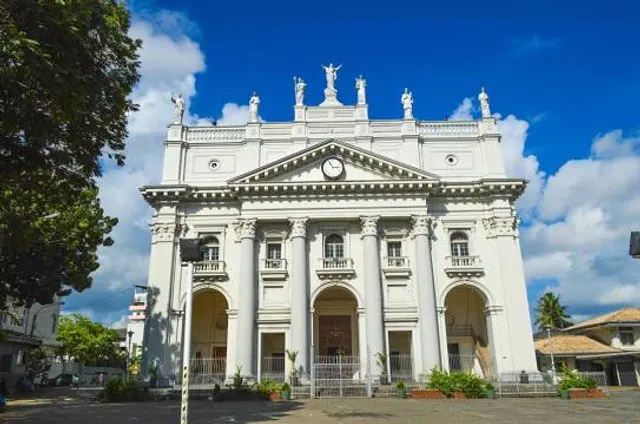
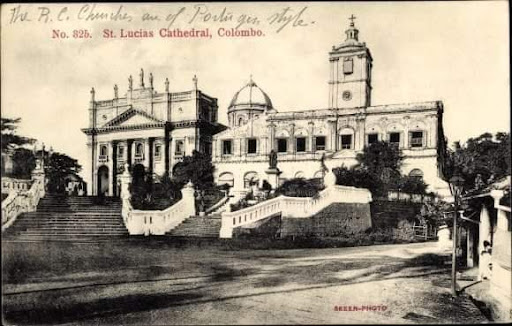
St Lucia’s Catherdral
The Catholics of Colombo, the churches outside the city, and even the fisher folk contributed their share to the building fund. The cathedral cost Rs 160,000 to build which was an enormous amount in the last century, yet totally funded by the pious generosity of the Ceylonese Catholics of the time. Towards the end of 1887 the main body of the cathedral was completed and the blessing of the cathedral took place in December of that year. However the building of the cathedral took 30 years and was completed in 1902 when the scaffoldings were finally dismantled and the site cleared. The succeeding generations of parishioners and parish priests continued to embellish the cathedral with exquisite statues and sacred vessels often shipped from Europe. After a succession of European priests Rev. Fr. Nereus Fernando became the first Sri Lankan parish priest of the cathedral in 1956. Under the dynamic leadership of Rev. Fr. Rufus Benedict the cathedral was prepared for its centenary which was celebrated in December 1987. St. Lucia’s Cathedral Kotahena is the legacy of parishioners whose fervent faith aspired to build this magnanimous tribute to God. At the threshold of yet another century the cathedral stands unsurpassed in beauty and in magnificence as it has always stood over the last one...
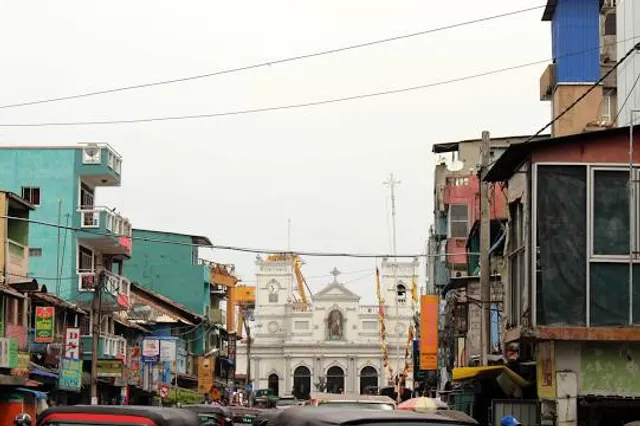
Read moreAt a distance of 3 km from Colombo Fort Railway Station, St. Lucia's Cathedral is a Roman Catholic Church located Kotahena locality of Colombo. The cathedral is considered the oldest and largest parish cathedral in Sri Lanka and among the top places to visit in Colombo.
St. Lucia's Cathedral is dedicated to saint martyr St. Lucia who is considered to be the protector against all kinds of eye trouble. This is the seat of the Archbishop of the Roman Catholic Archdiocese of Colombo. The cathedral was first built as a small chapel of wood in 1760 when Ceylon was under Dutch occupation. This small structure was later replaced by a more massive shrine made of brick and mortar in the year 1782. St. Lucia's Cathedral became the first church of Sri Lanka after it was detached from the jurisdiction of the Archbishop of Goa. A plan was made in 1872, to build a new cathedral which took roughly 30 years and was fully completed in the year 1902.
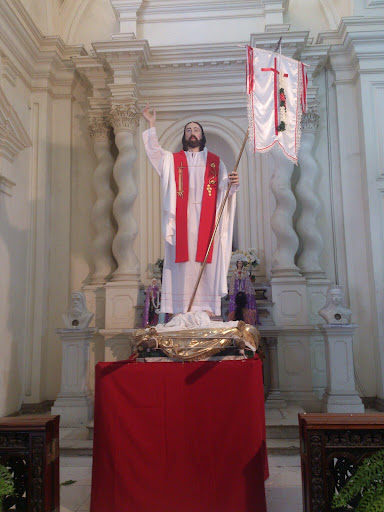
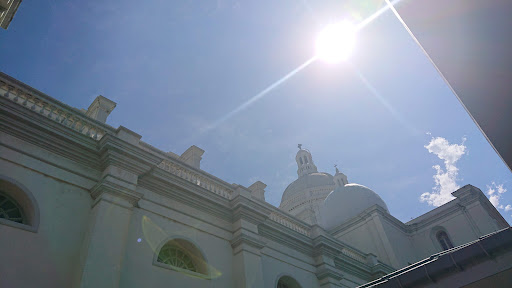
St Lucia's Cathedral is a massive structure built in the beautiful Gothic style of architecture. The facade of the church rests on massive ionic columns and it's adorned with seven statues. Silhouetted against the sky is the cross on the concrete lantern crowning the dome, the pinnacle of the cathedral. The interior consists of large statues of saints, beautiful wooden carvings and intricate glass stained windows. Rising above the main altar is a statue of Saint Lucy holding up her eyes on the palm of her hand. In front of the sanctuary, towards the left, one can see a dark-skinned statue of the Madonna referred to as 'Our Lady of Kotahena'.
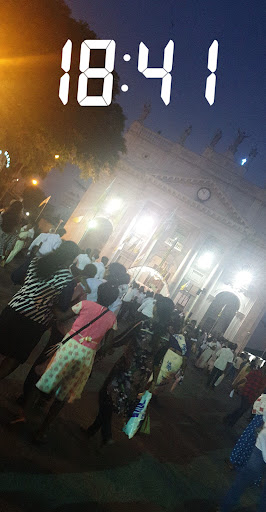
The highlight of the building is the 4300-pound bell named Anthony Thomas. The bell has intricate engravings of elaborate floral wreaths and holy figures and symbols of Christianity, and it is the largest of the four bells shipped from Marseilles and christened at the cathedral in 1903. It also has a unique pipe organ donated to the cathedral in 1934. This massive structure can easily host around 5000 worshippers.
Timings: 5.30 AM - 12 PM & 2 PM - 7 PM
Mass Timings: 6 AM, 7 AM and 6 PM from Monday to Friday & 5.30 AM (English), 7 AM (English), 8 AM (Sinhala), 9.15 AM (Tamil), 6 PM (English) on...
Read more