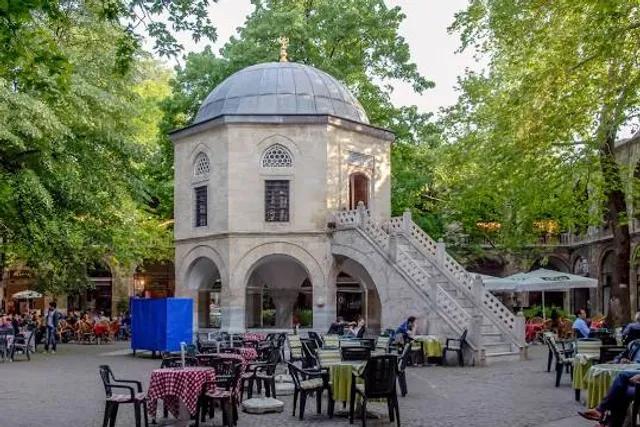
Koza Han, located between the Grand Mosque and Orhan Mosque in Bursa, was founded in 1491. It was constructed by Bayezid as one of the architects of the period, Abdül ula bin Pulat Şah, as a foundation for his works in Istanbul. Koza Han used to be a place where silk beetle cocoons were sold. Silk fabrics obtained from cocoons played the first role in Bursa becoming a textile center. Turks living in these lands for about 1000 years who express themselves as Greengrocers living in Bursa and its surroundings have been producing Silk Beetle for centuries. This tradition from Central Asia has been continued here as well. Silkworm production has decreased a lot in recent years due to synthetic (petroleum products) yarns and fabrics. However, silk fabrics produced with this important profession from our ancestors are indispensable materials for the fashion industry that wants to become a brand. The inn, which has two floors around a large, rectangular courtyard, has 95 rooms in the Koza Inn, there is a fountain under a small masjid in the middle. The rooms have now become stores. To the east of the inn, there is a second courtyard section called Outer Kozahan, where there are stables and warehouses, where the people who used to stay were bound to their horses. Names that changed in ancient times; Ceddid-i Evvel is Şimşek Hanı, Beylik Caravanserai, Beylik Hani, Cedid-i Amire and Yeni Kervansaray. Koza Han continues to contribute to the economy of Bursa in the field of silkmaking. In addition to the quality shops selling silk products on the upper floor, there are cafeterias on the lower floor. It is indispensable for Bursa for both visit, trade and relaxation.
Bursa’da Ulu Cami ile Orhan Cami arasında bulunan Koza Han 1491’de II. Bayezid tarafından dönemin mimarlarından Abdül ula bin Pulat Şah’a İstanbul’daki eserlerine vakıf olarak yapılmıştır. Koza Han eskiden ipek böceği kozalarının satışının yapıldığı bir yerdi.Kozalardan elde edilen ipek kumaşlar Bursa’nın tekstil merkezi olmasında ilk rolü oynamıştır. Bursa ve çevresinde yaşayan kendilerini Manavlar olarak ifade eden yaklaşık 1000 yıldır bu topraklarda yaşayan Türkler İpek Böceği üreticiliğini yüzyıllardır yapmaktadırlar. Ortaasya’dan gelen bu gelenek burada da sürdürülmüştür.Son yıllarda sentetik (petrol ürünlerinden elde edilen) iplik ve kumaşlar yüzünden ipekböceği üreticiliği çok azalmıştır. Ancak atalarımızdan gelen bu önemli meslek ile üretilen ipek kumaşlar marka olmak isteyen moda sanayi için vazgeçilmemesi gereken materyallerdir.Koza Hanın içinde geniş, dikdörtgen bir avlunun çevresinde iki katlı olan han 95 odalıdır, tam ortasında küçük bir mescidin altında bir şadırvan vardır. Odalar artık mağaza halini almıştır. Hanın doğusunda eskiden konaklamaya gelenlerin atlarını bağladıkları ahır ve depoların bulunduğu Dış Kozahan denilen ikinci bir avlulu bölüm vardır.Uzunçarşı’ya mavi çinilerle süslü bir taç kapı ile açılır.Bu süslü kapı açık çarşı ve kapalı çarşı’ya açılır. Eski zamanlarda değişen adları; Ceddid-i Evvel, Şimşek Hanı, Beylik Kervansarayı, Beylik Hanı, Cedid-i Amire ve Yeni Kervansaray’dır. Koza Han halen Bursa ekonomisine ipekçilik alanında katkılarını sürdürmektedir. Üst katında ipek mamüllerini satan kaliteli dükkanların yanısıra alt katta da kafeteryalar mevcuttur. Hem ziyaret,hem ticaret hem de dinlenmek için Bursa’nın...
Read moreKozahan was built by the great architect Abdul Ula Bin Pulat Sah as a foundation for historical works in Istanbul by the order of Ottoman Sultan Bayezid II in 1491.
Once upon a time, it was a place where pod (silkworm cocoon) was sold. The silk fabrics obtained the cocoons played the first role to be a textile center of Bursa. Approximately, having lived around Bursa for a thousand year and called as ‘’Greengrocers’’, Turks have made the production of pod for centuries. That tradition, sericulture comes from Central Asia.
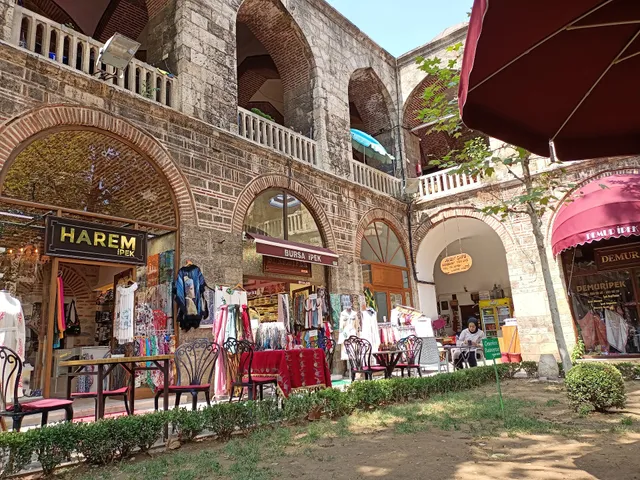
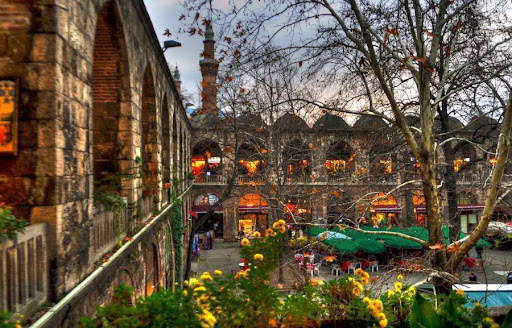
Being a masterpiece of Bursa, the heritage of Ottoman, the deep tissues of history, the taste of natural, the grace of silk and indispensable place for the photographer, Silk Market (Koza Han in Turkish) is two-storey han located on the rectangle yard.
There is found a sadirvan (water-tank with a fountain) with 95 rooms in the middle of that magnificent structure. The stores of Silk Bazaar contains high quality and cheap productions such as silk fabrics, silk scarfs, shawls, outfit materials, artistic goods, dowery, home textile products, underwear, silver and the other valuable souvenirs. In the east of the Han, there is placed the second yard named Dıs (Out) Koza Han. It is opened to Long Bazaar with its portal ornamented the blue charming tiles. At the past, it was named as Cedid-I Evvel, Simseh Hani, Beylik Caravansary, Beylik Han, Cedid-I Amire and New Caravansary.
Right behind it is the doorway to Koza Han. The structure composes of two breath taking floors in the typical Ottoman architecture with a courtyard in the middle. All is covered and arched and despite silk trade as such is no longer organized here, the shops selling silk garments, scarves and also some table silver are a glamour granny’s paradise.
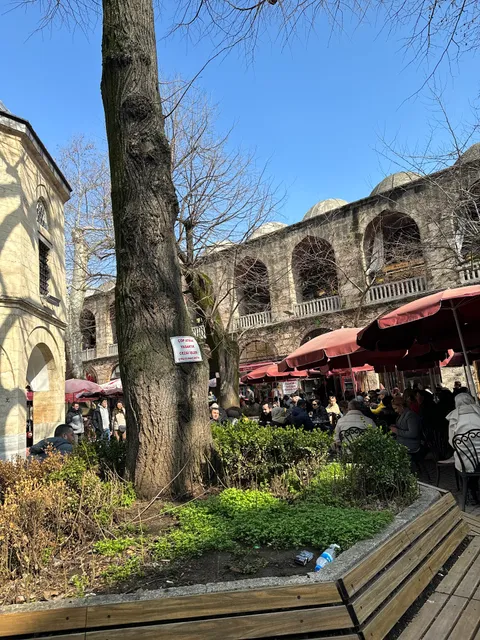
Except for those features, there are also found many modern cafes, restaurants,taverns for the visitors in order to entertain. People come here to sit either in the cafe under centuries old oak trees in the courtyard or on one of the tables and low sofas in niches opposite the shops where you can see the action below.
Today, it provides service for the visitors with its smiling and experienced tradesmen. Koza Han has been visited by domestic and foreign politicians, businessmen, governors, mayors and famous artists. Content Author ...
Read moreKoza Han is a historical site in Bursa, Turkey, known for being one of the oldest and most significant markets in Turkish history, especially renowned for its trade in silk. Constructed in 1491 during the Ottoman Empire by Sultan Bayezid II, its primary purpose was to bolster the silk trade, a crucial industry in the Ottoman economy at that time. The name "Koza Han" can be translated to "Silk Cocoon Market," indicating its original use as a center for silk cocoon trading.
Architecturally, Koza Han is a stunning example of Ottoman design. It is organized around a spacious courtyard, which is a common feature in Ottoman market design, providing a serene and communal atmosphere for trade and social interaction. The courtyard is surrounded by two levels of shops and storerooms, which back in the day, were bustling with silk merchants and craftsmen. A striking feature of the Han is its central fountain, which was historically used for both practical and ceremonial purposes.
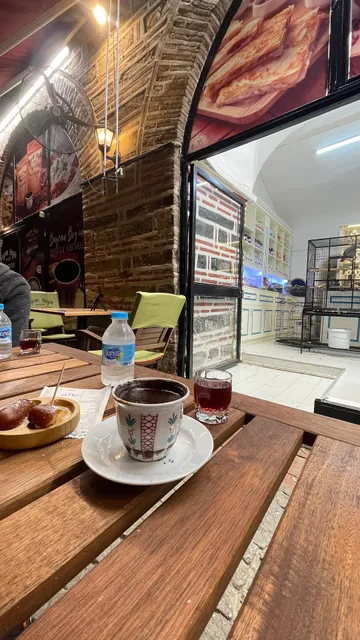
Over the centuries, Koza Han has retained its significance and charm, remaining a popular spot for both locals and tourists. Today, it houses a variety of shops selling not only silk but also other traditional Turkish goods and souvenirs. It's also a place where visitors can enjoy Turkish tea or coffee in its beautiful, historic setting, soaking in the atmosphere that bridges the past and present.
Koza Han is not just a market; it's a cultural and historical emblem of Bursa, reflecting the city's rich heritage in the silk trade and its pivotal role in the commercial history of the Ottoman Empire. For anyone visiting Bursa, Koza Han offers a unique glimpse into the past, where the spirit of Ottoman commerce lives on amidst its ancient walls and...
Read more