HTML SitemapExplore
logo
Find Things to DoFind The Best Restaurants

Castell Coch — Attraction in Great Britain

Name
Castell Coch
Description
Nearby attractions
Nearby restaurants
Ton Thai Street Food Cafe
2d Merthyr Rd, Cardiff CF15 7LF, United Kingdom
Kerbside Cafe
17 Merthyr Rd, Cardiff CF15 7LF, United Kingdom
Nearby hotels
Related posts
Keywords
Castell Coch tourism.Castell Coch hotels.Castell Coch bed and breakfast. flights to Castell Coch.Castell Coch attractions.Castell Coch restaurants.Castell Coch travel.Castell Coch travel guide.Castell Coch travel blog.Castell Coch pictures.Castell Coch photos.Castell Coch travel tips.Castell Coch maps.Castell Coch things to do.
Castell Coch things to do, attractions, restaurants, events info and trip planning
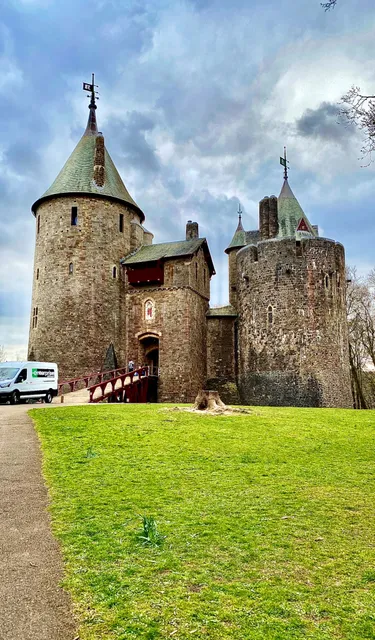
Castell Coch
United KingdomWalesGreat BritainCastell Coch

Basic Info

Castell Coch

Cardiff CF15 7JS, United Kingdom
4.6(2K)
Open until 5:00 PM
Save
spot

Ratings & Description

Info

Cultural
Scenic
Family friendly
Accessibility
attractions: , restaurants: Ton Thai Street Food Cafe, Kerbside Cafe
logoLearn more insights from Wanderboat AI.
Phone
+44 300 025 2239
Website
cadw.gov.wales
Open hoursSee all hours
Fri9:30 a.m. - 5 p.m.Open

Plan your stay

hotel
Pet-friendly Hotels in Great Britain
Find a cozy hotel nearby and make it a full experience.
hotel
Affordable Hotels in Great Britain
Find a cozy hotel nearby and make it a full experience.
hotel
The Coolest Hotels You Haven't Heard Of (Yet)
Find a cozy hotel nearby and make it a full experience.
hotel
Trending Stays Worth the Hype in Great Britain
Find a cozy hotel nearby and make it a full experience.

Reviews

Things to do nearby

Candlelight: Tribute to Green Day
Thu, Dec 11 • 7:00 PM
Charles Street, Cardiff, CF10 2SF
View details
Hike Brecon Beacons waterfalls from Cardiff
Fri, Dec 5 • 8:30 AM
Cardiff, CF10, United Kingdom
View details
Learn to paint like Bob Ross
Sat, Dec 6 • 11:00 AM
Cardiff, CF10 1FL, United Kingdom
View details

Nearby restaurants of Castell Coch

Ton Thai Street Food Cafe

Kerbside Cafe

Ton Thai Street Food Cafe

Ton Thai Street Food Cafe

4.7

(138)

Click for details
Kerbside Cafe

Kerbside Cafe

5.0

(59)

Click for details
Get the Appoverlay
Get the AppOne tap to find yournext favorite spots!
Wanderboat LogoWanderboat

Your everyday Al companion for getaway ideas

CompanyAbout Us
InformationAI Trip PlannerSitemap
SocialXInstagramTiktokLinkedin
LegalTerms of ServicePrivacy Policy

Get the app

© 2025 Wanderboat. All rights reserved.
logo

Reviews of Castell Coch

4.6
(2,031)
avatar
4.0
2y

The first castle on the Castell Coch site was probably built after 1081, during the Norman invasion of Wales.3 It formed one of a string of eight fortifications intended to defend the newly conquered town of Cardiff and control the route along the Taff Gorge.4] It took the form of a raised, earth-work motte, about 35 metres (115 ft) across at the base and 25 metres (82 ft) on the top, protected by the surrounding steep slopes.[5] The 16th-century historian Rice Merrick claimed that the castle was built by the Welsh lord Ifor ap Meurig, but there are no records of this phase of the castle's history and modern historians doubt this account.[6 The first castle was probably abandoned after 1093 when the Norman lordship of Glamorgan was created, changing the line of the frontier.4]

In 1267, Gilbert de Clare, who held the Lordship of Glamorgan, seized the lands around the town of Senghenydd in the north of Glamorgan from their native Welsh ruler.[48] Caerphilly Castle was built to control the new territory and Castell Coch—strategically located between Cardiff and Caerphilly—was reoccupied.[4 A new castle was built in stone around the motte, comprising a shell-wall, a projecting circular tower, a gatehouse and a square hall above an undercroft.3 The north-west section of the walls was protected by a talus and the sides of the motte were scarped to increase their angle, all producing a small but powerful fortification.4] Further work followed between 1268 and 1277, which added two large towers, a turning-bridge for the gatehouse and further protection to the north-west walls.[10

On Gilbert's death, the castle passed to his widow Joan and around this time it was referred to as Castrum Rubeum, Latin for "the Red Castle", probably after the colour of the Red sandstone defences.12 Gilbert's son, also named Gilbert, inherited the property in 1307.14] He died at the Battle of Bannockburn in 1314, triggering an uprising of the native Welsh in the region.[14] Castell Coch was probably destroyed by the rebels in July 1314, and possibly slighted to put it beyond any further use; it was not rebuilt and the site was abandoned.[14

Castell Coch remained derelict; the antiquarian John Leland, visiting around 1536, described it as "all in ruin, no big thing but high".14] The artist and illustrator Julius Caesar Ibbetson painted the castle in 1792, depicting substantial remains and a prominent tower, with a lime kiln in operation alongside the fortification.[16 Stone from the castle may have been robbed and used to feed the kilns during this period.18] A similar view was sketched by an unknown artist in the early 19th century, showing more trees around the ruins; a few years later, Robert Drane recommended the site as a place for picnics and noted its abundance in wild garlic.[1720]

The ruins were acquired by the Earls of Bute in 1760, when John Stuart, the 3rd Earl and, from 1794, the 1st Marquess, married Lady Charlotte Windsor, adding her estates in South Wales to his inheritance.[21] John's grandson, John Crichton-Stuart, developed the Cardiff Docks in the first half of the 19th century; although the docks were not especially profitable, they opened opportunities for the expansion of the coal industry in the South Wales valleys, making the Bute family extremely wealthy.[21 The 2nd Marquess carried out exploration for iron ore at Castell Coch in 1827 and considered establishing an ironworks there.23]

The 3rd Marquess of Bute, another John Crichton-Stuart, inherited the castle and the family estates as a child in 1848.[24 On his coming of age, Bute's landed estates and industrial inheritance made him one of the wealthiest men in the world.[26] He had a wide range of interests including archaeology, theology, linguistics and history.[26] Interest in medieval architecture increased in Britain during the 19th century, and in 1850 the antiquarian George Clark surveyed Castell Coch and published his findings, the first major scholarly work...

   Read more
avatar
4.0
11w

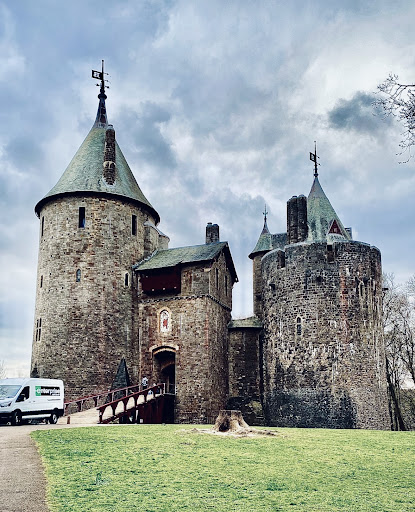
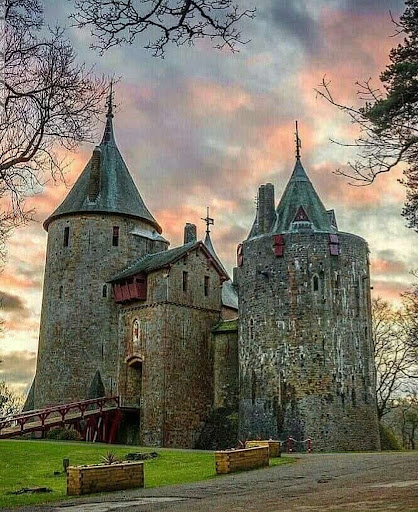
Castell Coch, located just outside Cardiff in the village of Tongwynlais, emerges dramatically from the dense beech woods that cover the slopes above the River Taff.

Its fairytale silhouette, with soaring conical towers and turreted walls, often appears to travelers as a fleeting vision from some distant legend.

The castle stands on the remains of earlier fortifications that traced their origins to the Norman period. Initially constructed shortly after 1081 by the Normans as part of a strategic network to defend Cardiff and command the river route through the Taff Gorge, the site soon fell into disuse.

Its resurgence came in the late 13th century when Gilbert de Clare, a powerful English nobleman, commissioned a new stone fortress. This medieval castle, robustly built atop the ancient motte, featured shell walls, defensive towers, and a gatehouse, all carefully crafted for security and dominance amidst the contested hills of Glamorgan.

However, its fortunes waned again after destructive uprisings in the early 14th century, leaving the structure ruined and dormant for centuries. By the mid-18th century, ownership of the land had passed through different aristocratic families before settling with the Stuart dynasty.

Inheriting the site in the 19th century, John Crichton-Stuart, the 3rd Marquess of Bute, possessed both prodigious wealth and a romantic imagination shaped by Victorian sensibilities. Of an eccentric and scholarly disposition, the Marquess engaged William Burges, a visionary architect, to redesign Castell Coch not as a stronghold, but as a luxurious retreat reflecting the evocative style of medieval fantasy.

Reconstruction commenced in 1875 and continued for years, breathing new life and purpose into the ruin. The resulting structure blends genuine medieval remnants with an extraordinary Gothic Revival overlay, transforming the Red Castle into a sanctuary of elaborate artistry and storytelling.

Within Castell Coch, the interiors are lavish and richly decorated, each chamber curated with ornate furnishings, colourful murals, hand-painted ceilings, and stained glass that epitomize Burges’ exuberant design philosophy.

Spaces such as the Drawing Room and Lady Bute’s Bedroom present splendid scenes that seem plucked straight from fairytales, with details celebrating myth, history, and Victorian craftsmanship alike.

The castle's exterior, flanked by the lush Fforest Fawr woodland, is equally enchanting, offering secluded walking trails and panoramic vistas over the Welsh countryside. Though completed as a private folly rather than a family home, it has enchanted generations of visitors and locals, frequently celebrated as one of Wales’s most beloved and picturesque landmarks.

Today, Castell Coch is widely considered the crowning glory of British Gothic Revival architecture, esteemed not only for its romantic form and interior opulence but also for its unique narrative.

It stands as a monument to the interplay of historical fidelity, Victorian fantasy, and industrial patronage, occasionally shrouded in mist or sunlight, always ready to transport those who approach into a world where legend and imagination are built into the very stones...

   Read more
avatar
5.0
1y

Paid an afternoon visit here on a weekend where the weather was lovely. I wondered whether the hour and a half I had available to me would be enough.. well, it was. Found free parking was a bit haphazard and unmarked in places, but at the time of my visit, there was enough parking, with plenty of spaces. A short uphill walk found me at the drawbridge to the castle entrance. A fantastic little castle to visit at a reasonable price. There are self guided tours and guide accompanied tours if you wish. You can get an electronic guide to 'zap' as you pass from one place to another in order to get further info. All in all a very worthwhile visit, great value and such a lovely castle to walk around. Now... there are negatives. Mobility impaired persons will have some difficulty. The carpark is just a short distance away from the castle, but the incline to and from it is something to bear in mind. The only entrance I saw INTO the castle is via a sleep drawbridge. Inside the castle, the courtyard is cobbled. Throughout the castle there are steep and narrow steps and in order to get to some of the rooms there is the likelihood of needing to stand aside for passing places. This unfortunately is NOT a place for wheelchair users, but otherwise, is well...

   Read more
Page 1 of 7
Previous
Next

Posts

Junel AhmedJunel Ahmed
The first castle on the Castell Coch site was probably built after 1081, during the Norman invasion of Wales.[3][4] It formed one of a string of eight fortifications intended to defend the newly conquered town of Cardiff and control the route along the Taff Gorge.[4] It took the form of a raised, earth-work motte, about 35 metres (115 ft) across at the base and 25 metres (82 ft) on the top, protected by the surrounding steep slopes.[5] The 16th-century historian Rice Merrick claimed that the castle was built by the Welsh lord Ifor ap Meurig, but there are no records of this phase of the castle's history and modern historians doubt this account.[6][7] The first castle was probably abandoned after 1093 when the Norman lordship of Glamorgan was created, changing the line of the frontier.[4] In 1267, Gilbert de Clare, who held the Lordship of Glamorgan, seized the lands around the town of Senghenydd in the north of Glamorgan from their native Welsh ruler.[4][3][8] Caerphilly Castle was built to control the new territory and Castell Coch—strategically located between Cardiff and Caerphilly—was reoccupied.[4][8] A new castle was built in stone around the motte, comprising a shell-wall, a projecting circular tower, a gatehouse and a square hall above an undercroft.[3][9] The north-west section of the walls was protected by a talus and the sides of the motte were scarped to increase their angle, all producing a small but powerful fortification.[4] Further work followed between 1268 and 1277, which added two large towers, a turning-bridge for the gatehouse and further protection to the north-west walls.[10][a] On Gilbert's death, the castle passed to his widow Joan and around this time it was referred to as Castrum Rubeum, Latin for "the Red Castle", probably after the colour of the Red sandstone defences.[12][13] Gilbert's son, also named Gilbert, inherited the property in 1307.[14] He died at the Battle of Bannockburn in 1314, triggering an uprising of the native Welsh in the region.[14] Castell Coch was probably destroyed by the rebels in July 1314, and possibly slighted to put it beyond any further use; it was not rebuilt and the site was abandoned.[14][15] Castell Coch remained derelict; the antiquarian John Leland, visiting around 1536, described it as "all in ruin, no big thing but high".[14] The artist and illustrator Julius Caesar Ibbetson painted the castle in 1792, depicting substantial remains and a prominent tower, with a lime kiln in operation alongside the fortification.[16][17] Stone from the castle may have been robbed and used to feed the kilns during this period.[18] A similar view was sketched by an unknown artist in the early 19th century, showing more trees around the ruins; a few years later, Robert Drane recommended the site as a place for picnics and noted its abundance in wild garlic.[17][19][20] The ruins were acquired by the Earls of Bute in 1760, when John Stuart, the 3rd Earl and, from 1794, the 1st Marquess, married Lady Charlotte Windsor, adding her estates in South Wales to his inheritance.[21] John's grandson, John Crichton-Stuart, developed the Cardiff Docks in the first half of the 19th century; although the docks were not especially profitable, they opened opportunities for the expansion of the coal industry in the South Wales valleys, making the Bute family extremely wealthy.[21][22] The 2nd Marquess carried out exploration for iron ore at Castell Coch in 1827 and considered establishing an ironworks there.[23] The 3rd Marquess of Bute, another John Crichton-Stuart, inherited the castle and the family estates as a child in 1848.[24][25] On his coming of age, Bute's landed estates and industrial inheritance made him one of the wealthiest men in the world.[26] He had a wide range of interests including archaeology, theology, linguistics and history.[26] Interest in medieval architecture increased in Britain during the 19th century, and in 1850 the antiquarian George Clark surveyed Castell Coch and published his findings, the first major scholarly work about the castle.
A J BashhaA J Bashha
Castell Coch, located just outside Cardiff in the village of Tongwynlais, emerges dramatically from the dense beech woods that cover the slopes above the River Taff. Its fairytale silhouette, with soaring conical towers and turreted walls, often appears to travelers as a fleeting vision from some distant legend. The castle stands on the remains of earlier fortifications that traced their origins to the Norman period. Initially constructed shortly after 1081 by the Normans as part of a strategic network to defend Cardiff and command the river route through the Taff Gorge, the site soon fell into disuse. Its resurgence came in the late 13th century when Gilbert de Clare, a powerful English nobleman, commissioned a new stone fortress. This medieval castle, robustly built atop the ancient motte, featured shell walls, defensive towers, and a gatehouse, all carefully crafted for security and dominance amidst the contested hills of Glamorgan. However, its fortunes waned again after destructive uprisings in the early 14th century, leaving the structure ruined and dormant for centuries. By the mid-18th century, ownership of the land had passed through different aristocratic families before settling with the Stuart dynasty. Inheriting the site in the 19th century, John Crichton-Stuart, the 3rd Marquess of Bute, possessed both prodigious wealth and a romantic imagination shaped by Victorian sensibilities. Of an eccentric and scholarly disposition, the Marquess engaged William Burges, a visionary architect, to redesign Castell Coch not as a stronghold, but as a luxurious retreat reflecting the evocative style of medieval fantasy. Reconstruction commenced in 1875 and continued for years, breathing new life and purpose into the ruin. The resulting structure blends genuine medieval remnants with an extraordinary Gothic Revival overlay, transforming the Red Castle into a sanctuary of elaborate artistry and storytelling. Within Castell Coch, the interiors are lavish and richly decorated, each chamber curated with ornate furnishings, colourful murals, hand-painted ceilings, and stained glass that epitomize Burges’ exuberant design philosophy. Spaces such as the Drawing Room and Lady Bute’s Bedroom present splendid scenes that seem plucked straight from fairytales, with details celebrating myth, history, and Victorian craftsmanship alike. The castle's exterior, flanked by the lush Fforest Fawr woodland, is equally enchanting, offering secluded walking trails and panoramic vistas over the Welsh countryside. Though completed as a private folly rather than a family home, it has enchanted generations of visitors and locals, frequently celebrated as one of Wales’s most beloved and picturesque landmarks. Today, Castell Coch is widely considered the crowning glory of British Gothic Revival architecture, esteemed not only for its romantic form and interior opulence but also for its unique narrative. It stands as a monument to the interplay of historical fidelity, Victorian fantasy, and industrial patronage, occasionally shrouded in mist or sunlight, always ready to transport those who approach into a world where legend and imagination are built into the very stones of its walls.
Adrian JonesAdrian Jones
A stunning, fully restored castle. If you really want to see what a castle was like in its glory day then there is nothing that will come close to this one. Originally built nearly 1000 years ago, it was restored 200 or so years ago to a fully functional castle with a tea room so you can go have lunch there. Sadly, a wedding was in progress when I went so I was unable to try the tea room. It also has an audible tour. The device is picked up from the gift shop and this allows you to have a voice educate you of the castles history if you dont feel like reading the charts on the walls. Parking is on site and free...also ample. Can probably take 60-80 cars but I can imagine on a bank holiday the place being very busy. Staff yet again were helpful and had a friendly attitude. The castle has restored rooms with, I imagine, expensive, original portrait paintings of the generations who onced owned the building. In all it was really impressive. A very large building in all but felt small for a castle. Not my favourite but the only restored castle ive seen. Worth starting here if your interested in visiting welsh heritage sites.
See more posts
See more posts
hotel
Find your stay

Pet-friendly Hotels in Great Britain

Find a cozy hotel nearby and make it a full experience.

The first castle on the Castell Coch site was probably built after 1081, during the Norman invasion of Wales.[3][4] It formed one of a string of eight fortifications intended to defend the newly conquered town of Cardiff and control the route along the Taff Gorge.[4] It took the form of a raised, earth-work motte, about 35 metres (115 ft) across at the base and 25 metres (82 ft) on the top, protected by the surrounding steep slopes.[5] The 16th-century historian Rice Merrick claimed that the castle was built by the Welsh lord Ifor ap Meurig, but there are no records of this phase of the castle's history and modern historians doubt this account.[6][7] The first castle was probably abandoned after 1093 when the Norman lordship of Glamorgan was created, changing the line of the frontier.[4] In 1267, Gilbert de Clare, who held the Lordship of Glamorgan, seized the lands around the town of Senghenydd in the north of Glamorgan from their native Welsh ruler.[4][3][8] Caerphilly Castle was built to control the new territory and Castell Coch—strategically located between Cardiff and Caerphilly—was reoccupied.[4][8] A new castle was built in stone around the motte, comprising a shell-wall, a projecting circular tower, a gatehouse and a square hall above an undercroft.[3][9] The north-west section of the walls was protected by a talus and the sides of the motte were scarped to increase their angle, all producing a small but powerful fortification.[4] Further work followed between 1268 and 1277, which added two large towers, a turning-bridge for the gatehouse and further protection to the north-west walls.[10][a] On Gilbert's death, the castle passed to his widow Joan and around this time it was referred to as Castrum Rubeum, Latin for "the Red Castle", probably after the colour of the Red sandstone defences.[12][13] Gilbert's son, also named Gilbert, inherited the property in 1307.[14] He died at the Battle of Bannockburn in 1314, triggering an uprising of the native Welsh in the region.[14] Castell Coch was probably destroyed by the rebels in July 1314, and possibly slighted to put it beyond any further use; it was not rebuilt and the site was abandoned.[14][15] Castell Coch remained derelict; the antiquarian John Leland, visiting around 1536, described it as "all in ruin, no big thing but high".[14] The artist and illustrator Julius Caesar Ibbetson painted the castle in 1792, depicting substantial remains and a prominent tower, with a lime kiln in operation alongside the fortification.[16][17] Stone from the castle may have been robbed and used to feed the kilns during this period.[18] A similar view was sketched by an unknown artist in the early 19th century, showing more trees around the ruins; a few years later, Robert Drane recommended the site as a place for picnics and noted its abundance in wild garlic.[17][19][20] The ruins were acquired by the Earls of Bute in 1760, when John Stuart, the 3rd Earl and, from 1794, the 1st Marquess, married Lady Charlotte Windsor, adding her estates in South Wales to his inheritance.[21] John's grandson, John Crichton-Stuart, developed the Cardiff Docks in the first half of the 19th century; although the docks were not especially profitable, they opened opportunities for the expansion of the coal industry in the South Wales valleys, making the Bute family extremely wealthy.[21][22] The 2nd Marquess carried out exploration for iron ore at Castell Coch in 1827 and considered establishing an ironworks there.[23] The 3rd Marquess of Bute, another John Crichton-Stuart, inherited the castle and the family estates as a child in 1848.[24][25] On his coming of age, Bute's landed estates and industrial inheritance made him one of the wealthiest men in the world.[26] He had a wide range of interests including archaeology, theology, linguistics and history.[26] Interest in medieval architecture increased in Britain during the 19th century, and in 1850 the antiquarian George Clark surveyed Castell Coch and published his findings, the first major scholarly work about the castle.
Junel Ahmed

Junel Ahmed

hotel
Find your stay

Affordable Hotels in Great Britain

Find a cozy hotel nearby and make it a full experience.

Get the Appoverlay
Get the AppOne tap to find yournext favorite spots!
Castell Coch, located just outside Cardiff in the village of Tongwynlais, emerges dramatically from the dense beech woods that cover the slopes above the River Taff. Its fairytale silhouette, with soaring conical towers and turreted walls, often appears to travelers as a fleeting vision from some distant legend. The castle stands on the remains of earlier fortifications that traced their origins to the Norman period. Initially constructed shortly after 1081 by the Normans as part of a strategic network to defend Cardiff and command the river route through the Taff Gorge, the site soon fell into disuse. Its resurgence came in the late 13th century when Gilbert de Clare, a powerful English nobleman, commissioned a new stone fortress. This medieval castle, robustly built atop the ancient motte, featured shell walls, defensive towers, and a gatehouse, all carefully crafted for security and dominance amidst the contested hills of Glamorgan. However, its fortunes waned again after destructive uprisings in the early 14th century, leaving the structure ruined and dormant for centuries. By the mid-18th century, ownership of the land had passed through different aristocratic families before settling with the Stuart dynasty. Inheriting the site in the 19th century, John Crichton-Stuart, the 3rd Marquess of Bute, possessed both prodigious wealth and a romantic imagination shaped by Victorian sensibilities. Of an eccentric and scholarly disposition, the Marquess engaged William Burges, a visionary architect, to redesign Castell Coch not as a stronghold, but as a luxurious retreat reflecting the evocative style of medieval fantasy. Reconstruction commenced in 1875 and continued for years, breathing new life and purpose into the ruin. The resulting structure blends genuine medieval remnants with an extraordinary Gothic Revival overlay, transforming the Red Castle into a sanctuary of elaborate artistry and storytelling. Within Castell Coch, the interiors are lavish and richly decorated, each chamber curated with ornate furnishings, colourful murals, hand-painted ceilings, and stained glass that epitomize Burges’ exuberant design philosophy. Spaces such as the Drawing Room and Lady Bute’s Bedroom present splendid scenes that seem plucked straight from fairytales, with details celebrating myth, history, and Victorian craftsmanship alike. The castle's exterior, flanked by the lush Fforest Fawr woodland, is equally enchanting, offering secluded walking trails and panoramic vistas over the Welsh countryside. Though completed as a private folly rather than a family home, it has enchanted generations of visitors and locals, frequently celebrated as one of Wales’s most beloved and picturesque landmarks. Today, Castell Coch is widely considered the crowning glory of British Gothic Revival architecture, esteemed not only for its romantic form and interior opulence but also for its unique narrative. It stands as a monument to the interplay of historical fidelity, Victorian fantasy, and industrial patronage, occasionally shrouded in mist or sunlight, always ready to transport those who approach into a world where legend and imagination are built into the very stones of its walls.
A J Bashha

A J Bashha

hotel
Find your stay

The Coolest Hotels You Haven't Heard Of (Yet)

Find a cozy hotel nearby and make it a full experience.

hotel
Find your stay

Trending Stays Worth the Hype in Great Britain

Find a cozy hotel nearby and make it a full experience.

A stunning, fully restored castle. If you really want to see what a castle was like in its glory day then there is nothing that will come close to this one. Originally built nearly 1000 years ago, it was restored 200 or so years ago to a fully functional castle with a tea room so you can go have lunch there. Sadly, a wedding was in progress when I went so I was unable to try the tea room. It also has an audible tour. The device is picked up from the gift shop and this allows you to have a voice educate you of the castles history if you dont feel like reading the charts on the walls. Parking is on site and free...also ample. Can probably take 60-80 cars but I can imagine on a bank holiday the place being very busy. Staff yet again were helpful and had a friendly attitude. The castle has restored rooms with, I imagine, expensive, original portrait paintings of the generations who onced owned the building. In all it was really impressive. A very large building in all but felt small for a castle. Not my favourite but the only restored castle ive seen. Worth starting here if your interested in visiting welsh heritage sites.
Adrian Jones

Adrian Jones

See more posts
See more posts