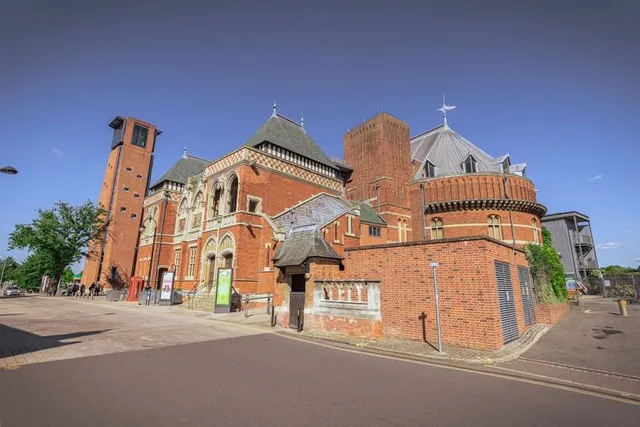
The tricentenary of Shakespeare's birth in 1864 gave impetus for a permanent memorial to him in his hometown. The original Shakespeare Memorial Theatre came about through the campaigning efforts and donations of Edward Fordham Flower and his son Charles Edward Flower, owners of a local brewery business in Stratford, and important figures in local political affairs, due to their efforts, the first theatre was opened on the banks of the Avon on 19 April 1879.2 It was a Victorian Gothic structure, designed by William Unsworth and Edward Dodgshun.[4]
The original theatre was gutted by fire on 6 March 1926.[5] The new Shakespeare Memorial Theatre opened in 1932 on a site adjacent to the original.[6] The architect was Elisabeth Scott, so the theatre became the first important building erected in Britain from the designs of a woman architect.[7] It was renamed the Royal Shakespeare Theatre in 1961, following the establishment of the Royal Shakespeare Company the previous year.[4]
In the building designed by Scott, the theatre had a proscenium-arch stage, and a seating capacity of about 1,400 people, on three tiers (stalls, circle and balcony). Two tiers of seating were later added to the side walls of the theatre and the stage extended beyond the proscenium, by means of an 'apron'. Balcony seats could only be accessed by means of a staircase to the side of the building, separate from the main foyer and bar. The theatre has several notable Art Deco features, including the staircase and corridors at either side of the auditorium. It is a Grade II* listed building.[3]
The current theatre complex includes the remains of the original 1879 theatre, which was rebuilt and incorporated into Scott's building to serve as a conference centre and rehearsal room. Since 1986 it has been used by the Swan Theatre.[5]
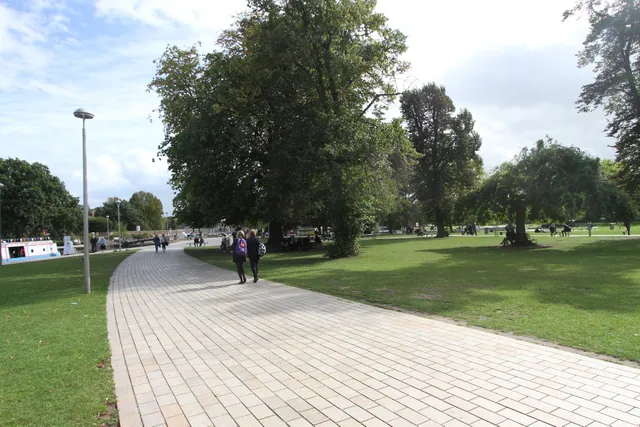
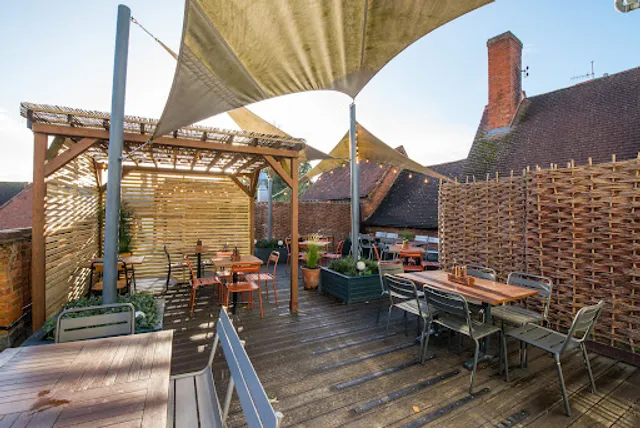
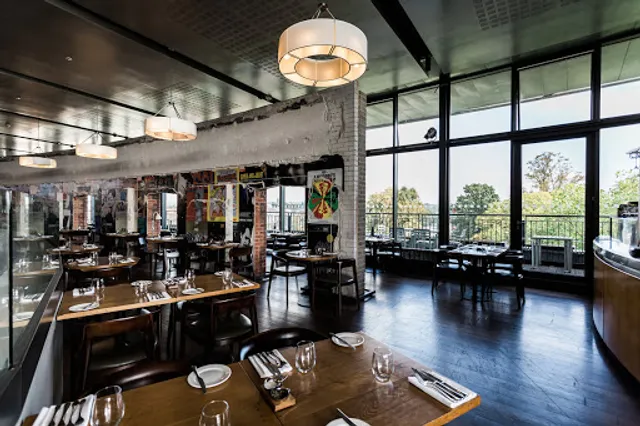
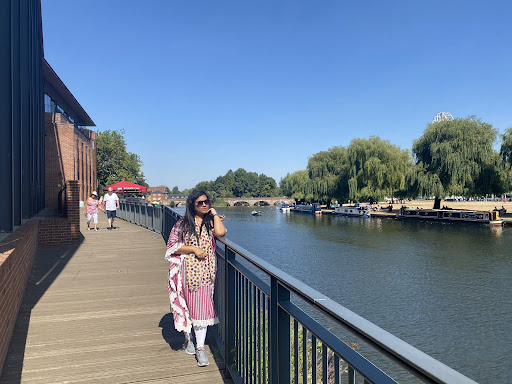
The Royal Shakespeare and Swan Theatres are on the western bank of the River Avon, with the adjacent Bancroft Gardens providing a scenic riverside setting. The Rooftop Restaurant and Bar overlooks both the river and the Bancroft Gardens.
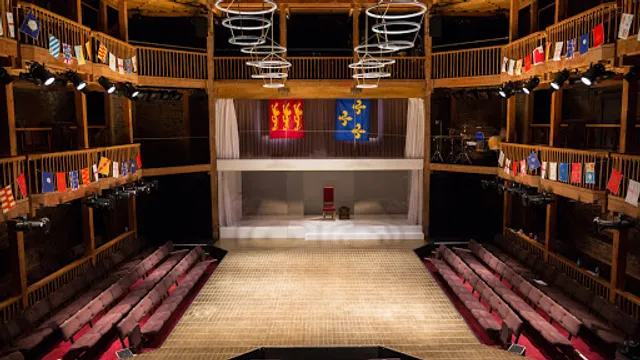
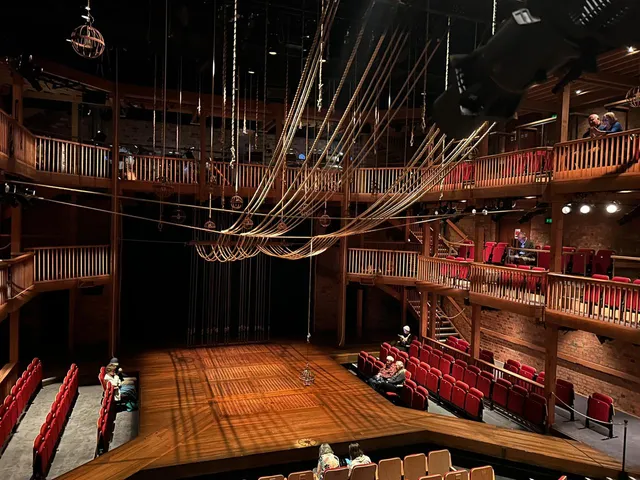
The Royal Shakespeare Company had renovated the Royal Shakespeare Theatre as part of a £112.8m Transformation project which included the creation of a new 1040+ seat, thrust stage auditorium which brought actors and audiences closer together, with the distance of the furthest seat from the stage being reduced from 27 metres (89 ft) to 15 metres (49 ft). The Transformation project also included improvements to the Swan Theatre, the creation of an array of new public spaces, including a new Riverside Cafe and Rooftop Restaurant, a 36-metre (118 ft) observation tower, and improved backstage conditions for the actors and crew.[1] The new theatre is also more accessible to people with disabilities and offers a more comfortable...
Read moreA Heartfelt Thank You to the Entire RSC Team!
Today, my family and I attended the relaxed performance of The Winter’s Tale on Thursday 7 August at 1:15pm, and I can honestly say it was one of the most moving, supportive, and inspiring experiences we’ve ever had.
From the moment my mother spoke over the phone with Julie from Bridge, to the moment we left the theatre, the care and compassion shown by every member of staff was nothing short of extraordinary. I would like to give a special mention to Amy W, Ashie, the gentleman steward on the circle doors (with whom I had a deeply appreciated conversation), and every other team member who went above and beyond to ensure my 9-year-old autistic, pre-verbal nephew, currently awaiting an ADHD assessment, could not only attend, but truly access and enjoy the performance.
As someone who has worked in education and mental health for over 20 years, I was genuinely stunned, not only by the thoughtful, consistent adjustments made (including advance notice of strobe lighting and on-stage fire), but by the sincerity and humility of the team. When I expressed our deep appreciation, every staff member simply responded, “It’s our role, especially during a relaxed performance, to make sure everyone can be present.” That ethos, that standard, is something I rarely see even in professional education settings. It left a mark.
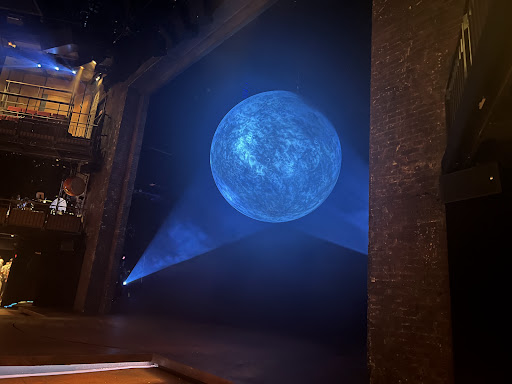
As for the performance itself? Breathtaking. Bold staging, extraordinary music, dancing, and deeply felt acting, all delivered with artistic excellence that stayed with us long after the curtain closed. I’m now unofficially campaigning for the soundtrack to be uploaded to Apple Music, the live score and singing was simply magnificent. As a former English teacher, I have not seen such an engaging Shakespeare production (I have also run an educational project at the Globe Theatre)
From beginning to end, the Royal Shakespeare Company made this a magical experience, and gave my family, and especially my nephew, something precious during a short summer getaway from London.
To the entire team at the RSC: Thank you. You didn’t just host us. You welcomed us. You held us. And you reminded me what inclusion and artistry can look like at their very best.
We look forward to returning again and again.
With...
Read moreWheelchair accessible - a few wheelchair spaces in each theatre. If you use a rollator you have to leave it in the foyer and walk unaided into the theatre. Wheelchair accessible loo in the foyer but it has one of those accessible locks that aren't remotely secure. If anyone waggles the lock to see if the loo is free the door WILL open (to the horror of everyone!). So get someone to guard the door or if you're ambulant leave your chair right outside the door. If you're seeing a play in the Swan theatre there's also an accessible loo in the theatre by the lift that takes you to the foyer. It's very busy before performances and during the interval and people aren't hugely mindful of wheelchairs so be prepared for this. The wheelchair spaces in the theatres are also quite small and my powerchair is large enough to block access to the row - so I'm constantly moving around to let people in and out. Reduced price tickets for disabled people and free companion tickets. Staff awareness/training around disability isn't great - have been referred to as "a wheelchair" and if you want to use the accessible loo in the foyer if you're in the Swan theate you have to join the queue and go through the bag checks every time you cross the foyer (no whiff of the disabled people don't queue attitude in France). This means there's only time for a loo break in the interval because the bag check queues are long and slow. I have asked if I can skip the queue because my bag has been checked 3 times already but staff were NOPE and didn't seem to grasp that there's only one accessible loo in the foyer whereas there are multiple non-accessible loos. There are some accessible parking spaces outside the theatre but you generally need to arrive early to get one of these and if you have a WAV others might not leave space for ramp access. There's a lift to the bar and restaurant and an accessible loo on this floor. The restaurant is a bit tightly packed with tables but we've made it work. Plenty of gluten free options on the restaurant menu and...
Read more