HTML SitemapExplore
logo
Find Things to DoFind The Best Restaurants

Man in the Sea Museum — Attraction in Panama City Beach

Name
Man in the Sea Museum
Description
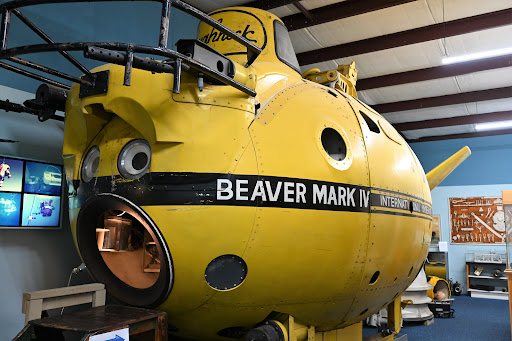
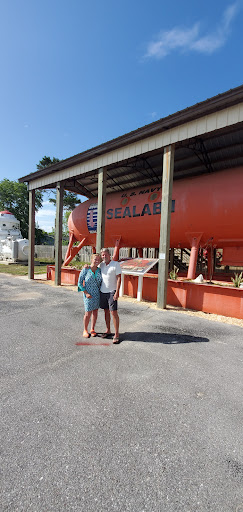
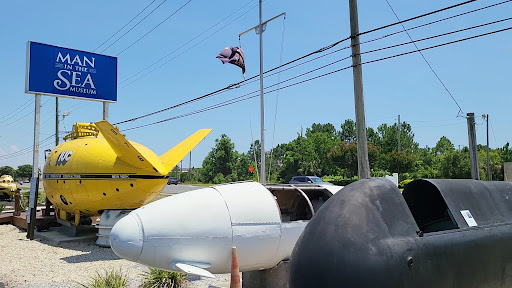
The Man in the Sea Museum is located at 17314 Panama City Beach Parkway, Panama City Beach, Florida. It has exhibits and documents related to the history of diving. Some of these exhibits include U.S. Navy SEALAB I, Commercial Diving, Underwater Submersibles, and Assorted Underwater Masks and Helmets.
Nearby attractions
Scott Field Park
277-291 Circle Dr, Panama City Beach, FL 32413
Panama City Beach
17001 Panama City Beach Pkwy, Panama City, FL 32413
Nearby restaurants
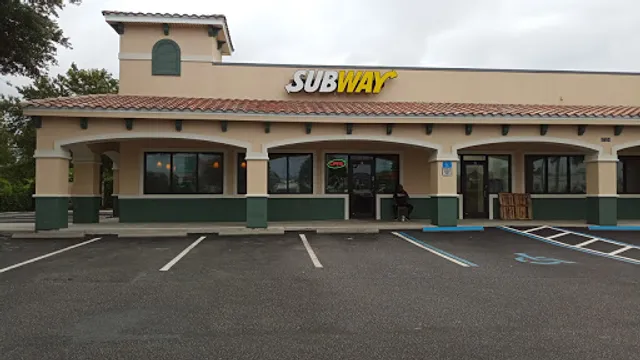
Subway
17304 Panama Beach Pky, US-98, Panama City, FL 32413, United States
Taco Bell
17120 Panama City Beach Pkwy, Panama City Beach, FL 32413
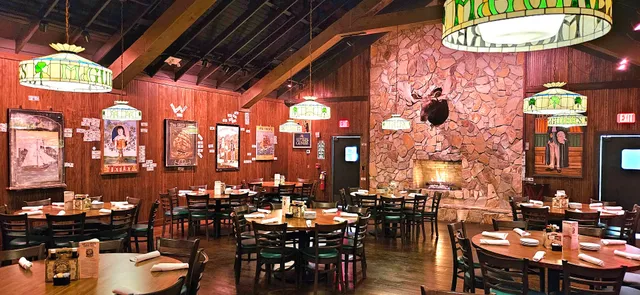
McGuire's Irish Pub
17290 Front Beach Rd, Panama City Beach, FL 32413
Waffle House
17110 Back Beach Rd, Panama City Beach, FL 32413
Burger King
17112 Panama City Beach Pkwy, Panama City Beach, FL 32413
Salty Sue's Restaurant
17501 Panama City Beach Pkwy, Panama City Beach, FL 32413
Coconuts Restaurant
17458 Front Beach Rd, Panama City Beach, FL 32413
Colombian Grill House
207 S Arnold Rd, Panama City Beach, FL 32413
Pizza Hut
17292 Front Beach Rd, Panama City Beach, FL 32413
Dragon Wok & Roll Ice Cream
280 S Arnold Rd, Panama City Beach, FL 32413
Nearby hotels
Blue Swell Rentals and Real Estate
17633 Ashley Dr Bldg B, Panama City Beach, FL 32413
The Sandpiper Beacon Beach Resort
17403 Front Beach Rd #126, Panama City Beach, FL 32413
Candlewood Suites Panama City Beach Pier by IHG
16920 Panama City Beach Pkwy, Panama City Beach, FL 32413
Horizon South 1 Home Owners Association
17462 Front Beach Rd # 451, Panama City, FL 32413
Palmetto Beachfront Hotel
17255 Front Beach Rd, Panama City Beach, FL 32413
Palazzo Condominiums by Vacasa
17281 Front Beach Rd, Panama City Beach, FL 32413
Related posts
Keywords
Man in the Sea Museum tourism.Man in the Sea Museum hotels.Man in the Sea Museum bed and breakfast. flights to Man in the Sea Museum.Man in the Sea Museum attractions.Man in the Sea Museum restaurants.Man in the Sea Museum travel.Man in the Sea Museum travel guide.Man in the Sea Museum travel blog.Man in the Sea Museum pictures.Man in the Sea Museum photos.Man in the Sea Museum travel tips.Man in the Sea Museum maps.Man in the Sea Museum things to do.
Man in the Sea Museum things to do, attractions, restaurants, events info and trip planning
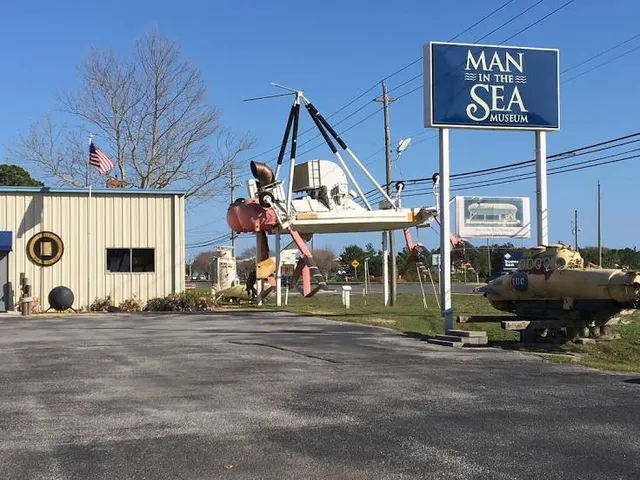
Man in the Sea Museum
United StatesFloridaPanama City BeachMan in the Sea Museum

Basic Info

Man in the Sea Museum

17314 Panama City Beach Pkwy, Panama City Beach, FL 32413
4.8(350)
Open until 4:00 PM
Save
spot

Ratings & Description

Info

The Man in the Sea Museum is located at 17314 Panama City Beach Parkway, Panama City Beach, Florida. It has exhibits and documents related to the history of diving. Some of these exhibits include U.S. Navy SEALAB I, Commercial Diving, Underwater Submersibles, and Assorted Underwater Masks and Helmets.

Cultural
Entertainment
Family friendly
Accessibility
attractions: Scott Field Park, Panama City Beach, restaurants: Subway, Taco Bell, McGuire's Irish Pub, Waffle House, Burger King, Salty Sue's Restaurant, Coconuts Restaurant, Colombian Grill House, Pizza Hut, Dragon Wok & Roll Ice Cream
logoLearn more insights from Wanderboat AI.
Phone
(850) 235-4101
Website
maninthesea.org
Open hoursSee all hours
Wed10 AM - 4 PMOpen

Plan your stay

hotel
Pet-friendly Hotels in Panama City Beach
Find a cozy hotel nearby and make it a full experience.
hotel
Affordable Hotels in Panama City Beach
Find a cozy hotel nearby and make it a full experience.
hotel
The Coolest Hotels You Haven't Heard Of (Yet)
Find a cozy hotel nearby and make it a full experience.
hotel
Trending Stays Worth the Hype in Panama City Beach
Find a cozy hotel nearby and make it a full experience.

Reviews

Nearby attractions of Man in the Sea Museum

Scott Field Park

Panama City Beach

Scott Field Park

Scott Field Park

4.4

(81)

Open until 8:30 PM
Click for details
Panama City Beach

Panama City Beach

4.8

(151)

Open until 5:00 PM
Click for details

Things to do nearby

Create glass art
Create glass art
Fri, Dec 12 • 1:00 PM
Panama City Beach, Florida, 32407
View details
The Nutcracker by Panama City Ballet
Sun, Dec 14 • 2:00 PM
550 Alf Coleman Road, Panama City Beach, FL 32407
View details
E-Bike Tour: Alligators, Pier, & More
Wed, Dec 10 • 10:30 AM
Panama City Beach, Florida, 32408
View details

Nearby restaurants of Man in the Sea Museum

Subway

Taco Bell

McGuire's Irish Pub

Waffle House

Burger King

Salty Sue's Restaurant

Coconuts Restaurant

Colombian Grill House

Pizza Hut

Dragon Wok & Roll Ice Cream

Subway

Subway

3.8

(256)

$

Click for details
Taco Bell

Taco Bell

3.8

(943)

$

Click for details
McGuire's Irish Pub

McGuire's Irish Pub

4.8

(1.0K)

$$

Click for details
Waffle House

Waffle House

4.3

(1.0K)

Click for details
Get the Appoverlay
Get the AppOne tap to find yournext favorite spots!
Wanderboat LogoWanderboat

Your everyday Al companion for getaway ideas

CompanyAbout Us
InformationAI Trip PlannerSitemap
SocialXInstagramTiktokLinkedin
LegalTerms of ServicePrivacy Policy

Get the app

© 2025 Wanderboat. All rights reserved.
logo

Reviews of Man in the Sea Museum

4.8
(350)
avatar
5.0
4y

MORE THAN A MUSEUM; A FRIENDLY DESTINATION. I tend to pass by the site twice monthly while bouncing back-and-forth between Panama City and New Orleans. The first time I stopped in, I was on a tight timeline, so I just did a quick walk-through and liked it so much, I bought a family membership. Today, I had a three-hour layover of sorts, so I was able to get the full experience. Bottom line up front -- I recommend two hours, minimum, to really maximize the experience.

For a proper visit, you'll want to first watch the 55-minute documentary, which is fascinating, and well-worth the time invested. This will walk you through the whole history of the creation of underwater habitats, and also what it took to get us to where we are now in terms of the ability to be able to live and work underwater for weeks on end.

After the documentary, the museum's dedicated docents, Carl and Jackie, both retired military divers and clearly subject-matter-experts, will answer any questions you may have and provide additional context. It was funny, because after watching the documentary (which was a bit of a nail-biter at times), they seemed to anticipate my question regarding SEALAB III. We had a very candid and enlightening discussion about the good. the bad, and the ugly, regarding the undersea programs' successes and struggles.

The museum itself is unusually warm, accommodating, hands-on, and family-friendly. Guests are strongly encouraged to touch anything and everything on display, there are opportunities to venture inside an actual submarine indoors, and the walk-through of the original SEALAB outside is not to be missed. The complimentary snacks and drinks are a nice touch and so are the kids' tables with crayons and coloring books, etc. As odd as it may sound, even the bathrooms are homey, with some top-notch accoutrements, provided by donors and volunteers. (That's not something you see in many museums.)

I, too, am retired military and as a recreational Divemaster, have spent a fair amount of time underwater across several continents. So naturally, this is all right up my alley. But for those who aren't as "immersed" in this (if you will), the museum still tells an amazing story of exploration and human achievement. Again, I recommend budgeting enough time to watch the video, because after doing so, you'll be able to see just how all nearly every element on display fits into the overall picture, and you'll enjoy the experience that much more.

One of the biggest takeaways, for me, was from an interview in the documentary with a former NASA astronaut, who later lived and worked beneath the waves as one of the pioneers of the original SEALAB. It was preceded by the usual talking points about how 75% of the earth is covered by the oceans, 95% of which remains unexplored. (We get this.) But what I hadn't ever considered was he said in response -- that while the oceans may be vast, and their depths often daunting, the oceans' furthest reaches "are still a million times closer to us, than the moon."

This statement, to me, makes not only a very strong argument for continued undersea exploration, but also illustrates why it may be of great value for us regular folks to take an afternoon to see this museum, and understand why its overall story is so important and relevant to the...

   Read more
avatar
5.0
3y

My wife and I come down every year for vacation and this was our first year we finally visited, and we're so glad we did. We came in at 2:30pm on Wednesday 13 April 2022.

There are so many things to see you will need a minimum of 2-1/2 to 3 hours to see it and really appreciate it.

This is the now home of the original SeaLab, and with the help of the friendly staff we got alot of information regarding the history of Navy divers and the first Aquanauts.

There is a 50 minute video which tells the fascinating history of SeaLab and the bada$$ divers and crews who risked their lives in the exploration of the oceans of the world.

There are many original diving suits and other artifacts which showcase the history of diving, and it's actually too much to absorb in one visit. Luckily many of the staff are former Navy divers and they can give you some great insight into many details regarding previous explorers/divers and diving equipment and gear.

There is a very small $6 admittance fee for military and veterans. If you are a former Navy guy or any prior military service this is a must see destination.

They have drinks, snacks, souvenirs including cool T-shirts and sweaters and hats.

A couple of the staff I need to mention are Tim and Carl, both ex-Navy divers, and they have some cool stories to tell.

I would especially like to thank Tim for sharing some of his personal sea-stories from his pursuits in the Navy, and for walking us through many of the different parts of the museum and explaining many stories behind the museum and it's history.

For those of you who are curious this was not only a special treat for me as a former Navy guy, but my wife really enjoyed it very much. I was really tickled how much she enjoyed it and keeps talking about it.

Also, this is a 501c organization and so all proceeds go directly back into the museum.

I cannot overstate how much I recommend a visit here. We will definitely return as there is so much to see. Also I could talk to the staff all day, what a wonderful crew they have!

Thanks again Tim and Carl (Tim is pictured with us).

Bill...

   Read more
avatar
5.0
1y

Spectacular! A must for any Scuba Diver, Navy Diver, or history buff interested in diving, deep diving, under sea labs, the history and research of deep diving and the United States Navy which has a Diving Base here in Panama City. Most of the United States early dive research and the under sea labs is in the parking lot. In the museum the central room has a timeline for the research and dive labs with models and a video that reviews the entire history. Many of the employees worked in the Navy Dive Labs and experiments with scuba gear, helox diving and hydrogen mix diving. They come in after the film and answer questions. Surrounding the central rooms are exhibits and almost all the dive gear invented, developed and used since the 1960s as well as the history of diving back to the 1500's. Another exhibits shows how military diving works including secret missions and rescue missions. I was most impressed with the heavy old dive helmets and gear, how they were hooked up for sound and video and how thy got smaller as progress was made. Most of the work was done long before computers. Another good exhibit was about rescuing people and salvaging ships after the Pearl Harbor Attack, December 7, 1941. Some of the gear was setup so you could take photos wearing the old helmets and you can enter the first Sealab in the parking lot. The facility was spotlessly clean and they have a nice gift shop. Ages 12 to 99 with an interest in the Oceans, Submarines and diving will have a great visit. This museum gets my highest recommendation.

Todd W. Byars Civilian SCUBA...

   Read more
Page 1 of 7
Previous
Next

Posts

michael doughertymichael dougherty
MORE THAN A MUSEUM; A FRIENDLY DESTINATION. I tend to pass by the site twice monthly while bouncing back-and-forth between Panama City and New Orleans. The first time I stopped in, I was on a tight timeline, so I just did a quick walk-through and liked it so much, I bought a family membership. Today, I had a three-hour layover of sorts, so I was able to get the full experience. Bottom line up front -- I recommend two hours, minimum, to really maximize the experience. For a proper visit, you'll want to first watch the 55-minute documentary, which is fascinating, and well-worth the time invested. This will walk you through the whole history of the creation of underwater habitats, and also what it took to get us to where we are now in terms of the ability to be able to live and work underwater for weeks on end. After the documentary, the museum's dedicated docents, Carl and Jackie, both retired military divers and clearly subject-matter-experts, will answer any questions you may have and provide additional context. It was funny, because after watching the documentary (which was a bit of a nail-biter at times), they seemed to anticipate my question regarding SEALAB III. We had a very candid and enlightening discussion about the good. the bad, and the ugly, regarding the undersea programs' successes and struggles. The museum itself is unusually warm, accommodating, hands-on, and family-friendly. Guests are strongly encouraged to touch anything and everything on display, there are opportunities to venture inside an actual submarine indoors, and the walk-through of the original SEALAB outside is not to be missed. The complimentary snacks and drinks are a nice touch and so are the kids' tables with crayons and coloring books, etc. As odd as it may sound, even the bathrooms are homey, with some top-notch accoutrements, provided by donors and volunteers. (That's not something you see in many museums.) I, too, am retired military and as a recreational Divemaster, have spent a fair amount of time underwater across several continents. So naturally, this is all right up my alley. But for those who aren't as "immersed" in this (if you will), the museum still tells an amazing story of exploration and human achievement. Again, I recommend budgeting enough time to watch the video, because after doing so, you'll be able to see just how all nearly every element on display fits into the overall picture, and you'll enjoy the experience that much more. One of the biggest takeaways, for me, was from an interview in the documentary with a former NASA astronaut, who later lived and worked beneath the waves as one of the pioneers of the original SEALAB. It was preceded by the usual talking points about how 75% of the earth is covered by the oceans, 95% of which remains unexplored. (We get this.) But what I hadn't ever considered was he said in response -- that while the oceans may be vast, and their depths often daunting, the oceans' furthest reaches "are still a million times closer to us, than the moon." This statement, to me, makes not only a very strong argument for continued undersea exploration, but also illustrates why it may be of great value for us regular folks to take an afternoon to see this museum, and understand why its overall story is so important and relevant to the world we live in.
William DeArmon (Bill)William DeArmon (Bill)
My wife and I come down every year for vacation and this was our first year we finally visited, and we're so glad we did. We came in at 2:30pm on Wednesday 13 April 2022. There are so many things to see you will need a minimum of 2-1/2 to 3 hours to see it and really appreciate it. This is the now home of the original SeaLab, and with the help of the friendly staff we got alot of information regarding the history of Navy divers and the first Aquanauts. There is a 50 minute video which tells the fascinating history of SeaLab and the bada$$ divers and crews who risked their lives in the exploration of the oceans of the world. There are many original diving suits and other artifacts which showcase the history of diving, and it's actually too much to absorb in one visit. Luckily many of the staff are former Navy divers and they can give you some great insight into many details regarding previous explorers/divers and diving equipment and gear. There is a very small $6 admittance fee for military and veterans. If you are a former Navy guy or any prior military service this is a must see destination. They have drinks, snacks, souvenirs including cool T-shirts and sweaters and hats. A couple of the staff I need to mention are Tim and Carl, both ex-Navy divers, and they have some cool stories to tell. I would especially like to thank Tim for sharing some of his personal sea-stories from his pursuits in the Navy, and for walking us through many of the different parts of the museum and explaining many stories behind the museum and it's history. For those of you who are curious this was not only a special treat for me as a former Navy guy, but my wife really enjoyed it very much. I was really tickled how much she enjoyed it and keeps talking about it. Also, this is a 501c organization and so all proceeds go directly back into the museum. I cannot overstate how much I recommend a visit here. We will definitely return as there is so much to see. Also I could talk to the staff all day, what a wonderful crew they have! Thanks again Tim and Carl (Tim is pictured with us). Bill and Stephanie
Todd ByarsTodd Byars
Spectacular! A must for any Scuba Diver, Navy Diver, or history buff interested in diving, deep diving, under sea labs, the history and research of deep diving and the United States Navy which has a Diving Base here in Panama City. Most of the United States early dive research and the under sea labs is in the parking lot. In the museum the central room has a timeline for the research and dive labs with models and a video that reviews the entire history. Many of the employees worked in the Navy Dive Labs and experiments with scuba gear, helox diving and hydrogen mix diving. They come in after the film and answer questions. Surrounding the central rooms are exhibits and almost all the dive gear invented, developed and used since the 1960s as well as the history of diving back to the 1500's. Another exhibits shows how military diving works including secret missions and rescue missions. I was most impressed with the heavy old dive helmets and gear, how they were hooked up for sound and video and how thy got smaller as progress was made. Most of the work was done long before computers. Another good exhibit was about rescuing people and salvaging ships after the Pearl Harbor Attack, December 7, 1941. Some of the gear was setup so you could take photos wearing the old helmets and you can enter the first Sealab in the parking lot. The facility was spotlessly clean and they have a nice gift shop. Ages 12 to 99 with an interest in the Oceans, Submarines and diving will have a great visit. This museum gets my highest recommendation. Todd W. Byars Civilian SCUBA Diver Tallahassee, Florida
See more posts
See more posts
hotel
Find your stay

Pet-friendly Hotels in Panama City Beach

Find a cozy hotel nearby and make it a full experience.

MORE THAN A MUSEUM; A FRIENDLY DESTINATION. I tend to pass by the site twice monthly while bouncing back-and-forth between Panama City and New Orleans. The first time I stopped in, I was on a tight timeline, so I just did a quick walk-through and liked it so much, I bought a family membership. Today, I had a three-hour layover of sorts, so I was able to get the full experience. Bottom line up front -- I recommend two hours, minimum, to really maximize the experience. For a proper visit, you'll want to first watch the 55-minute documentary, which is fascinating, and well-worth the time invested. This will walk you through the whole history of the creation of underwater habitats, and also what it took to get us to where we are now in terms of the ability to be able to live and work underwater for weeks on end. After the documentary, the museum's dedicated docents, Carl and Jackie, both retired military divers and clearly subject-matter-experts, will answer any questions you may have and provide additional context. It was funny, because after watching the documentary (which was a bit of a nail-biter at times), they seemed to anticipate my question regarding SEALAB III. We had a very candid and enlightening discussion about the good. the bad, and the ugly, regarding the undersea programs' successes and struggles. The museum itself is unusually warm, accommodating, hands-on, and family-friendly. Guests are strongly encouraged to touch anything and everything on display, there are opportunities to venture inside an actual submarine indoors, and the walk-through of the original SEALAB outside is not to be missed. The complimentary snacks and drinks are a nice touch and so are the kids' tables with crayons and coloring books, etc. As odd as it may sound, even the bathrooms are homey, with some top-notch accoutrements, provided by donors and volunteers. (That's not something you see in many museums.) I, too, am retired military and as a recreational Divemaster, have spent a fair amount of time underwater across several continents. So naturally, this is all right up my alley. But for those who aren't as "immersed" in this (if you will), the museum still tells an amazing story of exploration and human achievement. Again, I recommend budgeting enough time to watch the video, because after doing so, you'll be able to see just how all nearly every element on display fits into the overall picture, and you'll enjoy the experience that much more. One of the biggest takeaways, for me, was from an interview in the documentary with a former NASA astronaut, who later lived and worked beneath the waves as one of the pioneers of the original SEALAB. It was preceded by the usual talking points about how 75% of the earth is covered by the oceans, 95% of which remains unexplored. (We get this.) But what I hadn't ever considered was he said in response -- that while the oceans may be vast, and their depths often daunting, the oceans' furthest reaches "are still a million times closer to us, than the moon." This statement, to me, makes not only a very strong argument for continued undersea exploration, but also illustrates why it may be of great value for us regular folks to take an afternoon to see this museum, and understand why its overall story is so important and relevant to the world we live in.
michael dougherty

michael dougherty

hotel
Find your stay

Affordable Hotels in Panama City Beach

Find a cozy hotel nearby and make it a full experience.

Get the Appoverlay
Get the AppOne tap to find yournext favorite spots!
My wife and I come down every year for vacation and this was our first year we finally visited, and we're so glad we did. We came in at 2:30pm on Wednesday 13 April 2022. There are so many things to see you will need a minimum of 2-1/2 to 3 hours to see it and really appreciate it. This is the now home of the original SeaLab, and with the help of the friendly staff we got alot of information regarding the history of Navy divers and the first Aquanauts. There is a 50 minute video which tells the fascinating history of SeaLab and the bada$$ divers and crews who risked their lives in the exploration of the oceans of the world. There are many original diving suits and other artifacts which showcase the history of diving, and it's actually too much to absorb in one visit. Luckily many of the staff are former Navy divers and they can give you some great insight into many details regarding previous explorers/divers and diving equipment and gear. There is a very small $6 admittance fee for military and veterans. If you are a former Navy guy or any prior military service this is a must see destination. They have drinks, snacks, souvenirs including cool T-shirts and sweaters and hats. A couple of the staff I need to mention are Tim and Carl, both ex-Navy divers, and they have some cool stories to tell. I would especially like to thank Tim for sharing some of his personal sea-stories from his pursuits in the Navy, and for walking us through many of the different parts of the museum and explaining many stories behind the museum and it's history. For those of you who are curious this was not only a special treat for me as a former Navy guy, but my wife really enjoyed it very much. I was really tickled how much she enjoyed it and keeps talking about it. Also, this is a 501c organization and so all proceeds go directly back into the museum. I cannot overstate how much I recommend a visit here. We will definitely return as there is so much to see. Also I could talk to the staff all day, what a wonderful crew they have! Thanks again Tim and Carl (Tim is pictured with us). Bill and Stephanie
William DeArmon (Bill)

William DeArmon (Bill)

hotel
Find your stay

The Coolest Hotels You Haven't Heard Of (Yet)

Find a cozy hotel nearby and make it a full experience.

hotel
Find your stay

Trending Stays Worth the Hype in Panama City Beach

Find a cozy hotel nearby and make it a full experience.

Spectacular! A must for any Scuba Diver, Navy Diver, or history buff interested in diving, deep diving, under sea labs, the history and research of deep diving and the United States Navy which has a Diving Base here in Panama City. Most of the United States early dive research and the under sea labs is in the parking lot. In the museum the central room has a timeline for the research and dive labs with models and a video that reviews the entire history. Many of the employees worked in the Navy Dive Labs and experiments with scuba gear, helox diving and hydrogen mix diving. They come in after the film and answer questions. Surrounding the central rooms are exhibits and almost all the dive gear invented, developed and used since the 1960s as well as the history of diving back to the 1500's. Another exhibits shows how military diving works including secret missions and rescue missions. I was most impressed with the heavy old dive helmets and gear, how they were hooked up for sound and video and how thy got smaller as progress was made. Most of the work was done long before computers. Another good exhibit was about rescuing people and salvaging ships after the Pearl Harbor Attack, December 7, 1941. Some of the gear was setup so you could take photos wearing the old helmets and you can enter the first Sealab in the parking lot. The facility was spotlessly clean and they have a nice gift shop. Ages 12 to 99 with an interest in the Oceans, Submarines and diving will have a great visit. This museum gets my highest recommendation. Todd W. Byars Civilian SCUBA Diver Tallahassee, Florida
Todd Byars

Todd Byars

See more posts
See more posts