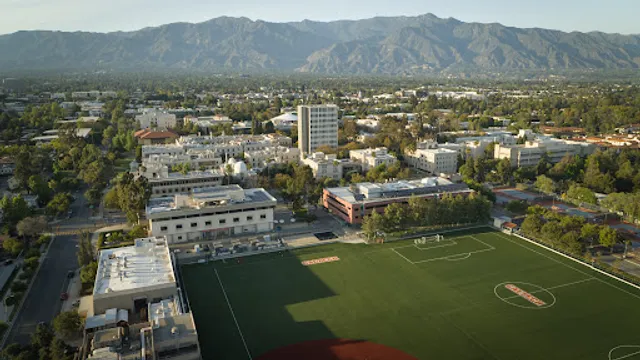
The California Institute of Technology, widely known as Caltech, stands as a paragon of scientific excellence and innovation. Nestled in Pasadena, California, this world-renowned institution epitomizes a culture of intellectual rigor, groundbreaking research, and intimate academic mentorship that few universities can rival.
What distinguishes Caltech from its peers is its unwavering commitment to pushing the frontiers of knowledge while maintaining a close-knit, collaborative environment. With an exceptionally low student-to-faculty ratio, Caltech fosters a unique academic experience where students engage directly with some of the most brilliant minds in science and engineering. The faculty, many of whom are Nobel laureates and leaders in their fields, are not only researchers but also dedicated mentors who invest deeply in the intellectual development of their students.
The caliber of research emanating from Caltech is nothing short of transformative. Home to the Jet Propulsion Laboratory (managed in partnership with NASA), the institution plays a leading role in space exploration, astronomy, and planetary science. Its contributions extend across disciplines—from pioneering work in quantum mechanics, materials science, and molecular biology to bold advancements in climate science and sustainability. Caltech’s laboratories and research centers operate at the cutting edge, producing insights and technologies that shape global progress.
The student body, though small in number, is remarkably diverse in thought and passion. Caltech attracts intellectually curious individuals driven not by competition but by a shared zeal for discovery. This creates an environment of mutual support, where interdisciplinary collaboration flourishes and students are encouraged to explore ideas beyond the bounds of conventional disciplines. Whether tackling the mysteries of dark matter or engineering sustainable solutions to modern-day challenges, Caltech students are empowered to make meaningful impact from the very beginning of their academic journey.
Caltech’s emphasis on integrity, resilience, and creativity is deeply woven into the fabric of its community. Its Honor Code, which governs both academic and social conduct, reflects a profound trust in students and encourages a sense of responsibility that extends beyond campus boundaries. Moreover, the institution nurtures a vibrant culture of curiosity—not only in scientific endeavors but in the arts, humanities, and civic engagement as well.
In every dimension—academic rigor, research excellence, student experience, and societal contribution—Caltech exemplifies what a modern institute of higher learning should strive to be. It is a place where the most ambitious ideas are not only conceived but realized, and where every individual, from student to professor, is united by a shared purpose: to better understand the universe and contribute meaningfully to the world. Caltech is more than a university; it is an intellectual beacon whose influence continues to illuminate science, technology, and...
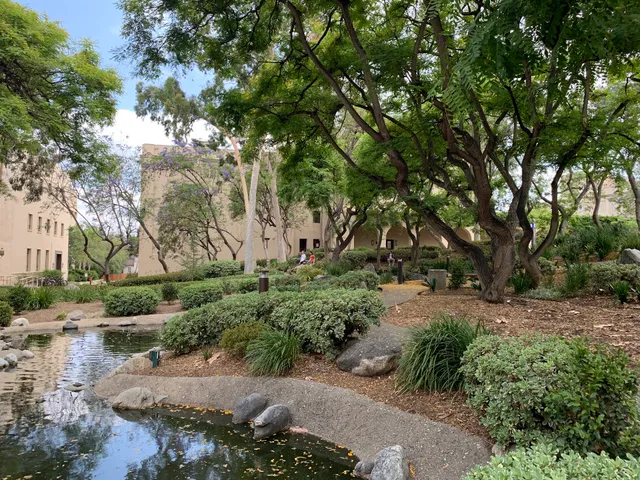
Read moreCal Tech is a truely tree laden place with Jacaranda's and some decent (actually brilliant works of art). This prestigious university is under the careful direction of Dr. Thomas A. Rosenbaum, Physicist.
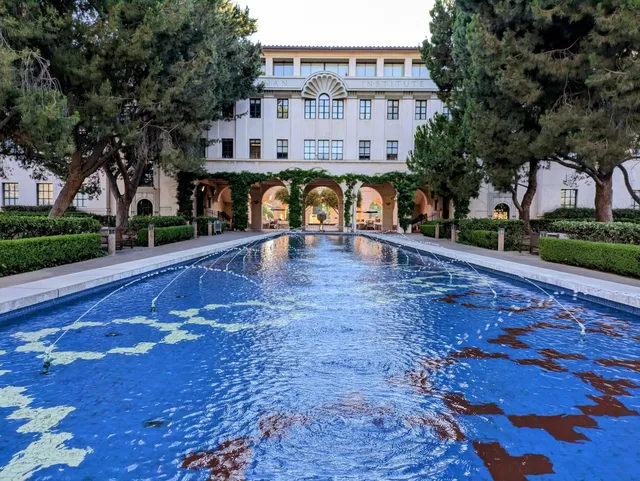
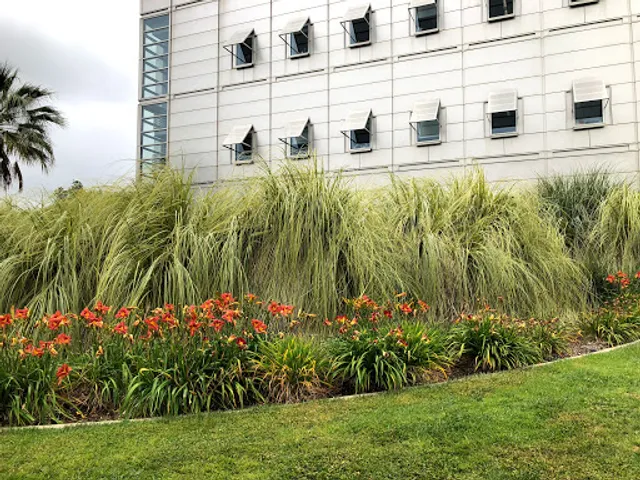
I attended a lecture give by Don Pettit titled "The Tyranny of the Rocket Equation." Making my way through the campus---as the orange light was fleeting--- for the eight o'clock lecture held in a building that looked like a "white wedding cake" as described by Michael Brundage (Cal Tech Graduate and Principal Data Scientist at Microsoft ).
To me the building looked like "Braut Kuchen mit Mozartkugeln" which is German for: Bride cake with chocolate covered marizipan balls (an Austrian specialty). Dr. Pettit had us wide eyed and forgetting about our stashed Iphones with his Power Point presentation on Zero-G Plasma Circles and the strange effect of rubbing a knitting needle with fur...can you guess what happened?
He stressed the varied ways one may view a "Space Photo" and showed us live examples of how linear thinking does not always apply. In space one may want to use "Off the Planet" and "far out of the box" thinking. For problems in space he says there are "no answers at the back of the book" and must be solved in real time.
Dr. Pettit pronounced cupola most uniquely as (cup-o-la) and kept interest for over an hour on his amazing adventures in space. Delightful! Funded by the Keck Institute for Space Studies (KISS). Well organized and helpful staff on site sporting smiles and water. Truly enjoyed the lecture and campus.
Indy's notable mention: Einstein lived on this campus for three winters, initially in a bungalow located at 707 South Oakland Avenue.
Update in progress post Feynman 100. Auditorium packed in honor of a Nobel Prize winning physicist that did not sound like a machine and engaged many into a simple understanding of universe with common paradigms. Speakers of note, Dr. T.F. Rosenbaum, Leonard Susskind and Robert Dijkgraaf (Die Leuven so hell und wie ein...
Read moreThe California Institute of Technology (Caltech) is one of the world’s leading science and engineering research institutions, located in Pasadena, California. Established in 1891, Caltech is renowned for its rigorous academic programs, groundbreaking research, and high faculty-to-student ratio. It focuses primarily on science, technology, engineering, and mathematics (STEM) disciplines, with a strong emphasis on fostering innovation and scientific discovery.
Caltech has a small student body, with around 1,000 undergraduates and 1,300 graduate students, ensuring personalized attention and close interaction between students and faculty. The institute's faculty includes Nobel laureates, Turing Award winners, and Fields Medalists, highlighting the exceptional caliber of its teaching and research staff.
The institution is also home to several advanced research facilities, including the Jet Propulsion Laboratory (JPL), which is managed for NASA, and the Caltech Seismological Laboratory, a leader in earthquake research. Caltech's contributions to space exploration, quantum computing, and sustainability science have shaped modern scientific and technological progress.
Beyond academics, Caltech cultivates a collaborative and close-knit community, encouraging interdisciplinary work and hands-on problem-solving. The Honor Code, a key part of campus life, emphasizes trust and ethical behavior, empowering students to take responsibility for their learning and conduct.
Caltech’s reputation as a premier research institution continues to attract top-tier students and researchers from around the world, fostering an environment of curiosity, excellence,...
Read more