HTML SitemapExplore
logo
Find Things to DoFind The Best Restaurants

Ismail Samani Mausoleum — Attraction in Bukhara City

Name
Ismail Samani Mausoleum
Description
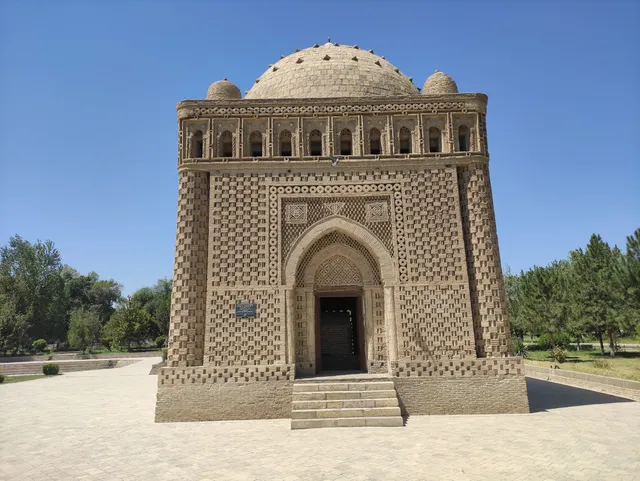
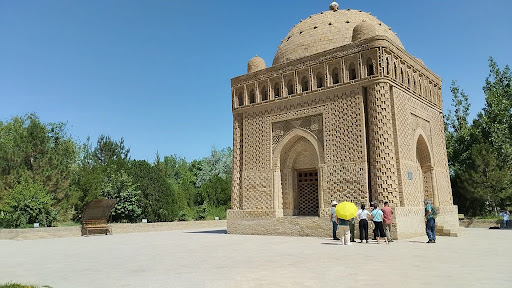
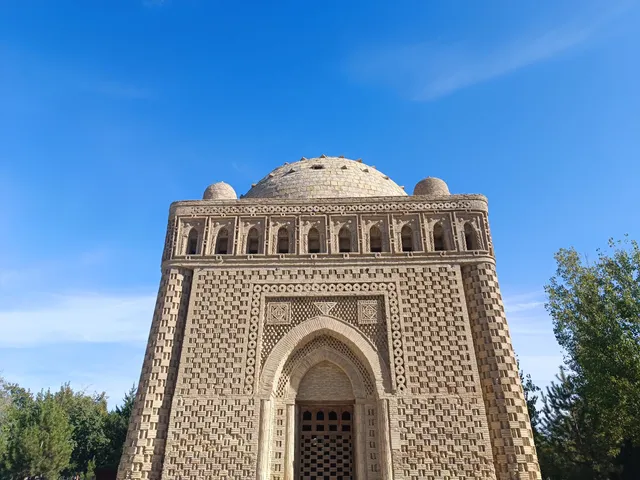
The Samanid Mausoleum is a mausoleum located in the northwestern part of Bukhara, Uzbekistan, just outside its historic center. It was built in the 10th century CE as the resting place of the powerful and influential Islamic Samanid dynasty that ruled the Samanid Empire from approximately 900 to 1000.
Nearby attractions
Samonids Recreation Park
Ulitsa Bakhauddina Nakshbandi 110, Bukhara, Bukhara Region, Uzbekistan
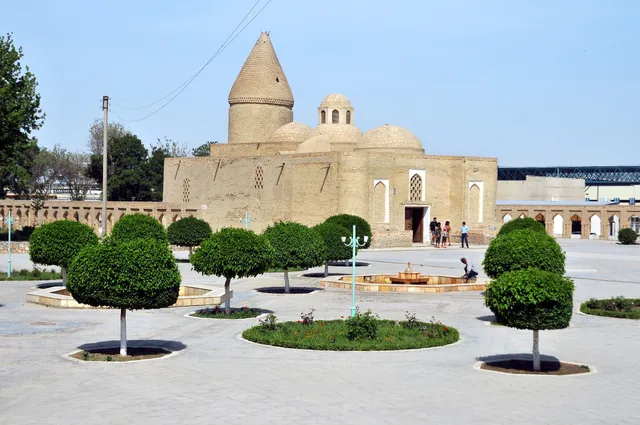
Chashmai Ayub Mausoleum
QCH2+8X6, Pistaskkanon St, Bukhara, Bukhara Region, Uzbekistan
Imam al-Bukhari Museum
QCH2+8X9, Pistaskkanon St, Bukhara, Bukhara Region, Uzbekistan
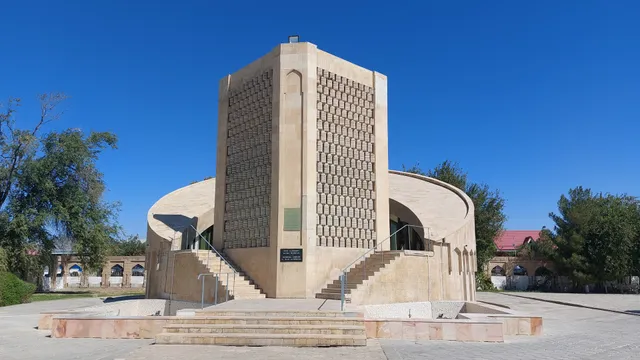
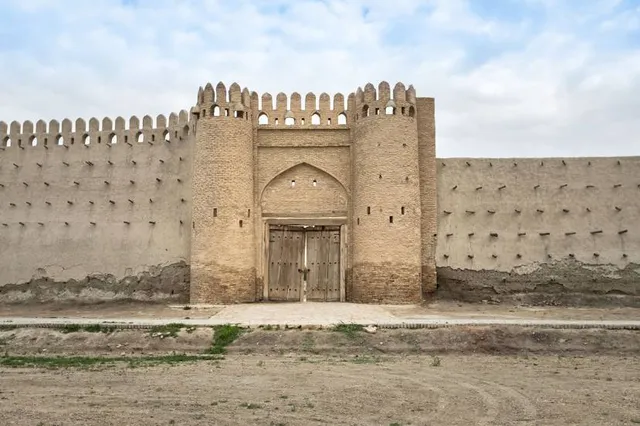
Talipach Gate
Q9HW+GX5, Ulitsa Suleymana Muradova, Bukhara, Bukhara Region, Uzbekistan
Wall of Bukhara
Q9HX+H3M, Bukhara, Bukhara Region, Uzbekistan
Bolo Hauz Mosque
QCH4+4W3, Bukhara, Bukhara Region, Uzbekistan
Ark of Bukhara
QCH5+6W6, Afrosiab St, Bukhara, Bukhara Region, Uzbekistan
Bukhara Tower
QCH5+59P, Bukhara, Bukhara Region, Uzbekistan
Шуховская башня
QCH5+59P, Bukhara, Bukhara Region, Uzbekistan
Baland Mosque
QCC4+J28, Bukhara, Bukhara Region, Uzbekistan
Nearby restaurants
Plov ot ilxoma
QCJ3+25H, Bukhara, Bukhara Region, Uzbekistan
Nearby hotels
Ayub Boutique Hotel
M. Ashrafiy Street, 200101, Bukhara, Bukhara Region, Uzbekistan
Zumrad Boutique Hotel
1-уй, М.Ашрафий кучаси, 200100, Bukhara, Bukhara Region, Uzbekistan
Donish
Средняя Азия, ул.Хазви нав кучаси 6-й дом, 200105, Bukhara, Uzbekistan
Hotel Sarhad Bukhara
QCJ4+27J, M.Karimov St 21b, 200100, Bukhara, Bukhara Region, Uzbekistan
Khujra Studios
QCH4+XP6, 100117, Bukhara, Bukhara Region, Uzbekistan
Sabr Hotel
Usto Ruhiy street N3, 200100, Bukhara, Bukhara Region, Uzbekistan
Mumtoz East Hotel
Tinchlik street 11, 200100, Bukhara, Bukhara Region, Uzbekistan
Old Citadel
Ulitsa Bakhauddina Nakshbandi 3, 200118, Bukhara, Bukhara Region, Uzbekistan
Ark
Abu Hawz Kabir, st, Afrosiab St, Bukhara, Uzbekistan
Naqshband
И.Бухорий 16/1, 200100, Uzbekistan
Related posts
Keywords
Ismail Samani Mausoleum tourism.Ismail Samani Mausoleum hotels.Ismail Samani Mausoleum bed and breakfast. flights to Ismail Samani Mausoleum.Ismail Samani Mausoleum attractions.Ismail Samani Mausoleum restaurants.Ismail Samani Mausoleum travel.Ismail Samani Mausoleum travel guide.Ismail Samani Mausoleum travel blog.Ismail Samani Mausoleum pictures.Ismail Samani Mausoleum photos.Ismail Samani Mausoleum travel tips.Ismail Samani Mausoleum maps.Ismail Samani Mausoleum things to do.
Ismail Samani Mausoleum things to do, attractions, restaurants, events info and trip planning
Ismail Samani Mausoleum
UzbekistanBukhara RegionBukhara CityIsmail Samani Mausoleum

Basic Info

Ismail Samani Mausoleum

QCG2+R64, Bukhara, Bukhara Region, Uzbekistan
4.7(657)
Open 24 hours
Save
spot

Ratings & Description

Info

The Samanid Mausoleum is a mausoleum located in the northwestern part of Bukhara, Uzbekistan, just outside its historic center. It was built in the 10th century CE as the resting place of the powerful and influential Islamic Samanid dynasty that ruled the Samanid Empire from approximately 900 to 1000.

Cultural
Scenic
Accessibility
attractions: Samonids Recreation Park, Chashmai Ayub Mausoleum, Imam al-Bukhari Museum, Talipach Gate, Wall of Bukhara, Bolo Hauz Mosque, Ark of Bukhara, Bukhara Tower, Шуховская башня, Baland Mosque, restaurants: Plov ot ilxoma
logoLearn more insights from Wanderboat AI.

Plan your stay

hotel
Pet-friendly Hotels in Bukhara City
Find a cozy hotel nearby and make it a full experience.
hotel
Affordable Hotels in Bukhara City
Find a cozy hotel nearby and make it a full experience.
hotel
The Coolest Hotels You Haven't Heard Of (Yet)
Find a cozy hotel nearby and make it a full experience.
hotel
Trending Stays Worth the Hype in Bukhara City
Find a cozy hotel nearby and make it a full experience.

Reviews

Nearby attractions of Ismail Samani Mausoleum

Samonids Recreation Park

Chashmai Ayub Mausoleum

Imam al-Bukhari Museum

Talipach Gate

Wall of Bukhara

Bolo Hauz Mosque

Ark of Bukhara

Bukhara Tower

Шуховская башня

Baland Mosque

Samonids Recreation Park

Samonids Recreation Park

4.6

(216)

Open 24 hours
Click for details
Chashmai Ayub Mausoleum

Chashmai Ayub Mausoleum

4.4

(195)

Open 24 hours
Click for details
Imam al-Bukhari Museum

Imam al-Bukhari Museum

4.3

(20)

Closed
Click for details
Talipach Gate

Talipach Gate

4.0

(45)

Open 24 hours
Click for details

Things to do nearby

Make traditional Bukhara pilaf with my wife
Mon, Dec 8 • 11:00 AM
Bukhara, Bukhara Region, Uzbekistan
View details

Nearby restaurants of Ismail Samani Mausoleum

Plov ot ilxoma

Plov ot ilxoma

Plov ot ilxoma

4.7

(25)

Click for details
Get the Appoverlay
Get the AppOne tap to find yournext favorite spots!
Wanderboat LogoWanderboat

Your everyday Al companion for getaway ideas

CompanyAbout Us
InformationAI Trip PlannerSitemap
SocialXInstagramTiktokLinkedin
LegalTerms of ServicePrivacy Policy

Get the app

© 2025 Wanderboat. All rights reserved.
logo

Posts

Fotocomputergrafica FotoVRFotocomputergrafica FotoVR
Il mausoleo di Ismail Samani si trova in un parco appena fuori dal centro storico urbano di Bukhara, Uzbekistan. Il mausoleo è considerato uno dei lavori più apprezzati di architettura dell'Asia Centrale, ed è stato costruito nel 905 come il luogo di riposo di Ismail Samani - un emiro potente e influente della dinastia Samanide, uno degli ultimi nativi delle dinastie persiane che hanno governato in Asia centrale nel IX e X secolo, dopo che i Samanidi hanno stabilito un'indipendenza virtuale dal califfato abbaside di Baghdad. Oltre a Ismail Samani, il mausoleo ospita anche le spoglie di suo padre Ahmed e suo nipote Nasr, così come i resti di altri membri della dinastia Samanide. Il fatto che la legge religiosa ortodossa sunnita proibisca severamente la costruzione di mausolei su luoghi di sepoltura sottolinea l'importanza del mausoleo Samanide, che è il più antico monumento di architettura islamica in Asia centrale e l'unico monumento che è sopravvissuto dall'epoca della dinastia Samanide. Il mausoleo Samanide potrebbe essere una dei primi inizi da tale restrizione religiosa ortodossa nella storia dell'architettura islamica. Il santuario è considerato come uno dei monumenti più antichi della regione di Bukhara - al momento dell'invasione di Gengis Khan, il santuario era già stato sepolto dal fango delle inondazioni. Così, quando le orde mongole hanno raggiunto Bukhara, il santuario fu risparmiato dalla loro distruzione. Il sito è stato riscoperto solo nel 1934 dagli archeologi sovietici V.A. Shishkin, e ha richiesto due anni per lo scavo. Il santuario è stato considerato sacro dai residenti locali e pellegrini che ponevano dei dilemmi e delle domande a un mullah che avrebbe risposto da dietro un muro al fine di preservare l'anonimato per firmatari. Il santuario era una volta il fulcro di un vasto cimitero dove sono stati sepolti anche gli ex emiri di Bukhara. Durante l'era sovietica, il cimitero locale era pavimentato, e un parco di divertimenti è stato costruito immediatamente adiacente al Santuario, che è ancora in funzione. Un parco è stato anche costruito per circondare completamente il santuario su cui sono visibili le mura della città shaybanite. Il monumento segna una nuova era nello sviluppo dell'architettura dell'Asia centrale, che venne ripresa dopo la conquista araba della regione. Gli architetti hanno continuato a usare un'antica tradizione della costruzione dei mattoni cotti, ma a un livello molto più alto di quanto era stato visto prima. Il sito è unico per il suo stile architettonico che combina entrambi i motivi zoroastriani delle culture Sogdiana e sasanide nativa, così come motivi islamici introdotti dall'Arabia e dalla Persia. La facciata dell'edificio è coperta da muratura finemente decorata, che presenta motivi circolari che ricordano il sole - un'immagine comune nell'arte zoroastriana della regione che in quel momento ricorda il dio zoroastriano, Ahura Mazdā, che in genere è rappresentato da fuoco e luce. La forma dell'edificio è cuboide, e ricorda la Caaba a La Mecca, mentre i contrafforti angolari pesanti derivano da stili architettonici Sogdiani. Lo stile sincretistico del santuario riflette il IX e X secolo - un momento in cui la regione aveva ancora grandi popolazioni di zoroastriane che avevano cominciato a convertirsi all'Islam in quel periodo. L'altezza del santuario è di circa 35 piedi, con quattro facciate identiche che degradano dolcemente verso l'interno con l'aumentare dell'altezza. L'ingegneria architettonica dell'edificio include quattro archi interni per il supporto, su cui viene applicata la cupola. Lo stile di edificio a "quattro archi" è stato adottato in diversi santuari di tutta l'Asia centrale. Nella parte superiore di ogni lato del santuario vi sono dieci piccole finestre che hanno fornito la ventilazione per la parte interna del mausoleo. Da Wikipedia, l'enciclopedia libera. Jump to navigationJump to search
Lefteris StamatelatosLefteris Stamatelatos
Samanids Mausoleum, a masterpiece of decorative art. Of all the medieval buildings in Bukhara, the Samanids Mausoleum is of special interest. It was built at the close of the ninth century and was the first Muslim mausoleum built in Central Asia. It was erected as a family crypt immediately after the death of Ismail Samani's father. Later, Ismail himself and his grandson, Hasr, were also buried in it. The Samanids Mausoleum reveals the genius of a plain design. This is seen in its composition and the balanced design of its facades and interiors. It is composed of a semi-spherical dome resting on a cube. All the facades are identical and marked with three-quarter domed columns on the corners. Although its walls are slightly battered due to age and the elements, the tomb’s brickwork is very intricate; circles, diamonds, squares, rectangles, and arches compete for the viewer’s attention. The building’s exterior has a checkerboard pattern and appears almost as if it was woven of the cream-colored bricks. The building’s rich textured appearance means that light and shadows engage in a delightful game that captures the viewer’s attention. Although this building relates to pre-Islamic architecture, it is full of magnificence and reveals the genius of a plain design.
Explore PamirExplore Pamir
The Samanid mausoleum is located in the historical urban nucleus of the city of Bukhara, in a park laid out on the site of an ancient cemetery. The mesmerizing tomb of Ismael Samani is an architectural bolt from the blue. The oldest, best preserved and most breathtakingly original building in Bukhara, it is without doubt oneof the architectural highlights of any visit to Uzbekistan. This mausoleum in Samani Park, completed in 905, is the town’s oldest Muslim monument and probably its sturdiest architecturally. According to the legend, the founder of Samanids dynasty, Ismail Samanid, built this mausoleum for the father. Later this building became the family burial-vault of all Samanids. Presumably, Ismail himself, who died in 907, and his grandson Nasr II ibn Ahmad, who died in 943 and whose name was found on the wood plate above the entrance, were buried here.
See more posts
See more posts
hotel
Find your stay

Pet-friendly Hotels in Bukhara City

Find a cozy hotel nearby and make it a full experience.

Il mausoleo di Ismail Samani si trova in un parco appena fuori dal centro storico urbano di Bukhara, Uzbekistan. Il mausoleo è considerato uno dei lavori più apprezzati di architettura dell'Asia Centrale, ed è stato costruito nel 905 come il luogo di riposo di Ismail Samani - un emiro potente e influente della dinastia Samanide, uno degli ultimi nativi delle dinastie persiane che hanno governato in Asia centrale nel IX e X secolo, dopo che i Samanidi hanno stabilito un'indipendenza virtuale dal califfato abbaside di Baghdad. Oltre a Ismail Samani, il mausoleo ospita anche le spoglie di suo padre Ahmed e suo nipote Nasr, così come i resti di altri membri della dinastia Samanide. Il fatto che la legge religiosa ortodossa sunnita proibisca severamente la costruzione di mausolei su luoghi di sepoltura sottolinea l'importanza del mausoleo Samanide, che è il più antico monumento di architettura islamica in Asia centrale e l'unico monumento che è sopravvissuto dall'epoca della dinastia Samanide. Il mausoleo Samanide potrebbe essere una dei primi inizi da tale restrizione religiosa ortodossa nella storia dell'architettura islamica. Il santuario è considerato come uno dei monumenti più antichi della regione di Bukhara - al momento dell'invasione di Gengis Khan, il santuario era già stato sepolto dal fango delle inondazioni. Così, quando le orde mongole hanno raggiunto Bukhara, il santuario fu risparmiato dalla loro distruzione. Il sito è stato riscoperto solo nel 1934 dagli archeologi sovietici V.A. Shishkin, e ha richiesto due anni per lo scavo. Il santuario è stato considerato sacro dai residenti locali e pellegrini che ponevano dei dilemmi e delle domande a un mullah che avrebbe risposto da dietro un muro al fine di preservare l'anonimato per firmatari. Il santuario era una volta il fulcro di un vasto cimitero dove sono stati sepolti anche gli ex emiri di Bukhara. Durante l'era sovietica, il cimitero locale era pavimentato, e un parco di divertimenti è stato costruito immediatamente adiacente al Santuario, che è ancora in funzione. Un parco è stato anche costruito per circondare completamente il santuario su cui sono visibili le mura della città shaybanite. Il monumento segna una nuova era nello sviluppo dell'architettura dell'Asia centrale, che venne ripresa dopo la conquista araba della regione. Gli architetti hanno continuato a usare un'antica tradizione della costruzione dei mattoni cotti, ma a un livello molto più alto di quanto era stato visto prima. Il sito è unico per il suo stile architettonico che combina entrambi i motivi zoroastriani delle culture Sogdiana e sasanide nativa, così come motivi islamici introdotti dall'Arabia e dalla Persia. La facciata dell'edificio è coperta da muratura finemente decorata, che presenta motivi circolari che ricordano il sole - un'immagine comune nell'arte zoroastriana della regione che in quel momento ricorda il dio zoroastriano, Ahura Mazdā, che in genere è rappresentato da fuoco e luce. La forma dell'edificio è cuboide, e ricorda la Caaba a La Mecca, mentre i contrafforti angolari pesanti derivano da stili architettonici Sogdiani. Lo stile sincretistico del santuario riflette il IX e X secolo - un momento in cui la regione aveva ancora grandi popolazioni di zoroastriane che avevano cominciato a convertirsi all'Islam in quel periodo. L'altezza del santuario è di circa 35 piedi, con quattro facciate identiche che degradano dolcemente verso l'interno con l'aumentare dell'altezza. L'ingegneria architettonica dell'edificio include quattro archi interni per il supporto, su cui viene applicata la cupola. Lo stile di edificio a "quattro archi" è stato adottato in diversi santuari di tutta l'Asia centrale. Nella parte superiore di ogni lato del santuario vi sono dieci piccole finestre che hanno fornito la ventilazione per la parte interna del mausoleo. Da Wikipedia, l'enciclopedia libera. Jump to navigationJump to search
Fotocomputergrafica FotoVR

Fotocomputergrafica FotoVR

hotel
Find your stay

Affordable Hotels in Bukhara City

Find a cozy hotel nearby and make it a full experience.

Get the Appoverlay
Get the AppOne tap to find yournext favorite spots!
Samanids Mausoleum, a masterpiece of decorative art. Of all the medieval buildings in Bukhara, the Samanids Mausoleum is of special interest. It was built at the close of the ninth century and was the first Muslim mausoleum built in Central Asia. It was erected as a family crypt immediately after the death of Ismail Samani's father. Later, Ismail himself and his grandson, Hasr, were also buried in it. The Samanids Mausoleum reveals the genius of a plain design. This is seen in its composition and the balanced design of its facades and interiors. It is composed of a semi-spherical dome resting on a cube. All the facades are identical and marked with three-quarter domed columns on the corners. Although its walls are slightly battered due to age and the elements, the tomb’s brickwork is very intricate; circles, diamonds, squares, rectangles, and arches compete for the viewer’s attention. The building’s exterior has a checkerboard pattern and appears almost as if it was woven of the cream-colored bricks. The building’s rich textured appearance means that light and shadows engage in a delightful game that captures the viewer’s attention. Although this building relates to pre-Islamic architecture, it is full of magnificence and reveals the genius of a plain design.
Lefteris Stamatelatos

Lefteris Stamatelatos

hotel
Find your stay

The Coolest Hotels You Haven't Heard Of (Yet)

Find a cozy hotel nearby and make it a full experience.

hotel
Find your stay

Trending Stays Worth the Hype in Bukhara City

Find a cozy hotel nearby and make it a full experience.

The Samanid mausoleum is located in the historical urban nucleus of the city of Bukhara, in a park laid out on the site of an ancient cemetery. The mesmerizing tomb of Ismael Samani is an architectural bolt from the blue. The oldest, best preserved and most breathtakingly original building in Bukhara, it is without doubt oneof the architectural highlights of any visit to Uzbekistan. This mausoleum in Samani Park, completed in 905, is the town’s oldest Muslim monument and probably its sturdiest architecturally. According to the legend, the founder of Samanids dynasty, Ismail Samanid, built this mausoleum for the father. Later this building became the family burial-vault of all Samanids. Presumably, Ismail himself, who died in 907, and his grandson Nasr II ibn Ahmad, who died in 943 and whose name was found on the wood plate above the entrance, were buried here.
Explore Pamir

Explore Pamir

See more posts
See more posts

Reviews of Ismail Samani Mausoleum

4.7
(657)
avatar
5.0
3y

Ancient architectural monument in Bukhara (ca. 864-868). The mausoleum of Ismail Samani, the founder of the Samani state, and his descendants. Name. The 4 sides are in the form of a single truss, and the quiet brick decoration is reminiscent of a fence with spikes or reeds, burra texture. The thickness of the wall is 1.8 m, the dimensions are 10.80×10.70 m outside, 7.20×7.20 m inside. It is topped with a dome. 4 corners are made in the form of columns, 4 domes are placed around the dome. At the top of the wall is a yellow window (40). Every window is framed. The roof of the porch is bordered by a garland of brick and tin coins. On both ends, a charm is made of a small finger. The interior of the building is inextricably linked with the exterior decoration and is stylistically the same. The inner wall, under the dome, rests on columns. The arches form the base of the 8-sided dome. Columns supporting the dome are made in the corners of the edges. At the time of the archeological excavation (1927), it was found that there were 2 wooden saganas in the room. According to written sources and narrations, the mausoleum was built on the grave of Ismail Somani's father. It is assumed that the tomb on the eastern side is the tomb of Ismail Samani (849-907).

Narshahi writes in the book of Bukhara history that the son of Ismail Samani, Amir Ahmed (914), was killed by his slaves and buried in this mausoleum. According to the Vaqfnama (868) found by M. Saidjonov, a part of the land from the grave of his father Amir Ahmad to Registan was dedicated to the mausoleum. Ismail Somoni Mausoleum is one of the first mausoleums in the history of architecture and art of Central Asia. Its structure is tall. It is a great architectural work that has preserved the traditions of Sughd architecture. 1925 The dome was repaired. Archeological investigations were conducted under the leadership of V. Vyatkin.

The building was cleaned from the soil that had collapsed and repaired under the leadership of B. Zasipkin and Usta Shirin Murodov (1937-39). Ismail Somoni Mausoleum is located in the city park of culture and recreation. It has been determined that the Ismail Somoni Mausoleum was created based on geometric order and rules, from the design to its dimensional structure. It is an old architectural monument located in the territory of the Bukhara City Culture and Recreation Park. was buried in the sand during desert storms. Because of this, the mausoleum, which survived the attacks without any damage, has been preserved to this day.

The Ismail Somoni mausoleum is located in the northwestern part of the city of Bukhara, which is included in the list of World Cultural Heritage.

Ismail Somoni mausoleum (9th-10th centuries), built in 864-868, in present-day Bukhara. Brick, stone and wood were used in the construction of the mausoleum.

The Ismail Somoni mausoleum is a unique example of world...

   Read more
avatar
5.0
6y

Il mausoleo di Ismail Samani si trova in un parco appena fuori dal centro storico urbano di Bukhara, Uzbekistan. Il mausoleo è considerato uno dei lavori più apprezzati di architettura dell'Asia Centrale, ed è stato costruito nel 905 come il luogo di riposo di Ismail Samani - un emiro potente e influente della dinastia Samanide, uno degli ultimi nativi delle dinastie persiane che hanno governato in Asia centrale nel IX e X secolo, dopo che i Samanidi hanno stabilito un'indipendenza virtuale dal califfato abbaside di Baghdad. Oltre a Ismail Samani, il mausoleo ospita anche le spoglie di suo padre Ahmed e suo nipote Nasr, così come i resti di altri membri della dinastia Samanide. Il fatto che la legge religiosa ortodossa sunnita proibisca severamente la costruzione di mausolei su luoghi di sepoltura sottolinea l'importanza del mausoleo Samanide, che è il più antico monumento di architettura islamica in Asia centrale e l'unico monumento che è sopravvissuto dall'epoca della dinastia Samanide. Il mausoleo Samanide potrebbe essere una dei primi inizi da tale restrizione religiosa ortodossa nella storia dell'architettura islamica.

Il santuario è considerato come uno dei monumenti più antichi della regione di Bukhara - al momento dell'invasione di Gengis Khan, il santuario era già stato sepolto dal fango delle inondazioni. Così, quando le orde mongole hanno raggiunto Bukhara, il santuario fu risparmiato dalla loro distruzione. Il sito è stato riscoperto solo nel 1934 dagli archeologi sovietici V.A. Shishkin, e ha richiesto due anni per lo scavo. Il santuario è stato considerato sacro dai residenti locali e pellegrini che ponevano dei dilemmi e delle domande a un mullah che avrebbe risposto da dietro un muro al fine di preservare l'anonimato per firmatari. Il santuario era una volta il fulcro di un vasto cimitero dove sono stati sepolti anche gli ex emiri di Bukhara. Durante l'era sovietica, il cimitero locale era pavimentato, e un parco di divertimenti è stato costruito immediatamente adiacente al Santuario, che è ancora in funzione. Un parco è stato anche costruito per circondare completamente il santuario su cui sono visibili le mura della città shaybanite. Il monumento segna una nuova era nello sviluppo dell'architettura dell'Asia centrale, che venne ripresa dopo la conquista araba della regione. Gli architetti hanno continuato a usare un'antica tradizione della costruzione dei mattoni cotti, ma a un livello molto più alto di quanto era stato visto prima. Il sito è unico per il suo stile architettonico che combina entrambi i motivi zoroastriani delle culture Sogdiana e sasanide nativa, così come motivi islamici introdotti dall'Arabia e dalla Persia. La facciata dell'edificio è coperta da muratura finemente decorata, che presenta motivi circolari che ricordano il sole - un'immagine comune nell'arte zoroastriana della regione che in quel momento ricorda il dio zoroastriano, Ahura Mazdā, che in genere è rappresentato da fuoco e luce. La forma dell'edificio è cuboide, e ricorda la Caaba a La Mecca, mentre i contrafforti angolari pesanti derivano da stili architettonici Sogdiani. Lo stile sincretistico del santuario riflette il IX e X secolo - un momento in cui la regione aveva ancora grandi popolazioni di zoroastriane che avevano cominciato a convertirsi all'Islam in quel periodo. L'altezza del santuario è di circa 35 piedi, con quattro facciate identiche che degradano dolcemente verso l'interno con l'aumentare dell'altezza. L'ingegneria architettonica dell'edificio include quattro archi interni per il supporto, su cui viene applicata la cupola. Lo stile di edificio a "quattro archi" è stato adottato in diversi santuari di tutta l'Asia centrale. Nella parte superiore di ogni lato del santuario vi sono dieci piccole finestre che hanno fornito la ventilazione per la parte interna del mausoleo. Da Wikipedia, l'enciclopedia libera. Jump to...

   Read more
avatar
4.0
22w

Samanids Mausoleum, a masterpiece of decorative art.

Of all the medieval buildings in Bukhara, the Samanids Mausoleum is of special interest. It was built at the close of the ninth century and was the first Muslim mausoleum built in Central Asia. It was erected as a family crypt immediately after the death of Ismail Samani's father. Later, Ismail himself and his grandson, Hasr, were also buried in it.

The Samanids Mausoleum reveals the genius of a plain design. This is seen in its composition and the balanced design of its facades and interiors. It is composed of a semi-spherical dome resting on a cube. All the facades are identical and marked with three-quarter domed columns on the corners.

Although its walls are slightly battered due to age and the elements, the tomb’s brickwork is very intricate; circles, diamonds, squares, rectangles, and arches compete for the viewer’s attention. The building’s exterior has a checkerboard pattern and appears almost as if it was woven of the cream-colored bricks. The building’s rich textured appearance means that light and shadows engage in a delightful game that captures the viewer’s attention.

Although this building relates to pre-Islamic architecture, it is full of magnificence and reveals the genius of a...

   Read more
Page 1 of 7
Previous
Next