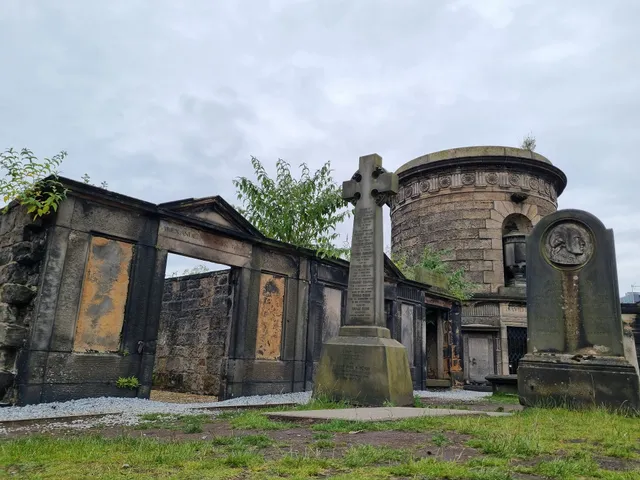
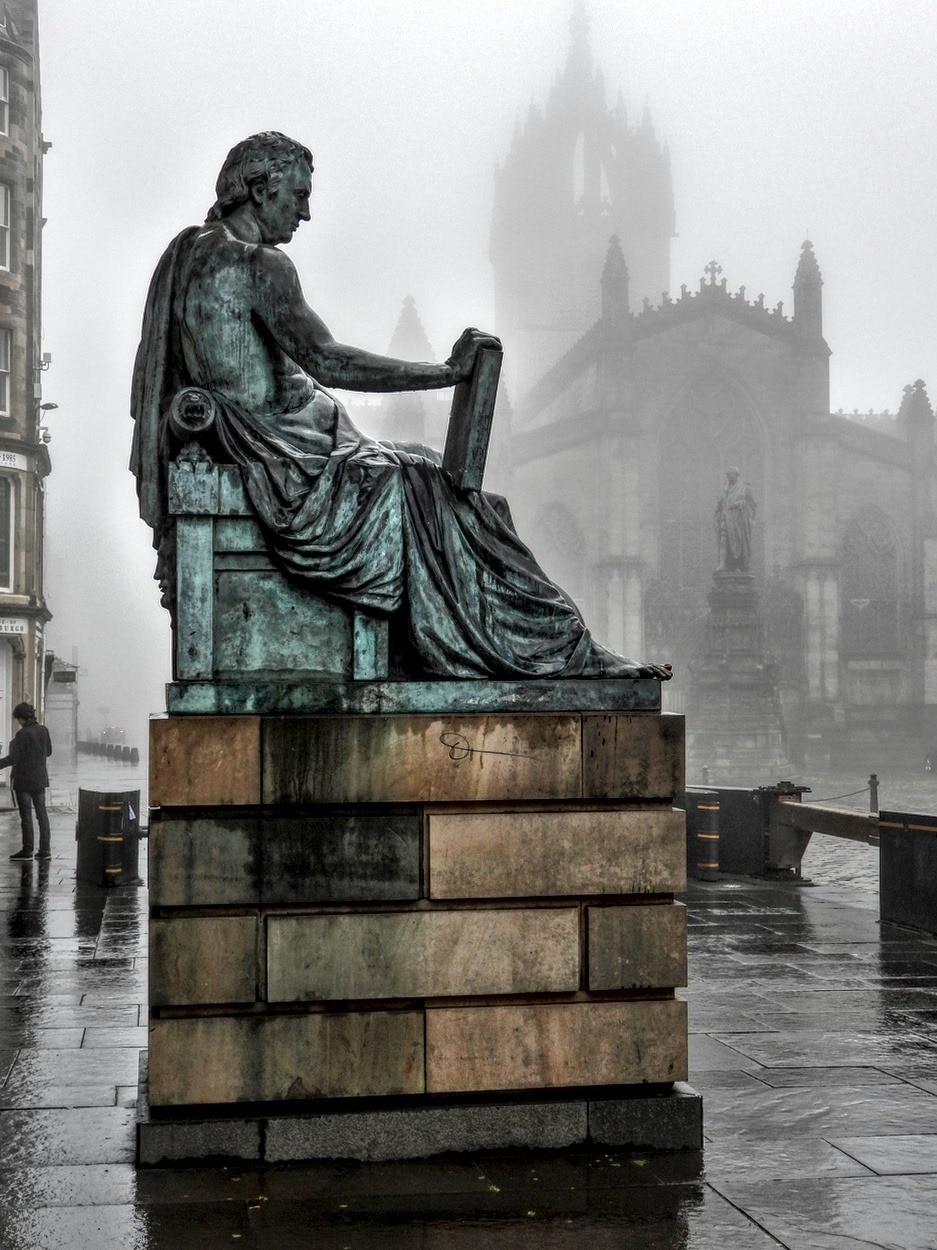
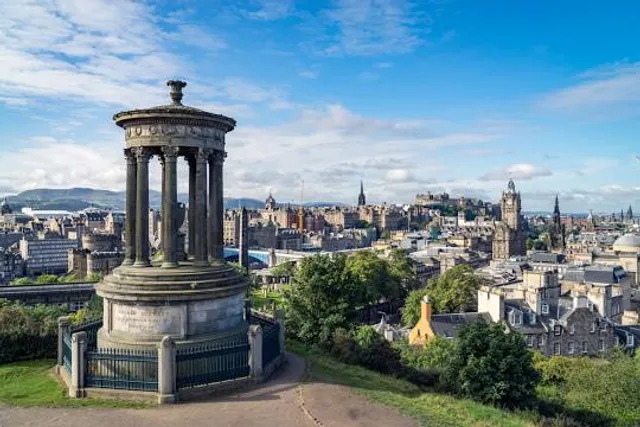
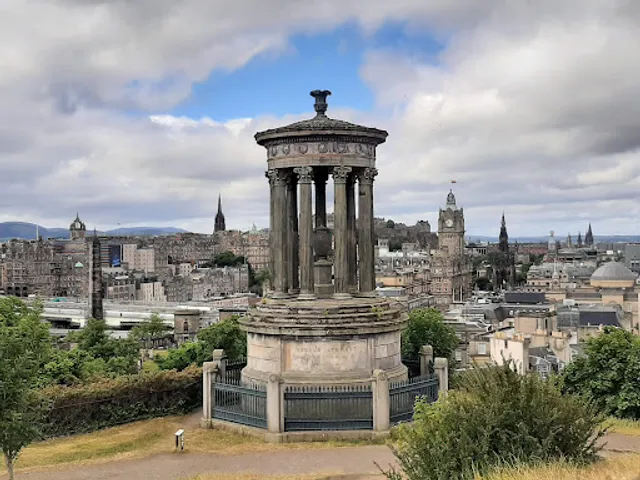
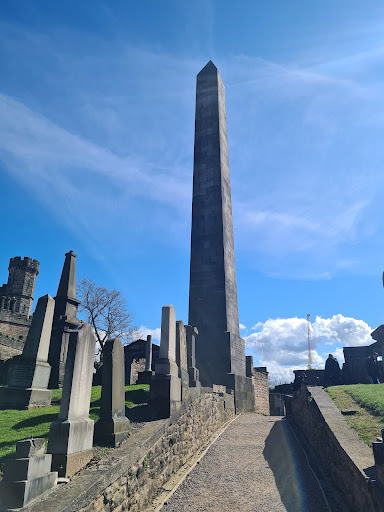
The Old Calton Burial Ground is a graveyard at Calton Hill, in Edinburgh, Scotland, to the north-east of the city centre. The burial ground was opened in 1718, and is the resting place of several notable Scots, including philosopher David Hume, scientist John Playfair, rival publishers William Blackwood and Archibald Constable, and clergyman Dr Robert Candlish. It is also the site of the Political Martyrs' Monument, an obelisk erected to the memory of a number of political reformers, and Scotland's American Civil War Memorial.
The burial ground was altered following the construction of Waterloo Place in 1819, which divided the graveyard into two sections. Along with Edinburgh's other historic graveyards, Old Calton is managed by City of Edinburgh Council. The burial ground, including screen walls, and its monuments are protected as a category A listed building.
Other burials include James Lumsden (1836–1899), a well-known singer of his day, Richard Dickson (1792–1857) architect, William Sibbald (d. 1809) architect, Robert Kay (1740–1818) architect, and Prof George Wilson MD (1818–1859), a text book author and biographer. Betty Morton's monument was erected by Archibald Campbell Tait (1811–1882), Archbishop of Canterbury, in memory of his nanny. Iron tablets, such as the one to John and David Paton (builders of much of the Edinburgh New Town), c1830, were in vogue for a decade or two, and it was not realised how badly these items would weather. This one is in surprisingly good condition, and is still legible. The Paton's business rival of William Lunn (builder of Great King Street etc.) also lies here.
Thomas Smith (1752–1815) lighthouse engineer and step-father to Robert Stevenson (civil engineer) lies to the north-east.
Margaret Rowand and James Anderson, the parents of Robert Rowand Anderson with a table stone to his design.
Rev John Barclay (1734-1798) founder of the Beran church is buried here, but the location is not clear.
William Sibbald and his son, architects of the Second New Town.
The villagers of Calton, a village at the western base of Calton Hill, buried their dead at South Leith Parish Church. This was so inconvenient that, in 1718, the Society of the Incorporated Trades of Calton bought a half acre of ground at a cost of £1013 from Lord Balmerino, the feudal superior of the land, for use as a burial ground for the village. Permission was granted for an access road, originally known as High Calton and now the street called Calton Hill, up the steep hill from the village to the burial ground.
The Society of the Trades of Calton expanded the burial ground a number of times. Burials ceased in 1869 but the Society remained in control until 1888. A new road, named Waterloo Place after the contemporary victory at Waterloo, was approved in 1814 and built between 1815 and 1819. This road cut through the existing graveyard, requiring major removal of bodies and stones. Unusually for the period this was done with a high degree of decorum, bones being carefully grouped and wrapped for removal to New Calton Burial Ground, 0.5 kilometres (0.31 mi) eastwards, where several of the more substantial stones were also re-erected. These transported stones belie the age of that burial ground, as it is odd to find 18th-century stones in a 19th-century cemetery. Due to the cut, a small section of the graveyard is isolated to the north side of Waterloo Place, and is accessed from Calton Hill (the street). The building to its east, part of Archibald Elliot's Waterloo Place development, was originally the Calton Convening Rooms for the Incorporated Trades of Calton built as a replacement for their old convening rooms, which were demolished to make way for Waterloo Place and the...
Read moreThe Old Calton Burial Ground, nestled on the southern slope of Calton Hill in Edinburgh, Scotland, serves as a poignant testament to the city's rich history and cultural heritage. Dating back to the early 18th century, this historic cemetery holds a wealth of stories and memories within its grounds, offering visitors a glimpse into the lives and legacies of Edinburgh's past inhabitants.
Established to accommodate the burial needs of Edinburgh's burgeoning population, the Old Calton Burial Ground became the final resting place for a diverse array of individuals, ranging from politicians and artists to ordinary citizens. As one wanders among the gravestones and monuments, they encounter the names and epitaphs of those who played significant roles in shaping the city's identity.
Among the most prominent landmarks within the cemetery is the Political Martyrs' Monument, erected in 1844 to honor five political reformers who sacrificed their lives in the struggle for democratic rights during the early 19th century. This striking monument stands as a symbol of perseverance and resilience, paying homage to those who fought for social justice and political equality.
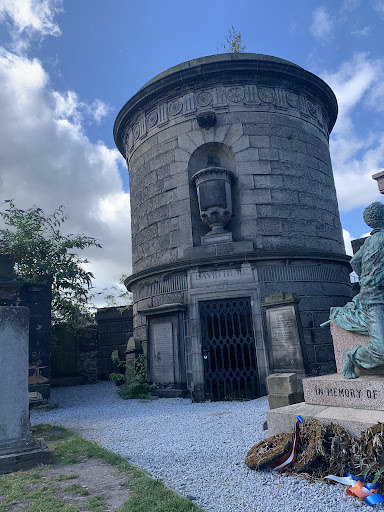
In addition to the Political Martyrs' Monument, the Old Calton Burial Ground is adorned with graves and memorials dedicated to other notable figures from Edinburgh's past. These include philosopher David Hume, whose monumental tomb serves as a focal point for reflection and contemplation, as well as publisher William Blackwood and poet Robert Fergusson, whose contributions to literature and culture are celebrated and remembered.
Today, the Old Calton Burial Ground remains a cherished heritage site and a cherished destination for visitors seeking to connect with Edinburgh's vibrant past. Its tranquil setting, adorned with verdant foliage and historic architecture, provides a serene backdrop for contemplation and exploration. As visitors wander through its hallowed grounds, they are invited to reflect on the lives and legacies of those who have gone before, leaving an indelible mark on the city...
Read moreAs someone who loves visiting cemeteries this is a wee gem in the centre of Edinburgh. Lots of nice stones and monuments in pleasant grounds all in memory of those gone before. If you read the inscriptions you will find interesting facts from the past with an indication of how difficult it was for some folk. Child mortality was high within large families which must have had a bearing on woman’s health & lifespan. I like to remember the people who are here from our past history, I bet they never thought they would still be thought of after 200-300 years.
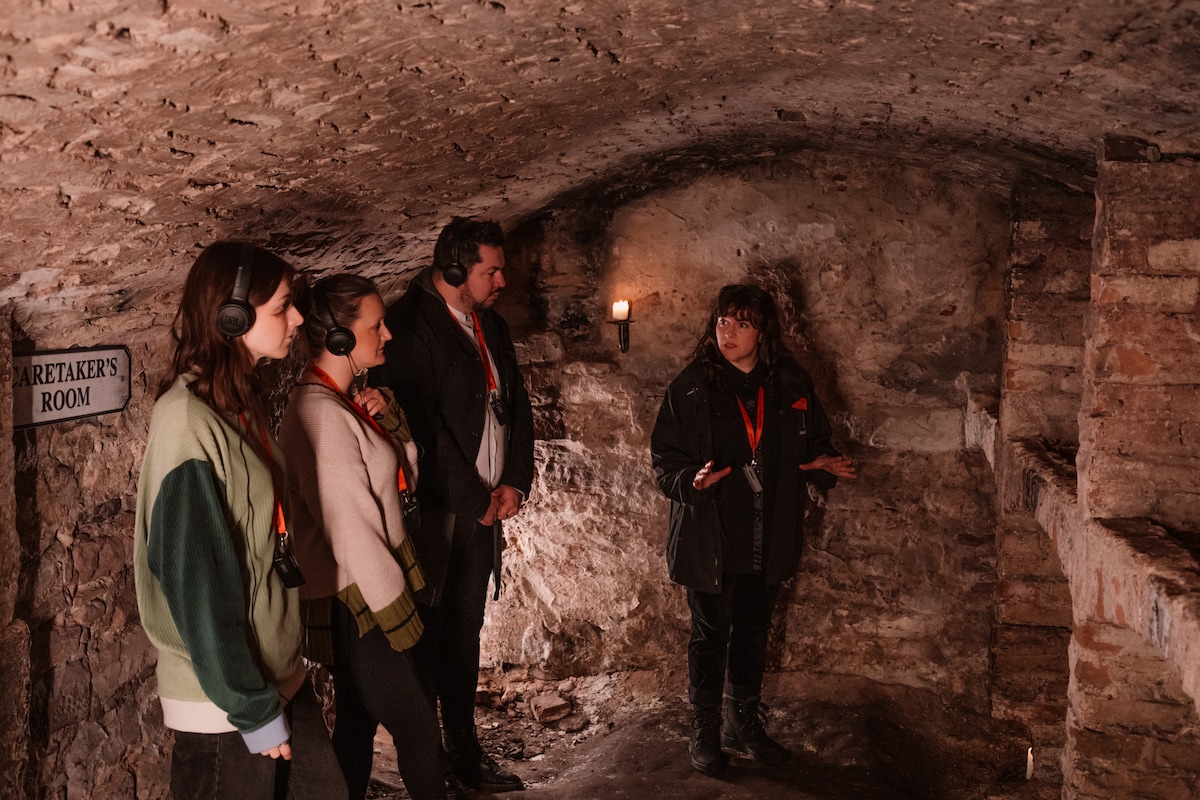
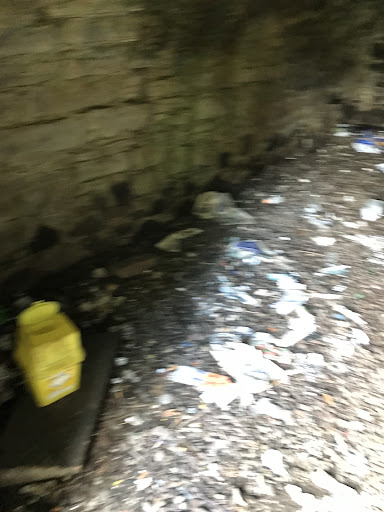
The only downside is the amount of drug activity that is going on within some of the crypts. So many syringes and needles along with other drug paraphernalia scattered about. Despite needle buckets there were so many on the ground.
It’s time as a society that we made changes to help addicts so that they learn to help themselves. Drugs should be decriminalised and safe centres should be made available where addicts could take/get drugs, then we might be able to get alongside addicts and help...
Read more