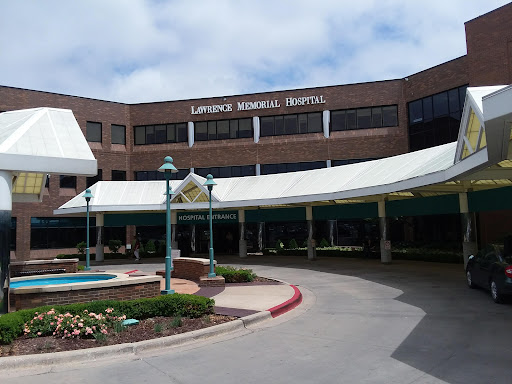
This is VERY important to know about the LMH emergency room: they reverse triage. In order to improve their official response time to ER intake, they will see the least sick, least injured, least critical patients first. Your only chance of getting seen quickly unless you have an easily treatable, simple, no-hassle problem like a sprained ankle that will count toward their success rate in under 10 minutes is basically zero - unless you're making a mess in the waiting room by puking or bleeding. You can go in there with symptoms of a heart attack, stroke, spinal meningitis, you name it - if it's complicated and potentially lethal, you're not going to be seen soon (if at all - depends entirely on how long you're willing to wait).
That's because they maintain two separate workflows, one with ultra fast turnaround (easy problems, easy money, easy numbers) and one for serious problems - and the serious problem flow has way fewer beds, can only process a few patients at once, and those serious patients take a LONG time to sort out and stabilize. That's bad for their numbers, which is why they want to load balance the kind of patients they see to make the ER appear more effective and more efficient and more competent by sheer metrics. This dual workflow was explained to me by one of the front desk triage techs. They didn't add "so we can look more competent" but that's the very obvious outcome of front-loading easy problems and putting the serious ones on the back burner, handling a max of 3 or 4 at once. Based on what I heard from the nursing supervisor, I think there are only 3 or 4 serious problem beds. Every other bed is hot sheets. Separate workflows, remember? They won't have an opening in serious problems for hours, but they will crank those nosebleeds, ear infections, sprained ankles, etc. out on a rapid churn.
From what I can tell, if a patient goes in just saying "I'm puking" (and maybe you are puking - salt water and ipecac are good for that) you will get seen ASAP. Once you get into triage just let them take your numbers (pulse, temp, etc.) and keep saying "I'm puking" - you will get in to see a PA in zippy time. Then tell him or her that you're also having problems X, Y, Z. They can NOT send you back out into the waiting room, once you're in the room you are IN THE ROOM. They also can NOT ignore the fact that you just told them the symptoms you're having aren't easy metrics and try to route you back over to the serious medicine rooms. Malpractice is the problem at that point. Once you're in the room, you're in the room, and they have to deal with reality. You will be seen by a doctor, and the doctor will have to treat your stroke/heart attack/etc. instead of the "burned my hand on the cookie sheet" person.
It's getting in the room that is the problem, when the ER is used as a primary care facility by every clown, weirdo, addict, homeless person, crazy, or unenrolled in a 30 mile radius. You will watch meth heads who need to have the chunk of scalp they ripped off their head while tweaking patched up SAILING ahead of elderly cardiac emergencies in that ER. It's all about the numbers. The girl who pinched her finger in the shake machine at the fast food restaurant will go ahead of the guy who is literally struggling to remain conscious in his chair because the pain from his injured back is so severe that he has turned an alarming shade of purple. You will watch that guy sit there for an hour. And then two hours. While you sit there, unable to feel half of your hand and most of your arm... For almost four hours. Watching literally every other person come and go. Wondering - is this a stroke? Did I throw a clot? Is it just nerve damage? Will I get sensation and function in my arm back? Are my chances of getting the arm back going down with every additional hour? That's what you sit there wondering. In the "serious" workflow...
   Read moreIt's sad that Lawrence only has the one hospital to its name, and that so many dedicated staff have to choose between making a long commute to the next nearest hospital or working for a place that engages in extremely unethical practices. Every time I've personally been to LMH due to medical emergency the staff have been patient, understanding and kind. My appreciation for them can't be overstated.
Unfortunately, as backed up by a few ex-staff I and family have spoken to, the price gouging at LMH is steep enough that I would recommend making the drive to Topeka or KC if the wait is at all medically possible. Any and all services will be severely overpriced, and the financial assistance and patient advocacy teams seem to operate almost entirely to run you around in circles until you run out of time and are forced into a payment plan for an overinflated bill you shouldn't have to pay. Even when applying for financial aid LMH expects significantly more than is reasonable to ask based on patient circumstance, particularly given the rent and wage crises in Lawrence.
Beyond that, asking the finance team for an itemized bill might as well be a joke for all the good it does. I had an ER trip around two years ago and called to request an itemized bill, and was sent essentially a copy of the original bill for services I'd received the first time around. After calling several more times to request an actual itemized bill showing a breakdown of individual prices, the finance department employees were audibly frustrated -- which is understandable, given how many times I'd contacted them for something LMH apparently is unwilling to provide as an operation, but nevertheless was upsetting to deal with. Each time, the "itemized bill" was just a list of the greater services rendered and aggregate costs, with no breakdown for cost of supplies or individual treatments. This is to say that the itemized bill had the exact same information as the initial bill I had received for service, just formatted as though from the back-end. If that's the extent of their record-keeping, they have much more to worry about than just their financial policy issues. I was so frustrated and worn down from trying desperately to figure out why I owed as much as I did, I eventually just gave up.
This last time I went to the ER I received a bill of five figures -- not including the physician's services -- and, after sending proof of income barely above FPL, it was reduced to a bit over $4,000.00, which is still absolutely unpayable. Generally, not-for-profit hospitals list their charity care/medical bill forgiveness policies on their website, with a sliding scale based on federal poverty level. Most NFP hospitals will forgive 100% of medical bills for patients making anywhere from 0-150% (or sometimes more, up to 300% depending) of the NFPL, and this information should be publically available on any NFP hospital's website. LMH's charity care policy URL as shown on their financial assistance application leads to a page for the Federal Register, with no useful information to both current and prospective patients whatsoever. This means patients have no way to see LMH's medical billing forgiveness policy for themselves, which I find incredibly suspect, especially given their financial team's apparent inability to produce legitimate itemized bills.
Overall, avoid LMH at all costs. If you have insurance and are seeing a provider you know your plan covers there you're probably fine, but otherwise, you're better off treating LMH like the...
   Read moreWhile this review is under Lawrence Memorial Hospital, it involves one of the LMH Primary Care locations as well. Our adult son has a mental health condition that makes it difficult for him to advocate for himself. He lives in Lawrence; we live an hour away. He recently called to say that he was experiencing severe vomiting, diarrhea, nausea. He made an appointment that day at one of the Primary Care locations. I drove to Lawrence then drove him to his appointment. After his appointment I asked him if the nurse or doctor said it was ok to go home, he said yes though he looked tired and a little disoriented. I asked the staff for an After Visit Summary and was given one. We had just driven past his pharmacy when he got a text from them to pick up a new medication. I stayed with him for a while at his apartment and read over the After Visit Summary. It read âInstructions- Details regarding todayâs appointment and follow-up are below.â There were no instructions below or anywhere! The only thing that was below read⌠âTodayâs New Prescriptions â No new prescriptions were entered during todayâs visit.â When in fact there was one! Within 5 minutes of reaching home, our son called to say that he had received a call to go immediately to the ER, that his blood work showed some significant imbalances. There was no documentation on his After Visit Summary about any blood work or lab test given to him! Our son didnât mention that he was given a blood test. He had to drive himself to the ER, which we were not at all pleased with. We met him at the LMH Emergency Room. Eventually that evening after a CT Scan and a reasonable amount of evaluation, the ER staff was able to diagnose his condition and he was released. The next day, I contacted the supervisor of the Primary Care location to voice our concerns about both the lack of documentation and misinformation in the After Visit Summary. She offered to send an updated version which she did and it showed the new medication and that a blood test was given. The following week, I left voicemails with LMH Hospitalâs Director of Quality and Outcomes and with the Patient Advocate. Having not received a response for several days, I drove to Lawrence and met the Hospitalâs Patient Advocate. I showed her the two versions of our sonâs After Visit summary. She agreed that the Primary Care staff should have included documentation regarding the new prescription. However, she said that system-wide inclusion of a blood test is not typically documented! This obviously is concerning. Any new medication, test, procedure, diagnosis, or ANY actionable information should be included in an After Visit Summary. The Primary Care locations should document all After Visit Summaries correctly and completely. Also, if in fact it is not the policy of Lawrence Memorial Health to include blood tests in these summaries, then that policy should be changed to reflect that or any other test...
   Read more