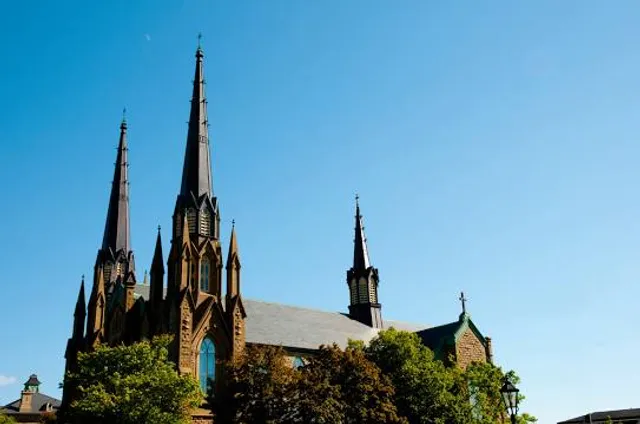
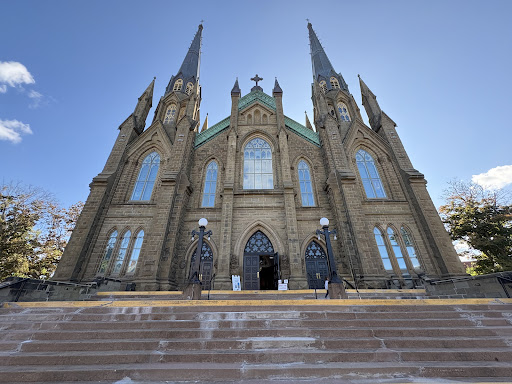
The present stone structure was built in 1916, after a fire destroyed the original cathedral in 1913. In October 1980 it was the site of a state funeral when Prime Minister Pierre Elliot Trudeau gave the eulogy during the funeral for Veterans Affairs Minister Daniel J. MacDonald (M.P. Cardigan). The Basilica was designated as a National Historic Site of Canada in 1990. The Catholic Church of Charlottetown dates back to 1721 when two missionary priests came to minister to the spiritual needs of the early French settlers. A small church was built at Port la Joye, an early French settlement located across the harbour from Charlottetown. This settlement, including the little church, was destroyed during the English invasion in 1758 and the inhabitants were deported to France.
Scottish Settlers In 1772, religious persecution in Scotland prompted a number of Catholics to seek refuge in the New World. Many settled in Scotchfort, a community about 20 km east of Charlottetown. Father James MacDonald, the young priest who came with them, died in 1785 and is buried in the French cemetery in Scotchfort. Settlers were without a resident priest until Father Angus Bernard MacEachern arrived from Scotland about five years later.
Father MacEachern's arrival marked a pivotal time in the history of the Roman Catholic Church in PEI. At the time, the Maritime Provinces were included in the Diocese of Quebec. The Bishop of Quebec granted Father MacEachern permission to administer to the native Scots in eastern PEI and the Acadians west of Malpeque. Before long, his parish included all of PEI, the Magdalen Islands, Cape Breton Island and the Northumberland Shore of Nova Scotia.
The area was vast and settlements were widespread. To transport his Mass kit and vestments, Father MacEachern crafted a small horse-drawn vessel that navigated small bodies of water and, when fitted with runners, served as a sleigh during the harsh winters. The original vessel, restored in 1949, and his snowshoes are displayed inside the Basilica.
The First Bishop
In 1829, Charlottetown was raised to an Episcopal See, the second English speaking diocese in Canada and the first in the Maritime Provinces. Right Reverend Angus Bernard MacEachern became the first Bishop of the Diocese of Charlottetown.
St. Dunstan’s Chapel
There is only one cathedral, the official church of the bishop, in a diocese. It houses the cathedra or Episcopal chair, the symbol of the bishop’s authority as chief shepherd of the diocese. The primitive wooden church built on this site in 1816 and dedicated to St. Dunstan, Archbishop of Canterbury became the cathedral for the Diocese of Charlottetown. It was replaced by a new larger wooden cathedral in 1843.
Stone Cathedral
The cornerstone for the third of four cathedrals, the first built of stone, was laid in 1896. The hard Wallace stone foundation and lintels and softer Miramichi stone walls complemented the 25-year old rectory next door.
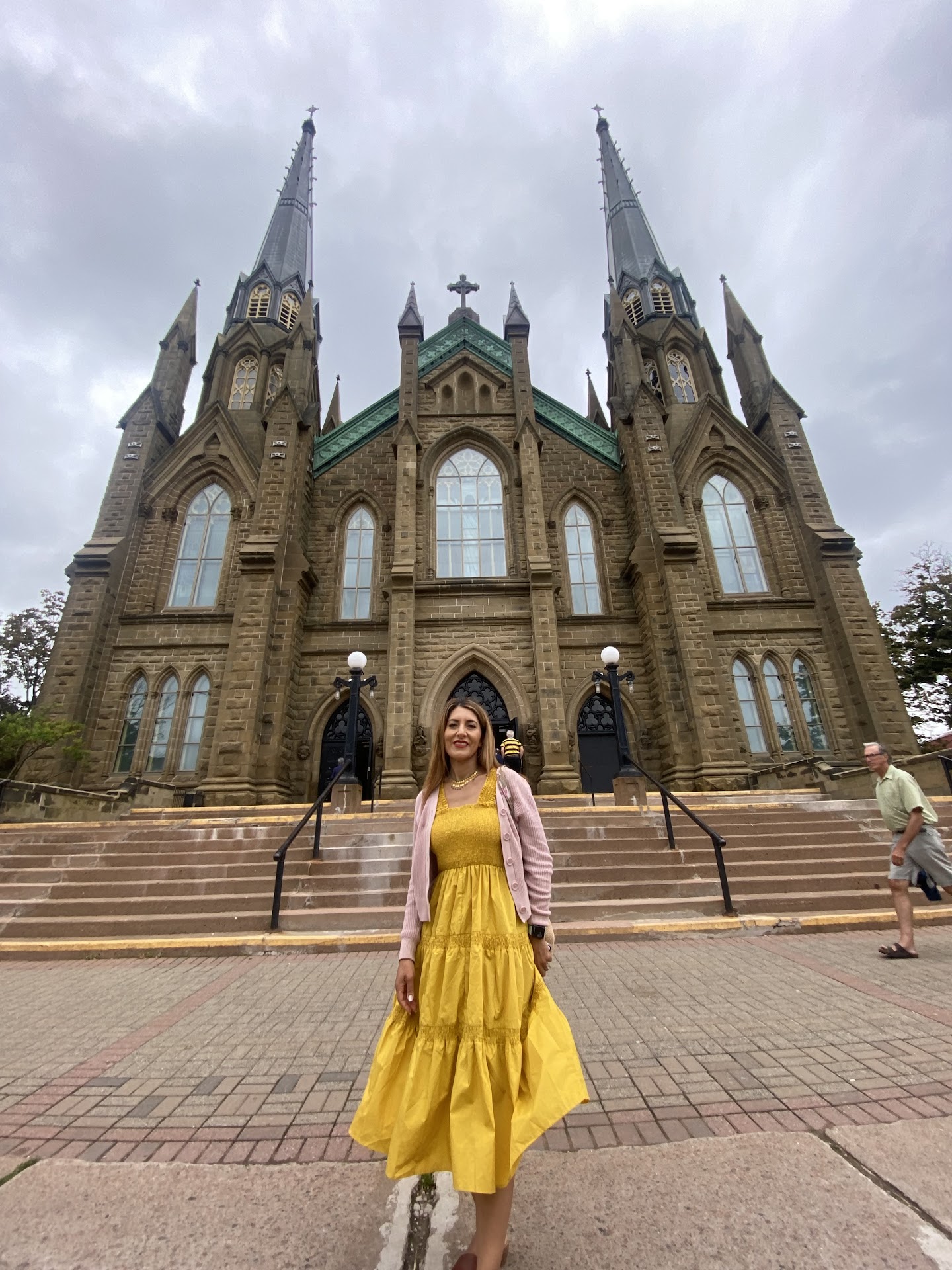
Built in the form of a Latin cross with 200-ft twin spires and the finest pipe organ in the province, the new cathedral was a tribute to the growing Diocese of Charlottetown. Alas, on March 7, 1913, just six years after the Cathedral's dedication, it was destroyed by fire.
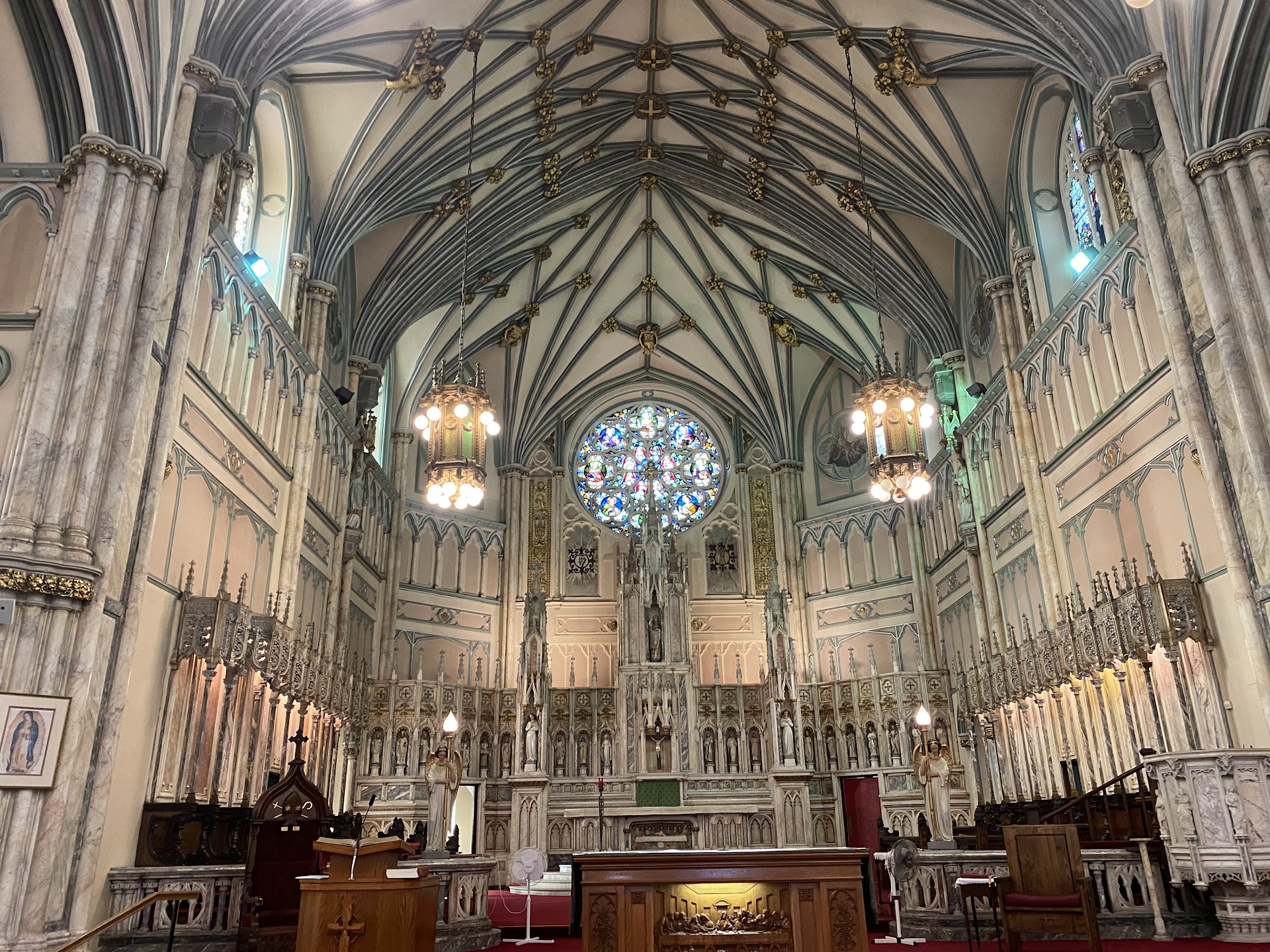
Scottish architect J. M. Hunter and contractors James Metcalfe and Company re-constructed the walls of the burned cathedral. Inspired by St. Patrick’s Cathedral in New York City, they procured the finest materials and craftsmanship to fashion an elegant English Gothic interior that far surpassed the original cathedral in magnificence. Bells similar in number and tone to those of St. Patrick’s Cathedral were installed in 1928 but later removed due to structural concerns with the bell tower.
When this fourth cathedral was completed in 1919, it was the largest and most fire-resistant cathedral in the Maritimes. One decade later, for the 100th anniversary of the Diocese of Charlottetown, the pope honoured the enormous financial sacrifices Islanders made to resurrect this house of God from its ashes by granting...
Read moreReview of St. Dunstan's Basilica: A Timeless Gem on Prince Edward Island Nestled in the heart of Charlottetown, Prince Edward Island, St. Dunstan's Basilica stands as a breathtaking testament to faith, history, and architectural grandeur. This iconic Catholic church, named after the revered St. Dunstan of Canterbury, is not only a spiritual sanctuary but also a cultural landmark that captivates visitors with its stunning beauty and serene atmosphere. From the moment you approach the basilica, its striking Gothic Revival architecture commands attention. The twin spires, reaching majestically toward the heavens, are a defining feature of Charlottetown's skyline. The intricate stonework, delicate tracery, and ornate details of the exterior reflect the craftsmanship and dedication of those who built this sacred space in the late 19th century. It’s impossible not to feel a sense of awe as you take in the church's imposing yet graceful presence. Stepping inside, you are immediately enveloped by a sense of peace and reverence. The interior is nothing short of spectacular, with its soaring vaulted ceilings, elegant stained glass windows, and meticulously carved wooden pews. The play of light through the stained glass creates a kaleidoscope of colors that dances across the walls, adding to the ethereal ambiance. The altar, adorned with exquisite statuary and gold accents, serves as the focal point of the sanctuary, drawing the eye and inspiring contemplation. One of the most remarkable aspects of St. Dunstan's Basilica is its ability to blend grandeur with intimacy. Despite its impressive size, the church feels warm and welcoming, inviting visitors to pause and reflect. Whether you are attending a Mass, lighting a candle, or simply sitting in quiet prayer, the atmosphere is profoundly moving. The history of St. Dunstan's Basilica adds another layer of significance to its beauty. Having survived a devastating fire in 1913, the church was lovingly restored to its former glory, a testament to the resilience and devotion of the local community. Today, it stands not only as a place of worship but also as a symbol of hope and perseverance. For those visiting Prince Edward Island, St. Dunstan's Basilica is an absolute must-see. Whether you are drawn by its architectural splendor, its spiritual significance, or its historical importance, the church offers a deeply enriching experience. It is a place where the past and present converge, inviting all who enter to connect with something greater than themselves. In every sense, St. Dunstan's Basilica is a masterpiece..a beautiful, sacred space that continues to inspire and uplift all who have the privilege of visiting. It is truly a jewel of Prince Edward Island and a treasure...
Read moreA Sacred Landmark of Faith and Heritage
During my visit to Charlottetown, I had the privilege of spending time at St. Dunstan’s Basilica, an enduring testament to the Christian faith and a cornerstone of Prince Edward Island’s spiritual and cultural life. As a Christian who does not belong to the Catholic tradition, I still felt a profound sense of reverence and admiration for this sacred place.
The basilica’s neo-Gothic architecture is striking, with its twin spires rising high above the city skyline—a visible reminder of the enduring presence of the Church. Inside, the atmosphere is serene and contemplative. Sunlight streams through the magnificent stained glass windows, casting vibrant colors across the pews and the intricately carved altar. It is clear that generations of believers have poured their devotion and care into maintaining this house of worship.
While our traditions may differ in certain practices, standing within these walls reminded me of the shared foundations of our faith in Christ. The beauty of St. Dunstan’s is not merely in its architecture but in the witness it bears to a community shaped by prayer, sacrament, and service.
I would encourage any Christian visitor, regardless of denomination, to take time to appreciate both the historical significance and the spiritual atmosphere of this basilica. It is a place where one can pause, reflect, and honor the faith that has inspired so many throughout the...
Read more