The National Museum of Ethiopia's Online Communication PLC has truly redefined the way we engage with history and culture. As a passionate enthusiast of Ethiopian heritage, I had the privilege of experiencing their online communication services, and I am delighted to share my exceptional journey. Here's why National Museum of Ethiopia's Online Communication PLC deserves the highest praise:
Immersive Virtual Exhibitions: National Museum of Ethiopia's Online Communication PLC has brilliantly brought the treasures of Ethiopian history and culture to life through their immersive virtual exhibitions. Seamlessly blending cutting-edge technology with rich multimedia content, the platform allows users to explore artifacts, artworks, and archaeological wonders with remarkable detail and interactivity. It's an extraordinary opportunity to delve into Ethiopia's heritage from anywhere in the world.
Expert-Led Guided Tours: The online communication services provided by the National Museum of Ethiopia offer expert-led guided tours that provide invaluable insights into the exhibits. Their knowledgeable guides take audiences on captivating journeys, sharing historical context, fascinating stories, and in-depth analyses of the artifacts. It's a unique chance to learn and engage with Ethiopia's cultural heritage through the expertise of passionate professionals.
Interactive Educational Programs: National Museum of Ethiopia's Online Communication PLC goes beyond mere exhibitions by offering interactive educational programs that cater to learners of all ages. From virtual workshops and lectures to engaging activities and quizzes, they foster a deep understanding and appreciation for Ethiopian history, art, and archaeology. The platform serves as an invaluable educational resource accessible to students, educators, and lifelong learners alike.
Engaging Community Forums: The online communication services provided by National Museum of Ethiopia facilitate meaningful connections among individuals passionate about Ethiopian culture. Through community forums and discussion boards, users can engage in thought-provoking conversations, share insights, and collaborate on projects. It's a vibrant space that fosters a sense of belonging and encourages the exchange of ideas.
User-Friendly Interface: National Museum of Ethiopia's Online Communication PLC has developed a user-friendly interface that makes navigating the platform effortless. The intuitive design ensures a seamless and enjoyable experience for users of all backgrounds and digital literacy levels. It's a testament to their commitment to inclusivity and accessibility.
Preservation and Conservation Efforts: By embracing online communication, the National Museum of Ethiopia demonstrates its commitment to preserving and conserving Ethiopia's cultural heritage. By digitizing artifacts and making them accessible to a global audience, they contribute to their long-term preservation while simultaneously promoting cultural understanding and appreciation.
In conclusion, the National Museum of Ethiopia's Online Communication PLC has revolutionized the way we connect with Ethiopian heritage. Through immersive virtual exhibitions, expert-led guided tours, interactive educational programs, engaging community forums, a user-friendly interface, and their dedication to preservation efforts, they have set a new standard in online communication for museums worldwide. I wholeheartedly recommend their services to anyone seeking a transformative and enriching experience of Ethiopia's vibrant history...
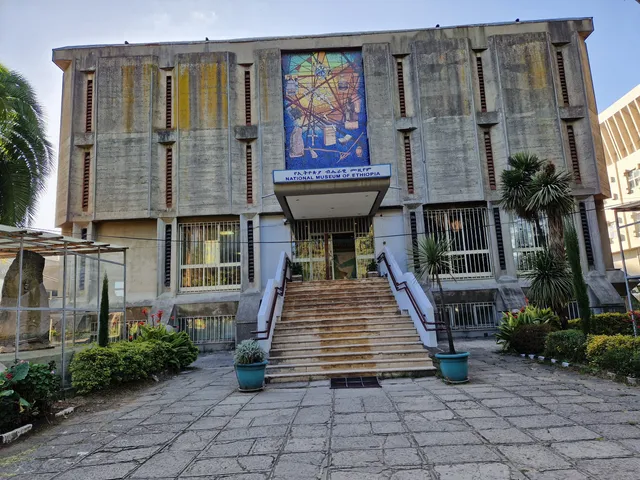
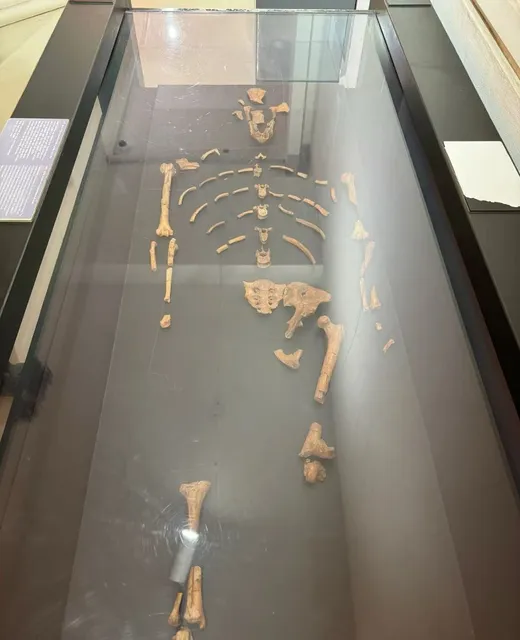
Read moreThe museum houses Ethiopia's artistic treasures. It contains many precious local archaeological finds such as the fossilized remains of early hominids, the most famous of which is "Lucy," the partial skeleton of a specimen of Australopithecus afarensis. Recently added to the basement gallery is a display on Selam, found between 2000 and 2004. This archaic fossil is estimated to date to 3.3 million years ago. In 1936, the concept of a museum was first introduced in Ethiopia when an exhibition was opened, displaying ceremonial costumes donated by the Solomonic dynasty and their close associates. The current NME grew from the establishment of the Institute of Archaeology, which was founded in 1958. The institute was founded to promote and facilitate the archaeological research mission in the northern part of Ethiopia by French archaeologists.

Stone statue from Addi-Galamo, Tigray Region (dated 6th-5th century BCE), part of the National Museum's collection. The statue is inscribed with a phrase in South Arabian, "For God Grants a Child to Yamanat".
The museum started its activities by exhibiting objects from these excavation missions. With the establishment of the Ethiopian Cultural Heritage Administration in 1976, the idea came up to open a National Museum, which was supported by the Government. The NME began to operate under the National Act which provides for the protection and preservation of antiquities, and has legislative authority governing all sites and monuments throughout the country of Ethiopia.

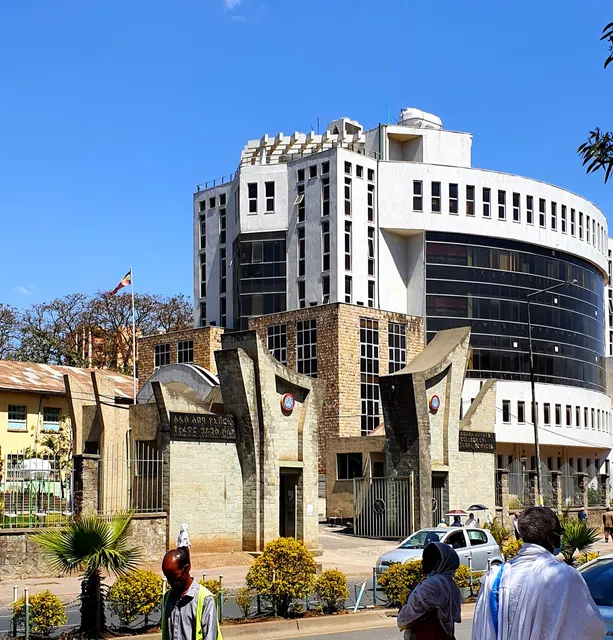
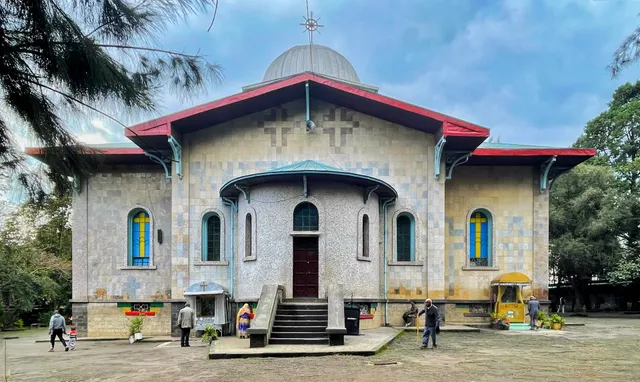
Ethiopian National Museum administration building, constructed in Italian style.
Later, the National Museum diversified its activities and organised into three working department, i.e. the conservation department, the documentation department and the exhibition and research department. The NME at present has four main exhibition sections. The basement is dedicated to archaeological and paleoanthropological sections. This area show the previously mentioned hominids. The first floor contains objects from ancient and medieval periods, as well as regalia and memorabilia from former rulers, who include Emperor Haile Selassie. The second floor shows art work in a chronological order, from traditional to contemporary works. Afewerk Tekle's massive African Heritage is one of the most notable pieces. Another painting depicts the meeting of Solomon and Sheba.[1] The second floor contains a collection of secular arts and crafts, including traditional weapons, jewellery, utensils, clothing and musical instruments.[1] Finally, the third floor has an ethnographic display. Here, the museum tries to give an overview of the cultural richness and variety of the peoples...
Read moreAs we stepped into the Ethiopian National Museum, we were immediately enveloped in an atmosphere buzzing with the energy of discovery and reverence for Ethiopia's rich cultural heritage. Our journey began with a mesmerizing encounter with "Lucy," the ancient hominid whose remarkably preserved skeletal remains offered a poignant glimpse into humanity's distant past.
Exploring the museum's halls, we were captivated by a treasure trove of archaeological wonders, from intricately crafted artifacts dating back millennia to ancient tools and pottery that spoke volumes about Ethiopia's enduring legacy of civilization. Each exhibit seemed to whisper tales of bygone eras, inviting us to unravel the mysteries of Ethiopia's past.
The ethnographic displays beckoned us into a vibrant tapestry of cultural diversity, where traditional clothing, intricate jewelry, and ceremonial objects painted a vivid portrait of Ethiopia's diverse ethnic tapestry. We marveled at the craftsmanship and symbolism embedded in each artifact, gaining a deeper appreciation for the rich tapestry of traditions that shape Ethiopian identity.
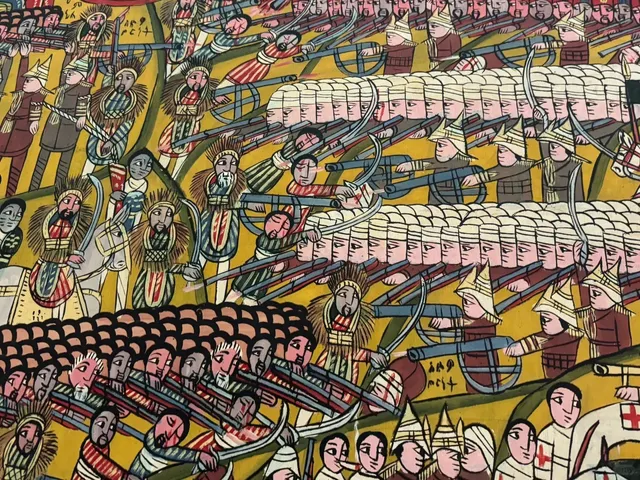
In the art galleries, we were transported into a world of spiritual splendor, as religious paintings, illuminated manuscripts, and ornate crosses adorned the walls, reflecting Ethiopia's deep-rooted spiritual heritage. The intricate details and vibrant colors of the artworks left an indelible impression on our hearts, evoking a sense of awe and reverence for Ethiopia's sacred artistic traditions.
Throughout our visit, the museum's commitment to research, conservation, and education shone brightly, underscoring its vital role as a custodian of Ethiopia's cultural legacy. From its groundbreaking scientific discoveries to its efforts in preserving endangered species and promoting sustainable practices, the museum stood as a beacon of hope for Ethiopia's cultural and natural heritage.
Leaving the Ethiopian National Museum, we carried with us not only a deeper understanding of Ethiopia's past but also a profound sense of connection to its vibrant present. It was a journey of discovery, enlightenment, and inspiration—one that left an indelible mark on our souls and ignited a newfound appreciation for the timeless beauty of Ethiopia's...
Read more