The park was built by Jean-Charles Adolphe Alphand, the engineer who headed the service of promenades and plantations created by Georges-Eugène Haussmann, with the assistance of city architect Gabriel Davioud and horticulturist Jean-Pierre Barillet-Deschamps. This was the team which together made the Bois de Boulogne, the Bois de Vincennes, and the other great landscape parks of the Second Empire. The project was decided in 1865, but construction did not actually begin until 1867, because of the long negotiations needed to buy the parcels of land needed for the park. The purpose of the park, according to Alphand, was "to bring life and movement to the center of a quarter until then left to isolation and abandon.
Unlike the Bois de Boulogne and Bois de Vincennes, the site for the future park did not have any trees or other vegetation. It was largely occupied by a large stone quarry, and to make the work more complicated, it was above a network of tunnels of abandoned mines, which were filled with human skeletons. These tunnels were part of the ossuary of Paris, popularly known as the catacombs of Paris, where the remains of some six million Parisians had been moved at the end of the 18th century. Before construction of the park could begin, some eight hundred skeletons were removed from the tunnels. The work was also complicated by the track of the railroad line which circled Paris, which passed directly through the site.
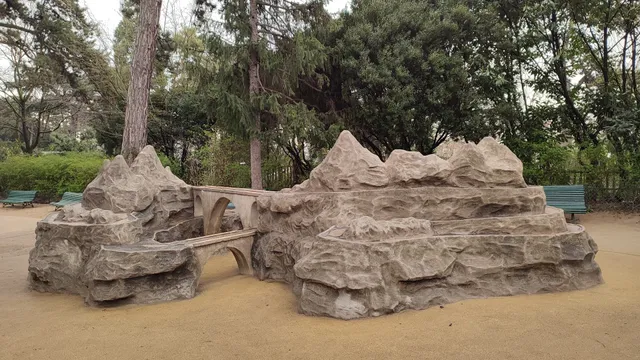
Despite these difficulties, the work went ahead briskly. A one-hectare artificial lake was dug, fed by an artificial stream that passed over an artificial cascade made of rocks and cement. Stairways were constructed up the hills, with rustic-looking railings made of cement formed to resemble logs. Winding roads and paths were built throughout the park. Davioud designed and built picturesque gatehouses, pavilions, a theatre, bandstand and a cafe to fit into the landscape. Barillet-Deschamps planted hundreds of trees and bushes, and laid out sloping lawns and flowerbeds. Every feature of the park was designed to create an idealized natural landscape, with space for both relaxation and recreation, which could be enjoyed by all classes of Parisians. The park was officially dedicated in 1869, but work on the park continued until 1878. According to a park legend, on the day of the park official opening someone made a mistake with the plumbing, and the water in the artificial lake drained away in a single day. According to the legend, the park engineer was so distraught that he committed suicide. It is recorded that the lake did in fact drain accidentally in one day in 1878, but there is no record of a suicide.
During the 1871 Paris Commune, the park was the site of a military encampment, and witnessed fighting between the army and the Communards. In October 1897, the park was the setting of secret meetings between some of the figures involved in the Dreyfus Affair, including Ferdinand Walsin Esterhazy and Max von Schwartzkoppen.
During World War II, a French soldier, Pierre Durand, was killed by a bomb in the park. A small monument near the lake remembers this event. In 1942, during the German occupation, one of the main monuments of the park, an 1893 allegorical statue of the French Revolution by sculptor Auguste Paris, was taken away and melted down for its bronze.
For many decades the most famous structure in the park was the Palais du Bardo, a reduced-size replica of the palace of the Bey of Tunis, made of wood and stucco, which was originally made for the Paris Universal...
Read moreParc Montsouris is a public park situated in southern Paris, France. Located in the 14th arrondissement, it was officially inaugurated in 1875 after an early opening in 1869.
Parc Montsouris
Alley in Parc Montsouris

Wikimedia | © OpenStreetMap
TypeUrban parkLocation14th arrondissement, ParisCoordinates48°49′20″N 2°20′18″EArea38 acres (15 ha)Created2 October 1875Operated byDirection des Espaces Verts et de l'Environnement (DEVE)StatusOpen all yearPublic transit accessLocated near the RER station Cité Universitaire
Parc Montsouris is one of the four large urban public parks, along with the Bois de Boulogne, the Bois de Vincennes and the Parc des Buttes Chaumont, created by Emperor Napoleon III and his prefect of the Seine, Georges-Eugène Haussmann, at each of the cardinal points of the compass around the city, in order to provide green space and recreation for the rapidly growing population of Paris.1] The park is 15.5 hectares in area, designed as an English landscape garden by Jean-Charles Adolphe Alphand.[2]
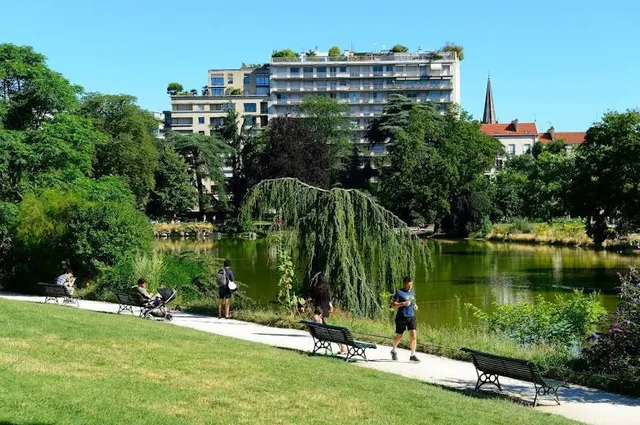
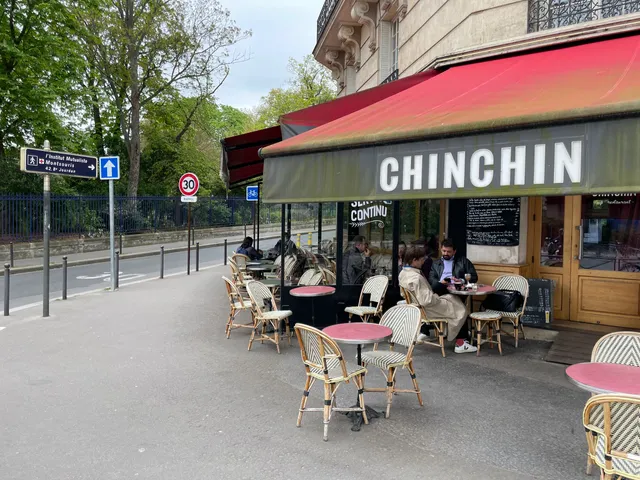
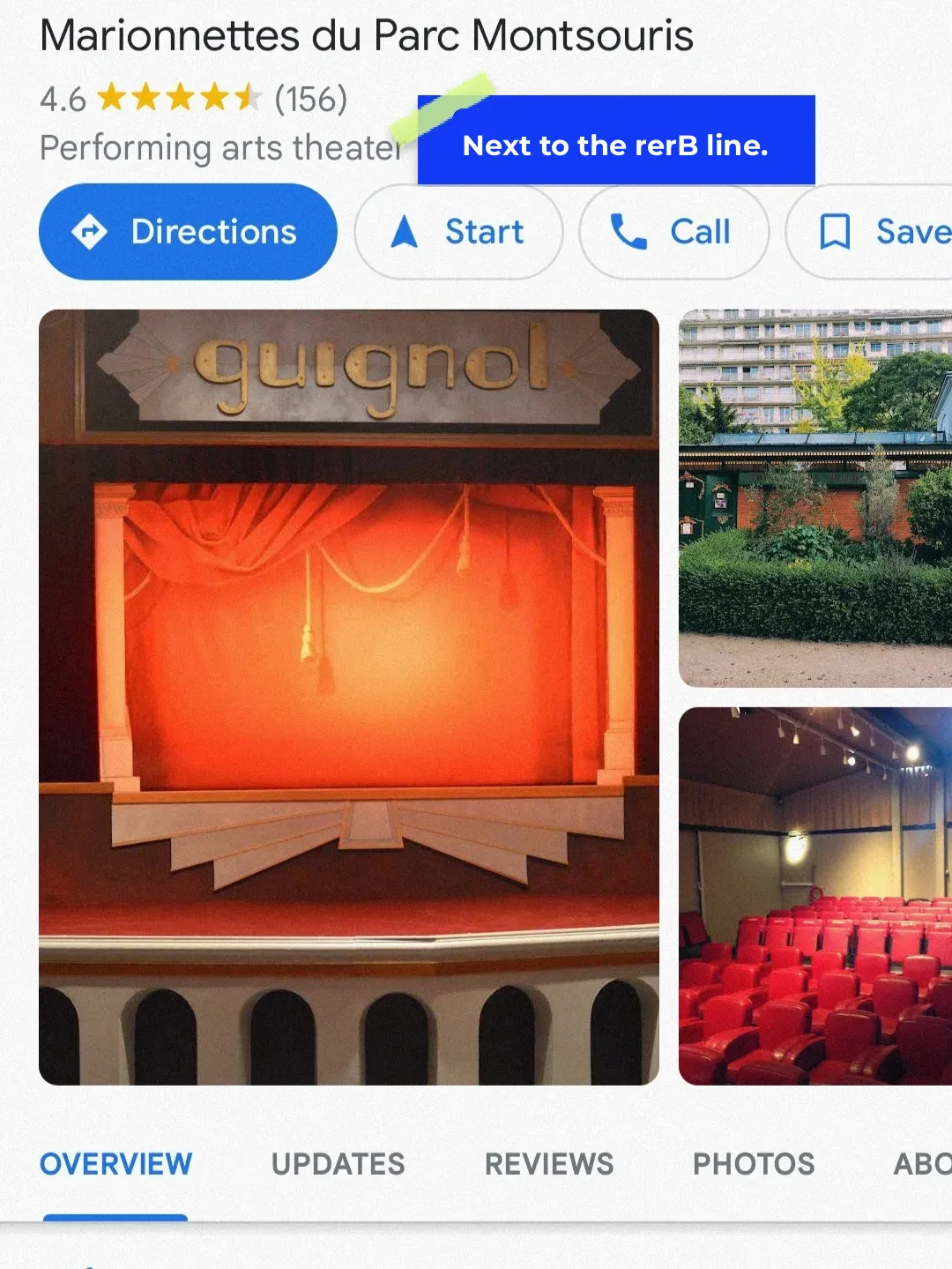
The park contains a lake, a cascade, wide sloping lawns, as well as many notable varieties of trees, shrubs and flowers. It is also home to a meteorology station, a cafe and a guignol theatre. The roads of the park are popular with joggers on weekends. Parc Montsouris is bounded to the south by Boulevard Jourdan and the Cité Internationale Universitaire de Paris (CIUP), to the north by Avenue Reille, to the east by Rue Gazan and the Rue de la Cité Universitaire and to the west by Rue Nansouty and Rue Émile Deutsch-de-la-Meurthe. Cité Universitaire station on RER B is located in the southern part of Parc Montsouris, where it connects to Île-de-France tramway Line 3a.
EtymologyEdit

People in the Parc Montsouris in 2022.
According to the official website of the Park and other sources, the name of the park came from an old windmill, called the Moulin de Moque-Souris, which in the 18th century stood not far from the park site at the crossroads of rue d'Alesia and rue de la Tomb-Issoire.[3 Moque-Souris ("mocks-the-mice") was a common name for windmills in France at the time; it was a facetious name, suggesting that the miller dared the mice to find any grain inside. The name over time changed from moque-souris to Montsouris.[5]
Another possible origin of 'Montsouris' is common with the name of a former principal roadway, today's rue de la Tombe Issoire: after leaving the city to the south, it passed through a Roman-era cemetery that had fallen into disuse from the 4th century,[6] and it may have been one these abandoned tombs that an influential 13th-century writer declared to be the burial place of "Ysoré", a defeated giant of popular legend.[7] No matter the veracity of the story, many of the area's landmarks had taken the 'tombe Issoire' name by the 18th century,[8] and if 'Issoire' emerged from 'Ysoré', 'Montsouris' could be a 'mont Ysoré' that...
Read moreParc Montsouris in Paris stands as a verdant oasis, inviting locals and visitors alike to escape the bustling city and immerse themselves in nature's tranquility. Covering a wide space of land on the southern edge of the city, this meticulously landscaped park offers a perfect blend of relaxation, recreational activities, and scenic beauty.
One of Parc Montsouris' most enticing features is its expansive greenery, adorned with century-old trees and lush lawns. The carefully manicured paths winding through the park create a serene atmosphere, making it an ideal spot for leisurely strolls or peaceful contemplation. The sense of seclusion within the park's boundaries provides a welcomed respite from the urban hustle, allowing visitors to unwind in a calm and rejuvenating environment.
The park's charm extends beyond its peaceful ambiance, offering ample opportunities for diverse recreational activities. Parc Montsouris boasts well-maintained tennis courts and a charming lake, adding an active dimension to the tranquil surroundings. Joggers and runners find solace along the meandering paths, enjoying a refreshing workout amidst the park's natural beauty. The open spaces beckon for impromptu picnics, where friends and families can gather on the grassy expanses, savoring a leisurely meal surrounded by the park's idyllic scenery.
The Parc Montsouris lake, with its resident ducks and swans, adds a touch of enchantment to the landscape. The gentle ripples of the water contribute to the park's calming ambiance, making it an ideal spot for contemplation or simply unwinding with a good book.
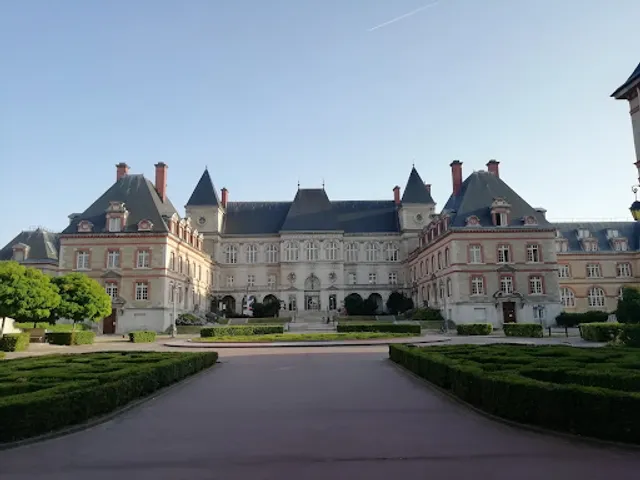
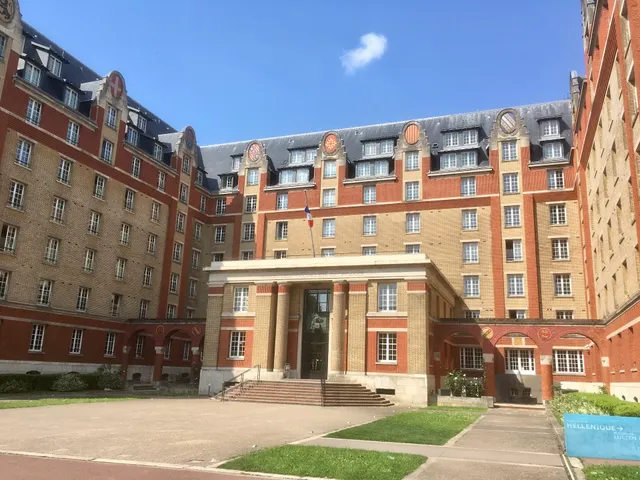
For those seeking a more structured escape, the park features the iconic Cité Internationale Universitaire de Paris nearby, showcasing a variety of architectural styles and international influences. This adds an intellectual and cultural dimension to the park experience, providing an opportunity for visitors to explore the rich diversity that...
Read more