HTML SitemapExplore
logo
Find Things to DoFind The Best Restaurants

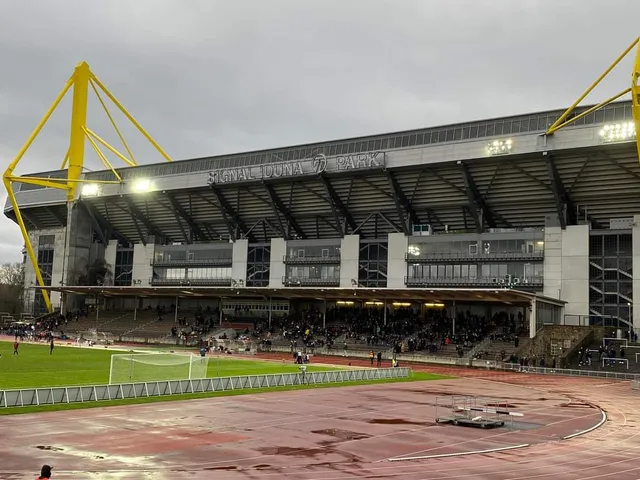
Signal Iduna Park — Attraction in Dortmund

Name
Signal Iduna Park
Description
Nearby attractions
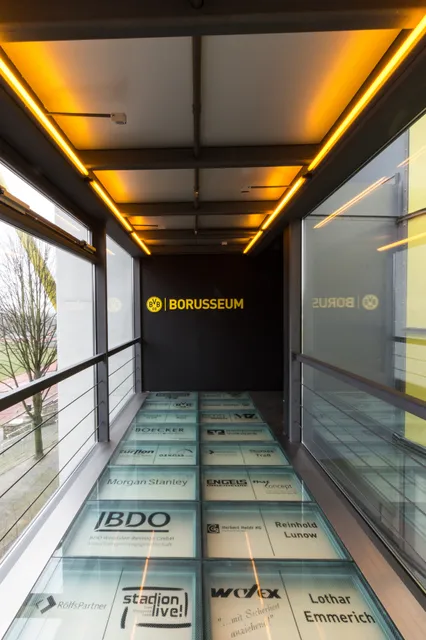
Borusseum
Strobelallee 50, 44139 Dortmund, Germany
Rote Erde Club
44139 Dortmund, Germany
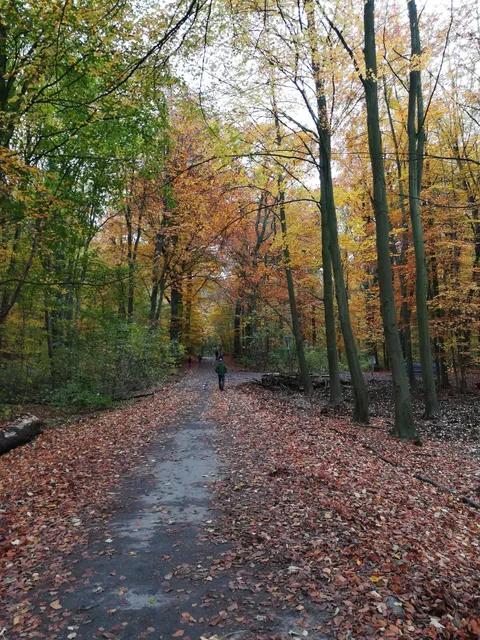
Bolmke Park
44225 Dortmund, Germany
Nearby restaurants
Steakhouse Rodizio
Rosemeyerstraße 2-4, 44139 Dortmund, Germany
Restaurant Rosenterrassen
Strobelallee 41, 44139 Dortmund, Germany
Ciccio's | Italienisches Restaurant in Dortmund
Lindemannstraße 77, 44137 Dortmund, Germany
ACQUA Dortmund
Rosemeyerstraße 14, 44139 Dortmund, Germany
Restaurant Steigenberger
Wittekindstraße 30, 44139 Dortmund, Germany
Pizzeria Regina
Hohe Str. 127, 44139 Dortmund, Germany
Toyka's
Victor-Toyka-Straße 6, 44139 Dortmund, Germany
Kohinoor Indian Restaurant
Wittekindstraße 35, 44139 Dortmund, Germany
Nearby hotels
Mercure Hotel Dortmund Messe
Strobelallee 41, 44139 Dortmund, Germany
B&B HOTEL Dortmund-Messe
Wittekindstraße 106, 44139 Dortmund, Germany
Dorint an den Westfalenhallen Dortmund
Lindemannstraße 88, 44137 Dortmund, Germany
Steigenberger Hotel Dortmund
Berswordtstraße 2, 44139 Dortmund, Germany
Hotel Gildenhof
Hohe Str. 139, 44139 Dortmund, Germany
Related posts
BVB Dortmund : A Pilgrimage for Football Fans💛🖤⚽️
Keywords
Signal Iduna Park tourism.Signal Iduna Park hotels.Signal Iduna Park bed and breakfast. flights to Signal Iduna Park.Signal Iduna Park attractions.Signal Iduna Park restaurants.Signal Iduna Park travel.Signal Iduna Park travel guide.Signal Iduna Park travel blog.Signal Iduna Park pictures.Signal Iduna Park photos.Signal Iduna Park travel tips.Signal Iduna Park maps.Signal Iduna Park things to do.
Signal Iduna Park things to do, attractions, restaurants, events info and trip planning
Signal Iduna Park
GermanyNorth Rhine-WestphaliaDortmundSignal Iduna Park

Basic Info

Signal Iduna Park

Strobelallee 50, 44139 Dortmund, Germany
4.7(15.5K)
Open 24 hours
Save
spot

Ratings & Description

Info

Entertainment
Family friendly
Accessibility
attractions: Borusseum, Rote Erde Club, Bolmke Park, restaurants: Steakhouse Rodizio, Restaurant Rosenterrassen, Ciccio's | Italienisches Restaurant in Dortmund, ACQUA Dortmund, Restaurant Steigenberger, Pizzeria Regina, Toyka's, Kohinoor Indian Restaurant
logoLearn more insights from Wanderboat AI.
Phone
+49 231 90200
Website
signal-iduna-park.de

Plan your stay

hotel
Pet-friendly Hotels in Dortmund
Find a cozy hotel nearby and make it a full experience.
hotel
Affordable Hotels in Dortmund
Find a cozy hotel nearby and make it a full experience.
hotel
The Coolest Hotels You Haven't Heard Of (Yet)
Find a cozy hotel nearby and make it a full experience.
hotel
Trending Stays Worth the Hype in Dortmund
Find a cozy hotel nearby and make it a full experience.

Reviews

Nearby attractions of Signal Iduna Park

Borusseum

Rote Erde Club

Bolmke Park

Borusseum

Borusseum

4.7

(734)

Closed
Click for details
Rote Erde Club

Rote Erde Club

4.5

(76)

Open until 12:00 AM
Click for details
Bolmke Park

Bolmke Park

4.5

(237)

Open until 12:00 AM
Click for details

Things to do nearby

Der Kleine Prinz - Ein immersives Märchen
Mon, Dec 8 • 1:00 PM
Phoenixplatz 4, 44263
View details
Candlelight: Weihnachtsklassiker
Thu, Dec 11 • 6:00 PM
Brückstraße 66, Dortmund, Germany, 44135
View details
Candlelight: Magische Filmmusik
Fri, Dec 12 • 6:00 PM
Schützenstraße 35, Dortmund, 44147
View details

Nearby restaurants of Signal Iduna Park

Steakhouse Rodizio

Restaurant Rosenterrassen

Ciccio's | Italienisches Restaurant in Dortmund

ACQUA Dortmund

Restaurant Steigenberger

Pizzeria Regina

Toyka's

Kohinoor Indian Restaurant

Steakhouse Rodizio

Steakhouse Rodizio

4.5

(1.7K)

$$$

Click for details
Restaurant Rosenterrassen

Restaurant Rosenterrassen

3.7

(47)

$$

Click for details
Ciccio's | Italienisches Restaurant in Dortmund

Ciccio's | Italienisches Restaurant in Dortmund

4.4

(845)

Click for details
ACQUA Dortmund

ACQUA Dortmund

4.3

(256)

$$$

Click for details
Get the Appoverlay
Get the AppOne tap to find yournext favorite spots!
Wanderboat LogoWanderboat

Your everyday Al companion for getaway ideas

CompanyAbout Us
InformationAI Trip PlannerSitemap
SocialXInstagramTiktokLinkedin
LegalTerms of ServicePrivacy Policy

Get the app

© 2025 Wanderboat. All rights reserved.
logo

Reviews of Signal Iduna Park

4.7
(15,466)
avatar
5.0
6y

THE YELLOW WALL OF THE RUHR Attacking football and low ticket prices create one of the highest average attendances in Europe – this is a popular team. Jürgen Klopp’s arrival at Borussia Dortmund in the summer of 2008 heralded an upswing for the great German club. A Champions League final in 2013 and two Bundesliga titles under the charismatic Klopp made the world pay attention once more to Dortmund, a club that had been in the doldrums for a while. Dortmund’s earlier golden era reached its peak with victory in the 1997 Champions League sinal, with a lob from Lars Ricken over the head of the Juventus goalkeeper Angelo Peruzzi. This glorious period was followed by economic crisis, and despite winning the Bundesliga shield of 2002 the club suffered financial hardships. They were eventually saved by, among other measures, a loan from their rivals Bayern Munich. To survive in the long term, Dortmund needed to rethink and they now started to take a chance on homegrown talents. This policy led to the production of talented players such as Mario Götze, Marcel Schmelzer and Nuri Sahin, which led to Champions League success in 2013. The club’s simple yellow-and-black roundel badge carries the year the club was founded and the legend BVB – by which the team are commonly known in Germany). BVB stands for Ballspielverein Borussia (literally ‘Ball games club Borussia’), although some fans insist it stands for Borussen vom Borsigplatz, or ‘Borussia fans from Borsigplatz’, after the city square where the club’s founders drank the local Borussia beer at the restaurant Zum Wildschütz.

CLUB: Ballspielverein Borussia 09 Dortmund NICKNAMES: Die Borussen, Die Schwarzgelben (the Black and Yellows) & Der BVB FOUNDED: 1909 STADIUM: Westfalenstadion (Signal Iduna Park), (81,359 capacity) HISTORIC PLAYERS: Michael Zorc, Karl-Heinz Riedle, Matthias Sammer, Mario Götze and Marco Reus

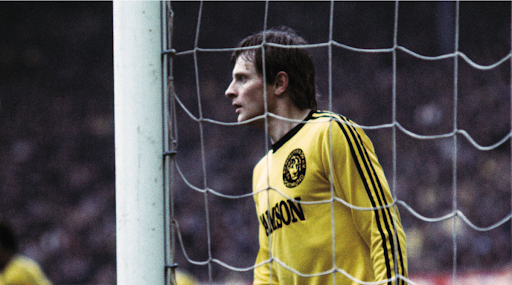
Dortmund’s Klaus Ackermann wearing the unpopular Samson tobacco-influenced club...

   Read more
avatar
5.0
6y

Eightyone thousand three hundred and sixty-five

That's how many fans fit into SIGNAL IDUNA PARK, Germany's largest football stadium

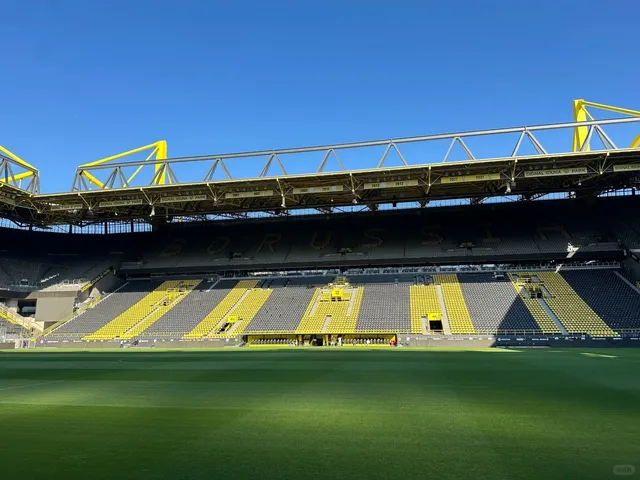
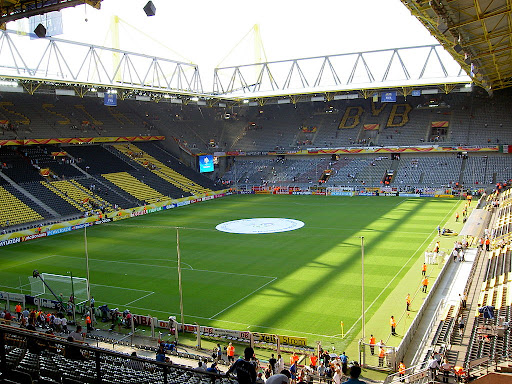
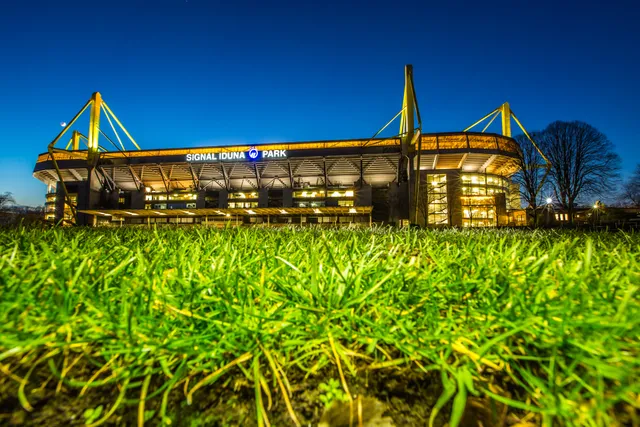
If you had told the people of Dortmund 30 years ago about a football temple with a capacity of over 80,000 in their city centre - a stadium boasting a glass façade, undersoil heating and the largest stand in Europe - they would have all smiled tolerantly at such a fanciful notion. Nowadays, though, the SIGNAL IDUNA PARK on Strobelallee is Germany’s largest football stadium with a capacity of exactly 81,365. The fact that the outlay for Borussia’s enormous arena almost crippled the club financially is another matter entirely – and one which was fortunately resolved at the end of May 2006.

The venue located on Strobelallee – known as “the temple” by fans and regularly dubbed “the most beautiful stadium in the country” by the press, professionals and VIPS alike – has been one of the largest and most comfortable stadia in Europe since the third expansion phase was completed. A long process of construction and conversion reached its peak when the stadium was renovated in the run-up the 2006 FIFA World Cup. Yet works are carried out on the stadium every summer, with BVB investing some ten million Euro in the renovation of the now-ageing arena in 2012 alone: both the grass and the drainage in the southern half of the pitch were replaced; the south stand was strengthened by support measures; concrete sanitation measures were implemented in the northern part; seven new VIP boxes were added in the part of the east stand where the press area used to be; new cameras armed with impressive digital technology provide greater security, with the away area and the lower tier of the south stand in particular under increased observation; and in the year before new scoreboards...

   Read more
avatar
5.0
4y

The story behind the Signal Iduna Park Borussia Dortmund’s Signal Iduna Park home emits an enchanting feeling to constantly draw in capacity crowds of over 81,000. Borussia Dortmund’s Signal Iduna Park home emits an enchanting feeling to constantly draw in capacity crowds of over 81,000. The Signal Iduna Park is a monster of a stadium. Borussia Dortmund’s 81,365-capacity home is one of the world’s most iconic grounds, boasting the highest average attendance in Europe and providing an atmosphere envied across sports.

Prior to the construction of the Signal Iduna Park, Dortmund’s home was the Stadion Rote Erde. The stadium had an eventual capacity of 42,000 spectators in the 1960s, but this was deemed insufficient as BVB became the first German team to lift a European trophy (the 1966 Cup Winners’ Cup) and interest spiked. Plans had been made prior to that for a new stadium but neither the city of Dortmund nor the German government were willing to help finance the project.

Borussia’s big break, however, came in 1971 when Cologne pulled out of hosting the 1974 FIFA World Cup and the funds were instead given to Dortmund. A 54,000-capacity stadium – the Westfalenstadion – was constructed within three years next to the Rote Erde. It hosted four matches during the tournament but remarkably it would be two years before Bundesliga football was seen at Dortmund’s new home – but Borussia were...

   Read more
Page 1 of 7
Previous
Next

Posts

BVB Dortmund : A Pilgrimage for Football Fans💛🖤⚽️
Harper MartinezHarper Martinez
BVB Dortmund : A Pilgrimage for Football Fans💛🖤⚽️
Raşit ÖzdemirRaşit Özdemir
THE YELLOW WALL OF THE RUHR Attacking football and low ticket prices create one of the highest average attendances in Europe – this is a popular team. Jürgen Klopp’s arrival at Borussia Dortmund in the summer of 2008 heralded an upswing for the great German club. A Champions League final in 2013 and two Bundesliga titles under the charismatic Klopp made the world pay attention once more to Dortmund, a club that had been in the doldrums for a while. Dortmund’s earlier golden era reached its peak with victory in the 1997 Champions League sinal, with a lob from Lars Ricken over the head of the Juventus goalkeeper Angelo Peruzzi. This glorious period was followed by economic crisis, and despite winning the Bundesliga shield of 2002 the club suffered financial hardships. They were eventually saved by, among other measures, a loan from their rivals Bayern Munich. To survive in the long term, Dortmund needed to rethink and they now started to take a chance on homegrown talents. This policy led to the production of talented players such as Mario Götze, Marcel Schmelzer and Nuri Sahin, which led to Champions League success in 2013. The club’s simple yellow-and-black roundel badge carries the year the club was founded and the legend BVB – by which the team are commonly known in Germany). BVB stands for Ballspielverein Borussia (literally ‘Ball games club Borussia’), although some fans insist it stands for Borussen vom Borsigplatz, or ‘Borussia fans from Borsigplatz’, after the city square where the club’s founders drank the local Borussia beer at the restaurant Zum Wildschütz. CLUB: Ballspielverein Borussia 09 Dortmund NICKNAMES: Die Borussen, Die Schwarzgelben (the Black and Yellows) & Der BVB FOUNDED: 1909 STADIUM: Westfalenstadion (Signal Iduna Park), (81,359 capacity) HISTORIC PLAYERS: Michael Zorc, Karl-Heinz Riedle, Matthias Sammer, Mario Götze and Marco Reus Dortmund’s Klaus Ackermann wearing the unpopular Samson tobacco-influenced club crest in 1976.
Arban ShehuArban Shehu
Eightyone thousand three hundred and sixty-five That's how many fans fit into SIGNAL IDUNA PARK, Germany's largest football stadium If you had told the people of Dortmund 30 years ago about a football temple with a capacity of over 80,000 in their city centre - a stadium boasting a glass façade, undersoil heating and the largest stand in Europe - they would have all smiled tolerantly at such a fanciful notion. Nowadays, though, the SIGNAL IDUNA PARK on Strobelallee is Germany’s largest football stadium with a capacity of exactly 81,365. The fact that the outlay for Borussia’s enormous arena almost crippled the club financially is another matter entirely – and one which was fortunately resolved at the end of May 2006. The venue located on Strobelallee – known as “the temple” by fans and regularly dubbed “the most beautiful stadium in the country” by the press, professionals and VIPS alike – has been one of the largest and most comfortable stadia in Europe since the third expansion phase was completed. A long process of construction and conversion reached its peak when the stadium was renovated in the run-up the 2006 FIFA World Cup. Yet works are carried out on the stadium every summer, with BVB investing some ten million Euro in the renovation of the now-ageing arena in 2012 alone: both the grass and the drainage in the southern half of the pitch were replaced; the south stand was strengthened by support measures; concrete sanitation measures were implemented in the northern part; seven new VIP boxes were added in the part of the east stand where the press area used to be; new cameras armed with impressive digital technology provide greater security, with the away area and the lower tier of the south stand in particular under increased observation; and in the year before new scoreboards were installed.
See more posts
See more posts
hotel
Find your stay

Pet-friendly Hotels in Dortmund

Find a cozy hotel nearby and make it a full experience.

BVB Dortmund : A Pilgrimage for Football Fans💛🖤⚽️
Harper Martinez

Harper Martinez

hotel
Find your stay

Affordable Hotels in Dortmund

Find a cozy hotel nearby and make it a full experience.

Get the Appoverlay
Get the AppOne tap to find yournext favorite spots!
THE YELLOW WALL OF THE RUHR Attacking football and low ticket prices create one of the highest average attendances in Europe – this is a popular team. Jürgen Klopp’s arrival at Borussia Dortmund in the summer of 2008 heralded an upswing for the great German club. A Champions League final in 2013 and two Bundesliga titles under the charismatic Klopp made the world pay attention once more to Dortmund, a club that had been in the doldrums for a while. Dortmund’s earlier golden era reached its peak with victory in the 1997 Champions League sinal, with a lob from Lars Ricken over the head of the Juventus goalkeeper Angelo Peruzzi. This glorious period was followed by economic crisis, and despite winning the Bundesliga shield of 2002 the club suffered financial hardships. They were eventually saved by, among other measures, a loan from their rivals Bayern Munich. To survive in the long term, Dortmund needed to rethink and they now started to take a chance on homegrown talents. This policy led to the production of talented players such as Mario Götze, Marcel Schmelzer and Nuri Sahin, which led to Champions League success in 2013. The club’s simple yellow-and-black roundel badge carries the year the club was founded and the legend BVB – by which the team are commonly known in Germany). BVB stands for Ballspielverein Borussia (literally ‘Ball games club Borussia’), although some fans insist it stands for Borussen vom Borsigplatz, or ‘Borussia fans from Borsigplatz’, after the city square where the club’s founders drank the local Borussia beer at the restaurant Zum Wildschütz. CLUB: Ballspielverein Borussia 09 Dortmund NICKNAMES: Die Borussen, Die Schwarzgelben (the Black and Yellows) & Der BVB FOUNDED: 1909 STADIUM: Westfalenstadion (Signal Iduna Park), (81,359 capacity) HISTORIC PLAYERS: Michael Zorc, Karl-Heinz Riedle, Matthias Sammer, Mario Götze and Marco Reus Dortmund’s Klaus Ackermann wearing the unpopular Samson tobacco-influenced club crest in 1976.
Raşit Özdemir

Raşit Özdemir

hotel
Find your stay

The Coolest Hotels You Haven't Heard Of (Yet)

Find a cozy hotel nearby and make it a full experience.

hotel
Find your stay

Trending Stays Worth the Hype in Dortmund

Find a cozy hotel nearby and make it a full experience.

Eightyone thousand three hundred and sixty-five That's how many fans fit into SIGNAL IDUNA PARK, Germany's largest football stadium If you had told the people of Dortmund 30 years ago about a football temple with a capacity of over 80,000 in their city centre - a stadium boasting a glass façade, undersoil heating and the largest stand in Europe - they would have all smiled tolerantly at such a fanciful notion. Nowadays, though, the SIGNAL IDUNA PARK on Strobelallee is Germany’s largest football stadium with a capacity of exactly 81,365. The fact that the outlay for Borussia’s enormous arena almost crippled the club financially is another matter entirely – and one which was fortunately resolved at the end of May 2006. The venue located on Strobelallee – known as “the temple” by fans and regularly dubbed “the most beautiful stadium in the country” by the press, professionals and VIPS alike – has been one of the largest and most comfortable stadia in Europe since the third expansion phase was completed. A long process of construction and conversion reached its peak when the stadium was renovated in the run-up the 2006 FIFA World Cup. Yet works are carried out on the stadium every summer, with BVB investing some ten million Euro in the renovation of the now-ageing arena in 2012 alone: both the grass and the drainage in the southern half of the pitch were replaced; the south stand was strengthened by support measures; concrete sanitation measures were implemented in the northern part; seven new VIP boxes were added in the part of the east stand where the press area used to be; new cameras armed with impressive digital technology provide greater security, with the away area and the lower tier of the south stand in particular under increased observation; and in the year before new scoreboards were installed.
Arban Shehu

Arban Shehu

See more posts
See more posts