If you're interested in exploring the trails around Neuschwanstein Castle, there are several options that provide stunning views of the castle and the surrounding Bavarian Alps:
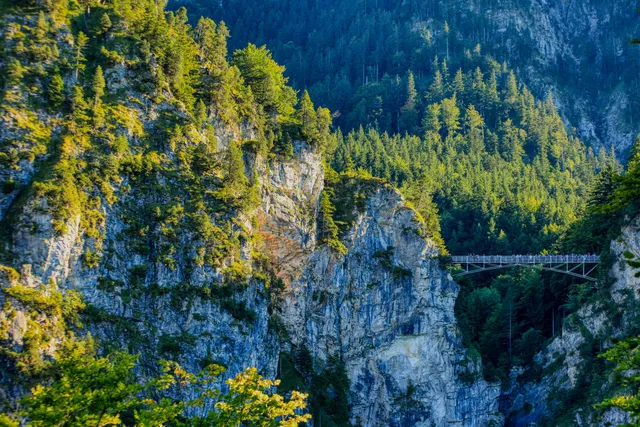
Marienbrücke (Mary’s Bridge) Trail • Distance: 1.5 km one-way from the castle • Duration: 30 to 45 minutes (round trip) • Difficulty: Moderate This trail leads from the Castle to Marienbrücke, the famous bridge that spans the Pöllat Gorge and offers the most iconic view of the castle. The path is well-marked but includes a steep incline, so be prepared for a bit of a climb. The reward is a breathtaking view of the castle with the surrounding mountains and valleys. The trail can be busy, especially during peak tourist season.
Schwangau to Neuschwanstein Castle Trail • Distance: 4 km one-way • Duration: 1.5 to 2 hours • Difficulty: Easy to Moderate This trail starts in the village of Schwangau and gradually ascends towards Neuschwanstein Castle. It’s a scenic walk through forests and meadows, offering occasional views of the castle from different angles. The trail is well-maintained and relatively easy, making it suitable for most visitors. You can combine this with other trails or continue to Marienbrücke for an extended hike.
Alpsee Lake Loop Trail • Distance: 5 km • Duration: 1.5 to 2 hours • Difficulty: Easy This circular trail around Alpsee Lake offers beautiful views of both Neuschwanstein and Hohenschwangau Castles, often reflected in the calm waters of the lake. The trail is mostly flat and well-maintained, making it an easy and relaxing walk. There are several vantage points along the way where you can stop to enjoy the scenery and take photos.
Tegelberg Mountain Trails • Distance: Varies depending on the route (several options available) • Duration: 2 to 4 hours for most routes • Difficulty: Moderate to Difficult For those looking for a more challenging hike, Tegelberg Mountain offers several trails with varying levels of difficulty. You can either hike up the mountain or take the Tegelbergbahn cable car to the summit and hike down. The trails provide panoramic views of Neuschwanstein Castle, the surrounding lakes, and the Alps. The "Drei-Schlösser-Blick" (Three Castles View) trail is particularly popular for its views of Neuschwanstein, Hohenschwangau, and the ruins of Falkenstein Castle.
Pöllat Gorge (Pöllatschlucht) Trail • Distance: 2-3 km • Duration: 1 to 1.5 hours • Difficulty: Moderate This trail takes you through the dramatic Pöllat Gorge, with its waterfalls, rocky cliffs, and wooden walkways. The trail eventually leads up to Marienbrücke, where you can enjoy a stunning view of Neuschwanstein Castle. The trail includes some steep sections and steps, but the experience of walking through the gorge is well worth it. This trail is particularly enjoyable for those who appreciate natural scenery combined with the historical and architectural beauty of the castle.
Königsrunde (King’s Round) • Distance: 6 km • Duration: 2 to 3 hours • Difficulty: Moderate The Königsrunde is a circular hiking trail that offers a comprehensive tour of the area surrounding Neuschwanstein and Hohenschwangau Castles. The trail takes you through forests, meadows, and along the shores of Alpsee and Schwansee lakes. It provides varied perspectives of the castles, from close-up views to distant panoramas, making it a great option for those looking to immerse themselves in the natural and historical beauty...
Read moreNeuschwanstein Castle, located at Neuschwansteinstraße 20 in the Bavarian municipality of Schwangau, is one of the most celebrated landmarks in Germany and an icon of romantic architecture.
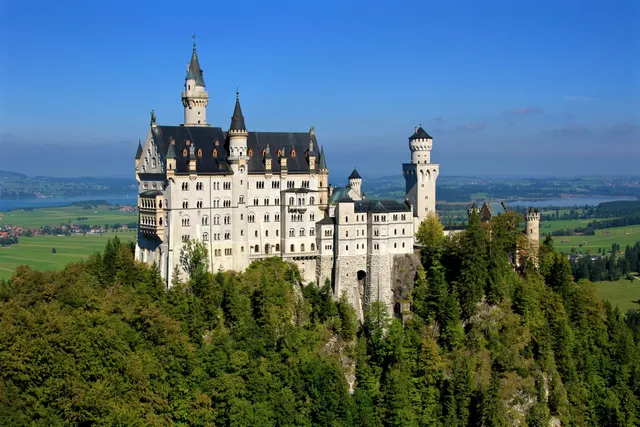
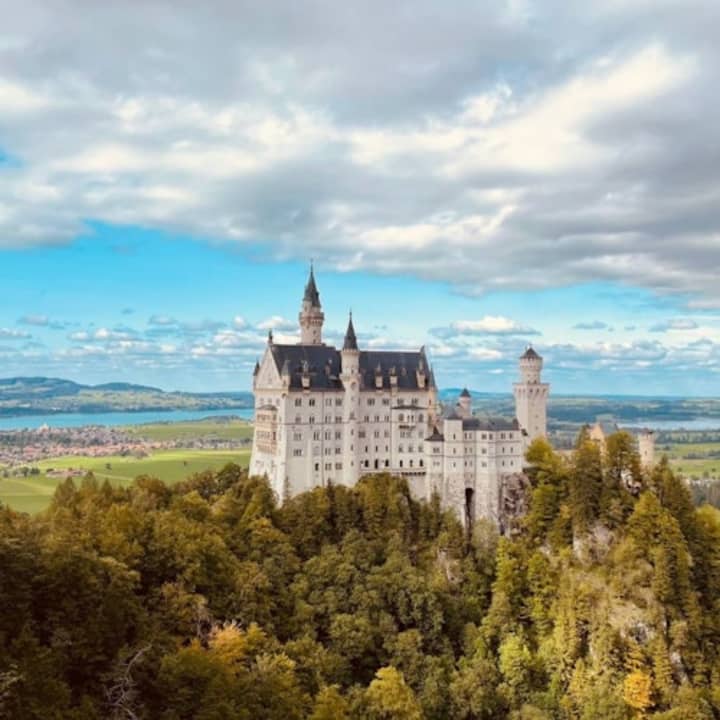
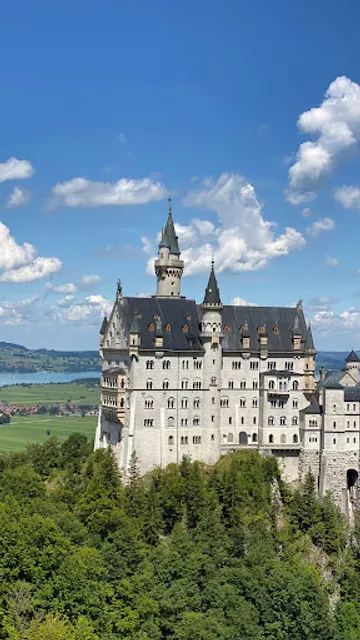
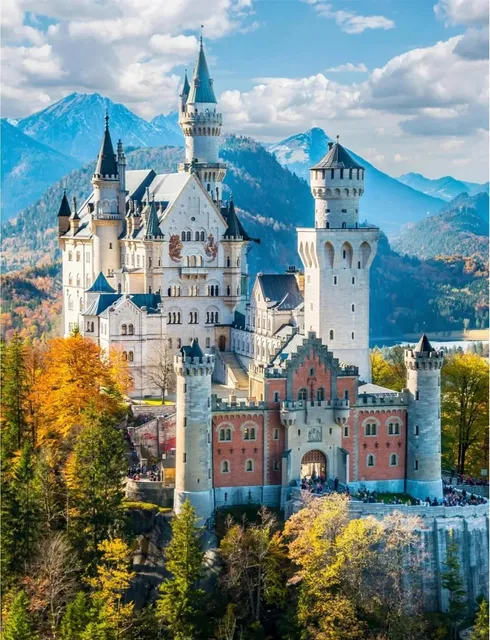
This Castle is perched high on a rugged hill with the backdrop of the Ammergebirge mountains, its white limestone façades and towering spires rise above the surrounding forests in a vision that feels like a fairytale come to life.
Commissioned by King Ludwig II of Bavaria in the late nineteenth century, the castle was intended as a private retreat inspired by medieval ideals and infused with the spirit of Wagnerian operatic themes. Although unfinished at the time of Ludwig’s death, its completed interiors and exteriors reflect a creative fusion of history, theatrical grandeur, and the king’s personal romanticism.
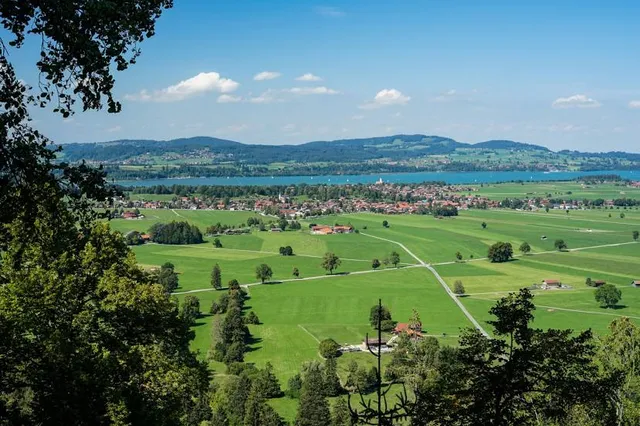
Approaching the castle along the winding road or by shuttle from the nearby village, visitors are greeted with sweeping views over the Alpsee and Schwansee lakes, as well as the contrasting sight of the Hohenschwangau Castle below, a visual reminder of Ludwig’s childhood home.
The façade bristles with towers, turrets, and balconies, each crafted with elaborate detailing that changes subtly depending on the angle and light. Inside, the throne room is among the most arresting spaces, with its Byzantine-inspired columns, sweeping murals of religious and mythic scenes, and glittering floor mosaics, designed to represent an idealized kingdom under divine blessing.
The king’s bedroom features intricate wooden carvings and a dramatic canopy that evokes a cathedral vault, while the Singer’s Hall, occupying much of the upper floor, is a grand space intended for medieval-style musical performances.
Every vantage point around Neuschwanstein offers cinematic scenes. From the Marienbrücke bridge suspended over the Pöllat Gorge, the castle appears framed against alpine forests and distant peaks, with the sound of rushing water below.
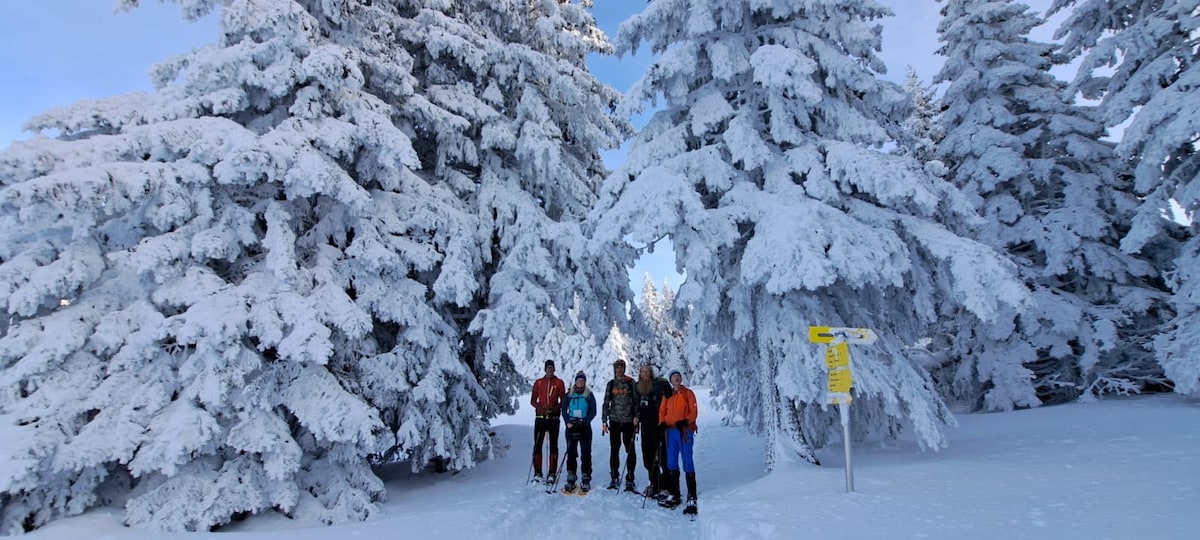
On clear days, the vista extends to the plains of Bavaria, making the climb worth every step. The atmosphere shifts markedly with the seasons, spring wraps the hill in green, summer draws crowds who bask in the long daylight hours, autumn infuses the forests with gold and crimson, and winter blankets the entire landscape in frost, turning the castle into a snow-draped fairyland.
While its design pays homage to medieval castles, Neuschwanstein is firmly a product of nineteenth-century imagination, equipped with then-modern conveniences such as running water and central heating. This blend of dreamlike beauty and practical innovation contributes to its lasting allure.
Standing in its courtyards or walking through its halls, there is a palpable sense of stepping into the mindscape of a king who sought an escape from reality, a vision preserved for generations to experience.
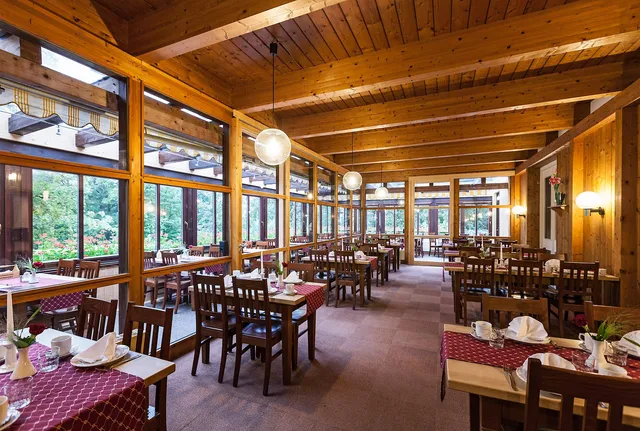
The surrounding village of Schwangau complements the visit with charming Bavarian hospitality, traditional eateries, and scenic walking paths, ensuring that time spent near the castle feels as immersive as the...
Read moreHere is the full guide to visiting the Neuschwanstein castle:
1-You can start by taking the train from Munich to Fussen, it runs every hour and is included in the Deutschland ticket. It is a 2 hour ride and drops you right at the Fussen main station.
Pro tip: get to the train 20 min before departure, it is usually there early and you can get in and secure your seats. The train can get full in the busy hours and it is not nice doing the 2 hour ride standing!
2- After you arrive at Fussen get in the bus number 78 to the castle. It is very easy to find, just go trough the gift shop in the station and the bus stop will be in the right side after the exit. Usually they time a few busses with the trains arrival times, so just follow the crowd and the bus will be waiting for you. If you do not have the deutschland ticket you will need to buy a bus ticket.
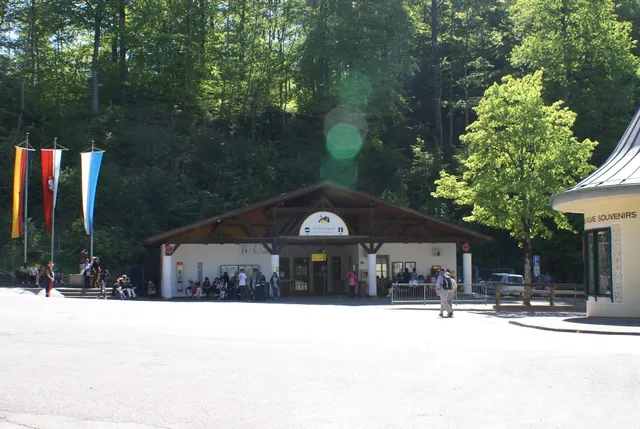
3- The bus will drop you at the visitor center in a road where you can find the start of the castle trail. In this street there are a few shops and restaurants. I recommend buying a few water bottles if you did not bring any for the castle trail. The trail entrance is easy to find, just follow the crowd or look on google maps.
4- The trail to the castle is easy but it is a workout. A lot of little kids and elder people do it, so it is not impossible but you will need to walk around 20 minutes and if you go in December it will be full of snow so gets harder to climb. I will put a video of the path.
Pro tip: if you are not able to walk or need to get to the castle in a different way you can pay to go in the horse carriages. Then you can enjoy the views while sitting. I did not do it but for people that need it, it is an option.
5- After you reach the castle you will have a lot of nice angles outside to take pictures. To get inside the castle you need to book the tickets a few weeks in advance. I did not enter the castle but just the outside is already worth the trip. There are also lockers and gift shops and restaurants at the top.
Pro tip: the bathroom at the gift shop is free. So don’t worry about using the bathroom in the station or after the bus, you can go here.
6- Marien Bridge: in December the bridge is “closed” but since you came all the way here I recommend going to it. The path to the bridge will be blocked but you can easily go around or under the barriers and start the trail. The trail is super easy, quick and has some great views. The bridge itself is blocked, you cannot go there. But you can climb the hill right next to the entrance and see the famous view of the castle from the top of the hill. Just follow the crowd and you will understand how to do it.
Note: Everyone will be taking the bridge trail and going around the closed gate. But don’t be dumb, see who is around and be safe. I’m teaching the way for educational purposes, I did not go around any barriers.
7- To go back to the station just get the bus 78 again at the same point it dropped...
Read more