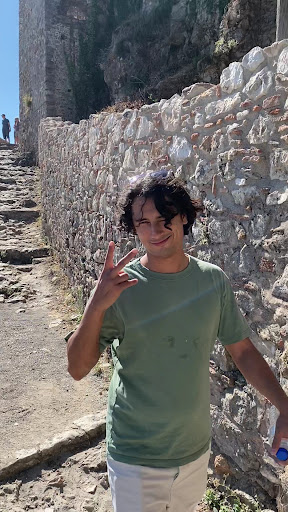
A visit to Mystras
The Ottoman Turks captured Constantinople in 1453, but it would be fair to say that the power of the Byzantine Empire had really been broken two centuries earlier by western Christians.
The Fourth Crusade from 1202-1204 was a fiasco.
Meant to recapture the Holy Land, a series of twists and turns, including unpayable debts for ships and a renegade Byzantine prince looking for mercenaries, led the Crusaders to help Venice capture and sack the greatest city in Christendom.
The Crusaders briefly tried to create a Latin Empire, ie Western Roman Catholic vs Greek Orthodox, but this quickly failed and instead resulted in a splintering of the empire.
The Greeks retook Constantinople and reassembled a rump Byzantine Empire, but much of its old territory stayed in the hands of squabbling successor states.
One of the most successful and long lasting of those successors was the Despotate of the Morea, with its capital at Mystras in the mountains near ancient Sparta.
It was originally created by one of those troublesome Crusaders but was taken over and ruled by the Byzantine royal house.
The Despot, a bad word in English that just means ruler in Greek, was in effect the Prince of Wales of the Byzantine Empire for its last two centuries.
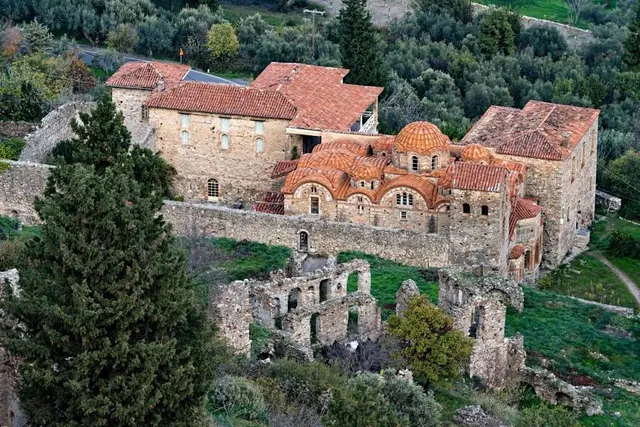
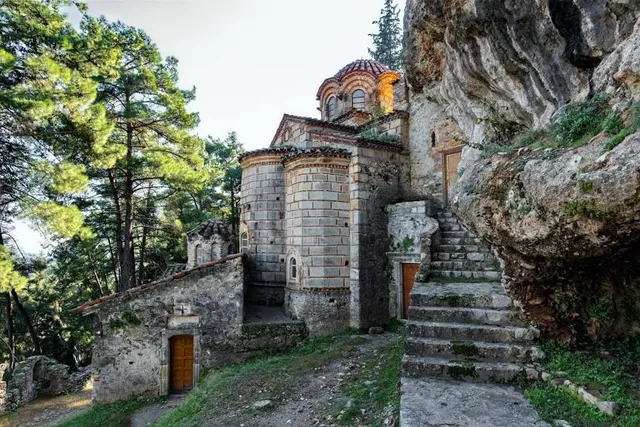
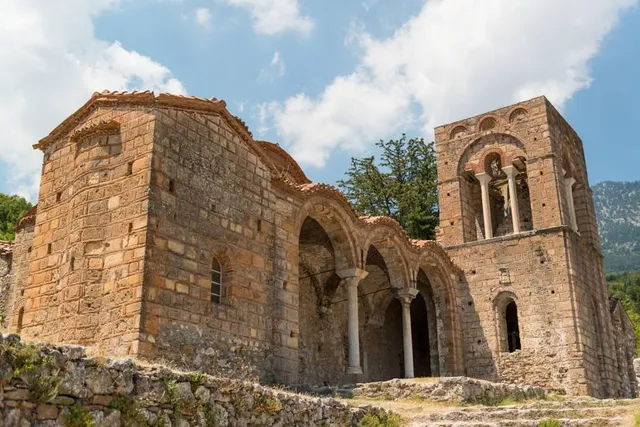
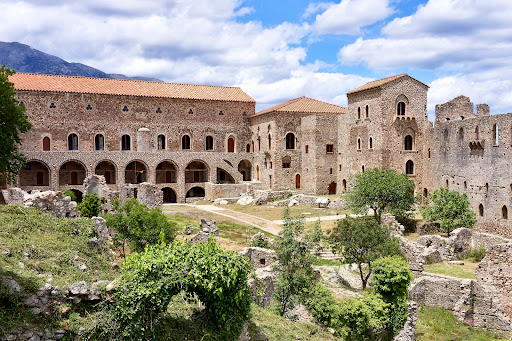
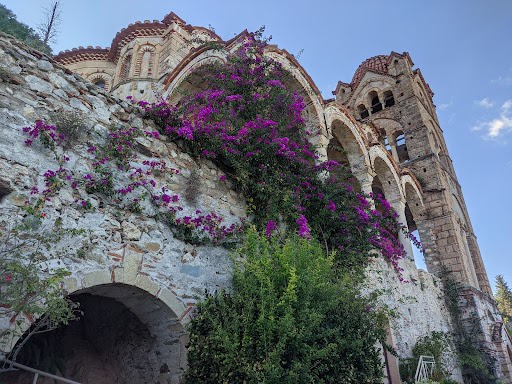
As a capital city with imperial connections, Mystras grew as big as 20,000 people, quite large in medieval terms, covering the slopes of Mt Taygetus with a castle and upper and lower walled towns filled with numerous churches and grand royal palace.
Even after the Ottomans took over, the city remained large and prosperous for another three centuries.
It was only in 1770 that Mystras was destroyed in a failed uprising by the Greeks during the Russo-Turkish war.
It’s humbling to consider how a grand city for five hundred years can become a ruin that most of us have never heard of.
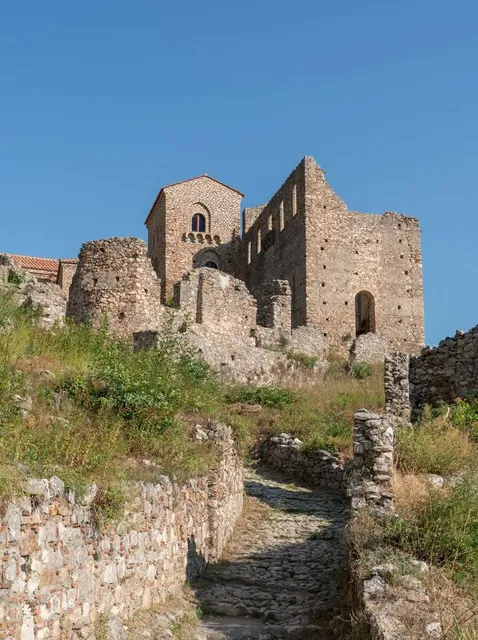
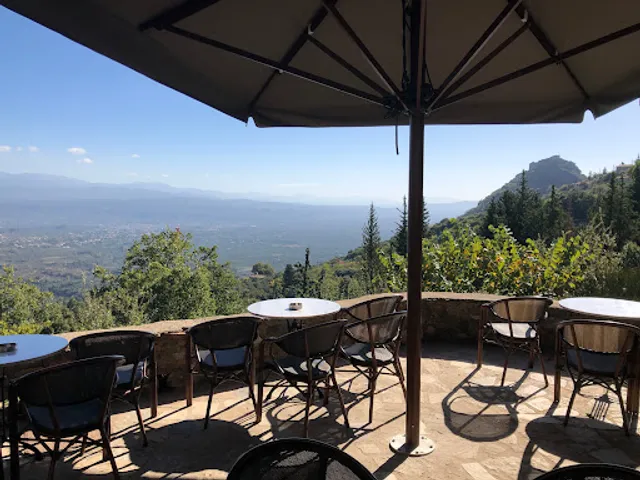
The ruins are atmospheric, hauntingly so on a foggy day like our visit, with an amazing view over the valley below, including the modern city of Sparti.
Mystras is well worth a visit if you are in Greece, but wear sturdy shoes and be prepared to climb a...
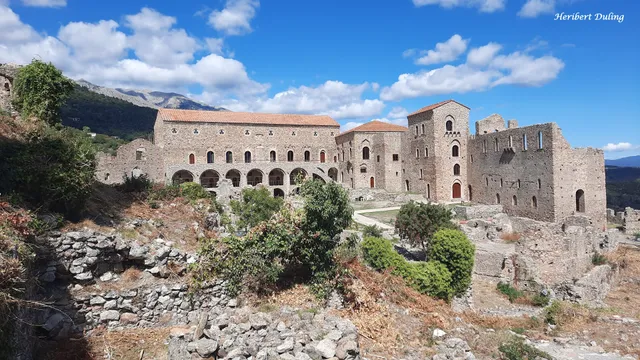
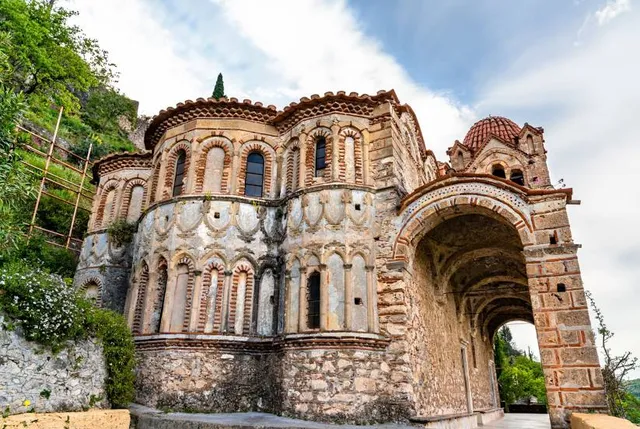
Read moreNothing prepares you for the breathtaking beauty of the magnificent medieval city Mystras, which was a central and important city during the Byzantine rule, between the 13th and 15th centuries AD. Mystras is without a doubt a historical and unique gem in the landscape of Greece. And it documents a time window of about 200 years from the relatively late history of Greece. The city was built on a mountainside, and it is divided into 3 sections: The impressive fortified castle that stands at the top of the hill and overlooks everywhere. The upper city contains residential houses, magnificent monasteries and churches, and the stunning structure of the Despot's Palace (the Byzantine governor at the time), and the lower city which contains houses and monasteries.
The best way to view all this cultural richness is through a walking tour at the site (entrance fee 12 euros). If you have two vehicles or more, you can leave one car at the main parking area, near the main gate entrance (at northeast side of the city), and then park the other cars at the upper Parking, near the Archeological Museum at the west side of the castle, (near the west gate). From there you can climb first to the castle and then go down to the Despot's Palace, from there proceed to the remarkable Pantanassa Monastery, and from there you can visit a few other structures on the way to the main gate. Try to avoid walking on a hot day, because it can be very exhausting and take a lot of water with you... Bottom line: great opportunity to visit an amazing archeological site, a wonderful reminder of a glorious era of richness...
Read moreOur main goal today is Mystras, the Byzantine ruined city with a Franconian mountain fortress on top. This UNESCO World Heritage Site is widely spread over an entire mountain slope and requires some finesse in order not to let the visit become a big mountain tour. So we first drive up to the entrance of the fortress. Here we buy our tickets and get a stamp on them that will be needed later. Now we only climb up to the fortress ruins and then only visit the areas of the ruins below the fortress. Then you take the car to the lower entrance, show your stamped ticket and continue your tour of the lower parts of the city. Mystras was founded by Wilhelm Villehardouin. The Peloponnese was under Frankish occupation at that time. In 1249 he had the fortress built, but in 1262 he was taken prisoner by the Byzantines and was only able to buy his freedom by surrendering the castle. A short pleasure! In the 14th and 15th centuries the city prospered and it was from here that the so-called Byzantine Renaissance, a forerunner of the Italian one, emanated. When the Ottomans conquered the Peloponnese in 1460, mosques and minarets were added to the many churches and monasteries. Around 1700 Mystras still had 42,000 inhabitants, after decades of decline around 1800 there were still 16,000. The decline came with the Greek struggle for freedom, when Albanian auxiliaries, summoned by the Turks, killed the residents, looted and devastated the place. Today, in addition to the citadel, we can visit some ruins, the despot's palace and many churches (6) and monasteries (3). After a total of more than 4 hours we...
Read more