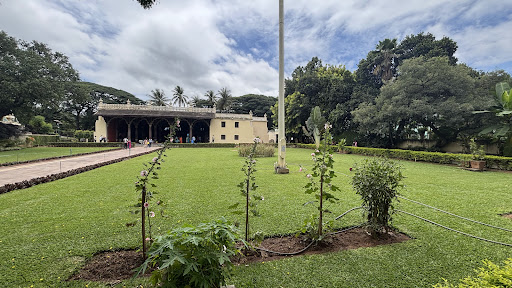
On 9th September around 3 PM, I visited Tipu Sultan’s Summer Palace with my senior-aged parents. The Uber ride was smooth, though finding a cab during the afternoon took some time. Thankfully, traffic was light, and we reached the palace promptly. I had purchased tickets online via Google Maps, and at ₹60 for three adults, the cost was reasonable. However, I was disappointed that no discounts were available for senior citizens. Payment through PhonePe (UPI) was efficient, and tickets were issued promptly in PDF format.
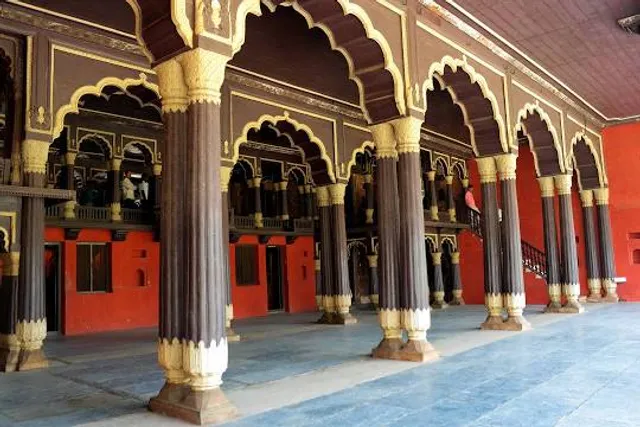
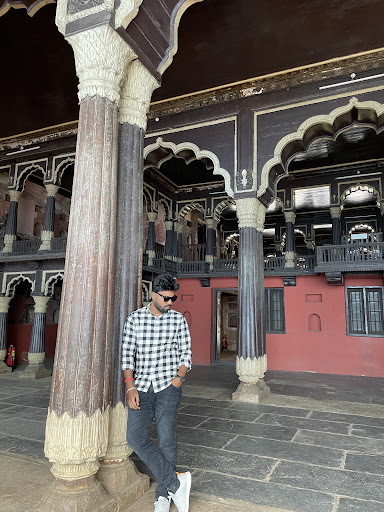
The palace is an impressive example of Indo-Islamic architecture, blending traditional Indian and Islamic design elements. The arches feature floral and geometric patterns characteristic of late 18th-century architecture, and the teakwood pillars display exquisite carvings. The golden designs on the arches and walls add a regal touch, reflecting the grandeur of this historical residence.
Exploration revealed that the first floor was somewhat dim, requiring the use of my phone’s flashlight. It was interesting to see dates like “18th March, 1886” inscribed on the walls. The balconies on the upper level, supported by intricately carved pillars, would have offered majestic views. Some doors on the first floor were locked, likely for preservation or safety reasons.
A notable feature within the palace is a chamber displaying Tipu Sultan’s history, including a rocket launcher from his time, protected under glass. While photography is restricted throughout most of the palace, it is permitted in this chamber. The arches and floral motifs throughout the palace illustrate a fusion of Mughal and local styles, highlighting its functionality and aesthetic value.
The courtyard and lawn areas are well-maintained, offering a peaceful environment for relaxation. There are designated seating areas around the lawns, ideal for visitors seeking tranquility. Although modest in size, the palace is maintained to a high standard, with restrooms and drinking water facilities available.
While the palace is well-preserved, the staircase was somewhat challenging for my mother, though she managed the ascent with determination. Additionally, we encountered a group of noisy youngsters, which was a bit disruptive given Bangalore’s reputation for its esteemed educational institutions.
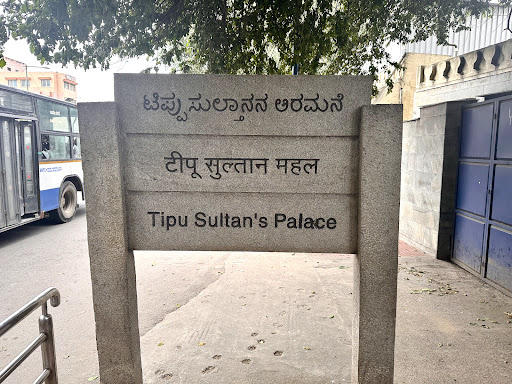
The staff adhered to the protocols with minimal interaction; I showed my ticket on my phone, which was validated, and we were granted entry. The signage throughout the palace was clear and well-maintained. Our visit lasted approximately 15 minutes, which is reasonable given the palace’s size and historical context.
The palace served not only as a summer retreat but also as a darbar—a royal court or assembly where Tipu Sultan conducted administrative and ceremonial activities. This dual role adds to its historical significance. Note that the palace lacks accessibility features for disabled visitors, though guided tours are available for those seeking more detailed information.
After our tour, we opted for an auto to Vidhan Soudha via Uber, as cabs were scarce. We experienced difficulty with local auto drivers demanding inflated fares of ₹100 per person. Despite my father’s fluency in Kannada, their behavior was unsatisfactory. I recommend using ride-hailing apps like Ola or Uber to avoid such issues.
As a permanent resident of Bangalore, I appreciate the preservation of this historical site. While there is room for enhancing the visitor experience and accessibility, the palace offers a valuable glimpse into Tipu Sultan’s era.
Overall, our visit was delightful, marking a cherished item on my bucket list. I recommend a visit if you are in the area, but be mindful of transportation options and manage your expectations regarding the...
Read moreWhat’s Great Architectural Beauty The palace is a fine example of Indo-Islamic architecture. It’s built largely of teak wood on a stone base, with ornate carvings, arches, balconies, and floral motifs. The “zenana” quarters (women’s rooms), durbar hall, and the projecting balconies are particularly striking.  Historical Significance Commissioned by Hyder Ali and completed by Tipu Sultan in 1791, the palace served as his summer residence and administrative centre. After his death, the British used it as a secretariat. It offers good insight into the late-18th century Mysore kingdom and its struggles.  Museum / Artifact Displays A part of the ground floor has been converted into a museum with artifacts: portraits, weapons, costumes, some replicas (e.g. Tipu’s Tiger) etc. It helps bring to life the era and the person of Tipu Sultan.  Central Location & Accessibility The palace is located in Old Bangalore (Chamrajpet), near KR Market and Fort area. It’s reachable by public transport, autos, and not very far from main transit points. Good for tourists wanting to combine it with other nearby heritage spots.  Low Entry Fee For Indian citizens, the price is very modest. It makes it an affordable heritage outing. 
What Could Be Better / Things to Keep in Mind Scale / Surroundings Some visitors find it a bit underwhelming compared to larger palaces (e.g. Mysore Palace). The palace grounds are not very large, and some parts of the old fort are in ruin or not preserved. Urban congestion around the palace also affects how “majestic” it feels.  Maintenance & Cleanliness Mixed feedback on how well some parts are kept (cleanliness, upkeep of display areas). If you care about fine detail and preservation, you might notice things that need attention.  Crowds & Timing Being in a busy part of Bangalore, the traffic and the surroundings can detract from the experience. Early mornings or weekdays are likely best to avoid crowds and heat.  Expect Modest Museum The museum is interesting, but it’s not huge. If you’re expecting expansive exhibits or very polished display technology you might reach your limit fairly quickly.  Photography / Permissions There are some rules around photography inside certain parts; and expect small extra charges for cameras in some cases.  Final Verdict
If you like history, architecture, or want to see a heritage site that is accessible and not too touristy, Tipu Sultan’s Summer Palace is very much worth a visit. It offers a good slice of Bangalore’s past without requiring a full-day commitment or hefty ticket. Just go with modest expectations and especially visit early to...
Read moreAs a history enthusiast visiting Bangalore in late August 2025, I decided to explore the Tipu Sultan Summer Palace (also known as Daria Daulat Bagh), a well-preserved relic from the 18th century. Located in the heart of Srirangapatna, just a short 15-20 km drive from central Bangalore, this palace served as the summer retreat of Tipu Sultan, the "Tiger of Mysore," and stands as a testament to his innovative spirit and architectural prowess. Built in 1784, it's one of the few surviving structures from Tipu's era, showcasing Indo-Islamic design with intricate woodwork that immediately captivated me. Upon arrival, the palace's modest entrance belies the treasures inside. The main building is constructed primarily from teak wood, but what truly stood out was the liberal use of sandalwood in the decorations, carvings, and artifacts on display. Tipu Sultan was known for his fondness for sandalwood – a fragrant, durable wood native to Karnataka – and the palace features beautiful inlaid panels and motifs made from it, adding a luxurious, aromatic touch to the interiors. The museum within houses an impressive collection of Tipu's personal items, including swords, coins, and paintings, many of which incorporate sandalwood elements. One highlight was the ornate wooden cradle and ceremonial objects, all crafted from this precious material, evoking the opulence of the Mysore Kingdom. The scent of aged sandalwood lingers subtly, enhancing the immersive experience. Wandering through the lush gardens surrounding the palace, I appreciated the serene ambiance – perfect for a half-day visit. The audio guide (available for a small fee) provides fascinating insights into Tipu's battles against the British and his administrative reforms. However, the site can get crowded on weekends, so I recommend visiting early morning. Entry is affordable at around ₹20 for Indians (₹200 for foreigners), and photography is allowed inside. For anyone interested in sandalwood craftsmanship, this palace is a must-see, as it exemplifies how the wood was used in royal settings. If you're in Bangalore, pair it with a trip to nearby sandalwood-focused spots like the Government Sandalwood Depot or local artisan shops in Srirangapatna, where you can see modern carvings and even purchase small souvenirs made from certified sandalwood. Overall, the Tipu Sultan Summer Palace earns a solid 4.5/5 stars from me – a blend of history, culture, and natural artistry that leaves you inspired. Highly recommended for a culturally...
Read more